
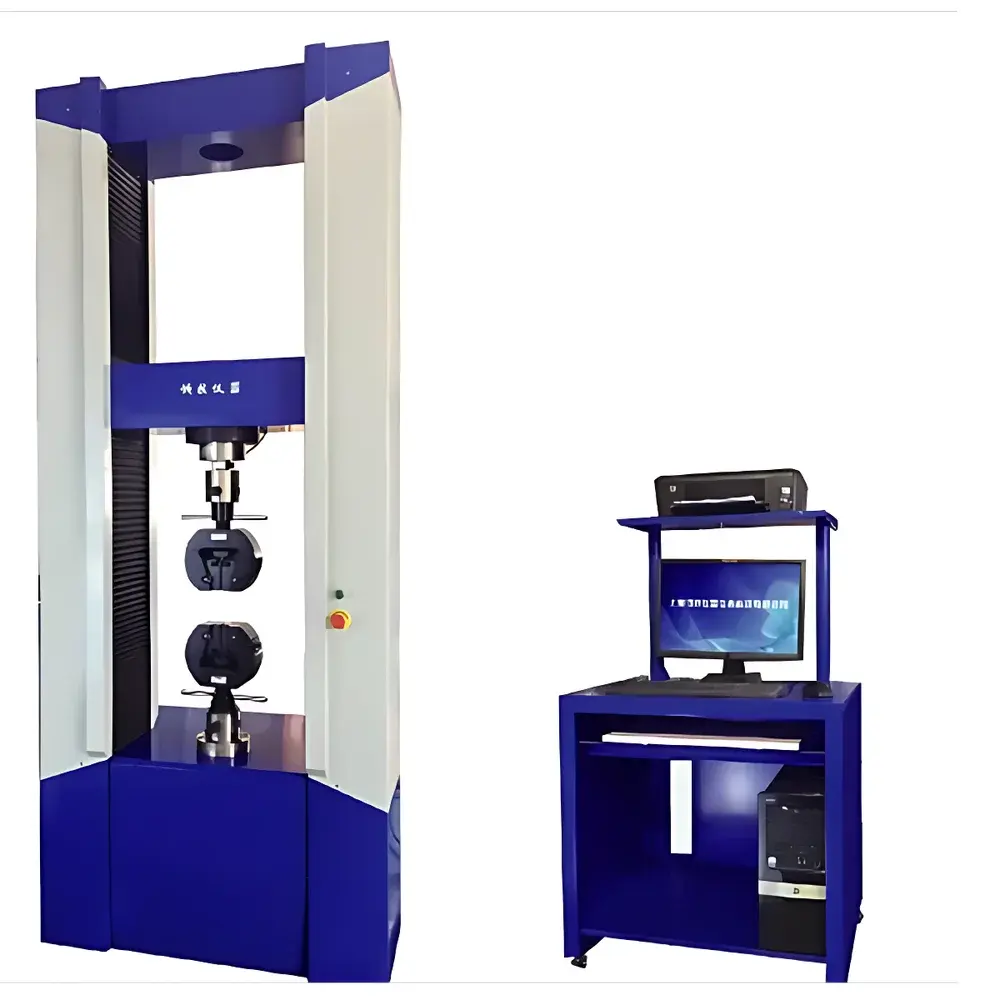
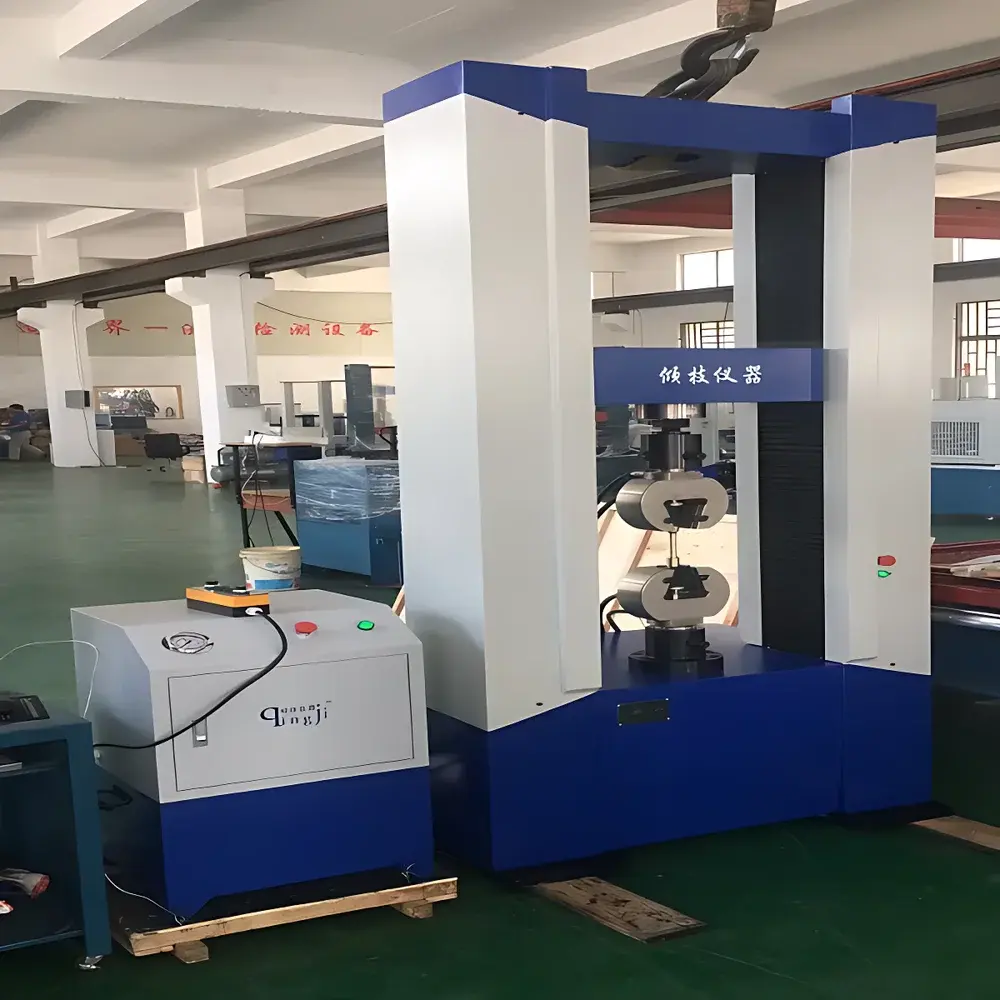
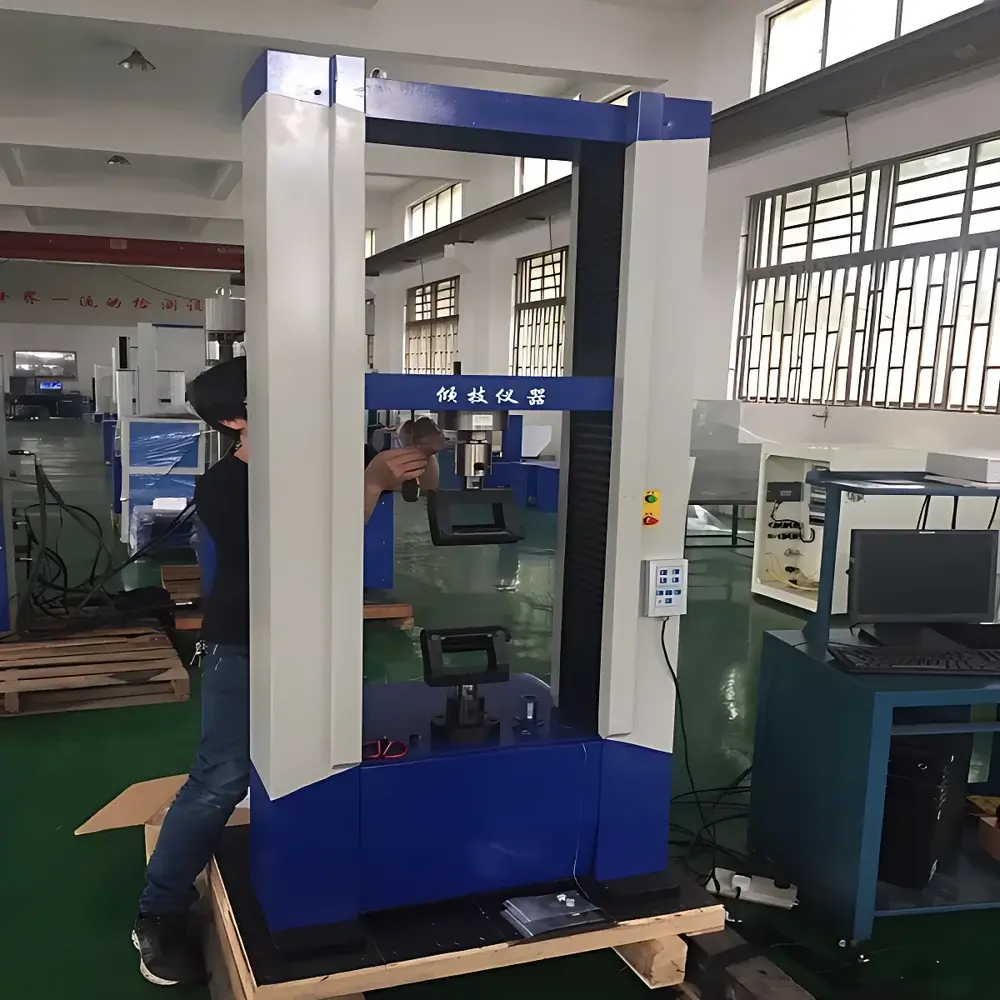
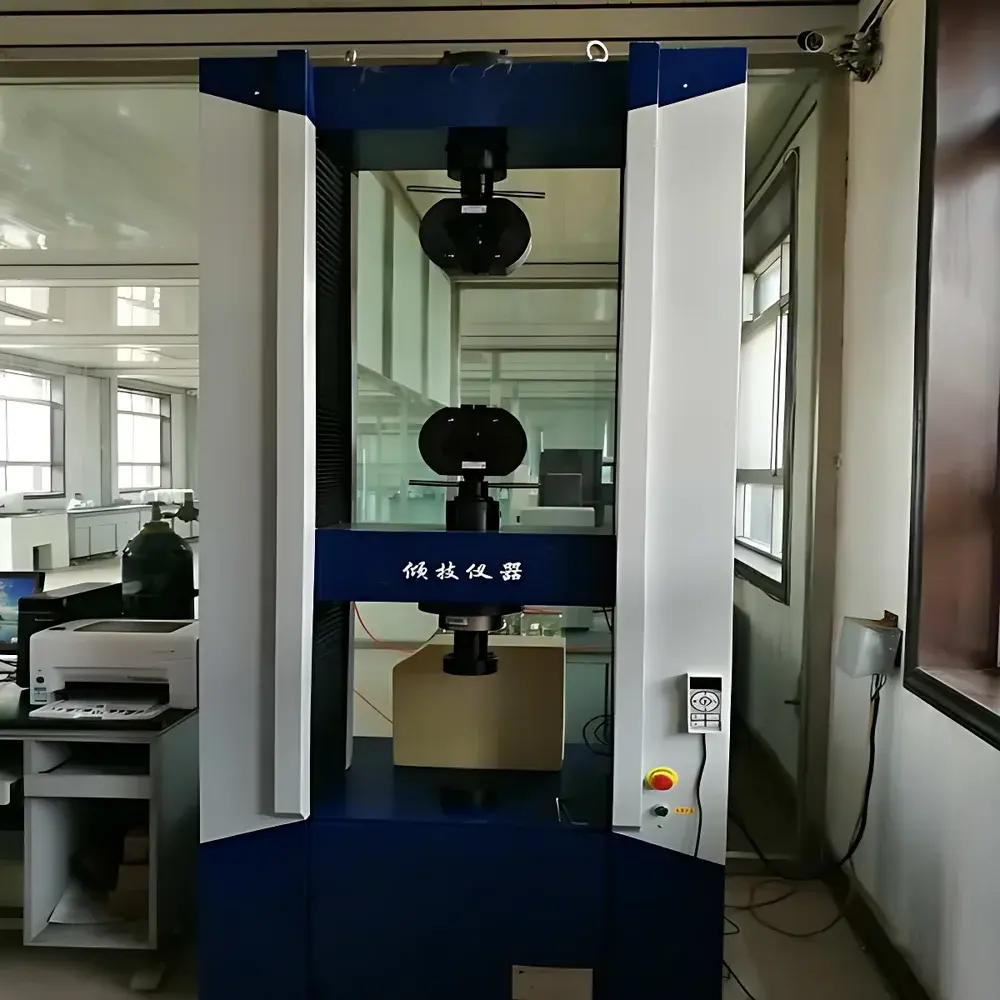
QJ212-300KN Universal Testing Machine by Qingji
| Brand | Qingji |
|---|---|
| Origin | Shanghai, China |
| Model | QJ212-300KN |
| Load Capacity | 0–300 kN |
| Load Accuracy | ±0.5% of full scale |
| Effective Test Width | 520 mm |
| Max Tensile Stroke | 800 mm |
| Test Speed Range | 0.01–1000 mm/min (standard: 300 mm/min) |
| Speed Accuracy | ±0.5% of indicated value |
| Displacement Measurement Accuracy | ±0.5% of indicated value |
| Strain Measurement Accuracy | ±0.5% of indicated value |
| Force Resolution | 500,000 counts (full-scale, no range switching) |
| Control System | Panasonic全-digital AC servo controller |
| Load Cell | High-precision sensor (USA-sourced) |
| Software | Windows-based closed-loop test control system supporting ISO, ASTM, JIS, DIN standards |
| Safety Protection | Electronic limit switches, software-based overload diagnosis, auto-return function, 10% over-load cutoff |
| Power Requirement | 2–5 kW |
| Dimensions (W×D×H) | 1000 × 680 × 2450 mm |
| Weight | ~1450 kg |
Overview
The QJ212-300KN Universal Testing Machine by Qingji is an electromechanical static testing system engineered for high-reproducibility mechanical characterization of metallic, polymeric, composite, ceramic, and elastomeric materials under tension, compression, bending, peel, tear, shear, puncture, and low-cycle fatigue conditions. Built upon a rigid dual-column frame architecture with reinforced crosshead guidance and precision-ground lead screws, the system delivers stable axial alignment and minimal parasitic moments during high-load testing—critical for compliance with ISO 7500-1 Class 0.5 force calibration requirements. Its force measurement subsystem integrates a traceable, temperature-compensated load cell (sourced from a U.S.-based OEM) with 500,000-count A/D resolution across the full 0–300 kN range—eliminating range-switching artifacts and ensuring consistent sensitivity from 0.02% to 100% of full scale. The machine operates under a fully digital closed-loop control architecture, enabling precise regulation of stress, strain, or displacement rate per ASTM E4, ISO 6892-1, and EN 10002-1 test protocols.
Key Features
- Rigid structural frame with 1450 kg mass and optimized moment inertia for vibration damping and long-term dimensional stability
- Panasonic all-digital AC servo drive system delivering smooth, low-noise motion control across the full speed range (0.01–1000 mm/min)
- High-fidelity displacement feedback via non-contact optical encoder and calibrated screw pitch, meeting ISO 9513 Class 0.5 displacement accuracy
- Dual-mode crosshead actuation: rapid manual positioning + programmable automatic return to pre-test origin
- Integrated safety architecture including hardware-based electronic limits, software-driven overload detection (10% FS cutoff), and real-time diagnostic monitoring
- Modular fixture interface compatible with standardized wedge-action grips, compression platens, bend fixtures, and custom-designed tooling per specimen geometry and standard requirement
Sample Compatibility & Compliance
The QJ212-300KN accommodates specimens up to 520 mm wide and 800 mm in active gauge length, supporting standardized test coupons (e.g., ASTM E8, ISO 6892-1 Type 1B), sheet metal strips, extruded profiles, welded joints, and molded polymer parts. It meets mechanical verification criteria defined in ISO 7500-1 (force), ISO 9513 (extensometry), and ASTM E4 (verification of force-measuring instruments). The system supports audit-ready data generation compliant with GLP and GMP environments when paired with optional 21 CFR Part 11–enabled software modules—including electronic signatures, audit trails, and user-access-level management. All test reports include traceable metadata: operator ID, calibration certificate numbers, environmental conditions (if logged), and raw channel timestamps.
Software & Data Management
The Windows-native test control software provides real-time dynamic plotting of stress–strain, load–displacement, and time-series curves with adjustable refresh rates (up to 1 kHz sampling). Users may perform post-test operations including curve overlay, segment extraction, tangent modulus calculation, yield point identification (0.2% offset, ISO 6892-1 Annex B), and fracture energy integration. Data export formats include CSV, XML, and PDF with embedded digital signatures. The system supports automated report generation aligned with ASTM E647, ISO 1133, and DIN 53455 templates. Optional database integration enables centralized storage, version-controlled test method libraries, and cross-instrument comparative analytics.
Applications
- Mechanical validation of structural alloys (Al 6061-T6, Ti-6Al-4V) per ASTM B557 and ISO 6892-2
- Tensile property mapping of thermoplastic composites (CFRP, GFRP) under ambient and elevated temperatures
- Compression testing of foams, elastomers, and biomedical hydrogels per ISO 13314 and ASTM D3574
- Bend strength assessment of ceramics and cementitious materials (ASTM C1161, ISO 14704)
- Peel and tack evaluation of pressure-sensitive adhesives (PSA) per ASTM D903 and FINAT FTM 1
- Low-cycle fatigue life determination for automotive suspension components (ISO 1099)
FAQ
What international standards does this system support out-of-the-box?
The QJ212-300KN firmware and software natively implement test routines and reporting templates for ISO 6892-1, ASTM E8/E9/E21, JIS Z2241, DIN 50125, and GB/T 228.1—with configurable parameters for strain rate, hold times, and acceptance criteria.
Is the load cell calibrated and certified to ISO/IEC 17025?
Yes—each unit ships with a manufacturer-issued calibration certificate traceable to NIM (China National Institute of Metrology), with optional third-party ISO/IEC 17025 accreditation available upon request.
Can the system be integrated into an existing LIMS or MES environment?
Via OPC UA or TCP/IP API, the controller supports bidirectional communication with laboratory information management systems (LIMS) and manufacturing execution systems (MES) for automated job dispatch and result ingestion.
What maintenance intervals are recommended for long-term accuracy retention?
Annual recalibration of force and displacement channels is advised; routine checks (monthly) include preload verification, crosshead parallelism assessment, and lubrication of lead screw assemblies per the maintenance logbook included with shipment.



