
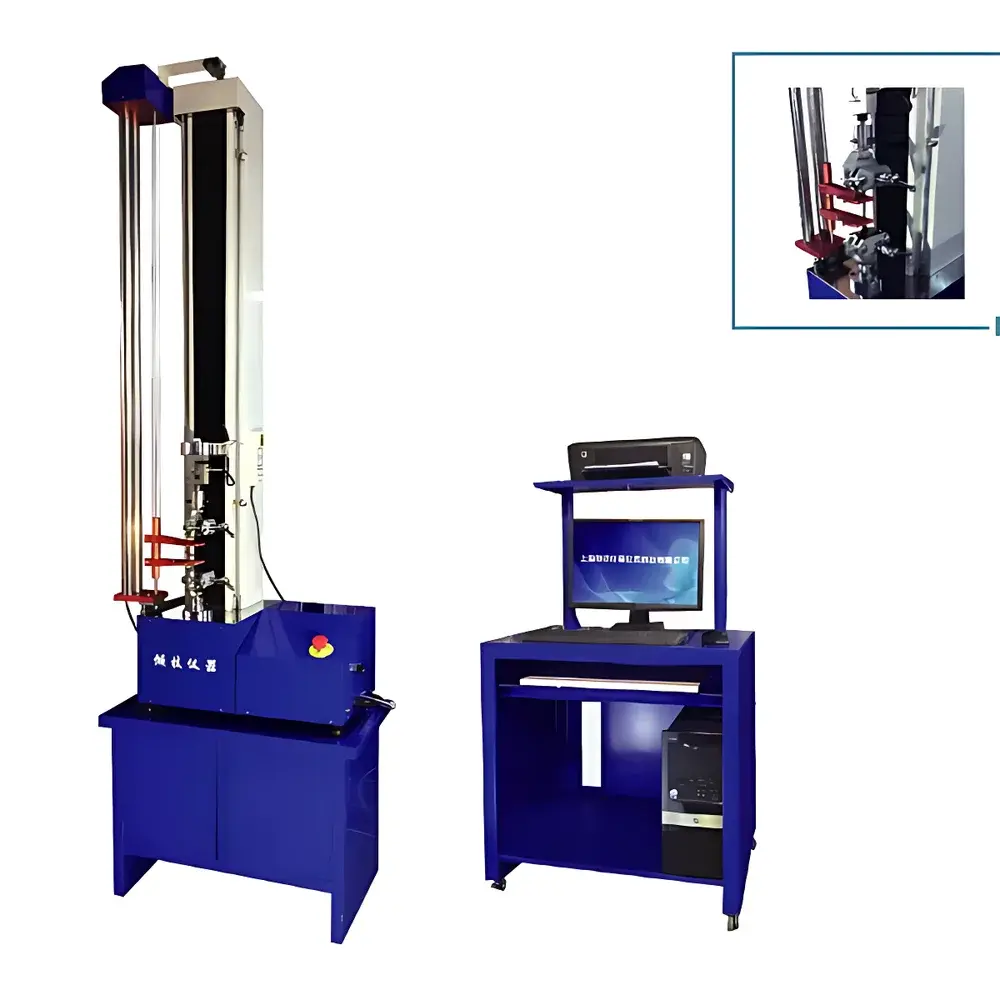
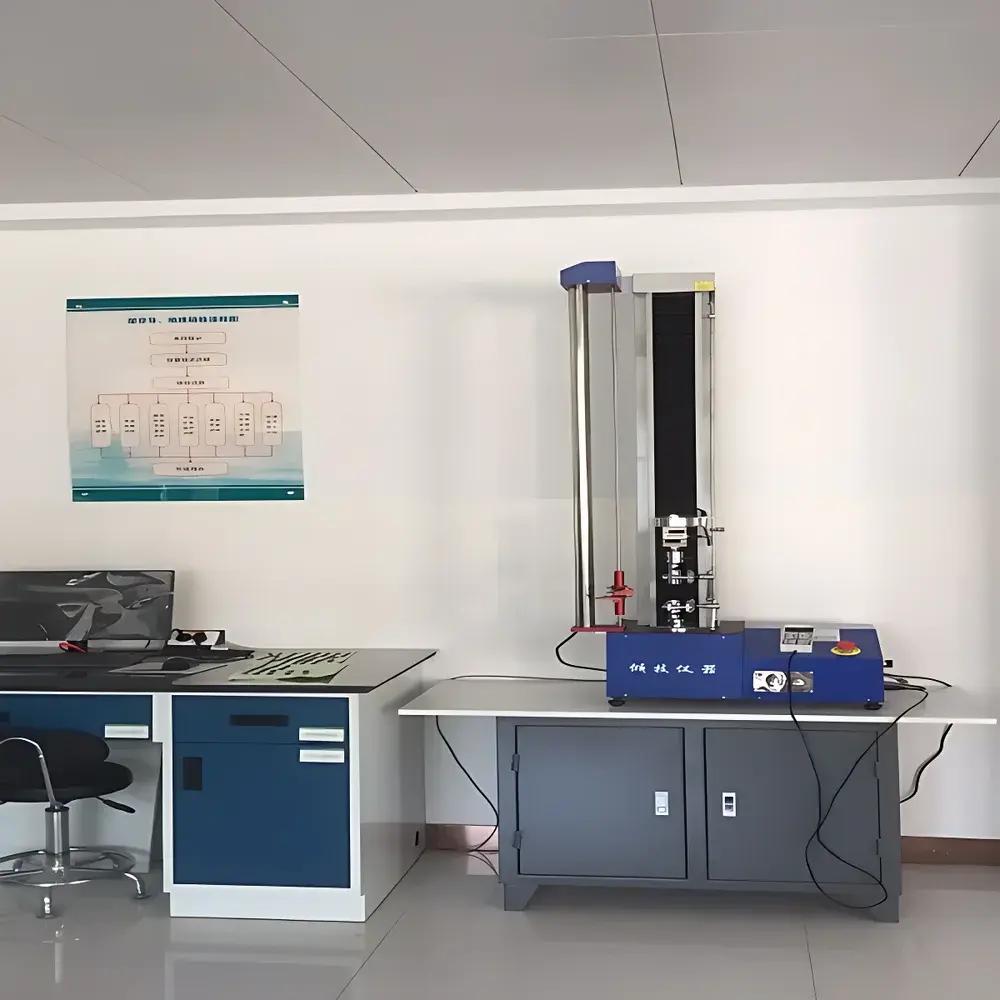
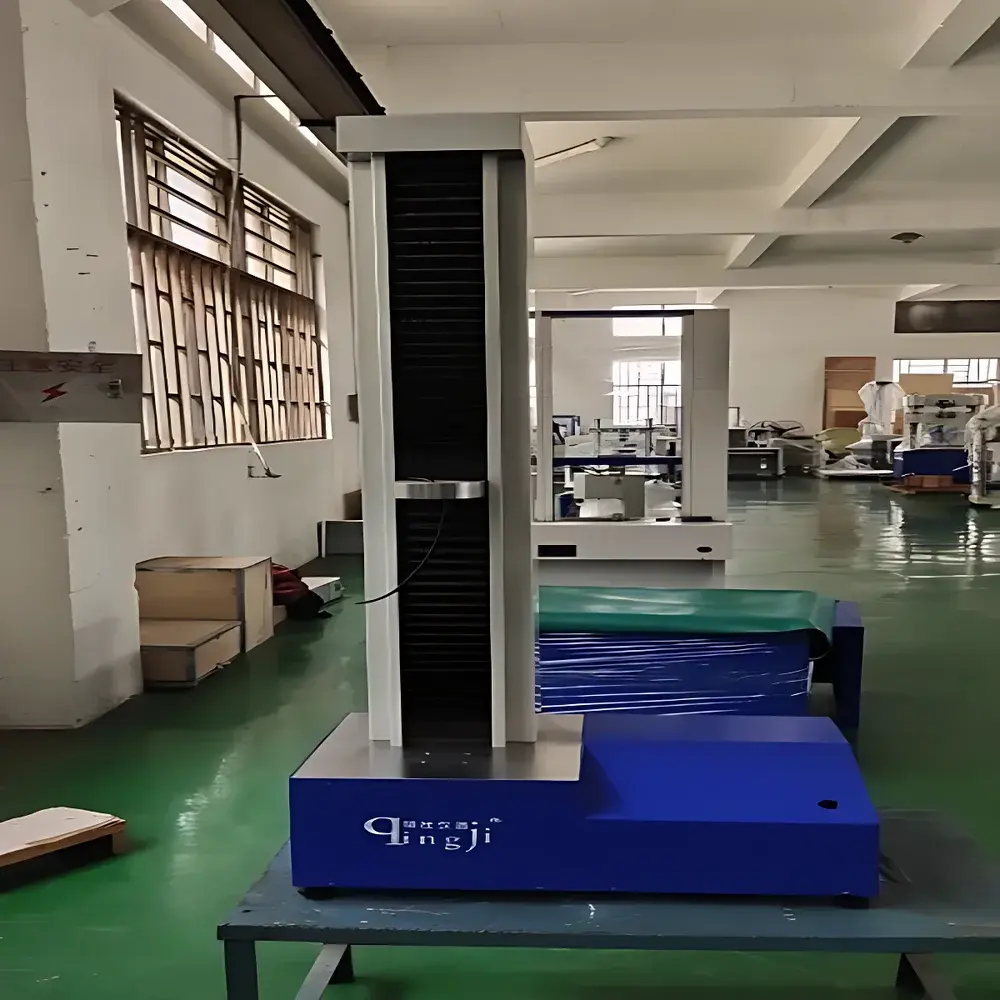
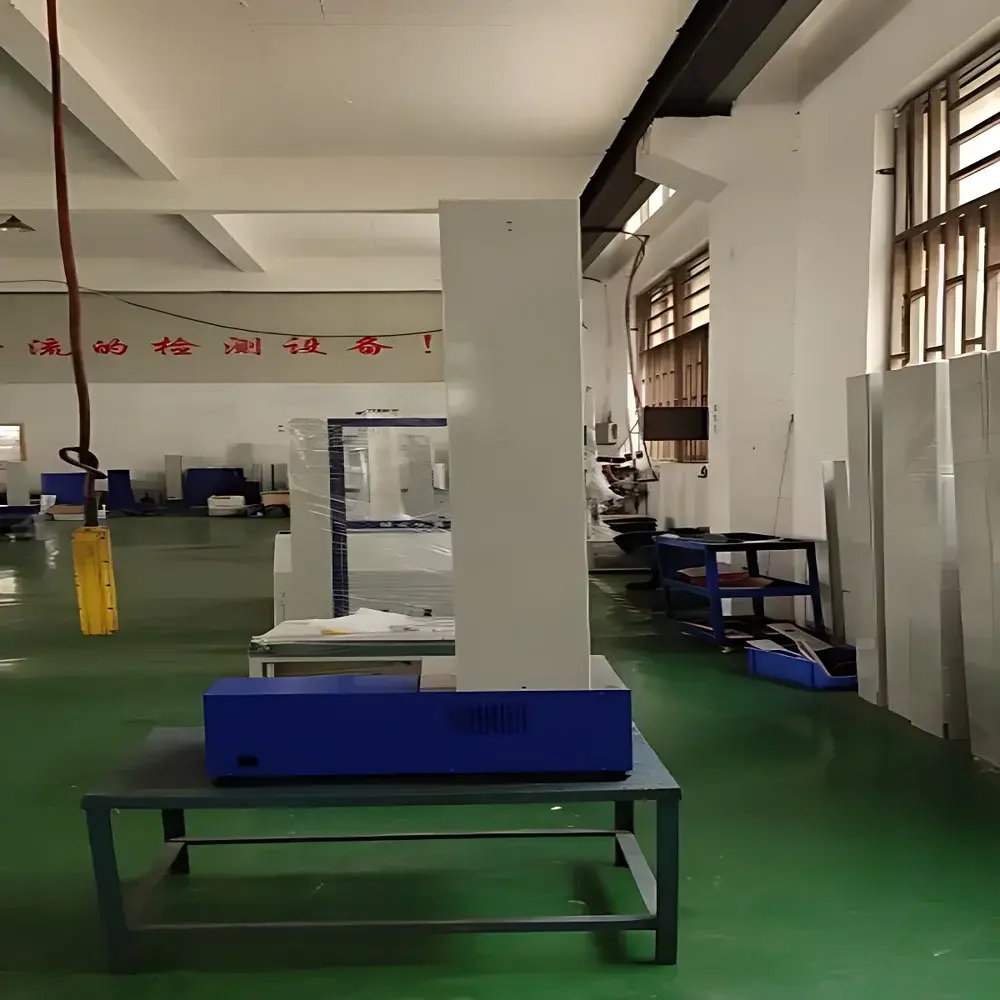
Qinji QT-210A-5KN Universal Tensile Testing Machine
| Brand | Qinji |
|---|---|
| Origin | Shanghai, China |
| Model | QT-210A-5KN |
| Max Test Load | 5 kN |
| Load Range | 0–5000 N |
| Load Accuracy | ±0.5% FS |
| Crosshead Travel | 800 mm |
| Displacement Resolution | 0.001 mm |
| Speed Range | 0.001–800 mm/min |
| Speed Accuracy | ±0.5% |
| Displacement Measurement Accuracy | ±0.5% |
| Deformation Measurement Accuracy | ±0.5% |
| Control System | Windows-based PC interface with digital servo drive |
| Safety Features | Electronic limit protection, emergency stop button |
| Weight | ~85 kg |
Overview
The Qinji QT-210A-5KN Universal Tensile Testing Machine is a single-column electromechanical testing system engineered for precision mechanical property evaluation of polymeric and elastomeric materials under uniaxial loading conditions. Based on the principle of controlled displacement or load-controlled actuation via a high-resolution digital servo motor and precision ball-screw transmission, the system delivers repeatable force-displacement data in accordance with standardized tensile test protocols. Designed primarily for quality control laboratories and R&D environments in rubber, plastic, adhesive, and composite manufacturing, it complies with core mechanical testing standards including ASTM D412, ISO 37, ISO 527-2, and GB/T 528—enabling reliable determination of tensile strength, elongation at break, yield point, modulus (e.g., secant modulus at 100% strain), and stress relaxation behavior. Its rigid yet compact single-arm architecture supports rapid specimen setup and consistent alignment—critical for minimizing bending moments during rubber specimen testing where low-modulus, high-elongation behavior demands precise gripping and minimal parasitic deformation.
Key Features
- High-fidelity load measurement using a calibrated 5 kN load cell with <±0.5% full-scale accuracy and 0.01% internal resolution, traceable to national metrological standards.
- Digital servo control system delivering smooth, programmable crosshead motion across a wide speed range (0.001–800 mm/min) with ±0.5% speed fidelity—essential for strain-rate-sensitive elastomer characterization per ISO 37 Annex B.
- Integrated displacement transduction with 0.001 mm resolution and ±0.5% linearity, enabling accurate determination of extension, permanent set, and recovery metrics in cyclic loading tests.
- Windows-based control and analysis software featuring real-time plotting of force–displacement, stress–strain, and modulus curves; automated peak detection; and customizable test templates aligned with ASTM/ISO method structures.
- Modular grip interface supporting pneumatic, wedge-action, and roller-type fixtures (optional); standard effective width: 150 mm; maximum usable travel: 800 mm (extendable upon request).
- Dual-layer safety architecture: hardware-level electronic limit switches plus software-enforced travel bounds, complemented by an illuminated emergency stop button meeting IEC 60204-1 requirements.
Sample Compatibility & Compliance
The QT-210A-5KN accommodates standard dumbbell-shaped (ISO 37 Type 2, ASTM D412 Die C), ring, and strip specimens of vulcanized rubber, thermoplastic elastomers (TPE), silicone gels, adhesives, and thin polymer films. Specimen thickness up to 10 mm and width up to 15 mm are routinely tested within its clamping envelope. All operational parameters—including calibration intervals, verification procedures, and uncertainty budgets—are documented to support GLP-compliant reporting. The system’s measurement traceability aligns with ISO/IEC 17025 requirements when used with certified reference standards. While not FDA 21 CFR Part 11–validated out-of-the-box, audit trails, user access logs, and electronic signature capability can be enabled through optional software configuration for regulated QC environments.
Software & Data Management
Control and data acquisition are managed via Qinji’s proprietary QT-TestSuite v4.x software, built on Microsoft .NET Framework and compatible with Windows 10/11 (64-bit). The application provides synchronized acquisition of force, displacement, and optional extensometer or video-based strain signals at up to 100 Hz sampling rate. Raw data exports to CSV, XLSX, and universal ASCII formats; graphical outputs conform to ISO 14289-1 (PDF/A-1b) for archival integrity. Calibration certificates—including load cell sensitivity, linearity, hysteresis, and zero drift—are stored digitally with timestamped version history. For enterprise integration, the software supports OPC UA connectivity and configurable API endpoints for LIMS or MES synchronization.
Applications
- Characterization of natural and synthetic rubber compounds: tensile strength, elongation at break, permanent set after stretching, and stress relaxation profiles.
- Evaluation of thermoplastic elastomer (TPE) formulations for automotive seals, medical tubing, and consumer goods under varying strain rates.
- Adhesion strength testing of pressure-sensitive adhesives (PSAs) using 180° peel or loop tack configurations (with accessory fixtures).
- Mechanical validation of silicone elastomers per ASTM D2240 hardness correlation studies and tear resistance screening (ASTM D624).
- Quality conformance testing in production environments requiring batch release against internal specifications or customer material data sheets (MDS).
FAQ
What standards does the QT-210A-5KN support for rubber tensile testing?
It natively supports ASTM D412, ISO 37, GB/T 528, and ISO 527-2. Custom test methods can be programmed to match internal or industry-specific protocols.
Is extensometer compatibility available?
Yes—contact-type clip-on extensometers (e.g., 10–50 mm gauge length) and non-contact video extensometers are supported via analog voltage or TTL input interfaces.
Can test reports be generated in PDF with digital signatures?
Standard reports export to PDF; digital signature and audit trail features require optional GLP module activation and role-based user credentialing.
What maintenance is required for long-term accuracy?
Annual verification using NIST-traceable load standards is recommended; routine checks include crosshead alignment verification, grip jaw wear inspection, and servo amplifier diagnostics.
Does the system support multi-step cyclic testing?
Yes—the software allows definition of complex sequences including preload, ramp-hold-relax segments, and staircase strain protocols for fatigue and hysteresis analysis.



