
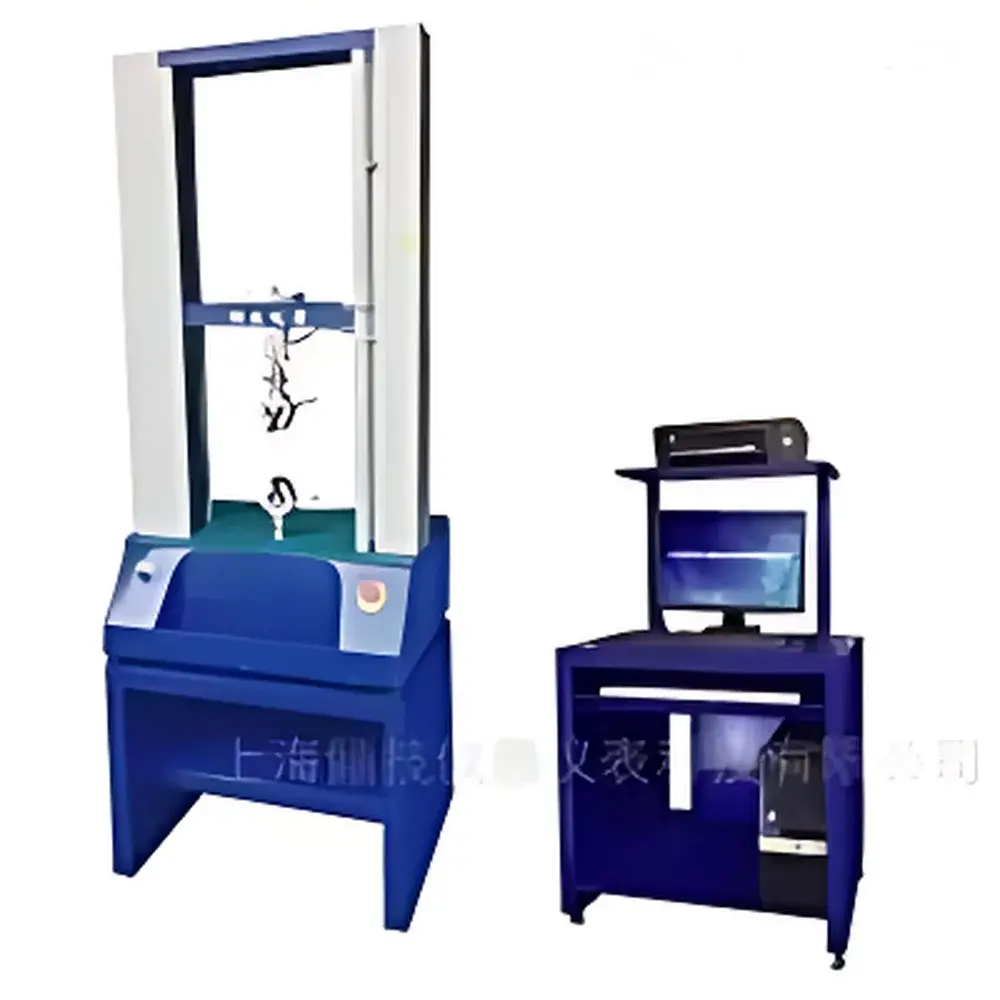
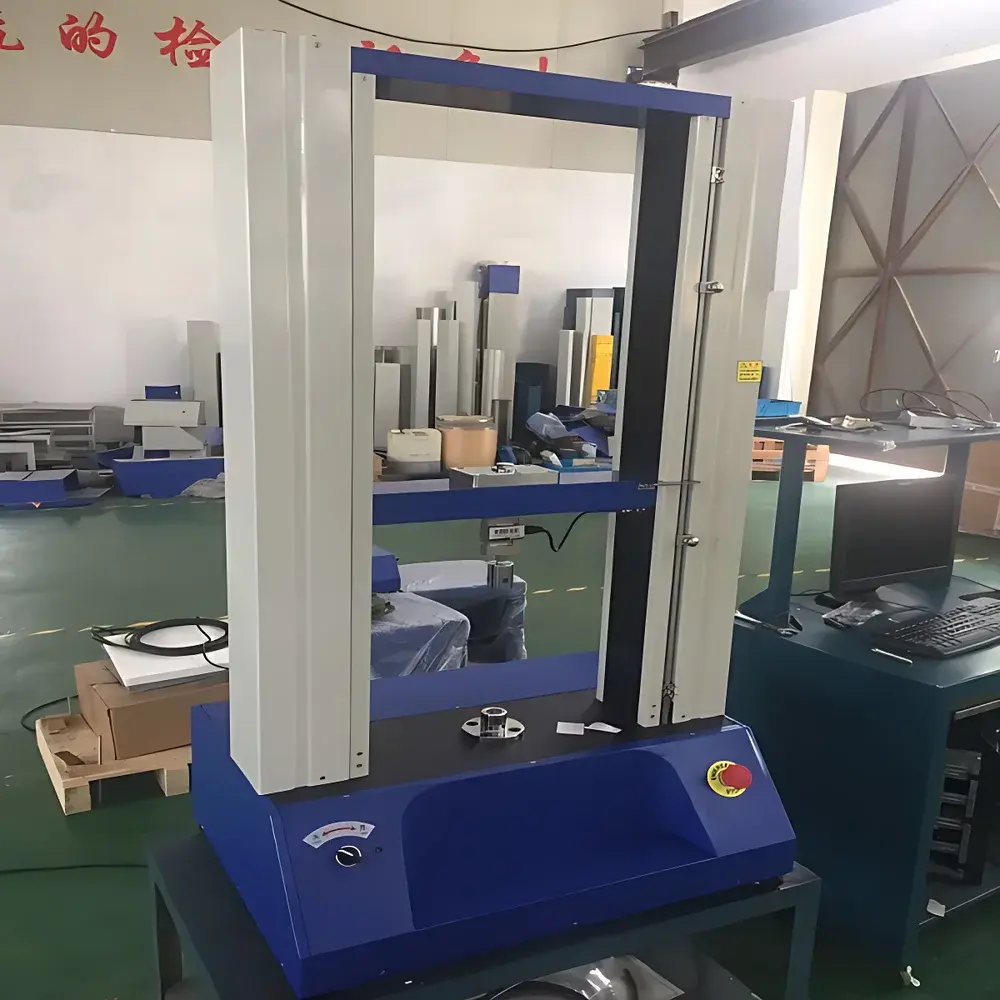
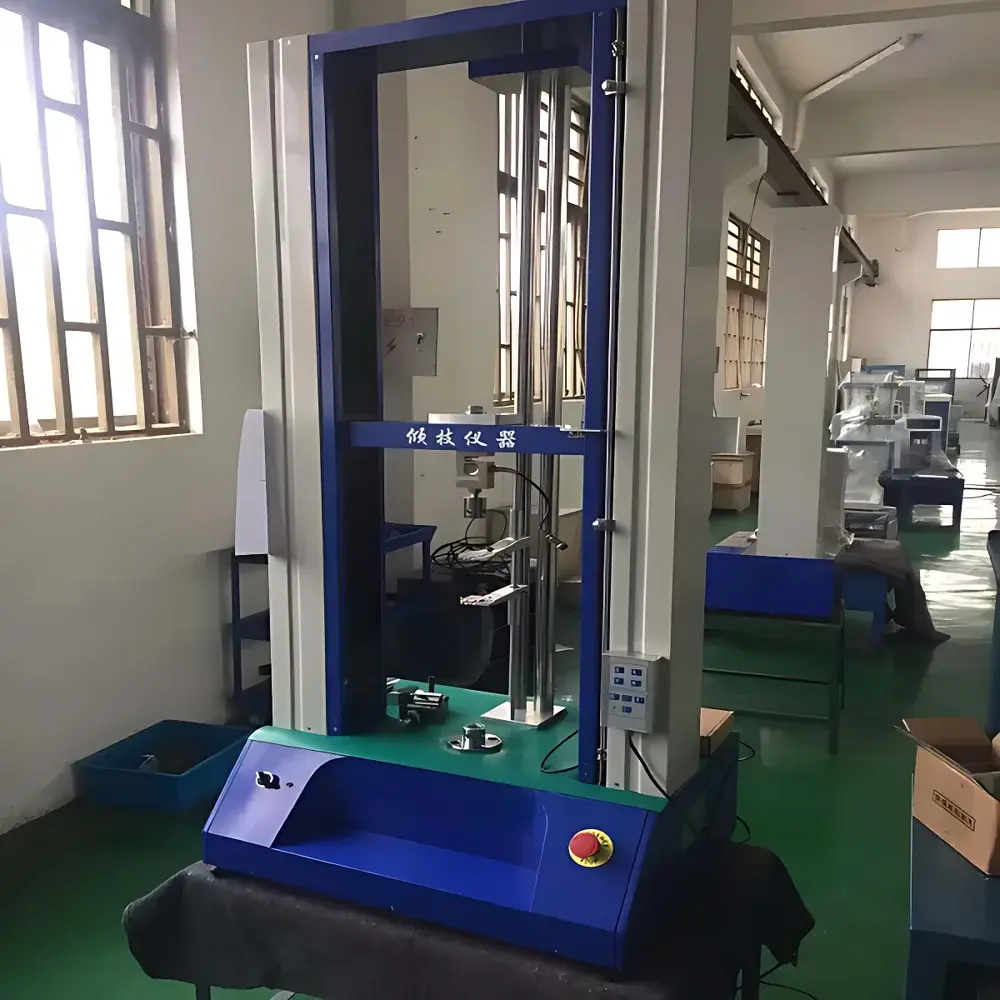
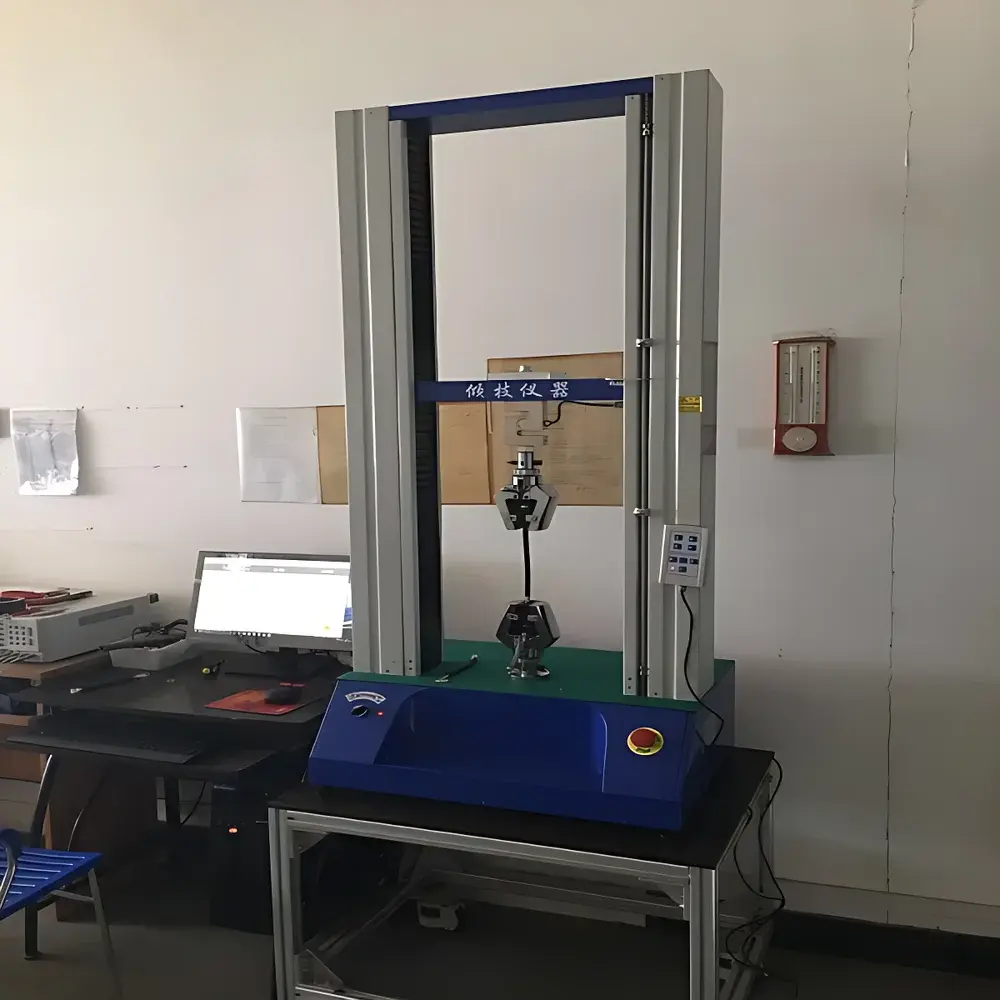
QJ211S Tensile Testing Machine by Qingji
| Brand | Qingji |
|---|---|
| Origin | Shanghai, China |
| Model | QJ211S |
| Maximum Load Capacity | 30 kN |
| Load Measurement Range | 0–30 kN |
| Load Accuracy | ±0.5% of reading |
| Crosshead Travel | 800 mm (excluding fixtures) |
| Displacement Resolution | 0.001 mm |
| Effective Test Width | 420 mm |
| Speed Range | 0.001–500 mm/min |
| Speed Accuracy | ±0.5% of set value |
| Displacement Accuracy | ±0.5% of reading |
| Deformation Measurement Accuracy | ±0.5% of reading |
| Power Supply | 750 W |
| Dimensions (W×D×H) | 700 × 420 × 1600 mm |
| Weight | 145 kg |
Overview
The QJ211S Tensile Testing Machine is a microprocessor-controlled universal testing system engineered for precision mechanical property evaluation of metallic, polymeric, composite, and elastomeric materials under uniaxial loading conditions. It operates on the fundamental principle of controlled displacement or load-controlled actuation, where force is applied via a high-rigidity dual-column frame and measured using a calibrated load cell, while axial displacement and deformation are captured via high-resolution encoder-based motion tracking. Designed in accordance with ISO 7500-1 (Class 0.5 accuracy), ASTM E4, and GB/T 228.1–2021 standards, the system delivers traceable, repeatable, and reproducible tensile, compression, flexural, shear, tear, and fatigue test data — essential for R&D validation, quality control (QC), and regulatory compliance in manufacturing and academic laboratories.
Key Features
- High-precision load measurement system with ±0.5% full-scale accuracy across the entire 0–30 kN range, supported by a 300,000-count internal resolution A/D converter and no-range-switching architecture for consistent sensitivity at all loads.
- Adjustable crosshead speed from 0.001 to 500 mm/min, digitally regulated with closed-loop feedback to maintain ±0.5% speed fidelity — enabling quasi-static to high-rate mechanical characterization.
- 800 mm effective vertical travel (excluding grips), accommodating elongation-intensive specimens such as thermoplastic films, rubber compounds, and fiber-reinforced composites.
- Dual-mode positioning: motorized fast/slow speed control with jog functionality for rapid specimen alignment and fine-tuning prior to test initiation.
- Integrated safety architecture including electronic limit switches, overload protection (auto-hold at 110% of rated capacity), and programmable emergency stop logic compliant with ISO 13850.
- Robust steel frame construction (700 × 420 × 1600 mm; 145 kg) ensures minimal deflection under load and long-term dimensional stability during repeated calibration cycles.
Sample Compatibility & Compliance
The QJ211S supports standardized and custom specimen geometries through interchangeable mechanical wedge-action, pneumatic, or hydraulic grips — configurable per ASTM D638, ISO 527, ISO 6892-1, ASTM D790, and GB/T 1040 series requirements. Optional extensometers (contact or non-contact) enable strain-controlled protocols meeting ISO 527-2 and ASTM E83 Class B-2 specifications. The system is fully compatible with GLP/GMP environments when paired with audit-trail-enabled software; raw test data files retain timestamped metadata, operator ID, environmental conditions (if interfaced with external sensors), and instrument calibration status — supporting FDA 21 CFR Part 11 readiness upon configuration.
Software & Data Management
Controlled via Windows-based proprietary software, the QJ211S provides real-time graphical display of stress–strain, load–displacement, and time-based curves with dynamic zoom, overlay, differential analysis, and derivative calculation functions. All datasets are stored in ASCII-compatible .csv and proprietary binary formats, allowing direct import into MATLAB, Python (NumPy/Pandas), or statistical analysis platforms. Users may edit, annotate, merge, or reprocess historical curves without retesting; export options include vector-based PDF, PNG, and Excel-ready reports with customizable templates aligned to internal SOPs or third-party accreditation bodies (e.g., CNAS, UKAS). Software update logs and user-access permissions are maintained for full traceability.
Applications
- Tensile strength, yield point, modulus of elasticity, and elongation at break determination per ISO 527 and ASTM D638.
- Compression testing of foams, ceramics, and structural adhesives per ASTM D3574 and ISO 844.
- Three-point bending evaluation of plastics and laminates per ISO 178 and ASTM D790.
- Tear propagation resistance (e.g., trouser tear, pant tear) for elastomers and thin films per ISO 34-1 and ASTM D624.
- Cyclic low-frequency fatigue assessment up to 5 Hz with programmable hold segments and load reversal profiles.
- Quality assurance screening for incoming raw materials, in-process verification, and final product release in automotive, medical device, packaging, and aerospace supply chains.
FAQ
What standards does the QJ211S comply with for force calibration?
The system meets ISO 7500-1 Class 0.5 requirements and is supplied with factory calibration documentation traceable to national metrology institutes.
Can the machine be integrated with an external environmental chamber?
Yes — the controller supports analog I/O and RS-485 communication for synchronized temperature/humidity chamber control and data acquisition.
Is software validation support available for regulated industries?
Upon request, IQ/OQ documentation packages and 21 CFR Part 11-compliant configuration services are provided for pharmaceutical and medical device clients.
What maintenance is required during the first year of operation?
Routine verification of load cell linearity, crosshead alignment, and grip jaw wear is recommended quarterly; annual recalibration is advised for ISO/IEC 17025 compliance.
Are replacement load cells and grips available as spare parts?
All mechanical and sensor components are stocked globally; standard grips ship within 5 business days; custom fixtures require 3–4 weeks lead time.
Related Products



