
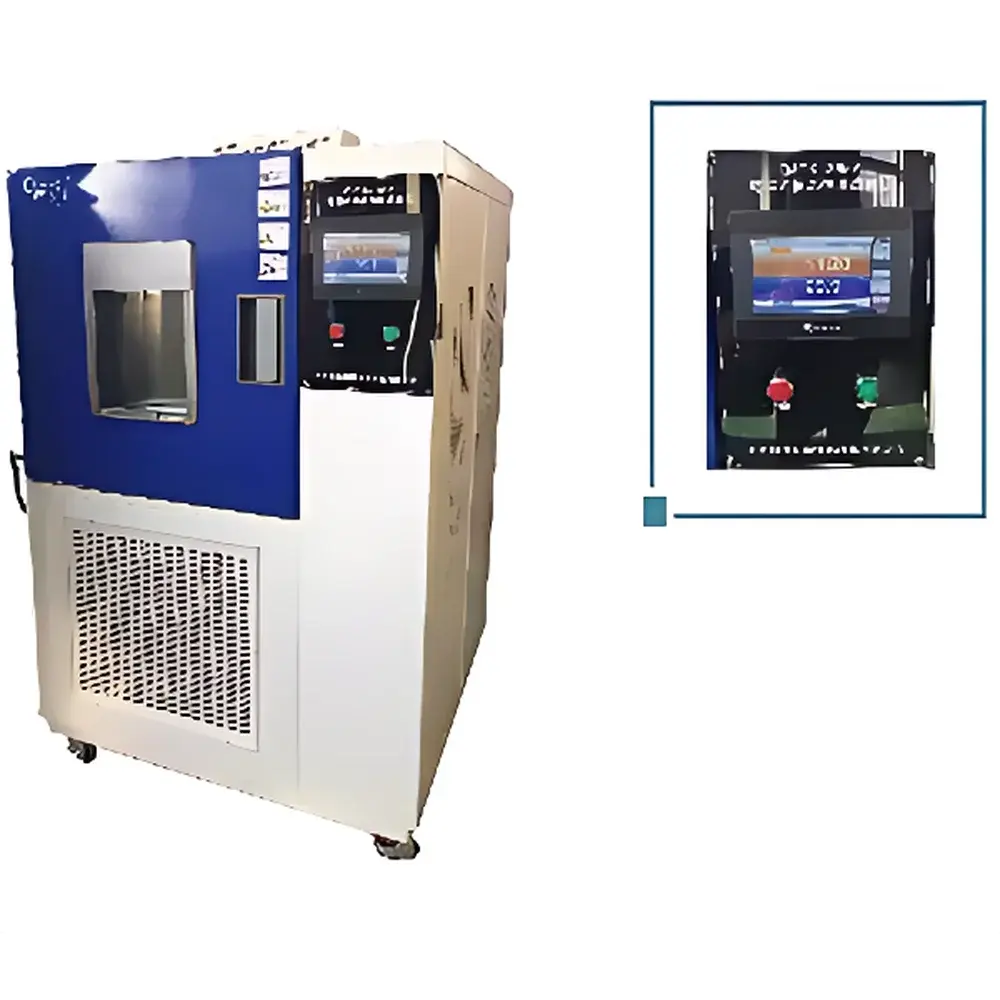
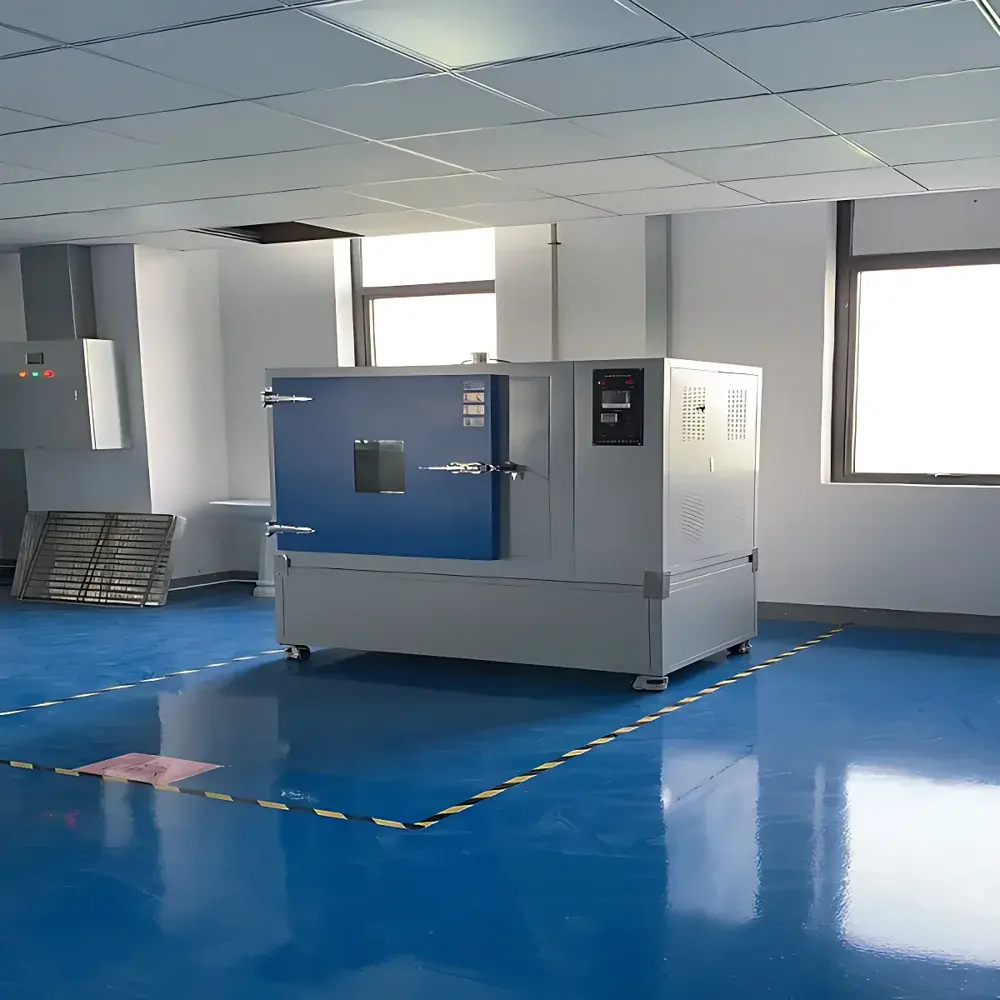
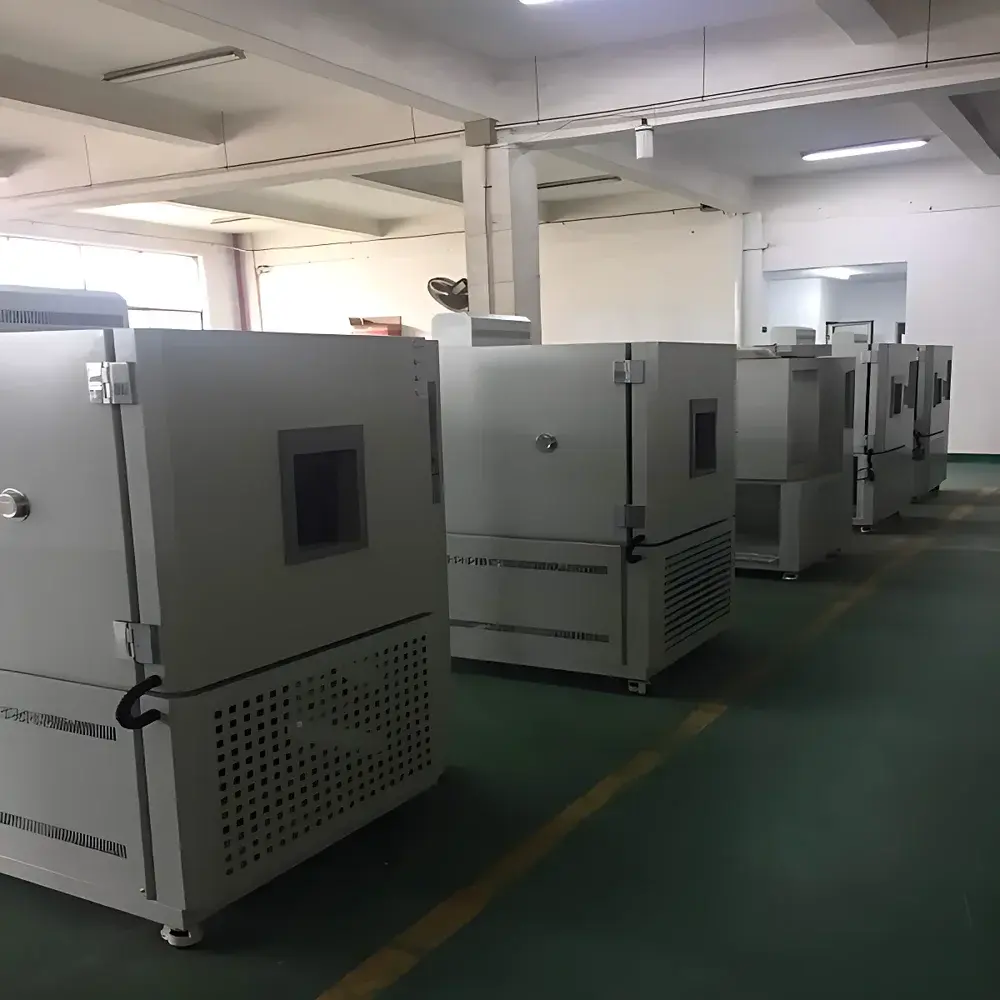
Qingji QJCK-562A Temperature and Humidity Controlled Environmental Test Chamber
| Brand | Qingji |
|---|---|
| Origin | Shanghai, China |
| Model | QJCK-562A |
| Chamber Type | Upright |
| Cooling Method | Air-cooled |
| Temperature Range | -40 °C to +150 °C |
| Humidity Range | 30–98 %RH |
| Temperature Uniformity | ≤ ±2 °C |
| Temperature Fluctuation | ±1 °C (high temp), ±2 °C (low temp) |
| Humidity Uniformity | ≤ ±2 %RH |
| Humidity Fluctuation | ±2 %RH |
| Internal Dimensions (W×D×H) | 450×400×350 mm |
| Power Supply | 220 V AC |
| Rated Power | 2.0 kW |
| Net Weight | ~180 kg |
Overview
The Qingji QJCK-562A Temperature and Humidity Controlled Environmental Test Chamber is an upright, air-cooled laboratory-grade environmental simulation system engineered for precise, repeatable conditioning of materials and components under controlled thermal and hygrometric conditions. It operates on the principle of forced-air convection combined with integrated refrigeration, electric heating, and steam-based humidification to maintain stable setpoints across a wide operational envelope. Designed in accordance with fundamental requirements of IEC 60068-2 series standards for environmental testing, the chamber supports static (steady-state) and dynamic (ramp-and-soak) profiles to evaluate material stability, dimensional integrity, functional reliability, and failure mechanisms under accelerated aging or stress screening protocols. Its architecture prioritizes thermal mass management, airflow homogeneity, and sensor redundancy—critical attributes for achieving high reproducibility in qualification tests mandated by automotive OEMs, electronics manufacturers, and medical device suppliers.
Key Features
- Wide operational range: -40 °C to +150 °C temperature control with simultaneous humidity regulation from 30 %RH to 98 %RH
- Air-cooled refrigeration system with optimized heat exchanger design for stable low-temperature performance and reduced maintenance intervals
- Dual-sensor feedback loop for independent monitoring of temperature and relative humidity, supporting real-time deviation correction
- High-resolution digital controller with programmable profile capability: up to 120 test programs, each comprising up to 1200 individual segments
- Internal chamber constructed from stainless steel 304 with seamless welding, corrosion-resistant insulation, and double-glazed observation window with anti-fog coating
- Compliance-ready data logging interface supporting time-stamped parameter records at user-defined intervals (1 s to 60 min)
- Over-temperature, over-humidity, and compressor overload protection circuits aligned with EN 61000-6-2 EMC and EN 61000-6-4 emission standards
Sample Compatibility & Compliance
The QJCK-562A accommodates samples up to 450 mm (W) × 400 mm (D) × 350 mm (H), including PCB assemblies, polymer specimens, pharmaceutical packaging, lithium-ion battery cells, and optical components. Its internal airflow pattern ensures uniform exposure without localized hot/cold spots—validated per ISO 16750-4 (road vehicles) and MIL-STD-810H Method 502.7 (temperature shock). The chamber meets baseline requirements for ASTM D4332 (conditioning of plastics), ASTM E145 (gravity-convection ovens), and IEC 60068-2-1/2/14/30 for cold, dry heat, temperature cycling, and damp heat testing. While not pre-certified for GLP or GMP environments, its hardware architecture—including non-volatile memory retention, audit trail-capable controller logs, and configurable alarm escalation—supports validation documentation per FDA 21 CFR Part 11 when integrated with compliant third-party software.
Software & Data Management
The embedded controller provides local operation via a 7-inch TFT touchscreen with intuitive icon-driven navigation. Data export is supported via USB 2.0 port in CSV format, enabling traceability and post-processing in Excel or statistical analysis platforms (e.g., JMP, Minitab). Optional RS-485/Modbus RTU interface allows integration into centralized facility monitoring systems (SCADA/BMS). Firmware supports password-protected parameter locking, user-level access control (operator/admin), and automatic generation of daily calibration verification reports. All logged data includes timestamp, setpoint, actual reading, and status flags—structured to align with internal quality system requirements for record retention and audit readiness.
Applications
- Accelerated life testing of elastomers, adhesives, and conformal coatings under combined thermal-hygrometric stress
- Pre-conditioning of electronic subassemblies prior to HALT/HASS screening
- Stability assessment of active pharmaceutical ingredients (APIs) and primary packaging per ICH Q1 guidelines
- Validation of thermal expansion coefficients in composite laminates used in aerospace structures
- Environmental stress screening (ESS) of automotive ECUs according to AEC-Q200 specifications
- Moisture absorption/desorption kinetics studies in porous ceramics and battery separator membranes
FAQ
What is the maximum ramp rate achievable between -20 °C and +100 °C?
Typical heating rate is approximately 2.5 °C/min under no-load conditions; actual ramp performance depends on sample thermal mass and chamber loading.
Does the chamber support humidity control below 30 %RH?
No—the minimum specified humidity range is 30 %RH; dehumidification below this level requires optional desiccant or refrigerant-based dry air purge add-ons.
Is remote monitoring possible without third-party software?
Local USB data export is standard; Ethernet or Wi-Fi connectivity requires optional communication module installation and configuration.
What calibration standards are recommended for routine verification?
NIST-traceable thermohygrometers (e.g., Vaisala HMT337 or Rotronic HC2-S) are advised for quarterly uniformity mapping and daily chamber checks.
Can the QJCK-562A be validated for ISO/IEC 17025 accredited testing?
Yes—when operated with documented SOPs, calibrated reference instruments, and maintained logbooks, it serves as a compliant platform for accredited laboratories performing environmental testing per ISO/IEC 17025 clause 6.4.



