
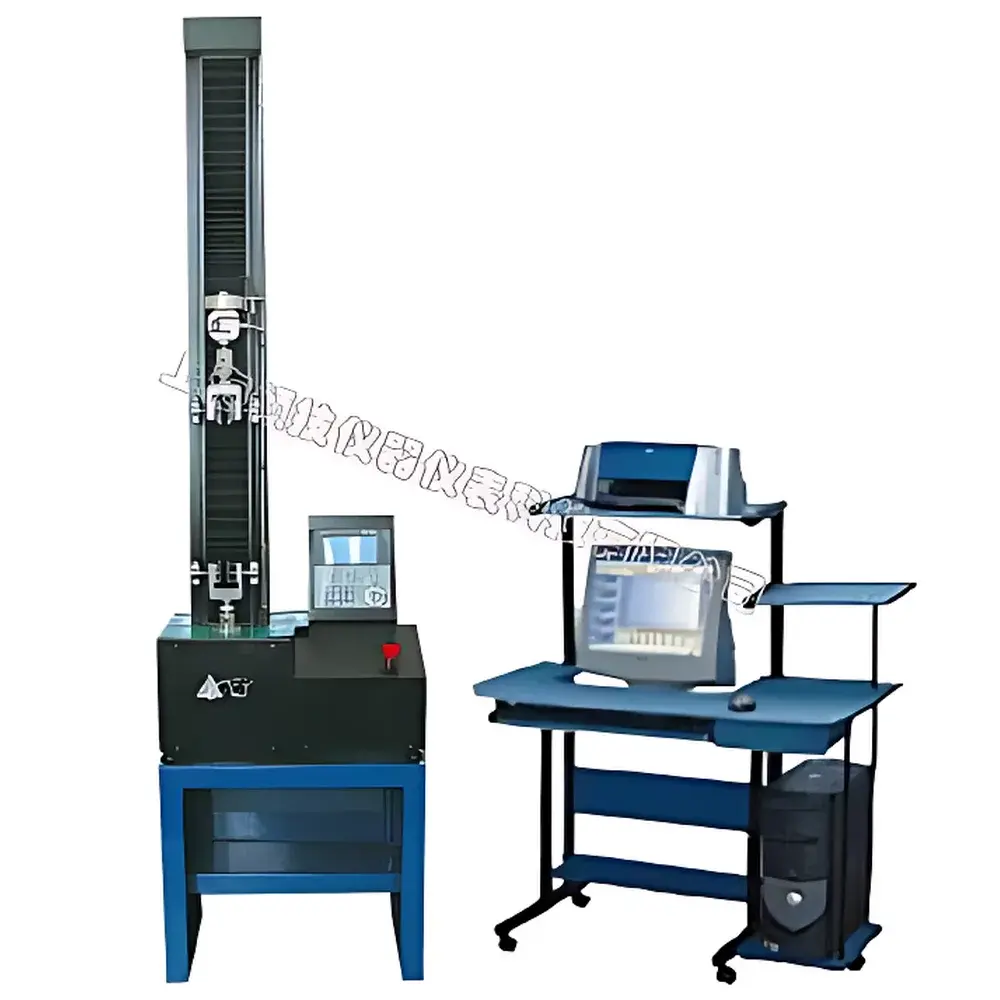
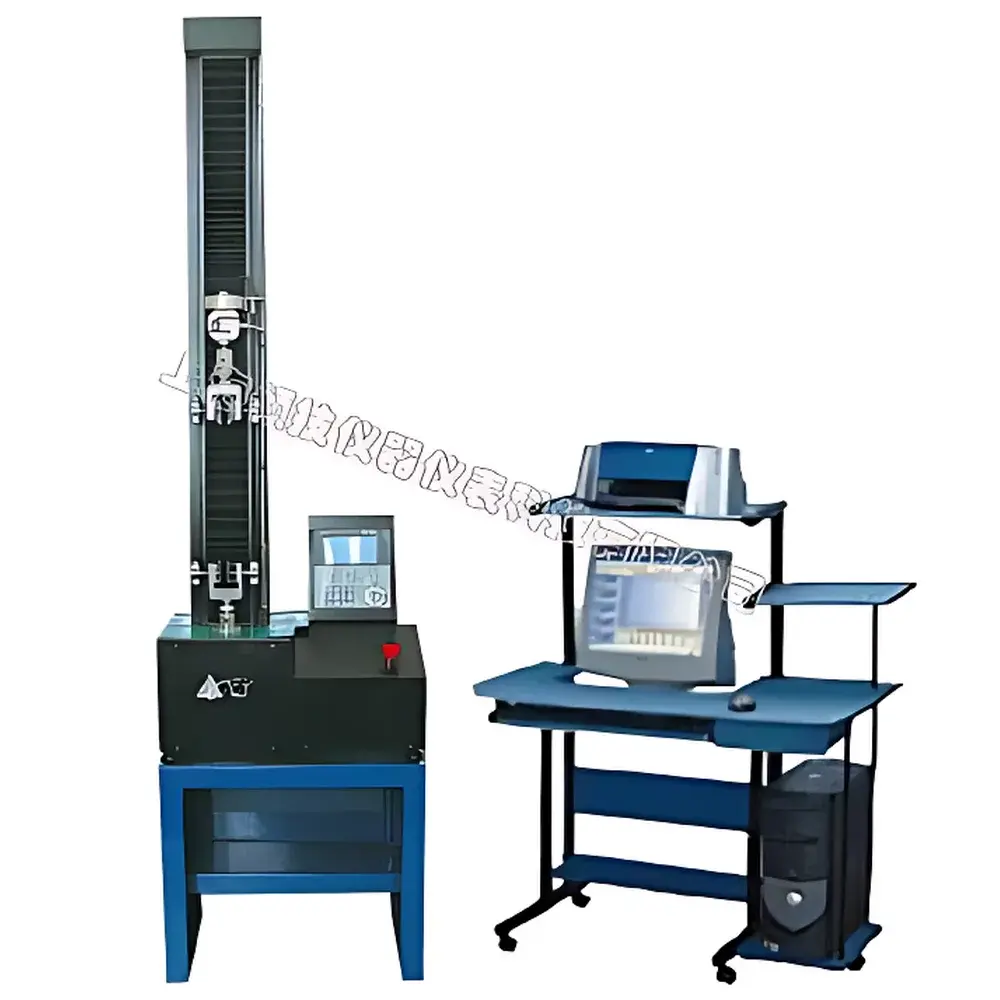
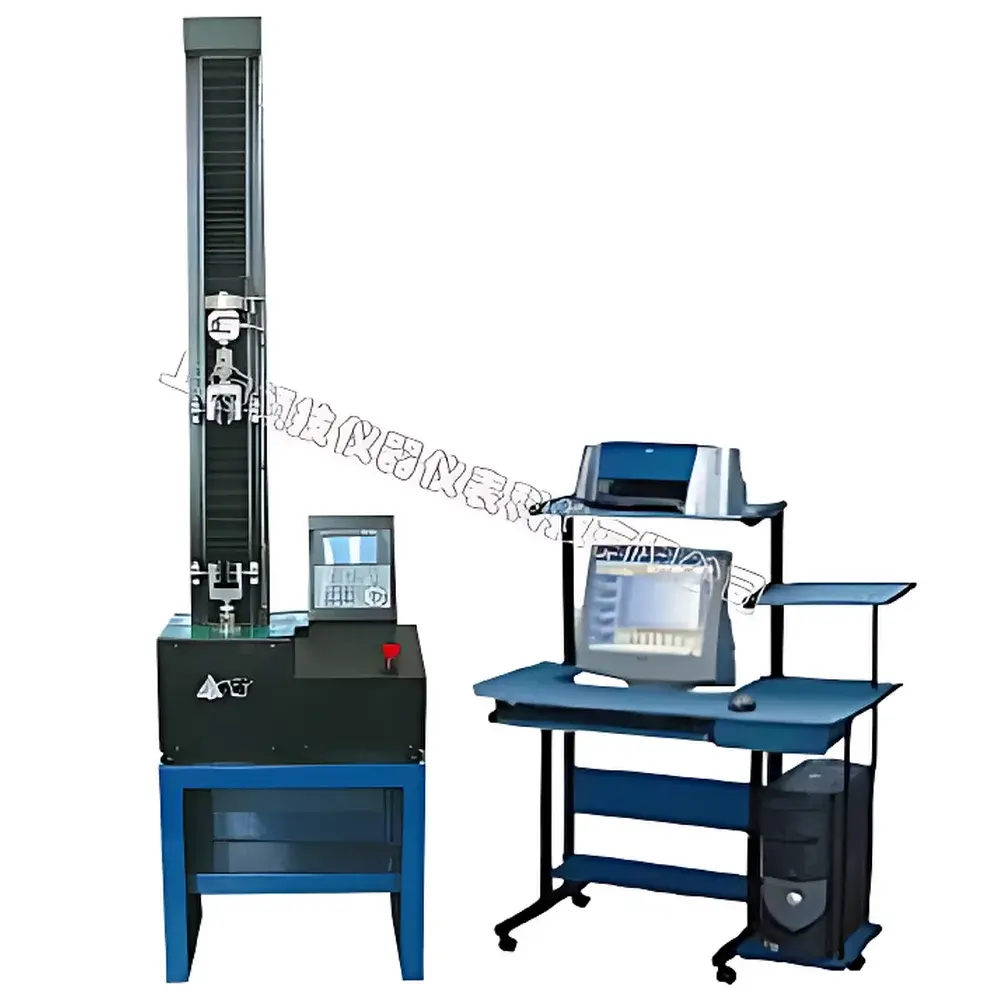
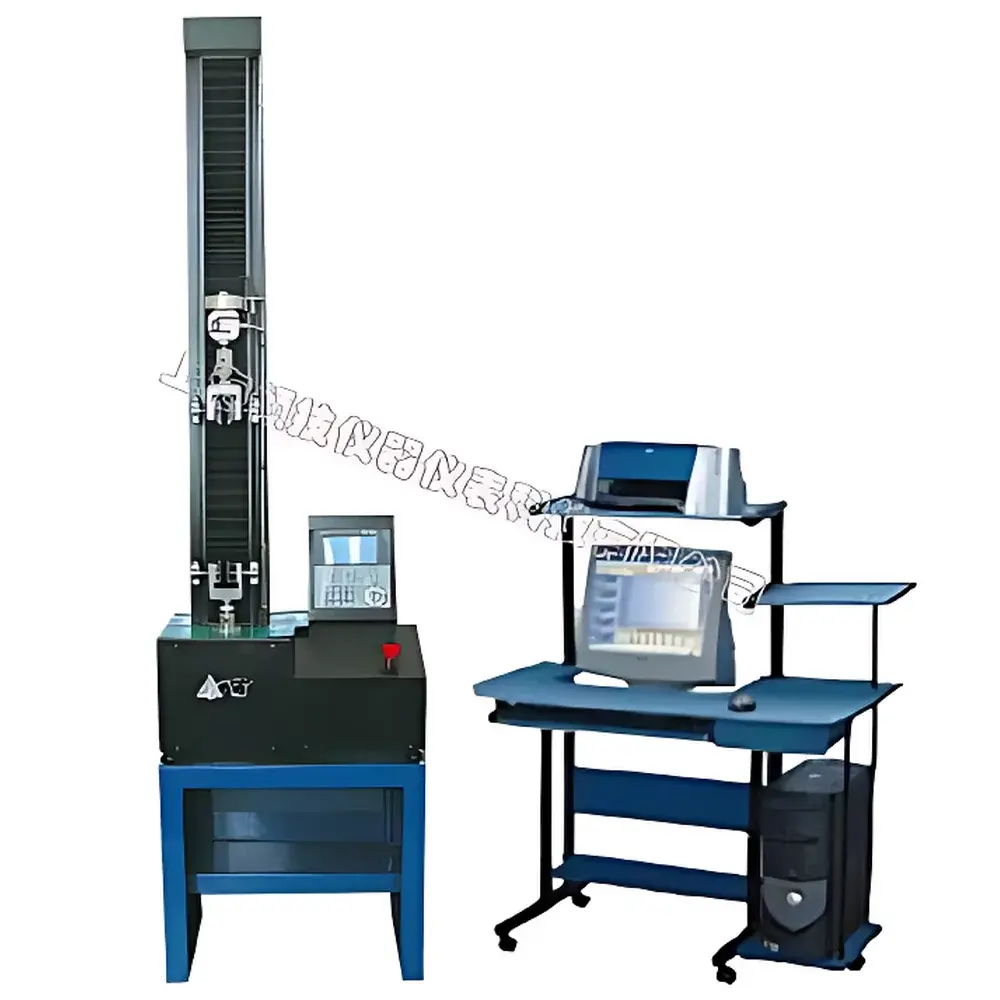
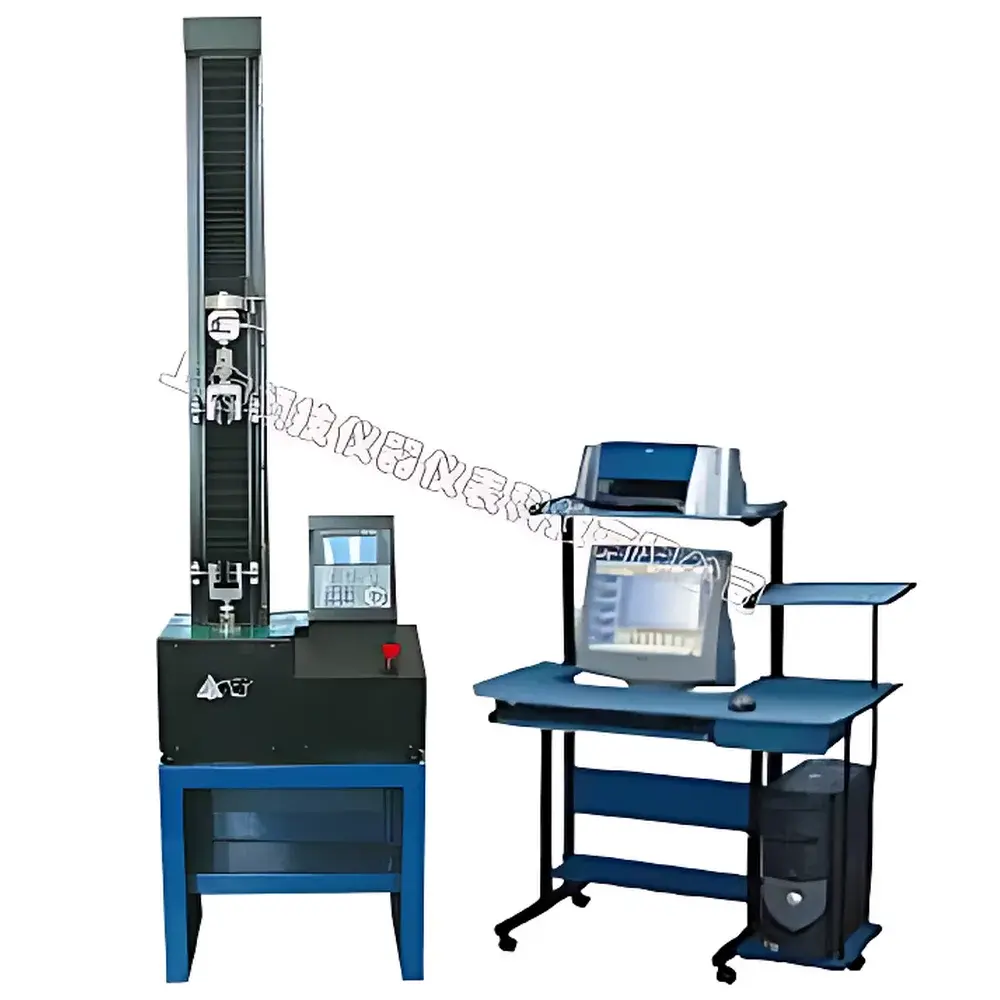
Qinji QJ210A Coal Briquette Bonding Strength Compression Testing Machine
| Brand | Qinji |
|---|---|
| Origin | Shanghai, China |
| Model | QJ210A |
| Max Test Load | 50 kN |
| Load Application Rate | 1 kN/s (adjustable) |
| Platen Spacing Adjustment Range | 1 mm resolution |
| Platen Dimensions | 590 mm (L) × 355 mm (W) |
| Overall Dimensions | 590 × 355 × 1640 mm |
| Weight | ~85 kg |
| Load Cell Accuracy Class | 0.5 |
| Effective Test Width | 150 mm |
| Vertical Travel | 800 mm |
| Speed Range | 0.01–500 mm/min |
| Speed Accuracy | ±0.5% of indicated value |
| Displacement & Strain Measurement Accuracy | ±0.5% of indicated value |
| Load Resolution | 500,000 counts (single-range, no auto-ranging) |
| Force Units | gf, kgf, N, kN, lbf |
| Control System | Panasonic full-digital AC servo controller |
| Load Cell | High-precision U.S.-sourced strain-gauge sensor |
| Safety Features | Software-based overload diagnosis, electronic limit switches, 110% over-load protection |
| Return Mode | Manual or programmable automatic return to initial position |
| Power Supply | 200 V AC, 400 W |
Overview
The Qinji QJ210A Coal Briquette Bonding Strength Compression Testing Machine is a precision-engineered universal testing system designed specifically for the mechanical characterization of coal briquettes and powdered coal agglomerates under uniaxial compressive loading. It operates on the fundamental principle of quasi-static compression testing in accordance with standardized methodologies defined in ASTM D388, ISO 1171, and GB/T 212–2008 (Chinese National Standard for Coal Analysis). The machine applies controlled, monotonic compressive force to cylindrical or cuboidal briquette specimens until structural failure—typically manifested as surface cracking, fragmentation, or plastic deformation—and records the peak load, corresponding displacement, and stress–strain response. Its architecture integrates a rigid dual-column frame, high-stiffness platens, and closed-loop servo control to ensure minimal compliance, high reproducibility (<±0.8% RSD across replicate tests), and traceable force measurement per ISO/IEC 17025 requirements.
Key Features
- High-accuracy load measurement system compliant with ISO 7500-1 Class 0.5, featuring a U.S.-sourced precision strain-gauge load cell with 500,000 internal resolution and no range-switching artifacts.
- Full-digital AC servo drive from Panasonic ensures stable, low-noise actuation across the entire speed range (0.01–500 mm/min), with speed accuracy maintained within ±0.5% of setpoint.
- Dual-mode platen movement: independent fast (for setup) and fine-adjustment (1 mm resolution) modes enable precise specimen alignment and repeatable initial contact positioning.
- Integrated safety architecture includes hardware-based electronic limit switches, real-time software diagnostics, and automatic shutdown at 110% of full-scale load capacity.
- Modular fixture interface supports custom tooling—including flat compression platens, groove inserts for edge-loading configurations, and confinement sleeves—for standardized and application-specific test protocols.
- Robust mechanical construction: heavy-duty steel frame (85 kg mass) minimizes vibrational coupling and maintains geometric stability during high-force compression cycles up to 50 kN.
Sample Compatibility & Compliance
The QJ210A accommodates standard briquette geometries per ASTM D388 (e.g., 32 mm diameter × 25 mm height cylinders) and non-standard shapes including rectangular blocks (up to 150 mm width × 800 mm height envelope). It supports both dry and conditioned samples (relative humidity ≤60%, ambient temperature 20±2°C), consistent with coal handling protocols outlined in ISO 13909-2. All force, displacement, and time data are recorded in SI units (N, mm, s) with optional unit conversion (kgf, lbf, gf), enabling direct comparison against regulatory benchmarks used by energy certification bodies and industrial QA labs. The system meets electromagnetic compatibility (EMC) requirements per IEC 61326-1 and electrical safety standards per IEC 61010-1.
Software & Data Management
The instrument operates via proprietary Windows-based acquisition software compatible with Windows 10/11 (64-bit), supporting real-time graphing of load vs. displacement, automatic yield point detection, and export of raw ASCII or CSV files for post-processing in MATLAB, Python (NumPy/Pandas), or statistical packages. Audit trails include operator ID, timestamp, calibration certificate ID, and environmental metadata—fully compliant with GLP documentation practices. Optional integration with LIMS platforms is enabled through TCP/IP or RS-232 interfaces. Data integrity safeguards include write-protected storage paths, user-level access controls (admin/operator/guest), and optional 21 CFR Part 11-compliant electronic signatures when paired with validated third-party software modules.
Applications
- Quantification of bonding strength in metallurgical and domestic briquettes produced from bituminous, anthracite, or lignite-derived powders.
- Evaluation of binder efficacy (e.g., starch, molasses, lignosulfonate, or synthetic polymers) during R&D of low-emission solid fuels.
- Quality assurance testing in coal processing plants prior to shipment, ensuring compliance with contractual calorific value and mechanical durability thresholds.
- Research into thermal-mechanical degradation behavior: sequential compression testing before/after controlled oven aging (200–400°C) simulates transport and storage conditions.
- Support for ISO 5069-2 (coal agglomeration testing) and national standards such as MT/T 748–2018 (Chinese standard for briquette mechanical strength).
FAQ
What standards does the QJ210A comply with for coal briquette testing?
It supports ASTM D388, ISO 1171, ISO 5069-2, GB/T 212–2008, and MT/T 748–2018 test protocols through configurable test templates and reporting formats.
Can the system be calibrated traceably to national metrology institutes?
Yes—load cell calibration certificates are issued with NIST-traceable references; annual recalibration services include uncertainty budgets per ISO/IEC 17025 Annex A.
Is remote technical support available for international users?
Qinji provides English-language remote diagnostics, firmware updates, and video-assisted commissioning via TeamViewer or AnyDesk, with SLA-backed response times under 4 business hours.
Does the machine require compressed air or hydraulic fluid?
No—it is fully electromechanical, requiring only single-phase 200 V AC power (400 W max); no ancillary utilities are needed.
How is specimen alignment verified prior to testing?
The system includes a built-in digital level indicator and adjustable leveling feet; optional laser alignment kit (QJ-AL-01) provides ±0.05° angular verification for critical repeatability studies.



