
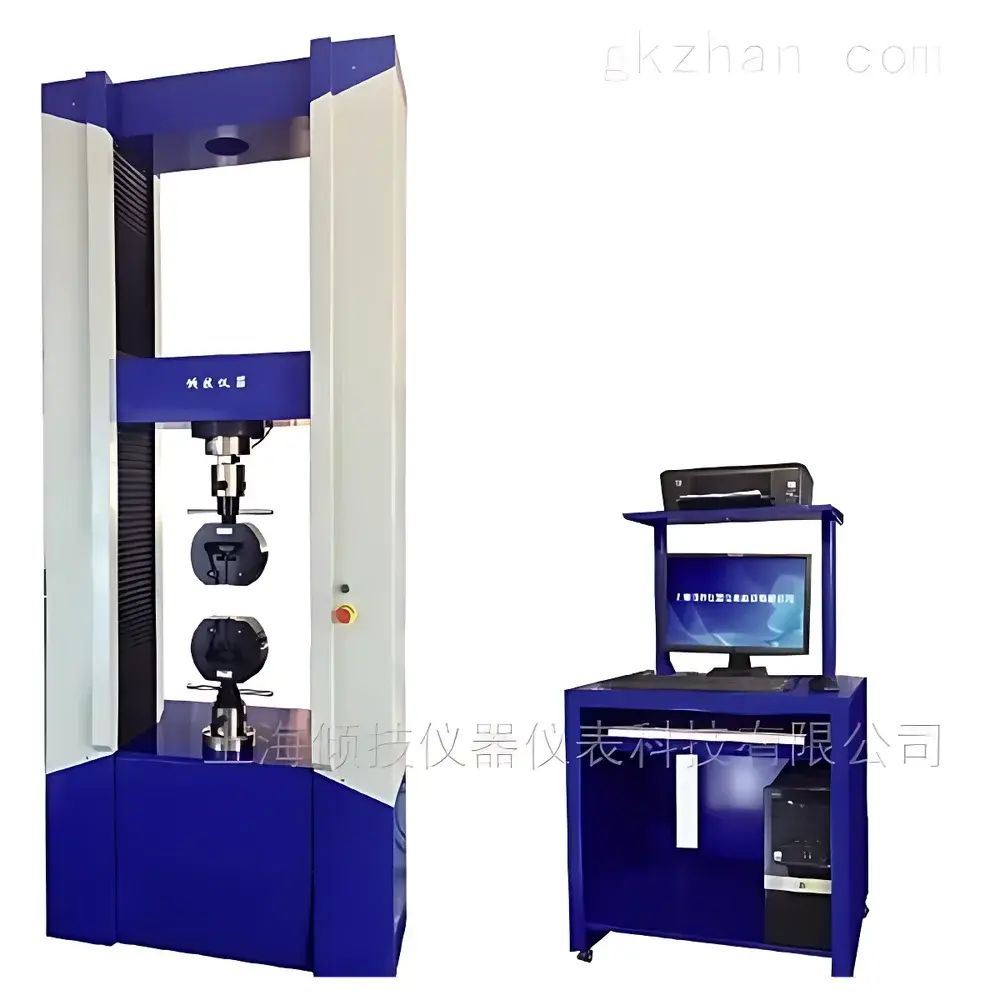
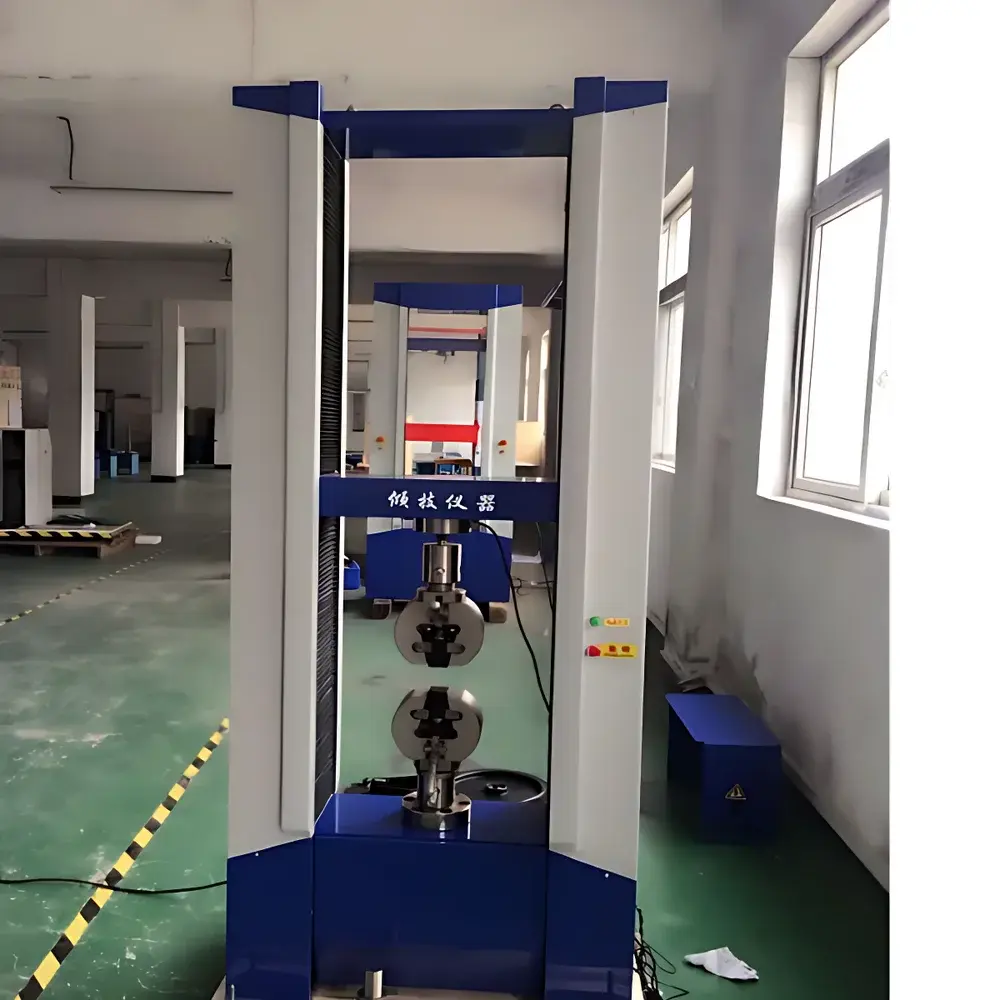
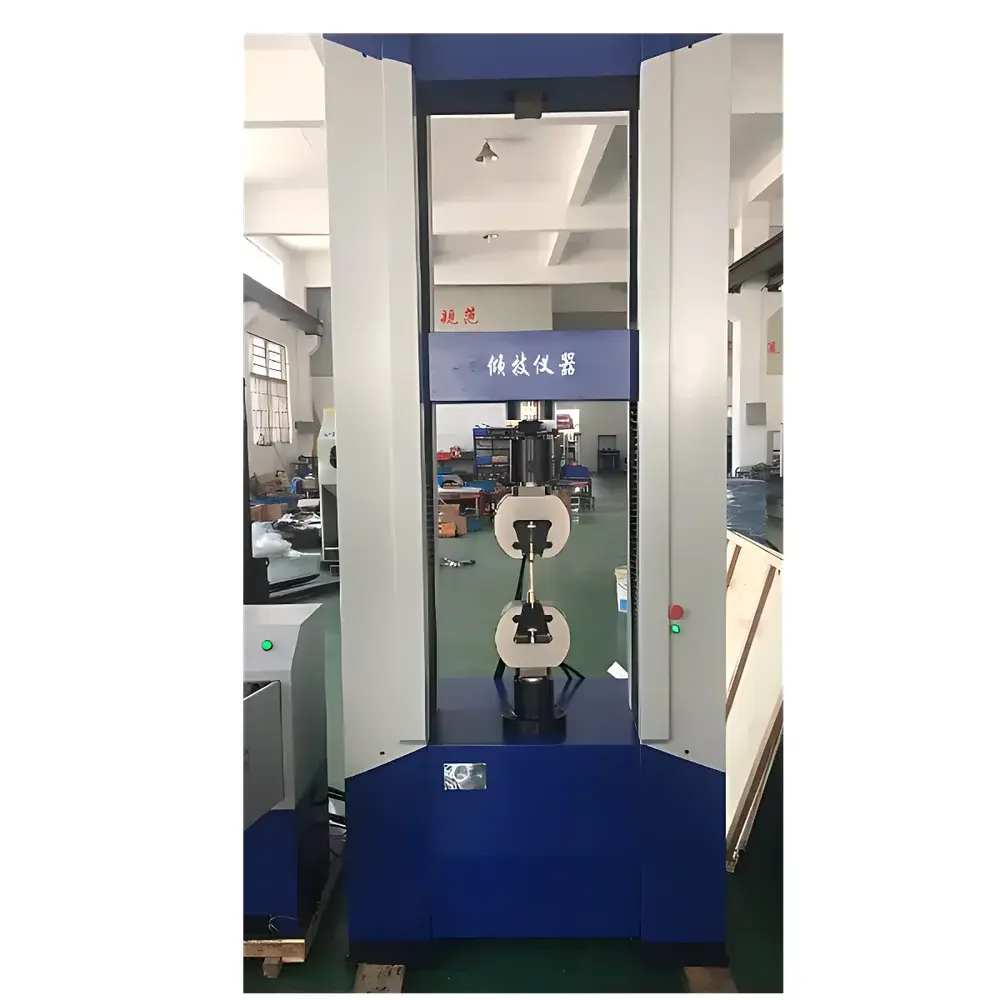
QJ212 Universal Testing Machine by Qingji
| Brand | Qingji |
|---|---|
| Model | QJ-212 |
| Type | Electromechanical Universal Testing Machine |
| Load Capacity | 0.02–500 kN |
| Load Accuracy | ±0.5% |
| Effective Test Width | 500 mm |
| Effective Tensile Stroke | 600 mm or 800 mm |
| Test Speed Range | 0.001–1000 mm/min |
| Speed Accuracy | ±0.5% of reading |
| Displacement Measurement Accuracy | ±0.5% of reading |
| Strain/Deformation Measurement Accuracy | ±0.5% of reading |
| Force Resolution | 1/250,000 (full-scale, no range switching) |
| Machine Dimensions (W×D×H) | 1000 × 680 × 2450 mm |
| Machine Weight | 1250 kg |
| Safety Features | Electronic limit protection, overload protection (10% above rated load), manual/auto return, stepless speed control for crosshead movement |
Overview
The Qingji QJ212 Universal Testing Machine is an electromechanical static testing system engineered for high-precision mechanical property evaluation of metallic, polymeric, composite, ceramic, and elastomeric materials. Based on the principle of controlled axial force application via servo-controlled ball-screw actuation, the system complies with fundamental mechanics-of-materials test methodologies defined in ISO 6892-1 (tensile testing of metallic materials), ASTM E8/E8M, ASTM D638 (plastics), ASTM D790 (flexural properties), ISO 178 (flexure), ISO 14129 (shear), and EN 10002-1. Its dual-column rigid frame architecture ensures minimal deflection under full-load conditions, supporting repeatable, traceable, and GLP-compliant data acquisition across tensile, compression, bending, peel, shear, and ring stiffness test modes. The machine integrates a high-stiffness load cell with digital signal conditioning, enabling stable force measurement throughout its full 0.02–500 kN range without range-switching artifacts.
Key Features
- High-resolution force measurement: 1 part in 250,000 full-scale resolution, maintained uniformly across the entire load range—no auto-ranging or internal gain switching required.
- Precise motion control: Crosshead speed adjustable from 0.001 to 1000 mm/min with ±0.5% accuracy relative to setpoint; dual-speed motorized lift for rapid positioning and fine-load alignment.
- Robust mechanical design: Cast-iron base and reinforced steel columns deliver structural rigidity exceeding 150 kN/mm lateral stiffness, minimizing compliance errors during high-force testing.
- Comprehensive safety architecture: Dual-redundant electronic limit switches, programmable overload cutoff (triggered at 110% of selected capacity), emergency stop circuitry compliant with IEC 60204-1, and automatic return-to-initial-position functionality post-test.
- Modular extensometer interface: Standard RS-422 and analog voltage output ports support both clip-on and non-contact strain measurement devices per ASTM E83 and ISO 9513 requirements.
- Thermally stable load cell housing: Internal temperature compensation maintains force accuracy across ambient variations from 10 °C to 40 °C.
Sample Compatibility & Compliance
The QJ212 accommodates specimens conforming to standardized geometries specified in ISO, ASTM, DIN, and JIS protocols—including flat sheet coupons (up to 500 mm wide), round bars (up to Ø40 mm), pipes, laminates, adhesively bonded joints, and corrugated tubing. Its open-test-zone configuration allows integration with environmental chambers (−70 °C to +300 °C), humidity control enclosures, and video extensometry systems. All firmware and software modules are designed to meet audit-readiness requirements for ISO/IEC 17025-accredited laboratories. Data integrity safeguards include electronic signatures, user-level access controls, and immutable audit trails aligned with FDA 21 CFR Part 11 principles where applicable.
Software & Data Management
Control and analysis are performed using Qingji’s proprietary Windows-based TestMaster v4.x software suite. The platform provides real-time graphical display of stress–strain, load–displacement, and time-based curves with synchronized multi-channel acquisition (load, displacement, extensometer, temperature). Users may perform post-test operations including curve overlay, segment extraction, yield point detection (0.2% offset, tangent, or automatic inflection), modulus calculation (secant, chord, or initial tangent), and fracture energy integration. Raw data exports to CSV, Excel, XML, and PDF formats support third-party statistical analysis (e.g., JMP, Minitab) and LIMS integration. All test methods are stored as reusable templates with configurable pass/fail criteria and automated report generation compliant with ISO 14289-1 (PDF/A) archival standards.
Applications
- Tensile characterization of structural steels, aluminum alloys, and titanium grades per ASTM E8 and ISO 6892-1.
- Compression testing of concrete cylinders, polymer foams, and biomedical scaffolds per ASTM C39 and ISO 844.
- Three-point and four-point flexural evaluation of composites and thermoplastics per ASTM D790 and ISO 178.
- Peel and tack testing of pressure-sensitive adhesives per ASTM D903 and PSTC-107.
- Ring stiffness determination for HDPE and PVC pipes per ISO 9969 and ASTM D2412.
- Quality control verification in automotive component manufacturing, aerospace fastener validation, and medical device packaging integrity assessment.
FAQ
What standards does the QJ212 support out-of-the-box?
The system includes preconfigured test methods for ISO 6892-1, ASTM E8/E8M, ASTM D638, ASTM D790, ISO 178, and ASTM D2412, with editable parameters to accommodate custom or emerging specifications.
Can the QJ212 be integrated into an existing LIMS or MES environment?
Yes—via OPC UA and TCP/IP protocols, the controller supports bidirectional communication with laboratory information management systems and manufacturing execution systems for automated job dispatch and result ingestion.
Is third-party calibration certification available?
Qingji provides factory calibration certificates traceable to NIM (China National Institute of Metrology); optional UKAS or DAkkS-accredited calibration services are arranged through authorized regional partners.
What maintenance intervals are recommended for long-term accuracy?
Annual verification of force and displacement transducers is advised; routine inspection of ball-screw lubrication, belt tension, and limit switch function should occur every 6 months or after 500 operational hours.
Does the system comply with electromagnetic compatibility (EMC) directives?
Yes—the QJ212 meets EN 61326-1:2013 for laboratory equipment EMC and carries CE marking for operation within the European Economic Area.
Related Products



