
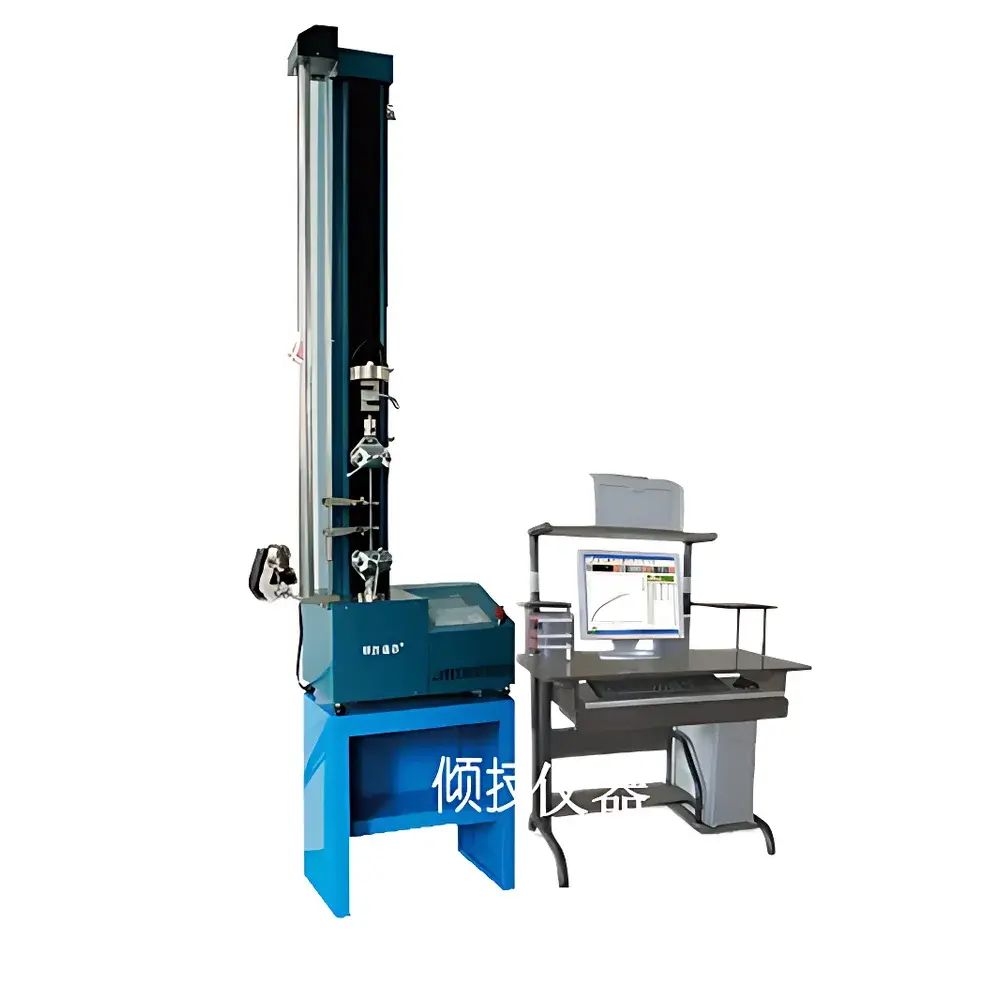
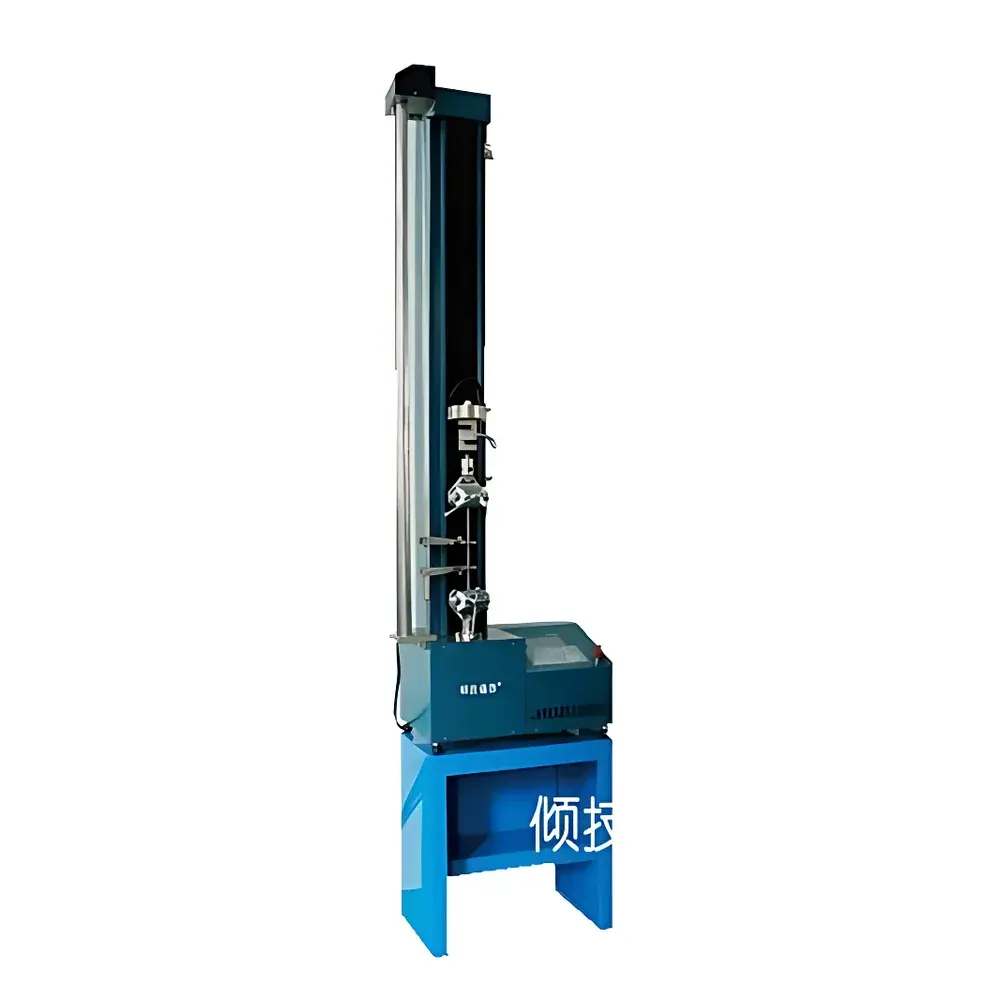
Qinji QJ210A 90-Degree Peel Tester
| [Brand | Qinji |
|---|---|
| Origin | Shanghai, China |
| Model | QJ210A |
| Instrument Type | Electromechanical Tensile Testing Machine |
| Maximum Load Capacity | Up to 5000 N |
| Accuracy Class | 0.5 |
| Effective Test Width | 150 mm |
| Effective Stroke | 500 mm |
| Test Speed Range | 0.01–300 mm/min |
| Speed Accuracy | ±0.5% of indicated value |
| Force Resolution | 500,000 counts (full-scale, no range switching) |
| Displacement Accuracy | ±0.5% of indicated value |
| Load Cell | High-precision U.S.-sourced sensor |
| Controller | Panasonic full-digital AC servo drive system |
| Control Mode | Full-digital closed-loop control (constant load, constant strain, constant displacement) |
| Power | 200 W |
| Dimensions (L×W×H) | 430 × 315 × 855 mm |
| Net Weight | 45 kg] |
Overview
The Qinji QJ210A 90-Degree Peel Tester is a precision electromechanical tensile testing system engineered for quantitative mechanical characterization of adhesive bonds, laminated structures, coated films, and flexible packaging materials. It operates on the fundamental principle of controlled uniaxial force application—using a high-resolution load cell and servo-driven crosshead—to measure peel resistance at a fixed 90° angle between substrate and adherend. This geometry ensures compliance with standardized peel test methodologies defined in ASTM D903, ISO 8510-2, JIS Z 0237, and GB/T 2790. Unlike general-purpose universal testers, the QJ210A integrates dedicated hardware and software logic optimized for peel-specific parameters: peel front propagation monitoring, real-time force–displacement curve acquisition, and automatic calculation of average and peak peel force per unit width (N/mm). Its modular architecture supports both standalone operation via integrated LCD interface and full PC-based control with traceable data export.
Key Features
- 0.5-class accuracy certified force measurement system with 500,000-count resolution across the full 10 N to 5000 N load range—no manual range switching required.
- Panasonic digital AC servo motor coupled with precision ball-screw transmission and synchronous belt reduction, delivering smooth, low-vibration crosshead motion from 0.01 to 300 mm/min with ±0.5% speed fidelity.
- Integrated dual-mode control: real-time parameter adjustment and live curve visualization on a high-contrast LCD panel; simultaneous full-function operation via Windows-based software with audit trail support.
- Robust mechanical design: rigid aluminum-alloy frame, electrostatically coated enclosure (RAL 7035), and compact footprint (430 × 315 × 855 mm) enabling benchtop deployment in QC labs or production environments.
- Comprehensive safety architecture: electronic end-limit detection, software-based overload cutoff (110% of set maximum load), automatic return-to-start post-test, and dual-speed manual jog controls for rapid sample setup.
- Modular fixture compatibility: standard pneumatic or mechanical clamps for rigid substrates; customizable jaw geometries—including peel-angle alignment guides and roller-assisted peel fixtures—for films, foils, tapes, and medical device laminates.
Sample Compatibility & Compliance
The QJ210A accommodates specimens conforming to standard peel test configurations: single-lap, T-peel, and 90° fixed-angle peel per ISO 8510-2 Annex A. Typical test specimens include pressure-sensitive adhesives (PSAs) on PET, PVC, or aluminum foil; biomedical tapes (e.g., silicone- or acrylic-based); flexible printed circuit laminates; and food-grade laminated pouches. All force, displacement, and time data are acquired at ≥1 kHz sampling rate, satisfying GLP/GMP documentation requirements. The system’s calibration traceability aligns with ISO/IEC 17025-accredited procedures, and its firmware supports configurable pass/fail criteria per test method—enabling direct comparison against ASTM D3330, YY/T 0148 (medical adhesives), or QB/T 2358 (plastic film peel strength).
Software & Data Management
The included PC software implements a full-digital closed-loop control environment compliant with FDA 21 CFR Part 11 for electronic records and signatures. It provides multi-user role-based access, configurable audit trails (including operator ID, timestamp, parameter changes, and raw data modification history), and automated report generation in PDF or Excel format—including graphical overlays of force–displacement curves, statistical summaries (mean, SD, CV%), and annotated failure mode classification (cohesive, adhesive, or interfacial). Raw binary data (.dat) files retain full 16-bit ADC resolution and are exportable for third-party analysis in MATLAB or Python. Optional validation packages include IQ/OQ documentation templates aligned with ISO 13485 and ICH Q7 quality systems.
Applications
- Quality control of pressure-sensitive adhesive tapes in automotive trim assembly and electronics manufacturing.
- Peel strength verification of sterile barrier packaging per ISO 11607-2 for medical device sterilization validation.
- R&D evaluation of novel biodegradable film laminates under variable humidity and temperature preconditioning.
- Process validation of hot-melt adhesive bonding in flexible packaging converting lines.
- Comparative testing of surface energy-modified substrates using peel adhesion as a functional proxy for corona treatment efficacy.
- Regulatory submission support for FDA 510(k) or CE Marking dossiers requiring mechanical performance evidence of adhesive-based wound dressings.
FAQ
What standards does the QJ210A directly support for 90° peel testing?
ASTM D903, ISO 8510-2, JIS Z 0237, GB/T 2790, and YY/T 0148.
Can the system perform other mechanical tests beyond peel?
Yes—it supports tensile, compression, bending, puncture, and elongation measurements per ASTM D882, ISO 527-3, and GB/T 1040.1, provided appropriate fixtures and calibration are applied.
Is the software compliant with 21 CFR Part 11 for pharmaceutical use?
Yes—the software includes electronic signature capability, audit trail logging, and user access controls required for regulated environments.
What is the minimum resolvable force increment at 10 N full scale?
0.02 mN (based on 500,000-count resolution and 10 N range).
Does the system require annual recalibration?
We recommend annual metrological verification against NIST-traceable standards; internal self-diagnostic routines verify sensor linearity and controller response prior to each test session.



