
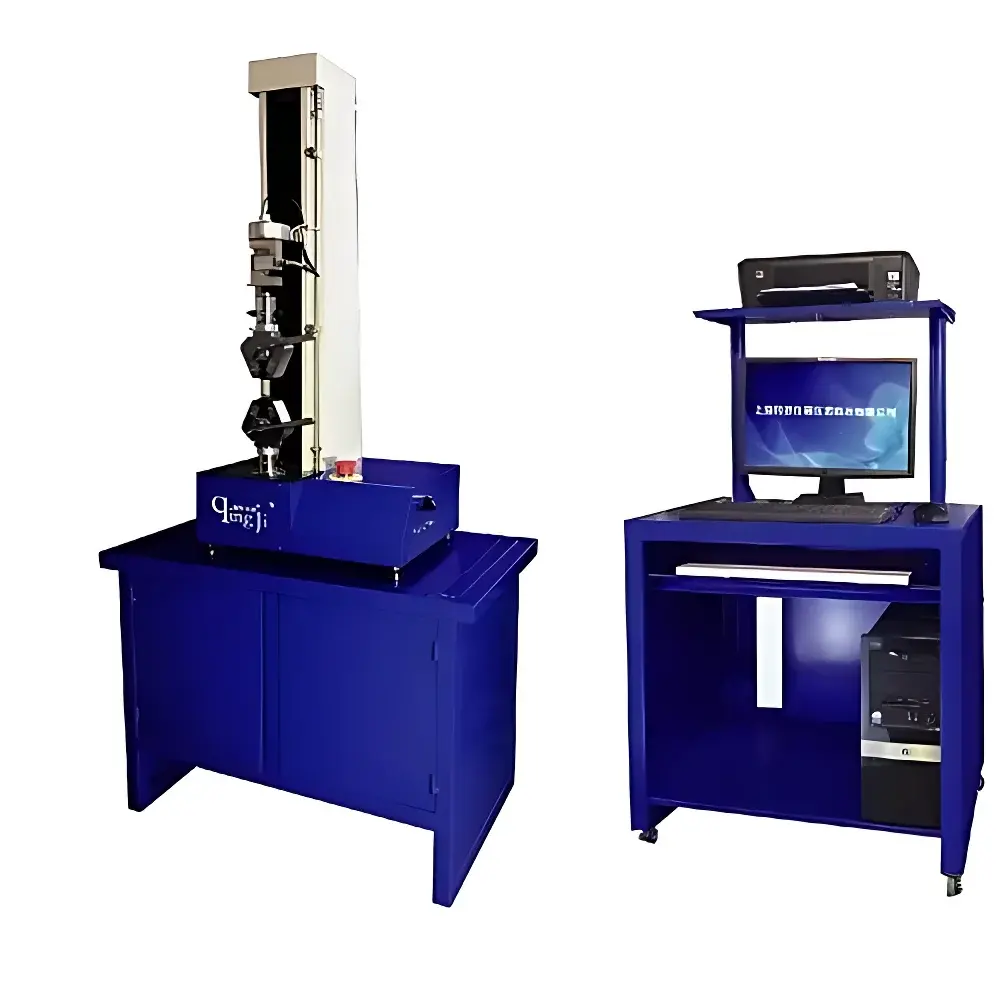
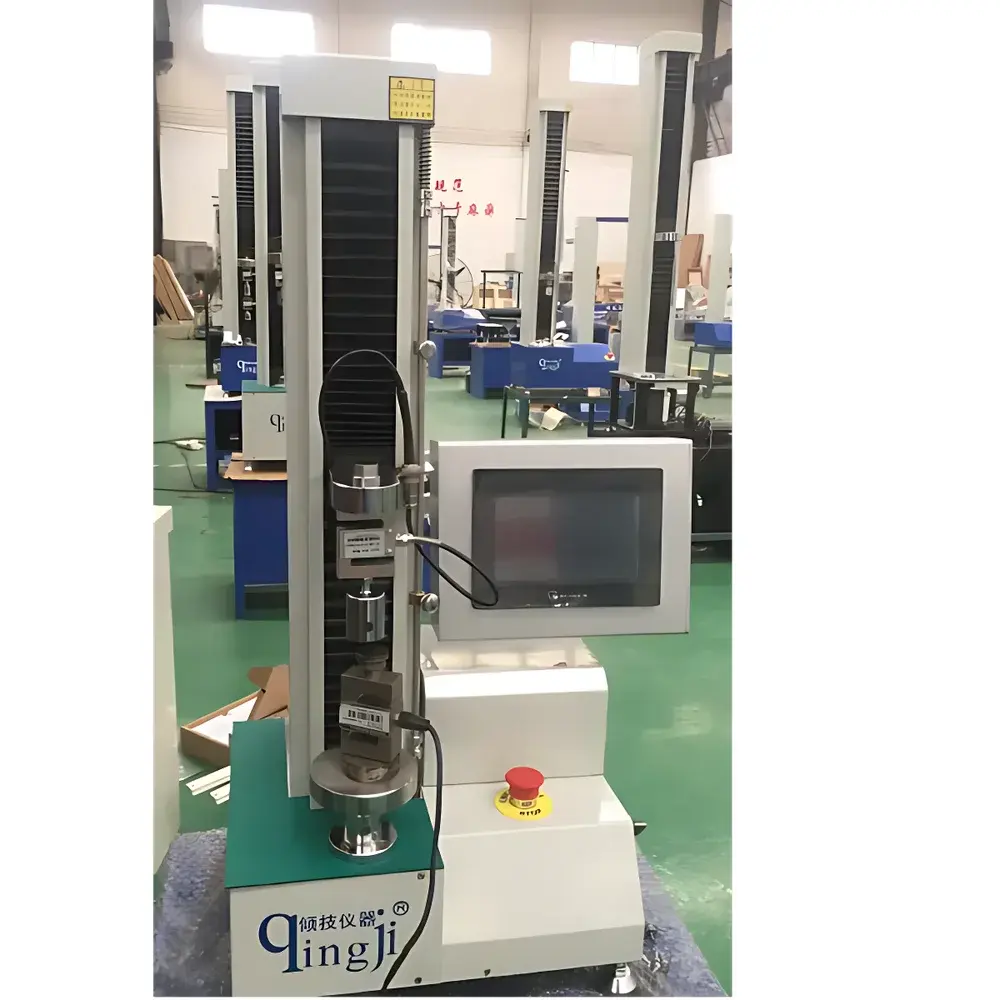
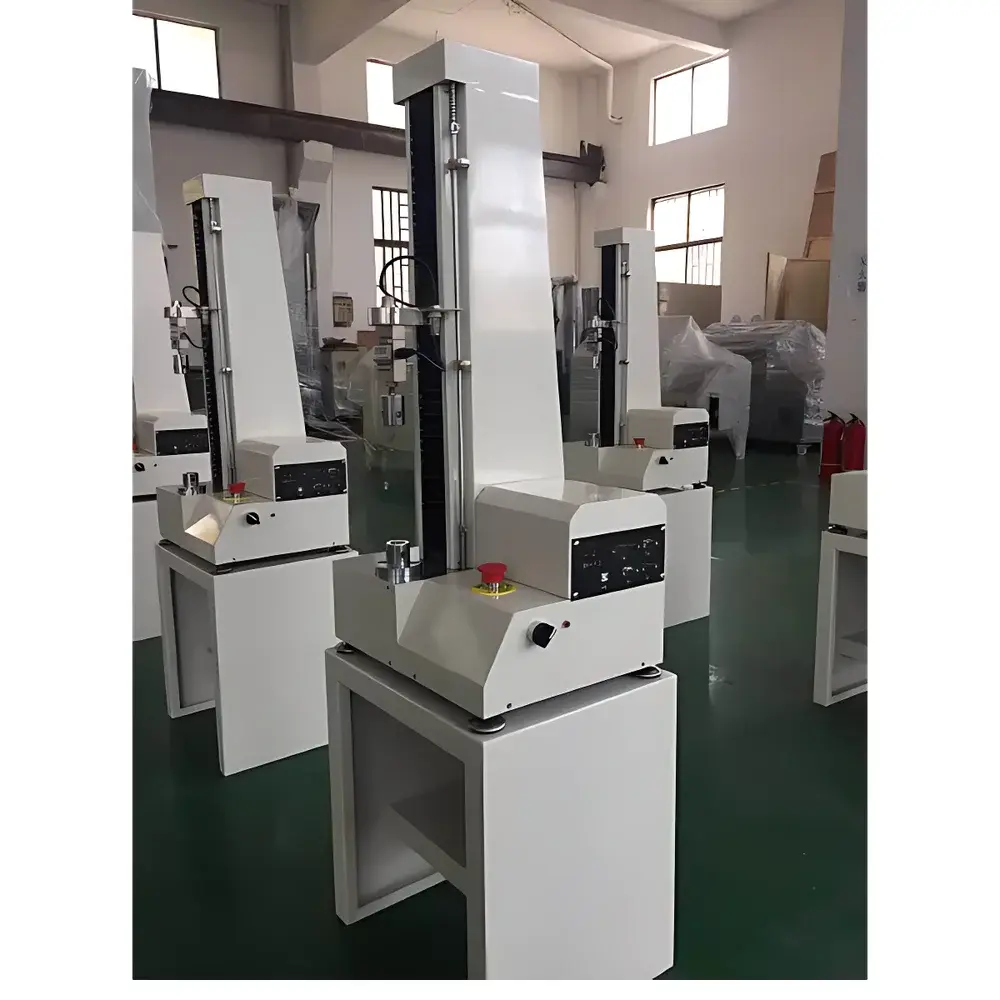
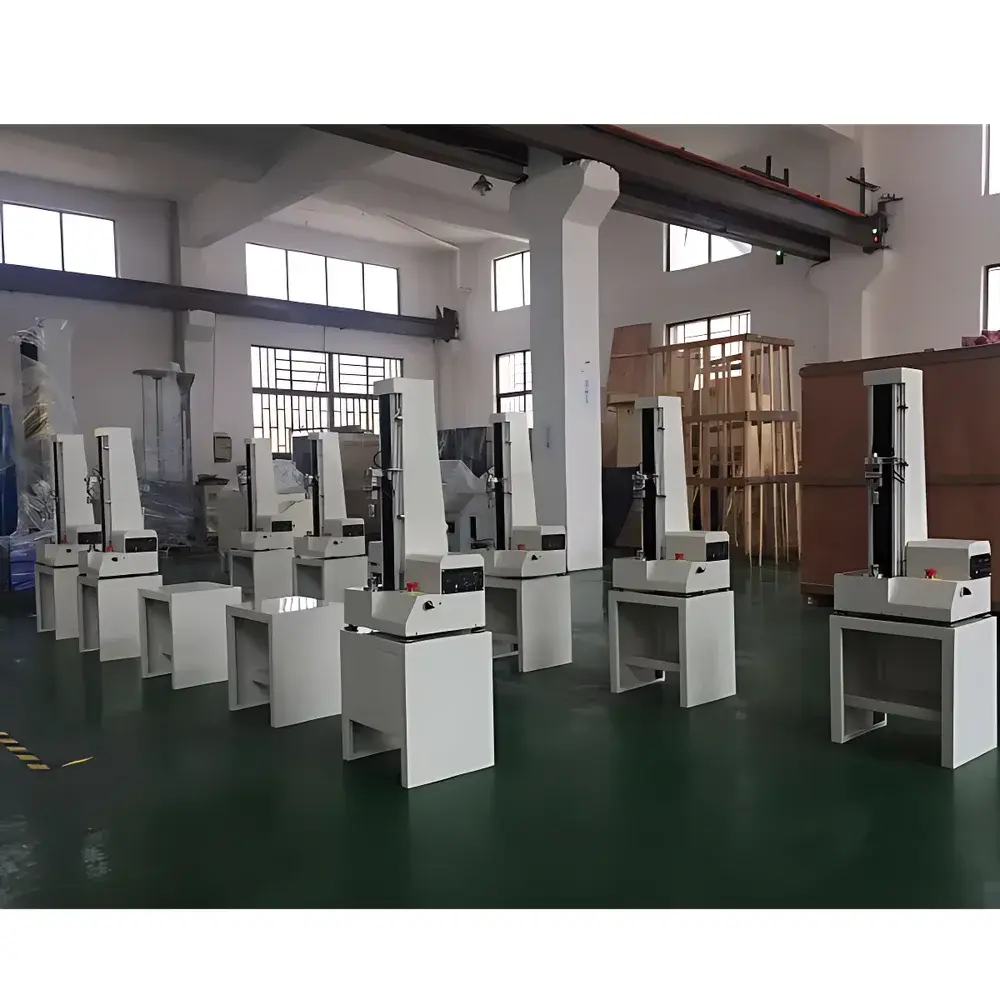
QJ210 Tensile Testing Machine by Qingji
| Brand | Qingji |
|---|---|
| Model | QJ210-2KN |
| Max Test Force | 2500 N |
| Force Range | 0–2500 N |
| Force Accuracy | ±0.5% FS |
| Stroke | 300 mm |
| Displacement Resolution | 0.001 mm |
| Test Speed | 0.001–300 mm/min |
| Speed Accuracy | ±0.5% |
| Stroke Accuracy | ±0.5% |
| Displacement Accuracy | ±0.5% |
| Effective Width | 150 mm |
| Safety Features | Electronic Limit Protection, Emergency Stop |
| Unit Weight | ~45 kg |
Overview
The QJ210 Tensile Testing Machine by Qingji is a precision-engineered electromechanical universal testing system designed for static mechanical property evaluation of metallic, polymeric, composite, and elastomeric materials under controlled uniaxial loading conditions. Based on servo-controlled linear actuation and high-fidelity load cell transduction, the instrument implements standard force-displacement measurement principles compliant with ISO 6892-1 (metallic materials – tensile testing), ASTM E8/E8M (tension testing of metallic materials), and ASTM D638/D882 (plastics and thin films). Its modular architecture supports tension, compression, bending, peel, puncture, and flexural testing modes within a single test frame—eliminating the need for multiple dedicated fixtures or auxiliary systems. The machine integrates real-time digital control logic with analog signal conditioning to ensure traceable, repeatable, and auditable data acquisition across its full 2500 N capacity range.
Key Features
- High-resolution displacement sensing with 0.001 mm resolution and ±0.5% stroke accuracy, enabling precise strain quantification in low-deformation regimes (e.g., brittle polymers or thin coatings)
- Digitally calibrated load cell with ±0.5% full-scale accuracy and 0.01% internal resolution, supporting ISO 7500-1 Class 1 compliance for force measurement uncertainty
- Programmable crosshead speed from 0.001 to 300 mm/min, adjustable in real time with ±0.5% speed stability—critical for rate-dependent material characterization per ASTM D1434 or ISO 527-3
- 150 mm effective test width accommodates standardized specimen grips (e.g., pneumatic, wedge, or vise-type) and ASTM/ISO-compliant dog-bone or strip geometries
- Integrated safety architecture featuring dual-channel electronic limit switches, hardware-based emergency stop circuitry, and safeguard stroke monitoring per ISO 13857
- Compact footprint (~45 kg) with reinforced aluminum extrusion housing and electrostatic powder-coated finish for laboratory durability and ESD-safe operation
Sample Compatibility & Compliance
The QJ210 accommodates specimens ranging from fine wires (Ø ≥ 0.1 mm) to rigid plates (thickness ≤ 25 mm), provided dimensional constraints align with the 300 mm vertical stroke and 150 mm jaw separation. Standardized test configurations include ASTM D638 Type I–V, ISO 527-2, ISO 37 (rubber tensile), and ISO 179 (impact-modified plastics). All force and displacement outputs are traceable to national metrological standards via factory calibration certificates (NIST-traceable load cells, certified displacement encoders). The system meets CE marking requirements for Machinery Directive 2006/42/EC and complies with electromagnetic compatibility (EMC) per EN 61326-1. Optional GLP/GMP-ready firmware supports 21 CFR Part 11 audit trails when paired with validated PC software.
Software & Data Management
The QJ210 operates in two operational modes: standalone LCD control (with real-time curve plotting of force vs. displacement) and PC-integrated mode via USB 2.0 or RS-232 interface. The included Windows-based software provides automated test sequencing, parameter scripting (predefined test profiles), and export of raw ASCII data (.csv) or standardized report formats (PDF, Excel). Data logging occurs at ≥100 Hz sampling rate, ensuring Nyquist-compliant capture of transient yield events. Calibration parameters are digitally stored in non-volatile memory and password-protected against unauthorized modification. Audit logs record user actions, calibration history, and test session metadata—supporting ISO/IEC 17025 documentation requirements.
Applications
- Mechanical qualification of thermoplastic injection-molded parts per ISO 10350
- Tensile modulus and elongation-at-break determination for medical-grade silicone tubing (ASTM D412)
- Adhesive bond strength validation in automotive trim assemblies (peel and shear protocols)
- Quality control of textile fibers and nonwovens (tensile strength, breaking tenacity)
- Validation of biodegradable film mechanical degradation kinetics under accelerated aging
- Educational use in materials science laboratories for stress-strain curve derivation and Hooke’s law verification
FAQ
What is the maximum allowable specimen thickness for compression testing?
Compression tests are supported up to 25 mm specimen height, assuming uniform contact area and alignment within the 150 mm effective width.
Does the system support automatic yield point detection?
Yes—the software implements ASTM E8-defined offset method (0.2% strain offset) and tangent modulus algorithms for automated yield strength calculation.
Can third-party grips be integrated?
Standard M6 threaded mounting holes and 12 mm parallel jaw faces allow mechanical integration of ISO/ASTM-compliant custom or vendor-supplied grips.
Is calibration certificate included with shipment?
Each unit ships with a factory-issued calibration report covering load cell linearity, zero drift, and displacement encoder verification—traceable to CNAS-accredited reference standards.
What environmental conditions are recommended for optimal performance?
Operate within 10–35 °C ambient temperature, ≤80% RH non-condensing, and on vibration-isolated benchtops to maintain displacement resolution integrity.
Related Products



