
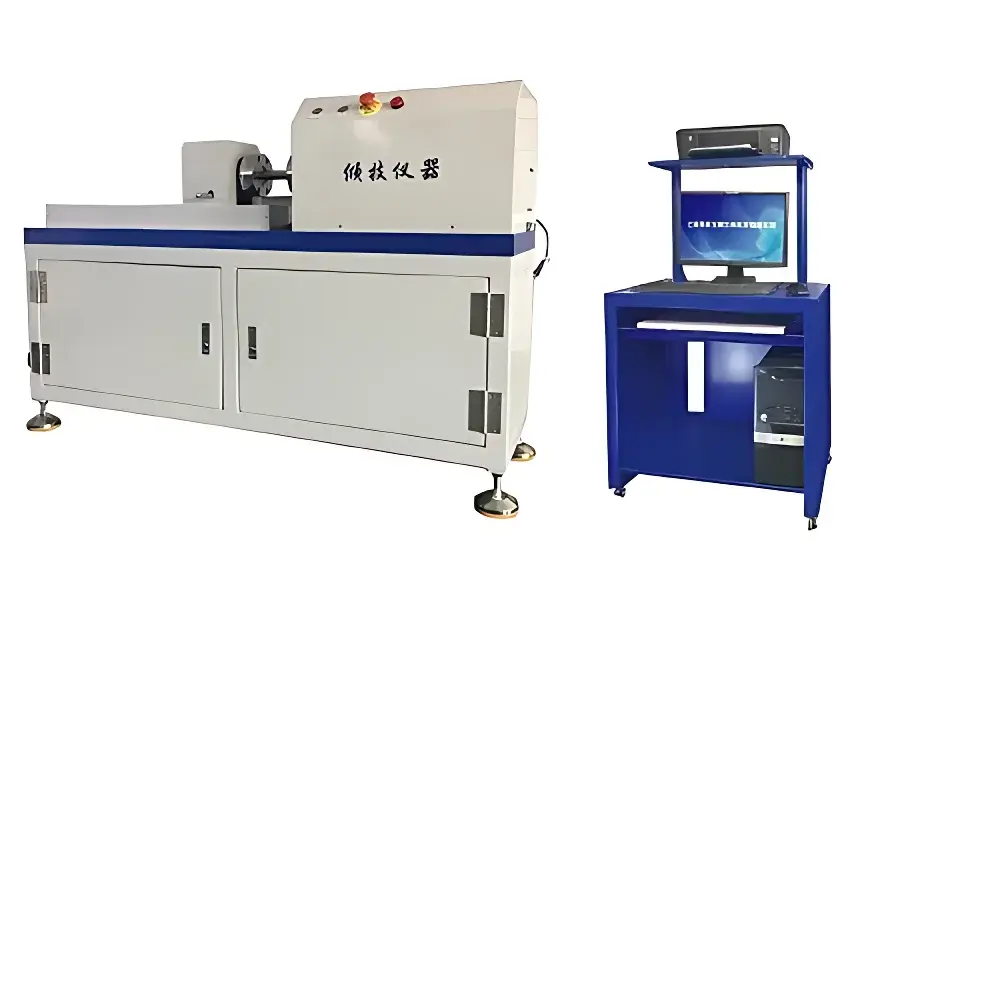
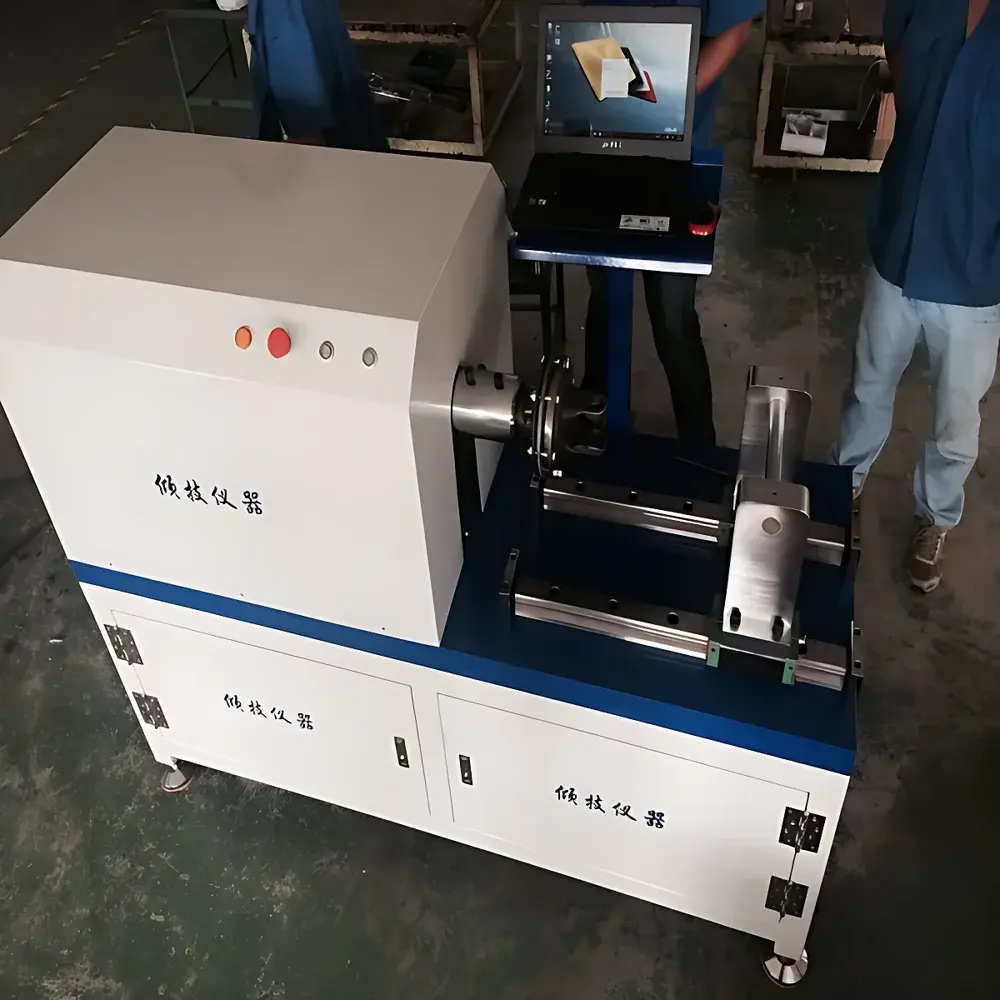
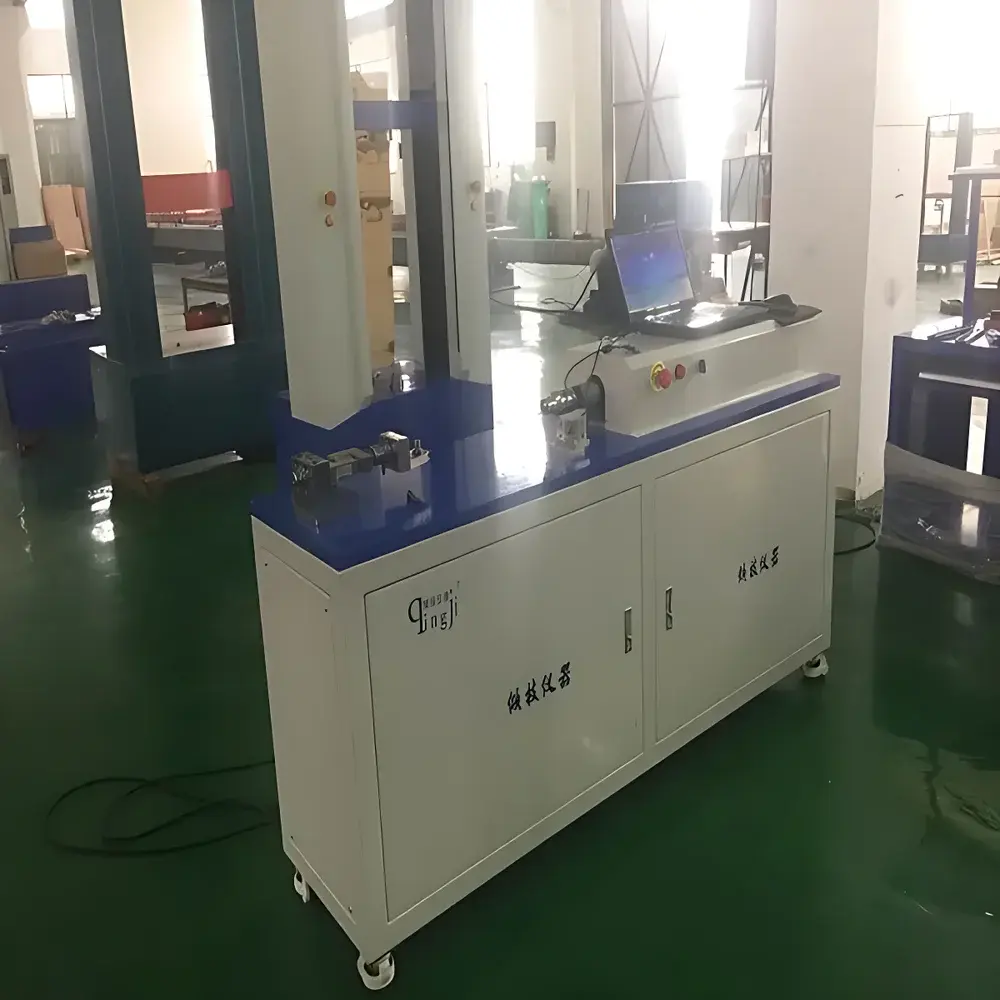
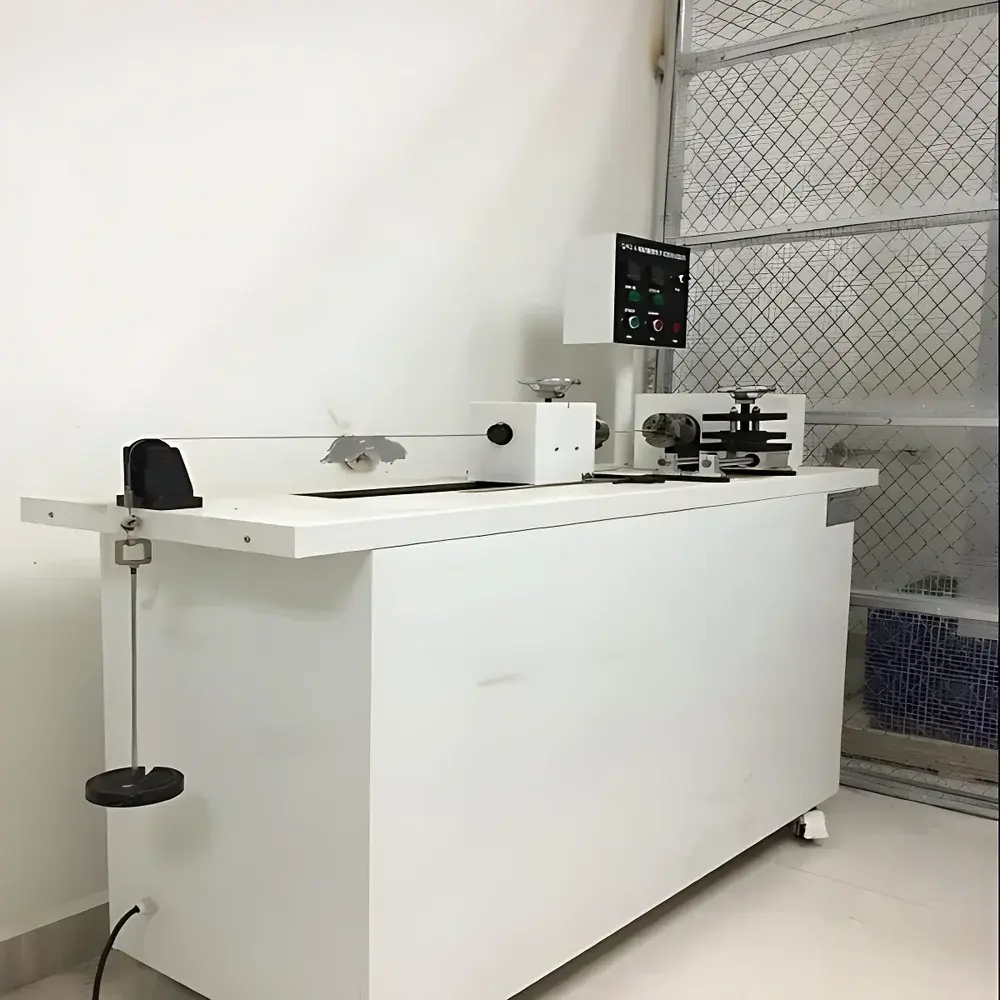
Qinji QJNZ-2000NM Torsion Testing Machine
| Brand | Qinji |
|---|---|
| Origin | Shanghai, China |
| Model | QJNZ-2000NM |
| Max Torque | 0–10,000 N·m |
| Torque Resolution | 0.01 N·m |
| Torsion Angle Range | 0–100,000° |
| Motor Power | 5 kW |
| Torque Measurement Accuracy | ±0.5% FS |
| Torsion Angle Accuracy | ±0.5% FS |
| Angular Resolution | ±0.001° |
| Speed Range | 0.01–1,000 °/min (infinitely variable) |
| Gauge Length | 1,500 mm |
| Specimen Clamping Diameter | Φ8–Φ40 mm (extendable) |
| Dimensions (L×W×H) | 2800×4700×1250 mm |
| Weight | 1,500 kg |
Overview
The Qinji QJNZ-2000NM Torsion Testing Machine is a high-capacity, precision-engineered electromechanical system designed for static and quasi-static torsional characterization of metallic and non-metallic materials, structural components, and mechanical assemblies. It operates on the principle of controlled angular displacement under applied torque, enabling direct measurement of torsional stiffness, yield behavior, ultimate strength, plastic deformation limits, and failure modes. The machine conforms to internationally recognized metrological and materials testing standards—including GB/T 9370–1999 (Methods for Determination of Torsional Properties of Metallic Materials), JJG 269–1981 (Verification Regulation for Torque Measuring Instruments), and GB/T 239–1999 (Torsion Testing Methods for Metallic Wires)—ensuring traceability, repeatability, and compliance in quality assurance and R&D environments.
Key Features
- High-torque capacity up to 10,000 N·m with robust servo-motor drive (5 kW) and precision harmonic reducer for stable low-speed control and high-load retention.
- True full-range torque resolution of 0.01 N·m across the entire 0–10,000 N·m span—no range switching or internal gain adjustment required.
- High-fidelity angular measurement system delivering ±0.001° resolution and ±0.5% full-scale accuracy over a continuous 0–100,000° rotation range.
- Infinitely variable torsion speed control from 0.01°/min to 1,000°/min, supporting both creep, relaxation, and rate-dependent material response studies.
- Modular fixture interface accommodating specimens from Φ8 mm to Φ40 mm (and beyond with custom adapters), with adjustable gauge length of 1,500 mm.
- Integrated overload protection, emergency stop circuitry, and real-time torque-angle safety interlocks compliant with IEC 61800-5-2 functional safety guidelines.
Sample Compatibility & Compliance
The QJNZ-2000NM accommodates solid rods, hollow tubes, fasteners, drive shafts, composite laminates, polymer extrusions, and welded joints. Its clamping architecture supports standardized specimen geometries per ASTM E143 (Shear Modulus), ISO 7888 (Torsional Rigidity of Pipes), and EN 10002-5 (Metallic Materials – Tensile Testing – Part 5: Method of Test at Elevated Temperature). All calibration procedures align with ISO/IEC 17025 requirements for testing laboratories, and torque transducers are certified to Class 0.5 per ISO 376. The system supports GLP-compliant test execution when paired with optional audit-trail-enabled software modules.
Software & Data Management
The embedded virtual instrumentation platform provides closed-loop PID control, synchronized multi-channel data acquisition (torque, angle, time, temperature if interfaced), and automated report generation in PDF, Excel, and XML formats. Raw data files include metadata headers compliant with ASTM E2913 (Standard Practice for Digital Data Acquisition in Mechanical Testing) and support post-hoc analysis using third-party tools such as MATLAB or Python-based SciPy workflows. Optional FDA 21 CFR Part 11 add-ons enable electronic signatures, user role management, and immutable audit trails for regulated industries.
Applications
- Determination of shear modulus (G) and torsional elastic limit via linear-regime slope analysis in small-angle torsion tests.
- Characterization of non-proportional yield stress (τnp) and plastic torsional strain hardening exponents in ductile alloys.
- Qualification testing of automotive driveline components (e.g., CV joints, propeller shafts) under ISO 14123-2 load spectra.
- Validation of adhesive bond integrity in bonded tubular assemblies per ASTM D1002 torsional lap-shear protocols.
- Calibration of torque sensors and transducers in national metrology institutes and accredited calibration labs.
- Teaching and research applications in mechanical engineering curricula covering Saint-Venant’s theory, warping torsion, and torsional buckling phenomena.
FAQ
What standards does the QJNZ-2000NM comply with for torque calibration and verification?
It meets GB/T 9370–1999, JJG 269–1981, and GB/T 239–1999, and its torque transducer is traceable to national primary standards via CNAS-accredited calibration certificates.
Can the system perform dynamic torsion tests or only static/quasi-static loading?
The QJNZ-2000NM is optimized for static and slow-rate quasi-static torsion; it is not rated for high-frequency cyclic loading (e.g., fatigue testing). For dynamic torsion, refer to dedicated servo-hydraulic torsion fatigue systems.
Is the software compatible with Windows 10/11 and capable of networked lab integration?
Yes—the control and analysis software runs natively on 64-bit Windows 10/11 and supports TCP/IP communication for integration into centralized LIMS or MES platforms via OPC UA or RESTful API extensions.
What maintenance intervals are recommended for long-term metrological stability?
Annual recalibration of the torque sensor and angular encoder is advised; routine mechanical inspection (belt tension, bearing preload, lubrication) should occur every 500 operational hours.
Does the system support custom test sequences or scripting for automated multi-step protocols?
Yes—advanced users may define programmable test profiles using built-in script editor (Lua-based) or import sequence definitions from CSV templates with conditional branching logic.



