
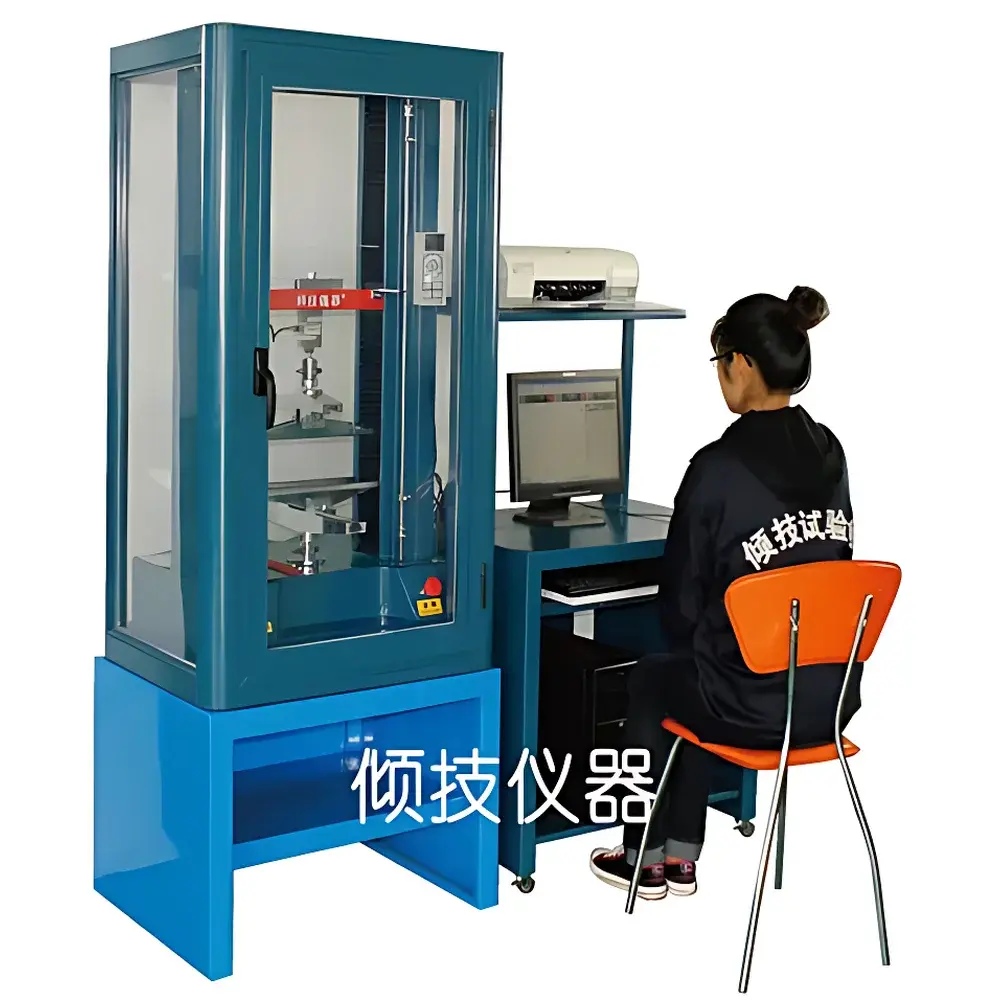
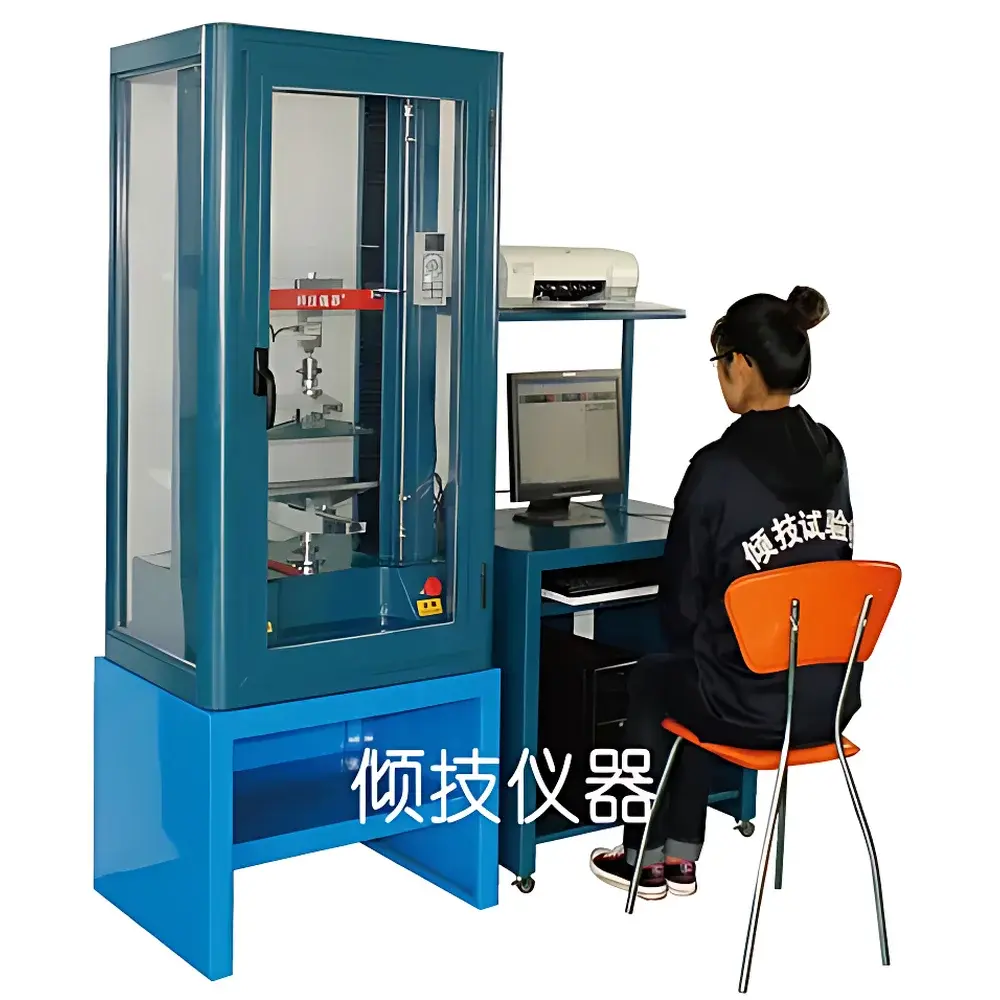
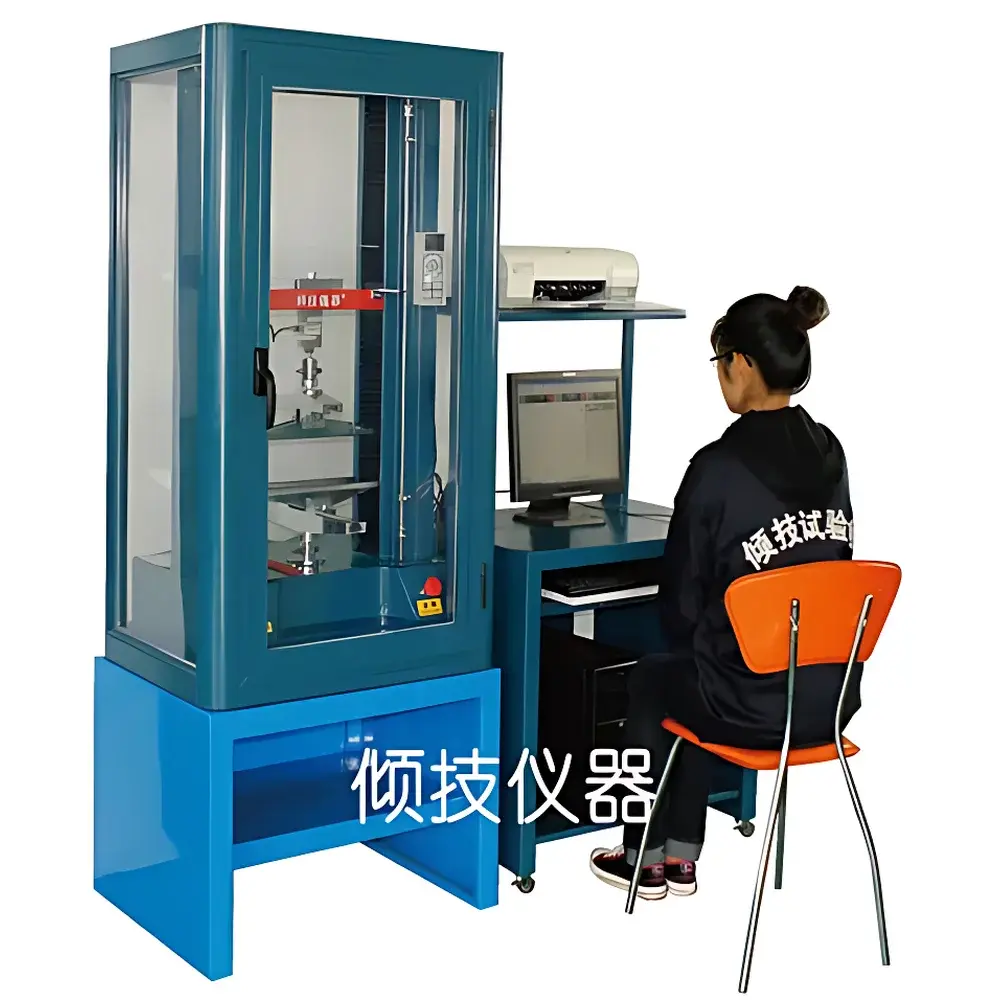
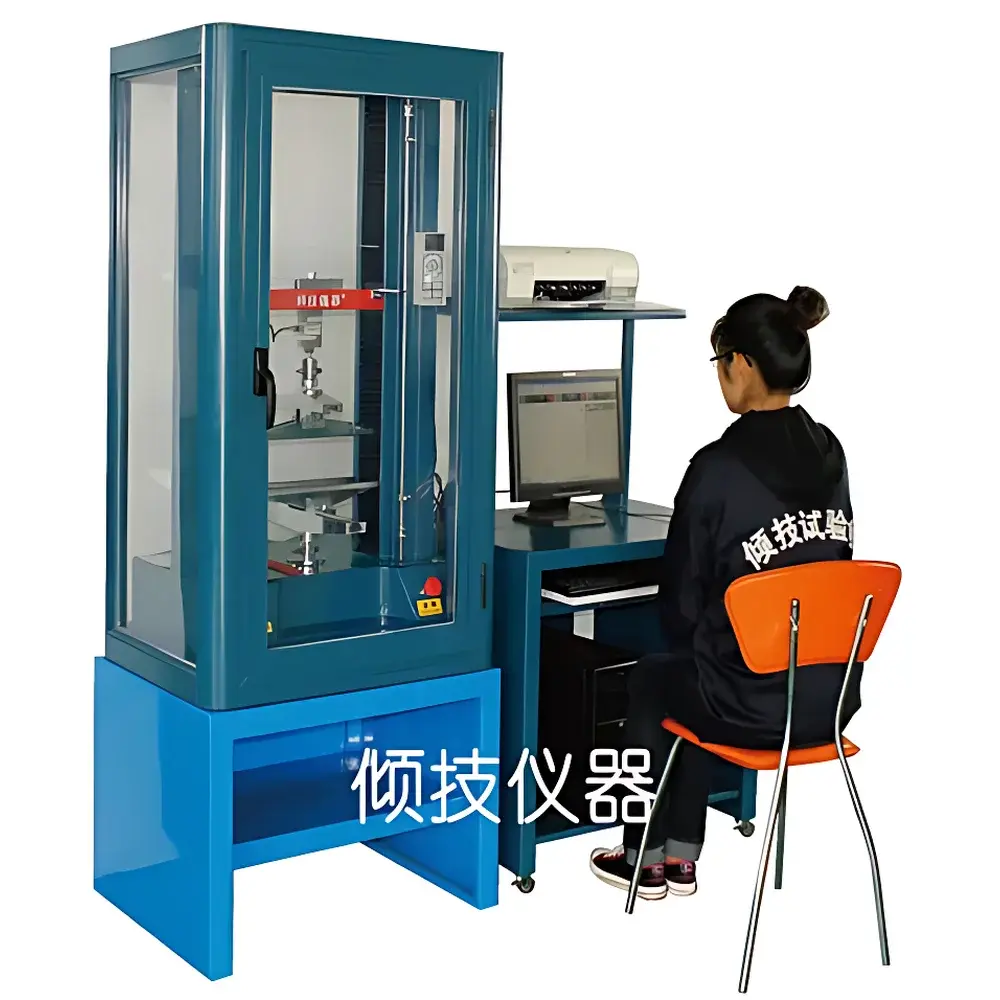
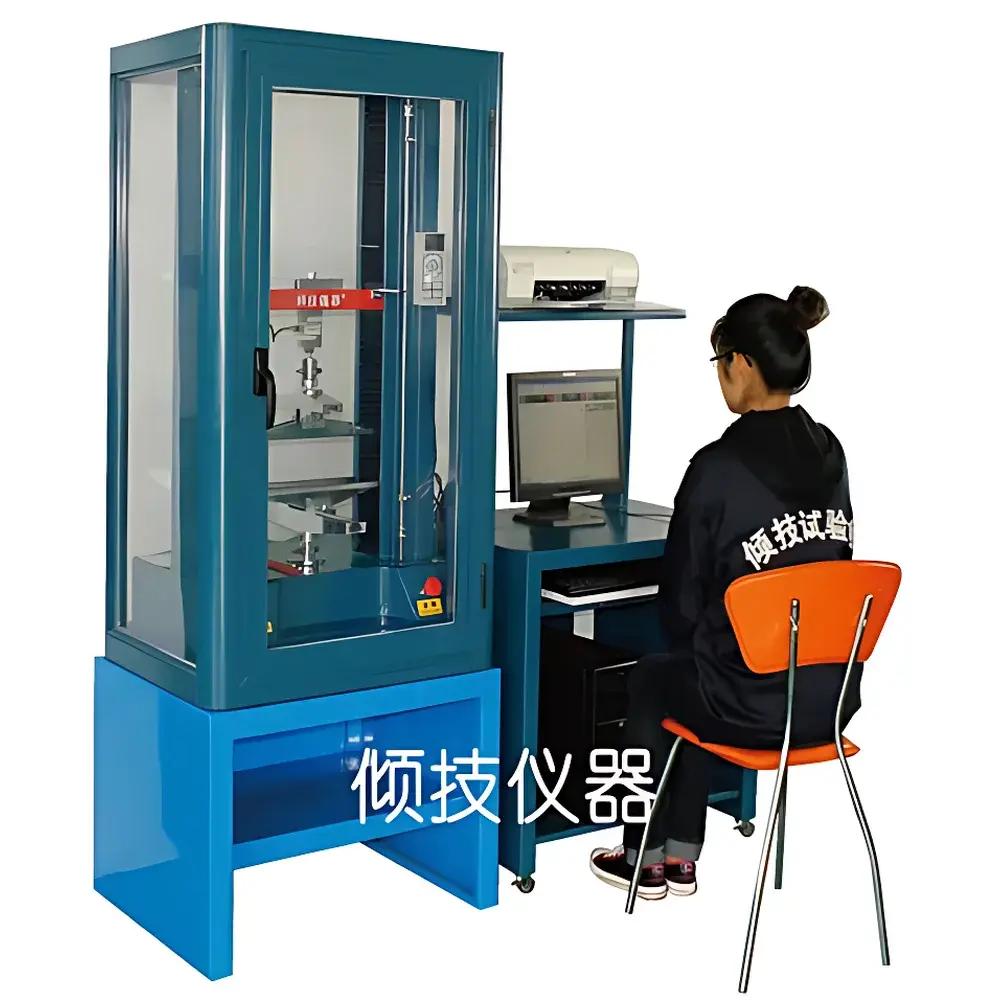
Qingji QJ211S ROR Dual-Ring Testing Machine
| Brand | Qingji |
|---|---|
| Origin | Shanghai, China |
| Model | QJ211S |
| Type | Electromechanical Universal Testing Machine |
| Load Capacity | 20 kN |
| Accuracy Class | 0.5 |
| Effective Force Range | 0.02–100% of full scale |
| Force Resolution | 500,000 counts (no internal/external range switching) |
| Effective Test Width | 460 mm |
| Effective Test Height (excluding fixtures) | 1500 mm |
| Speed Range | 0.001–1000 mm/min |
| Speed Accuracy | ±0.5% of indicated value |
| Displacement Accuracy | ≤0.2% of indicated value |
| Strain/Deformation Accuracy | ≤0.2% of indicated value |
| Noise Level | ≤76 dB(A) |
| Continuous Operation Duration | ≥2000 h |
| Critical Component Lifetime | ≥8000 h |
| Overload Protection | Activates at >110% of rated load |
| Motor Power | 0.75 kW |
| Dimensions (W×D×H) | ≈670×600×2220 mm |
| Weight | ≈195 kg |
Overview
The Qingji QJ211S ROR Dual-Ring Testing Machine is an electromechanical universal testing system engineered for high-precision mechanical characterization of brittle and semi-brittle optical materials used in display manufacturing and consumer electronics. Designed around the dual-ring loading configuration—optimized for controlled radial stress distribution—the instrument enables standardized evaluation of flexural strength, compressive resistance, static indentation, and interfacial adhesion under ISO 178, ASTM C1161, EN 1288-3, and GB/T 1449–2022 compliant conditions. Its rigid frame architecture, coupled with a closed-loop servo-controlled actuation system and high-fidelity load cell integration, ensures repeatable force application across sub-millinewton to 20 kN ranges. The machine supports both displacement-controlled and load-controlled test modes, making it suitable for routine QC verification as well as R&D-level material behavior analysis—including time-dependent phenomena such as creep under sustained load.
Key Features
- Dual-ring fixture geometry specifically calibrated for flat, thin substrates including tempered glass, sapphire cover lenses, chemically strengthened aluminosilicate glass, and laminated touch panels.
- 0.5-class accuracy per ISO 7500-1, validated across the full 0.02–100% force range without auto-ranging or hardware-based range switching—ensuring consistent resolution (500,000 internal counts) at all load levels.
- Variable-speed actuation from 0.001 to 1000 mm/min with ±0.5% speed fidelity, supporting quasi-static fracture tests and dynamic compliance assessments.
- Integrated electronic limit switches, programmable overload cutoff (>110% FS), and motorized return-to-start functionality for unattended operation cycles.
- Modular fixture interface accommodating standardized three-point bend, four-point bend, flatwise compression, spherical indentation (for yellow-spot evaluation), shear, peel, and tensile grip configurations.
- Low-noise (<76 dB(A)) operation and extended-duty design validated for ≥2000 hours of continuous runtime; critical wear components rated for ≥8000 operational hours.
Sample Compatibility & Compliance
The QJ211S is routinely deployed in cleanroom-adjacent QA labs serving LCD, OLED, microLED, and touch module manufacturers. It accommodates specimens up to 460 mm wide and 1500 mm tall (excluding fixture height), enabling full-panel validation of 17-inch and smaller display assemblies. Sample thickness range spans 0.1 mm (ultra-thin cover glass) to 25 mm (laminated structural substrates). All mechanical test protocols align with international standards governing optical-grade glass: ASTM C1424 (fracture toughness), ISO 9327-2 (bending strength), IEC 62368-1 (mechanical safety), and USP for adhesion assessment of optically clear adhesives (OCAs). System documentation supports GLP-compliant audit trails when paired with optional software modules.
Software & Data Management
The machine operates via Qingji’s proprietary WinTest v4.2 control suite, compatible with Windows 10/11 (64-bit). Software provides real-time force-displacement-strain plotting, automatic yield point detection, modulus calculation (secant/tangent), and multi-curve statistical overlay. Raw data exports to CSV, XLSX, and XML formats with embedded metadata (operator ID, timestamp, calibration certificate ID, environmental conditions). Optional 21 CFR Part 11 compliance package includes user role-based access control, electronic signatures, and immutable audit logs for regulated environments. Calibration certificates traceable to NIM (National Institute of Metrology, China) are supplied with each unit.
Applications
- Three- and four-point flexural testing of cover glass substrates per ISO 14125 and GB/T 21185.
- Static indentation resistance (yellow-spot evaluation) using hemispherical indenters per JIS R3222.
- Tensile strength and elongation-at-break measurement of OCA films and conductive adhesives.
- Peel strength quantification of laminated sensor stacks (e.g., ITO/PET/glass interfaces).
- Compression testing of folded hinge mechanisms and polymer gaskets in foldable display enclosures.
- Creep and stress-relaxation profiling under constant load for long-term reliability forecasting.
FAQ
What standards does the QJ211S support for glass flexural testing?
It complies with ISO 178, ASTM C1161, EN 1288-3, and GB/T 1449–2022 for bending strength evaluation of rigid plastics and glass plates.
Can the system perform automated multi-step test sequences?
Yes—WinTest v4.2 supports programmable test sequences with conditional branching, dwell steps, and pass/fail logic based on force, displacement, or time thresholds.
Is third-party calibration certification included?
Each unit ships with a factory calibration report traceable to NIM; optional UKAS-accredited calibration is available upon request.
What maintenance intervals are recommended?
Preventive maintenance is advised every 12 months or after 2000 operational hours—whichever occurs first—with full service kits and OEM technical support available globally.
Does the machine meet electromagnetic compatibility (EMC) requirements for lab deployment?
Yes—it conforms to IEC 61326-1:2013 for laboratory equipment, including immunity to electrostatic discharge, radiated RF fields, and fast transient bursts.



