
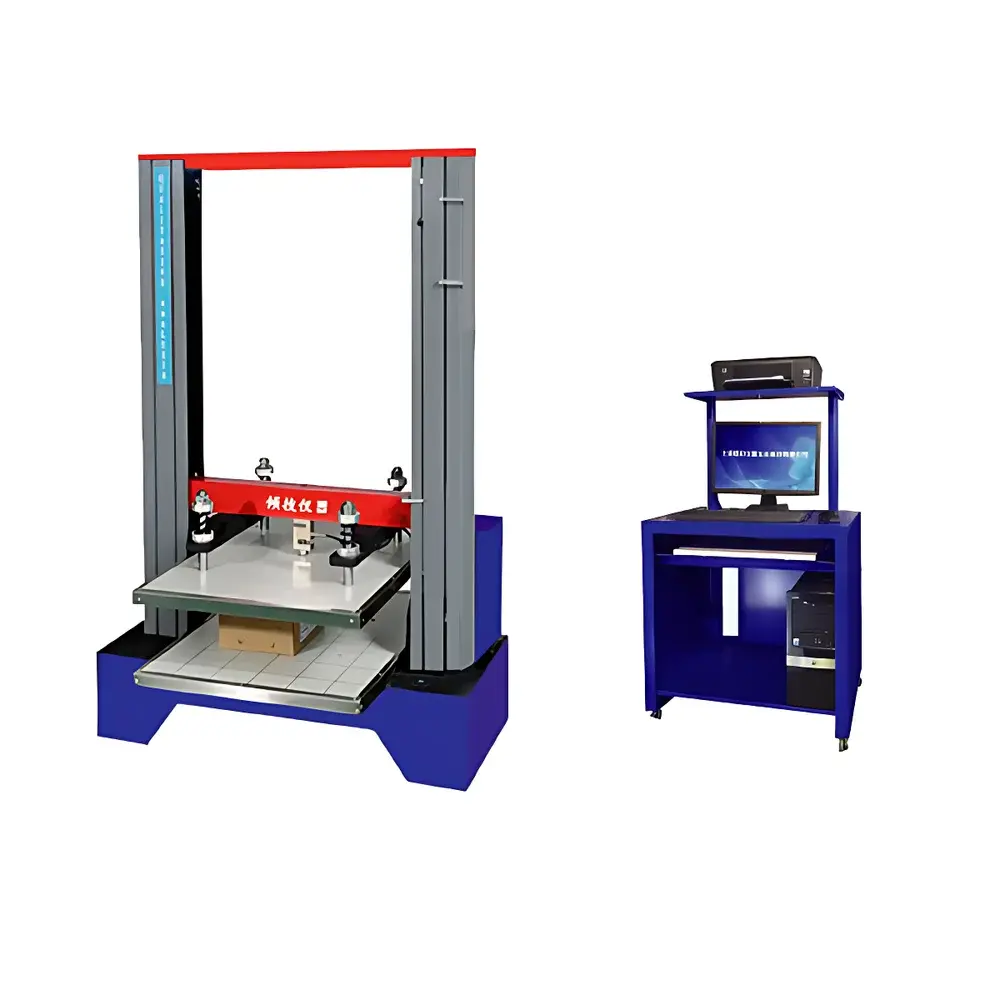
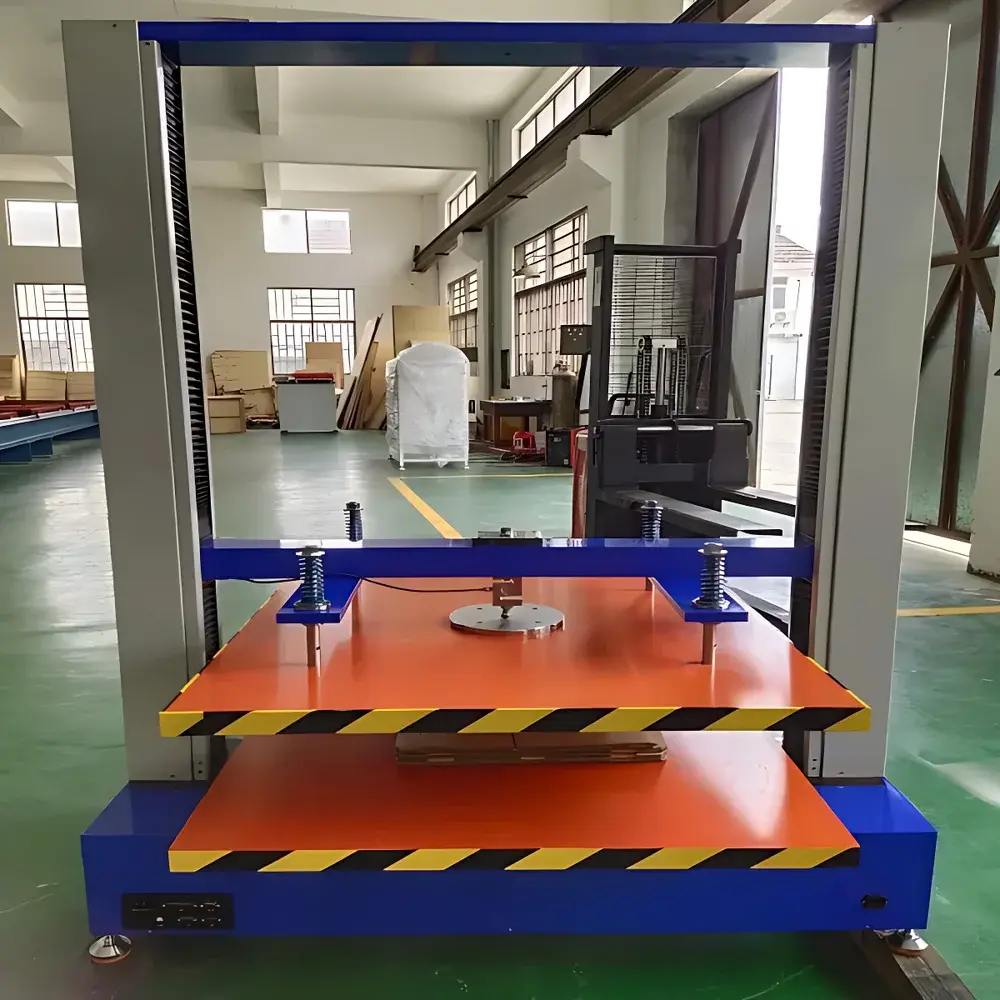
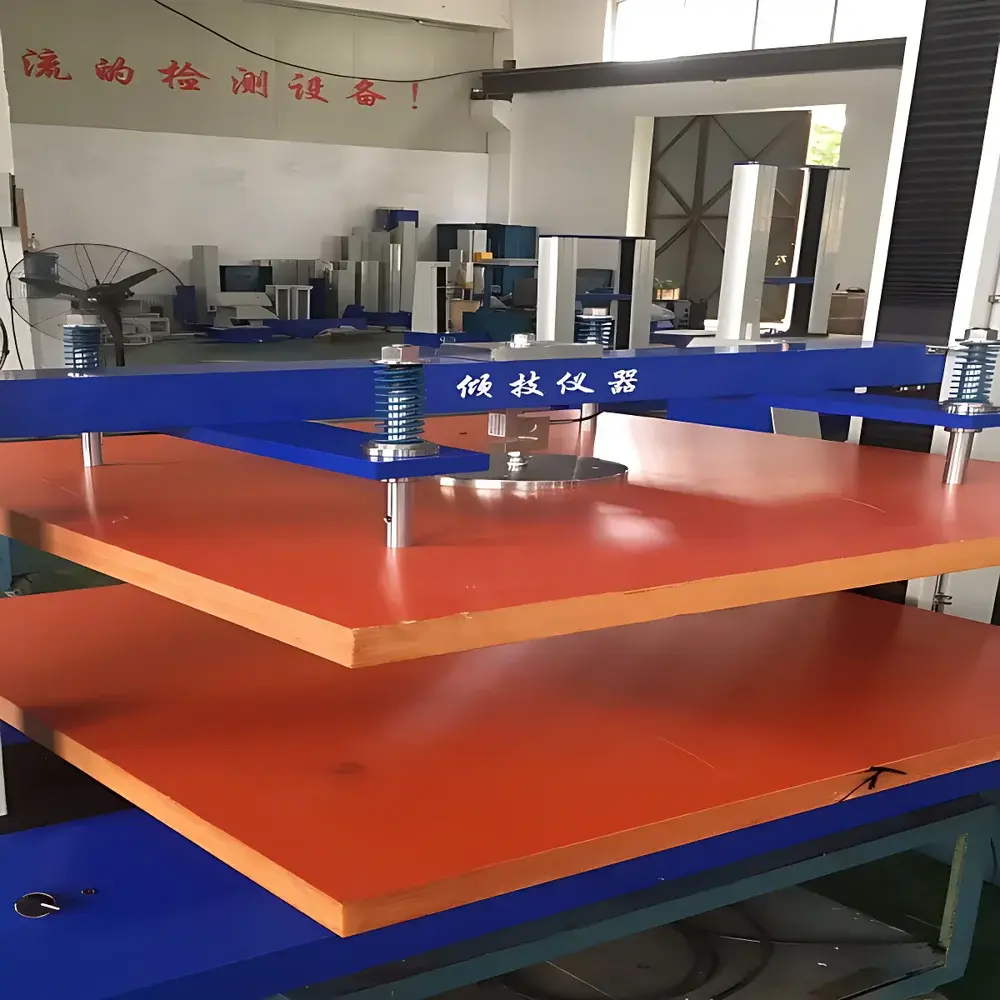
Qinji QJ211H Paperboard Compression Tester
| Brand | Qinji |
|---|---|
| Origin | Shanghai, China |
| Model | QJ211-H |
| Instrument Type | Electronic Universal Testing Machine |
| Load Capacity | 0.00 N to 30 kN |
| Load Accuracy | ±0.5% |
| Effective Test Width | 320 mm |
| Effective Tensile Stroke | 500 mm (optional 800 mm) |
| Test Speed Range | 0.01–300 mm/min |
| Speed Accuracy | ±0.5% of reading |
| Displacement Measurement Accuracy | ±0.5% of reading |
| Deformation Measurement Accuracy | ±0.5% of reading |
| Load Cell Resolution | 500,000 counts (single-range, no auto-ranging) |
| Control System | Panasonic全-digital AC servo controller |
| Data Acquisition | High-precision U.S.-sourced load cell |
| Safety Protection | Software-based diagnosis, electronic travel limit, overload protection at 110% capacity |
| Power Requirement | 2–5 kW |
| Net Weight | ~145 kg |
Overview
The Qinji QJ211H Paperboard Compression Tester is an electronically actuated universal testing machine engineered for high-reproducibility compression, stacking, and structural integrity evaluation of corrugated fiberboard containers and rigid packaging materials. It operates on the principle of controlled axial force application under displacement or load-controlled modes, conforming to standardized mechanical testing methodologies defined in ISO 12048, ASTM D642, ASTM D4577, and GB/T 4857.4. Designed for laboratory and quality control environments, the system delivers precise quantification of compressive yield strength, crush resistance, creep behavior under static load, and long-term stackability performance—critical parameters for logistics validation, shelf-life assessment, and regulatory compliance in packaging engineering.
Key Features
- Robust dual-zone testing architecture supporting both compression (top-down) and tensile/tear/puncture modes via interchangeable fixture configurations.
- High-fidelity load measurement system with ±0.5% accuracy across full 30 kN range, utilizing a U.S.-manufactured precision load cell with 500,000-count resolution and no internal range switching—ensuring consistent sensitivity from 0.02% to 100% of full scale.
- Panasonic digital AC servo motor drive with closed-loop position and speed feedback, enabling programmable test profiles including ramp-to-load, hold-at-load, ramp-to-displacement, and cyclic loading sequences.
- Integrated safety subsystem comprising software-driven fault detection, hardware-based electronic end-limit switches, and automatic overload cutoff at 110% of rated capacity.
- Motorized crosshead with dual-speed adjustment (fast positioning + fine-tuning), manual return capability, and programmable auto-return functionality post-test.
- Modular fixture interface compatible with standard compression platens (320 mm clear width), custom mandrels for paper tubes, and optional accessories for edge crush test (ECT), flat crush test (FCT), and ring crush test (RCT).
Sample Compatibility & Compliance
The QJ211H accommodates standard and non-standard specimens per ISO 7263 (corrugated board), ISO 3037 (edge crush), and TAPPI T811 (ring crush). It supports testing of single- and double-wall corrugated boxes, paper drums, fiber cans, molded pulp trays, and laminated cartons up to 320 mm wide and 500 mm (or optionally 800 mm) in vertical stroke. All mechanical and electrical components comply with CE machinery directive (2006/42/EC) and IEC 61000-6-2/6-3 EMC standards. The system architecture supports audit-ready operation under GLP and GMP frameworks when paired with validated software and procedural documentation.
Software & Data Management
Equipped with a fully digital closed-loop control platform, the QJ211H enables real-time acquisition of force, displacement, and time-synchronized deformation data at user-defined sampling rates. The embedded test software supports creation of multi-step test methods, automatic calculation of peak load, deformation at yield, energy absorption, and compression modulus. Export formats include CSV, XLSX, and PDF reports with embedded metadata (operator ID, timestamp, calibration certificate ID, environmental conditions). Optional configuration includes 21 CFR Part 11-compliant software modules featuring electronic signatures, audit trails, and role-based access control—suitable for regulated pharmaceutical and medical device packaging validation.
Applications
- Static compression testing of shipping containers to simulate warehouse stacking conditions (ASTM D642).
- Dynamic crush resistance evaluation for e-commerce packaging subjected to automated sorting systems.
- Edge crush test (ECT) and flat crush test (FCT) for corrugated board qualification prior to box fabrication.
- Ring crush test (RCT) for linerboard and medium characterization per TAPPI T818.
- Creep and stress-relaxation analysis over extended durations (up to 99 hours) to model long-term storage behavior.
- Validation of sustainable packaging alternatives (e.g., molded fiber, mycelium composites) against traditional fiberboard benchmarks.
FAQ
What international standards does the QJ211H support out-of-the-box?
It natively implements test protocols aligned with ASTM D642, ASTM D4577, ISO 12048, ISO 3037, and GB/T 4857.4; method templates are preloaded in the software.
Can the system perform creep tests lasting more than 24 hours?
Yes—the controller supports uninterrupted test durations up to 99 hours with continuous data logging and auto-save intervals configurable down to 100 ms.
Is third-party calibration certification included with delivery?
A factory-issued calibration certificate traceable to NIM (China National Institute of Metrology) is provided; ISO/IEC 17025-accredited calibration services are available upon request.
Does the software allow user-defined pass/fail criteria and automatic result classification?
Yes—threshold-based logic rules can be assigned to force, displacement, or time parameters, triggering visual alerts and flagging results during real-time execution.
What maintenance is required during the first year of operation?
No scheduled maintenance is required; however, quarterly verification of load cell zero balance and crosshead alignment is recommended using supplied reference weights and alignment gauges.
Related Products



