
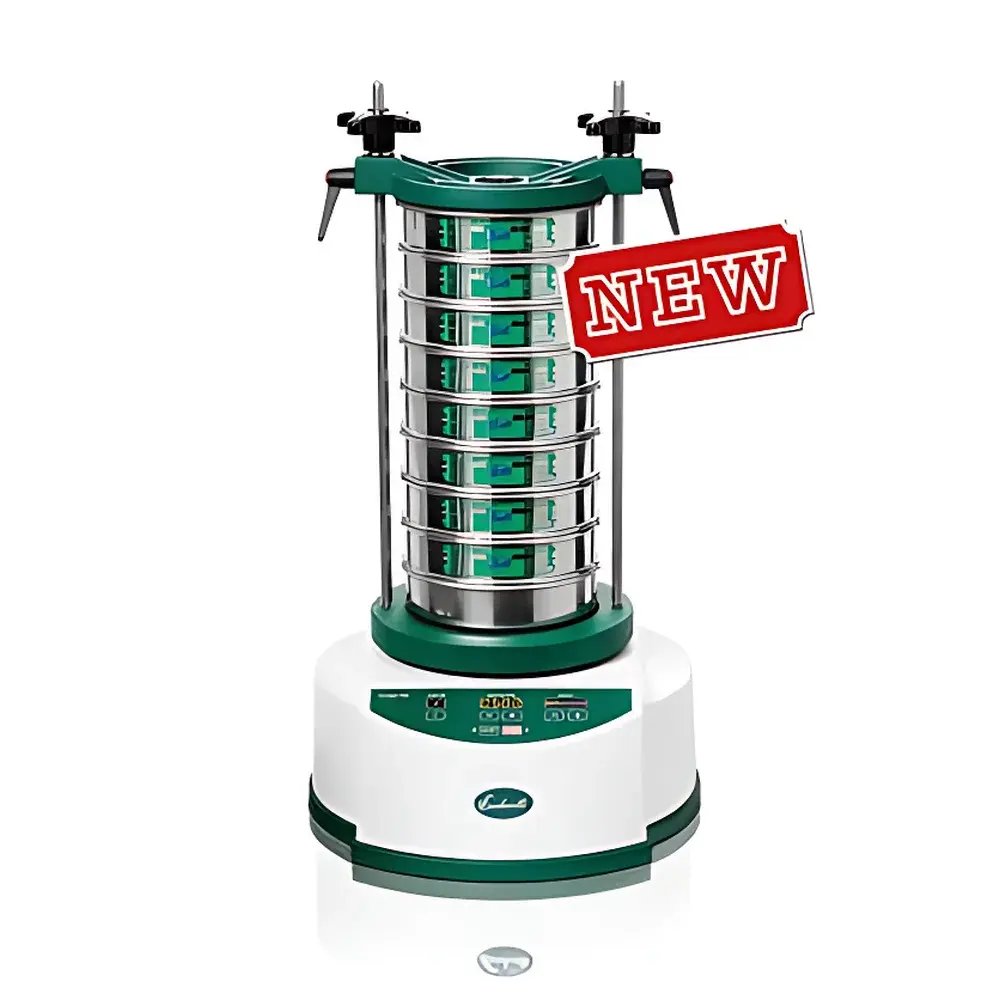
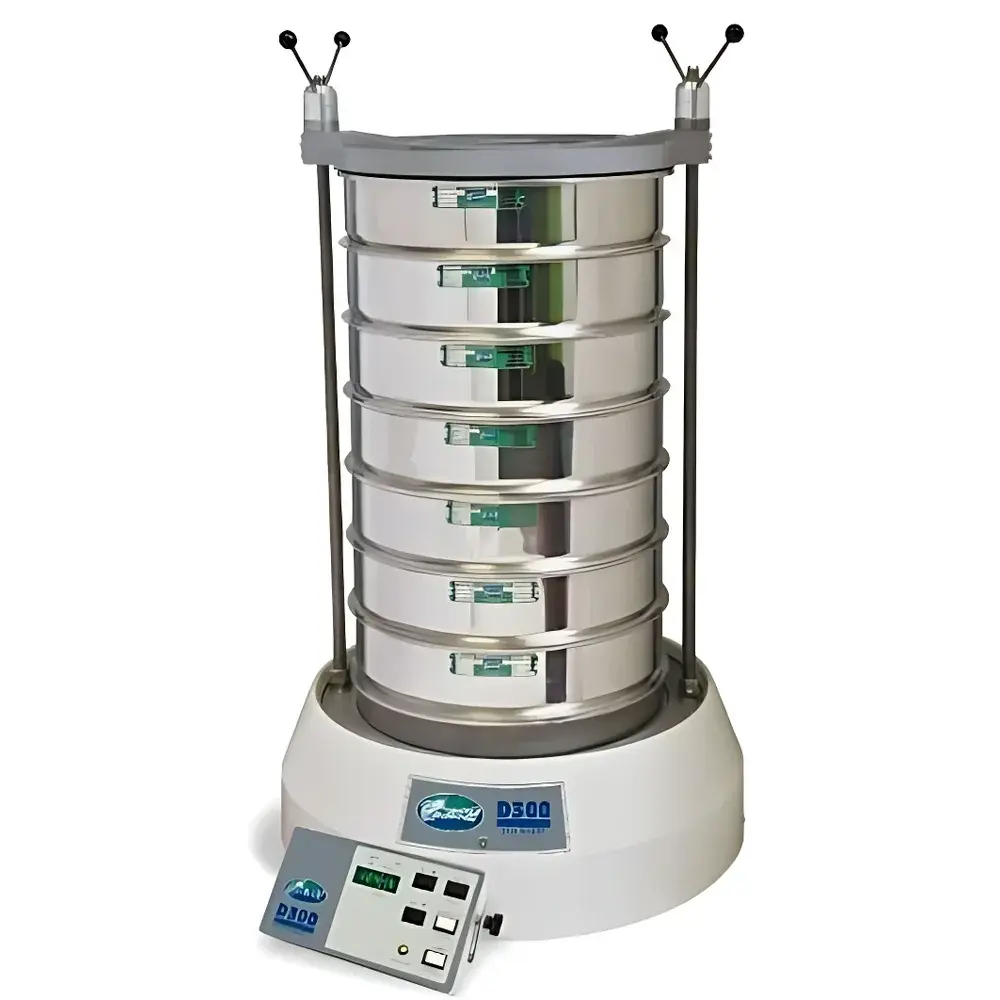
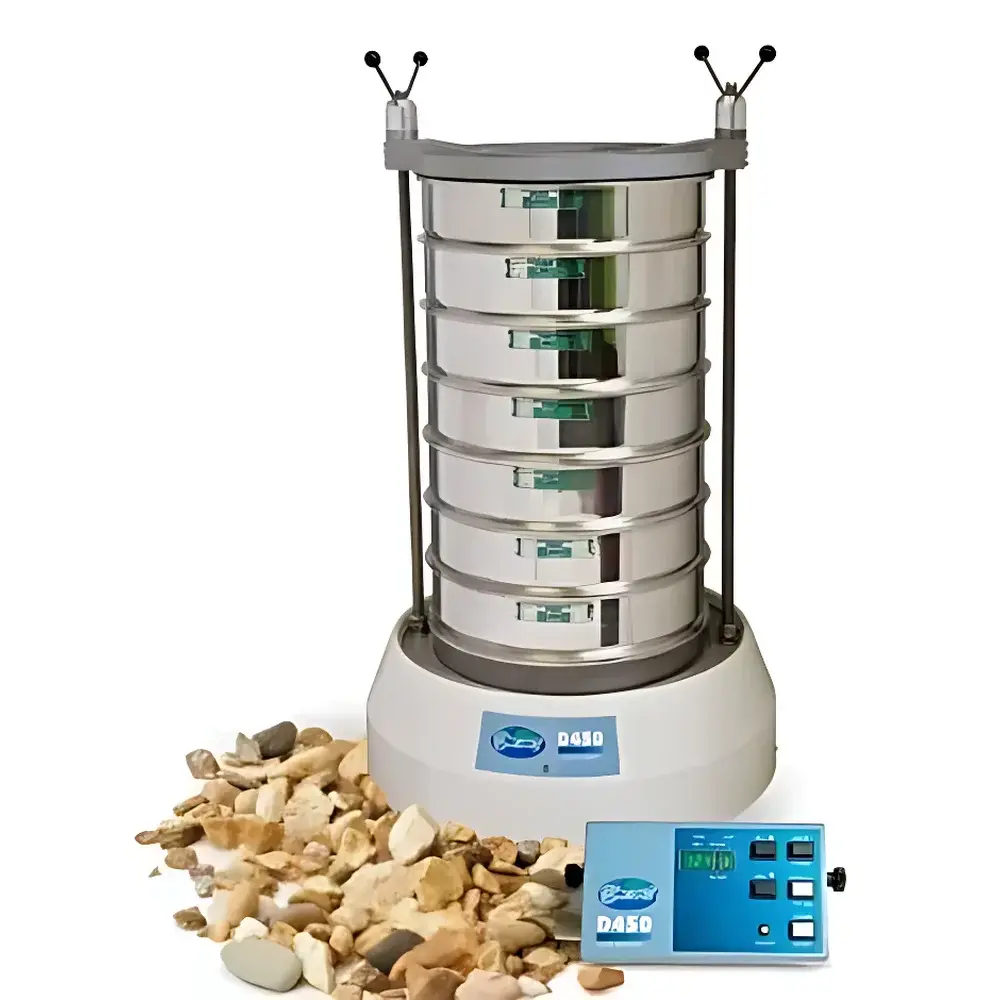
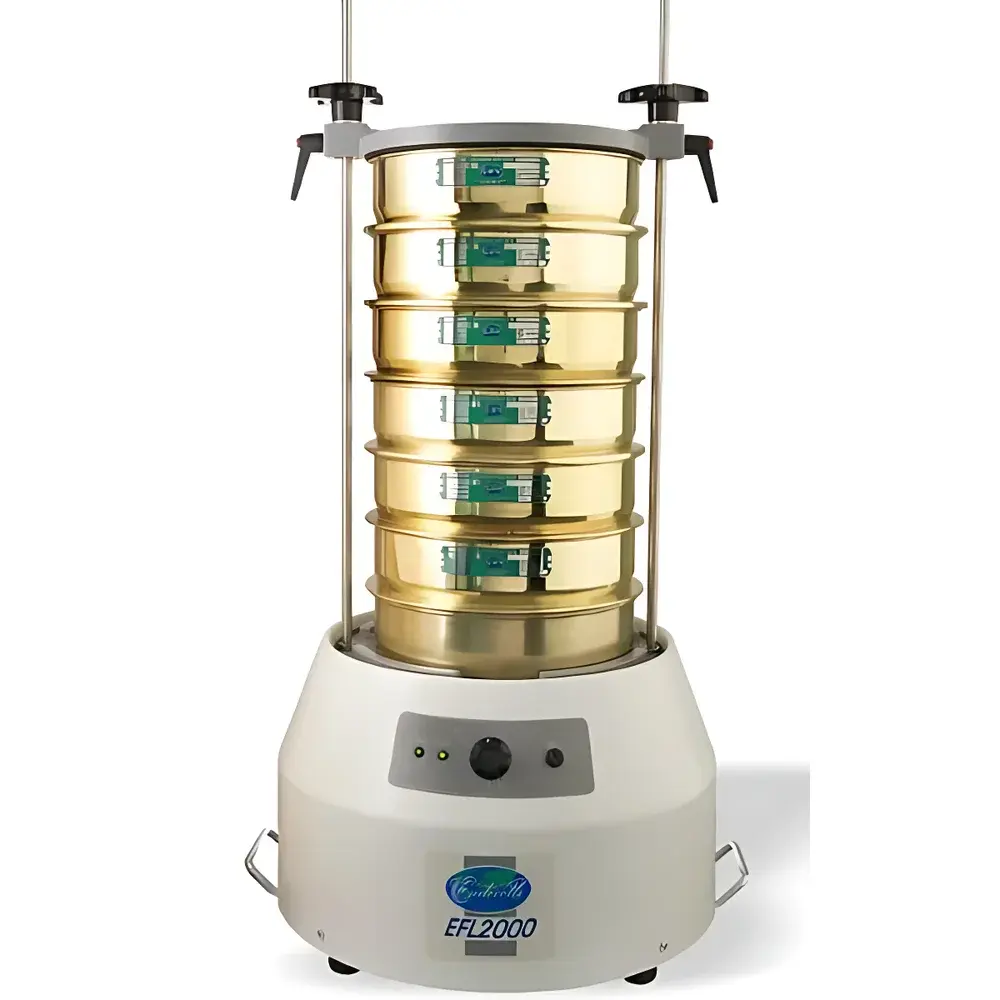
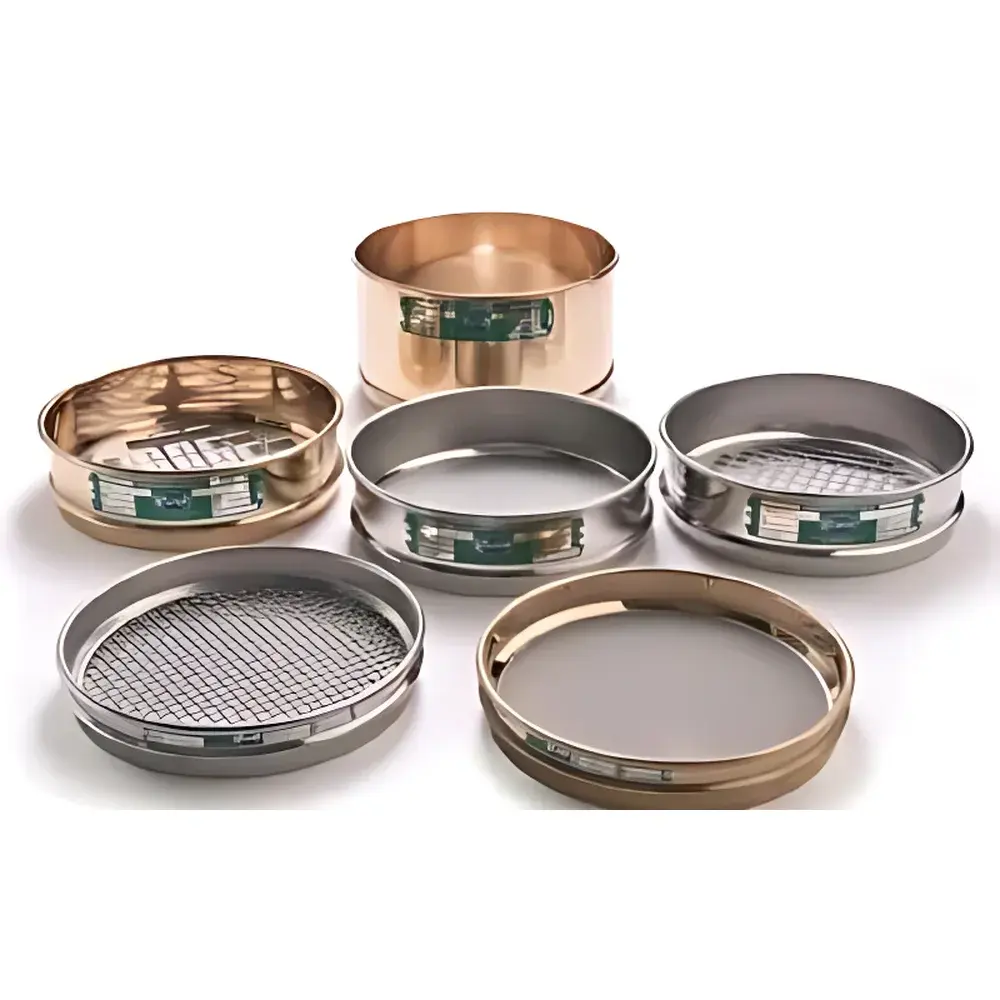
Endecotts Octagon D200 Electromagnetic 3D Vibratory Sieve Analyzer
| Brand | Endecotts |
|---|---|
| Origin | United Kingdom |
| Model | Octagon D200 |
| Principle | Electromagnetic 3D vibratory sieving |
| Power Supply | 230 V / 50 Hz / 300 VA or 115 V / 60 Hz / 300 VA |
| Sieve Diameter | 200 mm (8") |
| Max Stack Capacity | 8 full-height or 18 half-height sieves |
| Vibration Frequency | 3000 min⁻¹ (50 Hz) / 3600 min⁻¹ (60 Hz) |
| Max Amplitude | 3.4 mm (50 Hz) / 2.5 mm (60 Hz) |
| Net Weight | 43 kg |
| Dimensions (H × Ø) | 210 mm × 410 mm (excl. support rod) |
| Operating Temperature | 5–35 °C |
| Relative Humidity | 35–90% RH |
| Compliance | BS 410:2000, ISO 3310-1 & -2:2016, ASTM E11-22 |
Overview
The Endecotts Octagon D200 is a precision-engineered electromagnetic 3D vibratory sieve analyzer designed for reproducible, standards-compliant particle size distribution analysis of dry and wet free-flowing materials. Unlike rotary or mechanical shaker-based systems, the Octagon D200 employs a contactless electromagnetic drive mechanism that generates controlled, high-frequency vertical oscillation—combined with lateral inertia—to induce three-dimensional particle motion across the sieve surface. This principle ensures efficient stratification, rapid percolation through apertures, and minimal blinding—critical for accurate grading of powders, granules, agglomerates, and suspensions. Its architecture conforms to the fundamental metrological requirements of sieve analysis defined in ISO 3310-1 (woven wire mesh), ISO 3310-2 (perforated plate), BS 410:2000, and ASTM E11-22, making it suitable for GLP-compliant laboratories, QC/QA departments, and contract testing facilities requiring audit-ready traceability.
Key Features
- Electromagnetic drive system with zero rotating parts—eliminates mechanical wear, reduces maintenance, and ensures long-term amplitude stability.
- Digital controller enabling precise setting of duration (0–99 min), amplitude (adjustable via internal calibration), and operational mode (continuous or intermittent vibration).
- Intermittent vibration mode—programmable “on/off” cycles—mechanically dislodges near-size particles and prevents aperture clogging, enhancing separation efficiency for cohesive or electrostatically charged samples.
- Patented non-metallic spring suspension and elastomeric isolation feet minimize transmitted vibration to the work surface and reduce ambient noise to <65 dB(A) at 1 m.
- Tool-free, self-centering clamping mechanism secures 200 mm (8″) sieves with optimal tension—neither over-compressing nor under-clamping the mesh—preserving sieve integrity and dimensional repeatability across repeated use.
- Compact footprint (Ø410 mm × H210 mm, excl. support rod) and integrated carrying handles facilitate transport between lab benches, cleanrooms, and field sites without recalibration.
Sample Compatibility & Compliance
The Octagon D200 accommodates standard full-height and half-height test sieves conforming to ISO 3310-1 (woven wire mesh), ISO 3310-2 (perforated plate), BS 410:2000, and ASTM E11-22. It supports sieve diameters of 200 mm (8″) with certified aperture tolerances from 20 µm to 125 mm. The instrument is validated for both dry sieving (e.g., pharmaceutical APIs, metal powders, catalysts) and wet sieving (e.g., soil aggregates, ceramic slurries, mineral suspensions) when used with appropriate liquid-tight receivers and sealed lid assemblies. All Endecotts test sieves are manufactured under ISO 9001-certified processes, individually serialized, and supplied with a Certificate of Compliance referencing traceable calibration against NPL (UK) or NIST-traceable optical measurement systems. This documentation satisfies regulatory expectations for data integrity under FDA 21 CFR Part 11 (when paired with compliant software), EU GMP Annex 11, and ISO/IEC 17025 accreditation requirements.
Software & Data Management
While the Octagon D200 operates as a standalone hardware platform, its programmable digital interface provides deterministic, repeatable parameter recall—enabling SOP-driven operation without external software dependency. For laboratories implementing electronic recordkeeping, Endecotts offers optional integration with third-party LIMS and ELN platforms via RS-232 or USB-to-serial protocols (firmware v3.2+). All user-defined methods—including time, amplitude, and duty cycle—are stored in non-volatile memory with timestamped execution logs. When deployed in regulated environments, the system supports audit trails for method changes and operator identification (via optional RFID badge reader module), aligning with ALCOA+ principles for data reliability. Routine performance verification can be performed using Endecotts’ certified reference test powders (e.g., NIST SRM 1991b), and calibration certificates are issued annually per ISO/IEC 17025-accredited service providers.
Applications
The Octagon D200 delivers consistent performance across diverse industrial and research domains: in pharmaceutical manufacturing, it verifies granule size distribution prior to tablet compression per USP ; in cement and construction materials testing, it determines fineness modulus and residue on sieve per ASTM C109/C184; in food science, it classifies flour, spices, and powdered dairy products according to Codex Alimentarius standards; in mining and metallurgy, it characterizes crushed ore and flotation feed streams per ISO 8501; and in environmental labs, it performs particle-size analysis of sediment and airborne particulate matter (PM₁₀, PM₂.₅) following EPA Method 202. Its ability to handle up to 18 half-height sieves in a single run enables multi-stage fractionation workflows essential for R&D screening and quality release testing.
FAQ
What standards does the Octagon D200 comply with for sieve analysis?
It is fully compatible with BS 410:2000, ISO 3310-1 & -2:2016, ASTM E11-22, and EN 933-1, supporting both woven wire mesh and perforated plate test sieves.
Can the Octagon D200 perform wet sieving?
Yes—when equipped with a sealed lid, liquid-tight receiver pan, and corrosion-resistant stainless-steel sieve frames, it meets ISO 2591-1 requirements for wet sieving of fine aggregates and mineral suspensions.
Is routine calibration required?
Annual verification of vibration frequency and amplitude using a certified accelerometer or laser vibrometer is recommended per ISO/IEC 17025; Endecotts provides accredited calibration services with NIST-traceable certificates.
How is data integrity ensured in regulated environments?
The device supports configurable operator login, method version control, and electronic signature-capable output logs—fully compatible with 21 CFR Part 11-compliant software extensions and audit-ready LIMS integration.
What maintenance does the electromagnetic drive require?
None—the solid-state electromagnetic actuator has no consumable parts, bearings, or lubrication points; only periodic visual inspection of suspension springs and clamping surfaces is advised.



