
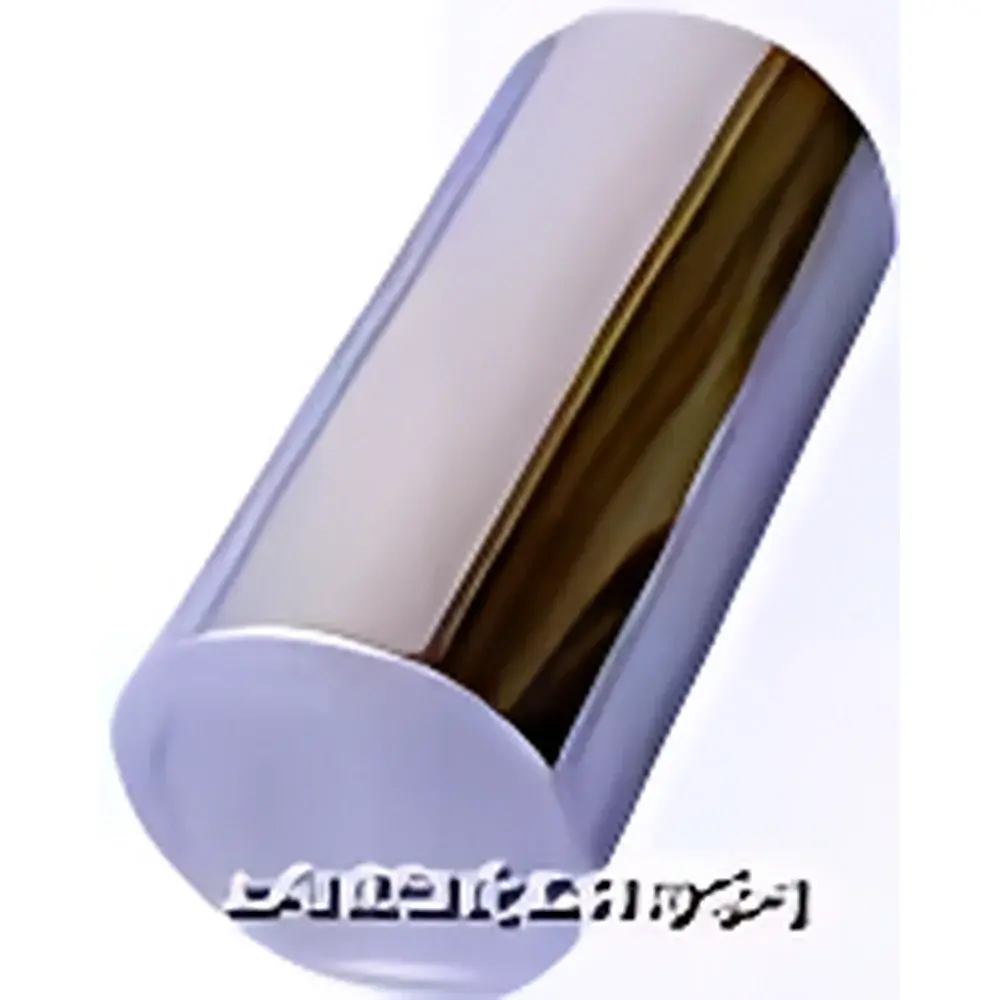
GW Dry Heat Resistance Test Cup for Furniture Coating Evaluation
| Origin | Shanghai, China |
|---|---|
| Manufacturer Type | Authorized Distributor |
| Model | GW |
| Quotation | Available Upon Request |
| Cup Inner Diameter | 44 mm |
| Height | 102 mm |
| Material | H62 Brass |
| Mass | 440 ±25 g |
Overview
The GW Dry Heat Resistance Test Cup is a precision-engineered specimen holder designed specifically for standardized assessment of dry heat resistance in decorative surface coatings applied to wood-based furniture and cabinetry. It operates on the principle of controlled thermal contact transfer: a pre-conditioned, standardized metal cup is placed directly onto a coated test panel under defined load and ambient conditions, and the resulting thermal degradation—manifesting as discoloration, blistering, wrinkling, or loss of gloss—is evaluated after specified exposure durations. This method is fundamentally aligned with the physical mechanism of localized conductive heating at the coating–substrate interface, where thermal mass, conductivity, and interfacial adhesion govern failure onset. The device is not a standalone instrument but a critical, traceable metrological component within a broader test system that includes a temperature-controlled laboratory environment (per ISO 291), calibrated weight application fixtures, and standardized evaluation protocols.
Key Features
- Dimensionally certified geometry: 44 mm internal diameter × 102 mm height ensures consistent contact area and thermal mass distribution across test repetitions.
- H62 brass construction provides stable thermal conductivity (≈110 W/m·K), minimal oxidation under repeated 70 °C exposure, and long-term dimensional stability—critical for inter-laboratory reproducibility.
- Tight mass tolerance (440 ±25 g) guarantees uniform pressure application (≈2.9 kPa nominal contact stress) when used with standard support fixtures, minimizing variability in heat transfer kinetics.
- Smooth, burr-free interior surface finish prevents unintended mechanical abrasion during placement or removal, preserving coating integrity prior to thermal evaluation.
- Compliant with dimensional and material specifications mandated in GB/T 4893.3–1985, enabling direct use in regulatory and quality assurance testing for domestic and export-oriented furniture manufacturers.
Sample Compatibility & Compliance
The GW test cup is validated for use with flat, rigid substrates ≥6 mm thick—including particleboard, MDF, solid wood, and laminated panels—coated with thermosetting systems such as polyester, polyurethane, nitrocellulose, and UV-curable acrylics. Its design excludes flexible or low-modulus substrates (e.g., thin veneers or PVC laminates) due to uncontrolled thermal expansion mismatch. Compliance extends beyond GB/T 4893.3–1985: the cup’s geometry and mass are compatible with the procedural framework of ISO 4211-2 (1993), which references equivalent thermal mass criteria for heat resistance cups, and supports alignment with ASTM D4060–22 Annex A2 for comparative thermal aging studies. For GLP-regulated environments, each cup can be individually serialized and included in equipment calibration logs; mass verification is recommended quarterly using Class M2 weights traceable to NIM (China National Institute of Metrology).
Software & Data Management
As a passive mechanical test component, the GW Dry Heat Resistance Test Cup requires no embedded electronics or firmware. However, its integration into digital QA workflows is fully supported: cup identification numbers can be scanned via QR codes (optional engraving service available), linked to LIMS entries containing test parameters (exposure time, ambient RH, substrate batch ID), and cross-referenced with digital image archives of pre- and post-test panels. When used with automated imaging stations (e.g., ISO 2813-compliant glossmeters or spectrophotometers), cup-specific metadata ensures audit-ready traceability per ISO/IEC 17025:2017 Clause 7.7 and FDA 21 CFR Part 11 requirements for electronic records.
Applications
- Quality control release testing of finished furniture components prior to packaging and shipment.
- R&D screening of new resin formulations for improved thermal stability under domestic appliance proximity (e.g., kitchen cabinet surfaces near ovens).
- Third-party certification testing for CNAS-accredited laboratories performing GB/T 4893 series evaluations.
- Root cause analysis of field failures involving heat-induced coating delamination in high-temperature indoor environments.
- Interlaboratory proficiency testing programs requiring identical thermal mass artifacts across participating sites.
FAQ
Is the GW test cup suitable for testing coatings on metal or plastic substrates?
No. GB/T 4893.3–1985 explicitly specifies wood-based substrates. Thermal expansion coefficients and interfacial adhesion mechanisms differ significantly on non-wood materials, invalidating comparative results.
Can this cup be used interchangeably with ISO 4211-2 compliant cups?
Yes—provided the mass remains within ±25 g and dimensions match 44 mm × 102 mm. H62 brass meets ISO 4211-2’s requirement for “non-corroding, thermally stable metal.”
Does the cup require periodic recalibration?
Mass verification is recommended every 90 days using traceable weights; dimensional inspection is advised annually using calibrated micrometers per ISO 14253-1.
What is the maximum allowable exposure temperature?
Per GB/T 4893.3–1985, the standard test temperature is 70 °C ±2 °C. Prolonged exposure above 80 °C may induce irreversible annealing of H62 brass, altering thermal mass characteristics.
Is surface passivation or cleaning required before each test?
Yes. Cups must be cleaned with anhydrous ethanol and lint-free wipes between uses to remove residual oils or coating debris; air-drying at room temperature is mandatory—no oven drying—to avoid micro-oxidation.



