
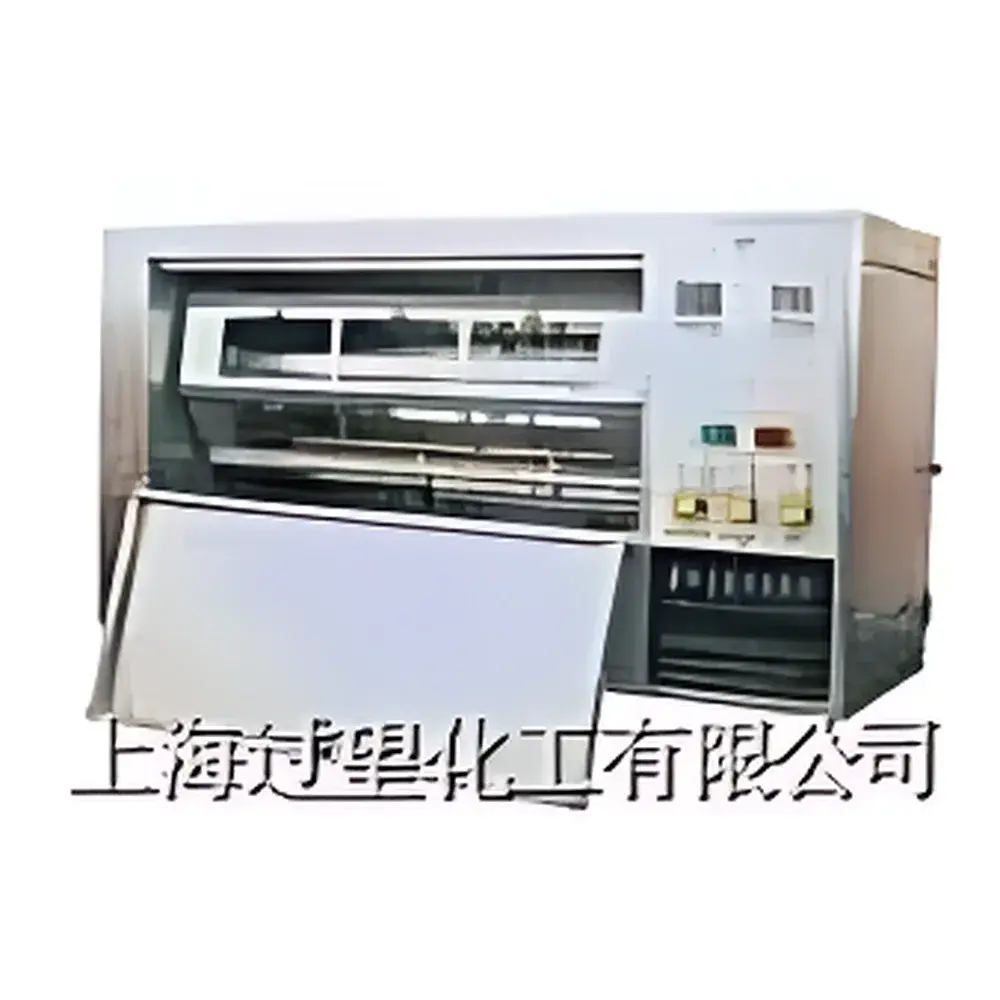
LUV-II UV Accelerated Weathering Test Chamber
| Origin | Shanghai, China |
|---|---|
| Manufacturer Type | Authorized Distributor |
| Origin Category | Domestic (China) |
| Model | LUV-II |
| Pricing | Available Upon Request |
Overview
The LUV-II UV Accelerated Weathering Test Chamber is an engineered environmental test system designed to simulate and accelerate the photochemical degradation effects of solar ultraviolet (UV) radiation combined with moisture exposure on non-metallic materials. It operates on the principle of controlled UV irradiation—typically using UVA-340 or UVB-313 fluorescent lamps—to replicate the spectral distribution of terrestrial sunlight in the critical 295–385 nm range. Concurrent condensation or water spray cycles introduce moisture in precise temporal alignment with UV exposure, enabling realistic simulation of outdoor weathering mechanisms such as photolysis, hydrolysis, and oxidative chain scission in polymers, coatings, adhesives, and composites. Unlike thermal-only aging methods, the LUV-II chamber isolates UV-driven degradation pathways, making it particularly suitable for comparative ranking of material resistance to sunlight-induced embrittlement, chalking, color shift, and gloss loss under standardized accelerated conditions.
Key Features
- Programmable UV irradiance control with real-time monitoring via calibrated UV radiometer (integrated sensor compliant with ISO 4892-3 and ASTM G154)
- Dual-mode moisture delivery: continuous condensation cycle (simulating dew formation) and intermittent water spray (mimicking rain exposure)
- Precise black-panel temperature control (range: 40–70 °C) with PID-regulated heating and forced-air circulation for uniform thermal distribution
- Stainless steel 316 interior chamber with quartz glass UV-transmitting viewing window and corrosion-resistant hardware
- Microprocessor-based controller with 10-segment programmable cycle sequencing, data logging, and password-protected parameter settings
- Compliance-ready architecture supporting audit trails, user access levels, and electronic signature capability for GLP/GMP environments
Sample Compatibility & Compliance
The LUV-II accommodates flat-panel specimens up to 150 mm × 75 mm × 20 mm (W × H × D), with adjustable sample racks permitting vertical or angled mounting per ISO 4892-3 orientation requirements. It supports standard test substrates including aluminum panels, glass slides, and polymer plaques. The system meets the operational criteria of multiple international standards: ISO 4892-3 (Plastics — Methods of exposure to laboratory light sources — Part 3: Fluorescent UV lamps), ASTM G154 (Standard Practice for Operating Fluorescent Ultraviolet (UV) Lamp Apparatus for Exposure of Nonmetallic Materials), and JIS D 0205 (Automotive coating weathering). When configured with optional calibration kits and traceable lamp output verification, the chamber supports regulatory submissions requiring documented instrument qualification (IQ/OQ/PQ) and adherence to FDA 21 CFR Part 11 for electronic records in quality-controlled laboratories.
Software & Data Management
The embedded controller firmware provides local data storage for up to 1,000 hours of timestamped operational parameters—including UV intensity (W/m²), chamber temperature, black-panel temperature, and cycle phase status. Optional RS-485 or Ethernet connectivity enables integration with centralized laboratory information management systems (LIMS) or SCADA platforms. Export functions support CSV-formatted reports compatible with statistical process control (SPC) tools and accelerated life modeling software (e.g., Arrhenius or Time-Temperature-Shift analysis). All logged data include metadata tags for test ID, operator ID, calibration date, and lamp usage hours—ensuring full traceability required under ISO/IEC 17025 accreditation frameworks.
Applications
- Ranking relative UV resistance of architectural coatings, automotive clearcoats, and industrial powder coatings
- Evaluating photostability of plastic packaging films, geomembranes, and agricultural mulch films
- Qualifying UV stabilizers and HALS (hindered amine light stabilizers) in polyolefin formulations
- Supporting IEC 61215 compliance testing for UV durability of photovoltaic module encapsulants and backsheets
- Generating comparative aging data for R&D screening of new polymer blends prior to outdoor field trials
FAQ
What UV lamp types are supported by the LUV-II chamber?
The system is factory-configured for UVA-340 lamps (peak emission at 340 nm), which best simulate midday summer sunlight UV spectrum; UVB-313 lamps (peak at 313 nm) are available as optional upgrade for more aggressive, high-energy stress testing.
Can the LUV-II be used for cyclic corrosion testing (CCT)?
No—the LUV-II is optimized for UV/moisture synergy only and does not provide salt fog, SO₂, or humidity-only phases required for CCT; it is not a replacement for multi-function climate chambers like those conforming to ASTM G85 Annex A5.
Is lamp irradiance calibration traceable to NIST or other national standards?
Yes—optional calibration services include NIST-traceable radiometer certification and lamp spectral power distribution (SPD) verification reports issued by accredited third-party metrology labs.
How often must UV lamps be replaced to maintain test validity?
Per ISO 4892-3, lamps should be replaced after 1,600 hours of cumulative operation or when irradiance drops below 90% of initial value—whichever occurs first; the controller logs lamp runtime automatically.
Does the LUV-II meet requirements for ISO/IEC 17025 accredited testing laboratories?
Yes—when operated with documented IQ/OQ protocols, scheduled maintenance logs, and traceable calibration records, the system satisfies clause 6.4.10 (Equipment Verification) and clause 7.7 (Ensuring Validity of Results) of ISO/IEC 17025:2017.



