
Precision Eforming Electroformed Sieve
| Brand | Precision Eforming |
|---|---|
| Origin | USA |
| Manufacturer Type | Authorized Distributor |
| Import Status | Imported |
| Model | Precision Eforming |
| Pricing | Available Upon Request |
| Aperture Range | 3–2000 µm (1 µm increments) |
| Ultra-Precision Aperture Range | 2–500 µm (1 µm increments) |
| Base Material | Nickel |
| Compliance | ASTM E161, ISO 3310-3 |
| Tolerance | ±2 µm (Ultra-Precision: ±1.5 µm) |
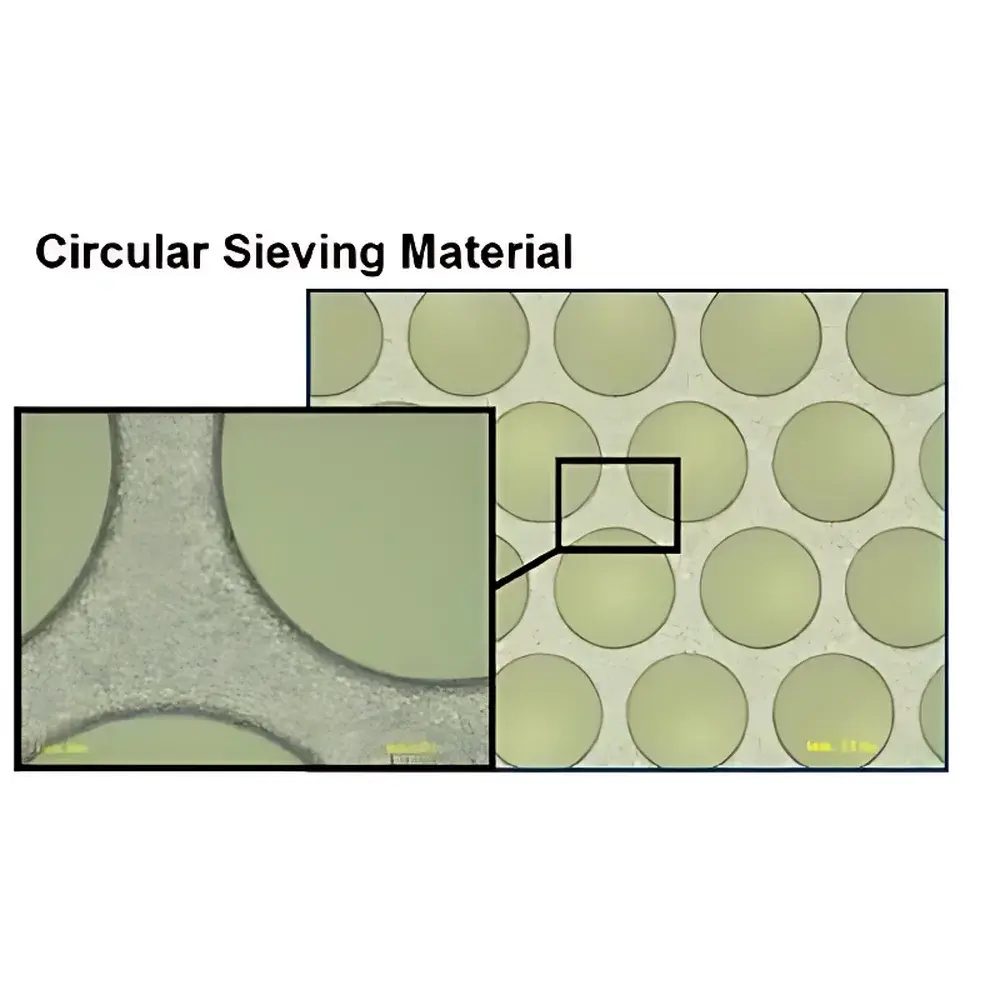
| Aperture Shapes | Square, Round, Slotted, Custom Geometries |
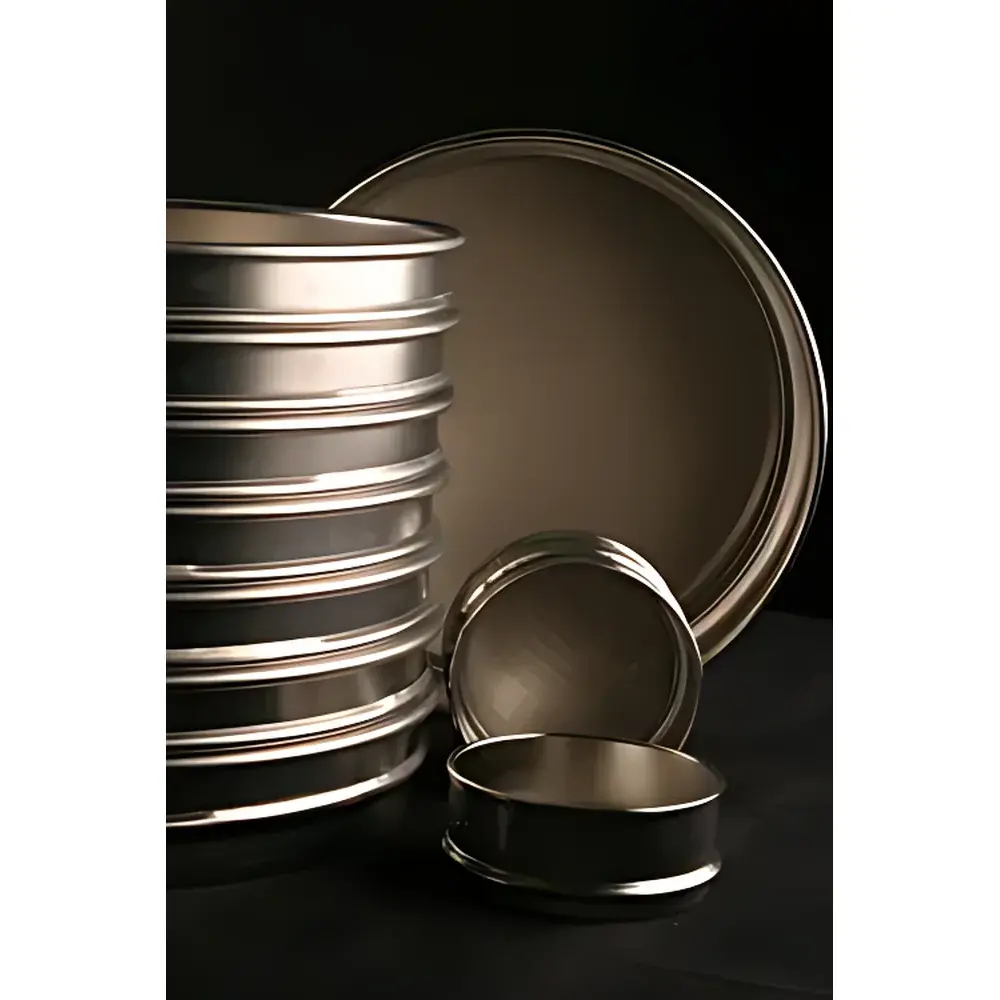
| Sieve Diameters | 3", 8", 12" (stainless steel) |
| Support Grid | Stainless steel (optional or removable) |
Overview
The Precision Eforming Electroformed Sieve is a high-precision particle size analysis medium engineered for laboratories and industrial quality control environments where metrological traceability, dimensional stability, and long-term repeatability are non-negotiable. Unlike conventional woven wire mesh sieves—whose aperture geometry is constrained by mechanical weaving tolerances and subject to progressive deformation under load—the electroformed sieve is manufactured via an additive electrodeposition process. In this method, nickel is precisely deposited onto a photolithographically defined mandrel, enabling deterministic control over pore geometry, wall thickness, and surface topography at the micrometer scale. This results in a monolithic, rigid, and dimensionally invariant filtration structure with near-perfect planarity and minimal inter-pore variation—critical attributes for ISO 13320-compliant laser diffraction validation, USP <786> particulate matter testing, and regulatory-grade sieve analysis per ASTM E11 and ISO 3310-3.
Key Features
- Sub-micron aperture tolerance control: Standard electroformed sieves maintain ±2 µm dimensional tolerance across the full 3–2000 µm range; ultra-precision variants tighten this to ±1.5 µm within 2–500 µm—enabling classification of narrow-distribution powders used in pharmaceutical inhalers, battery cathode materials, and advanced ceramics.
- Geometric flexibility: Supports square, round, slotted, and custom-defined apertures fabricated to customer-specified CAD geometries—facilitating specialized applications such as anisotropic particle orientation studies or flow-through microfluidic pre-filtration.
- Structural integrity and longevity: The electroformed nickel matrix exhibits zero plastic deformation under standard sieve shaker loads (e.g., Ro-Tap®, Gilson, or Endecotts units), eliminating aperture drift over thousands of operational cycles—a key advantage over woven meshes that relax and distort after repeated vibration.
- Surface uniformity: Flat, smooth, burr-free surface finish minimizes particle adhesion and facilitates rapid cleaning via ultrasonic immersion or low-pressure solvent rinse—reducing cross-contamination risk and downtime between batches.
- Modular compatibility: Available in standardized diameters (75 mm, 100 mm, 200 mm, 3″, 8″, 12″) with optional stainless steel support grids (removable or permanently bonded), ensuring seamless integration into existing sieve stack assemblies and automated sieve analysis platforms.
Sample Compatibility & Compliance
Electroformed sieves are validated for use with dry powders, granules, and friable solids across industries including pharmaceuticals (API and excipient grading per USP <786> and EP 2.9.28), mineral processing (ASTM C136/C78), food safety (FDA Bacteriological Analytical Manual Chapter 18), and nanomaterial characterization (ISO/TS 80004-2). Each sieve is supplied with a traceable calibration certificate referencing NIST-traceable master standards and certified against ASTM E161 (Standard Specification for Electroformed Metal Test Sieves) and ISO 3310-3 (Test Sieves — Technical Requirements and Testing — Part 3: Electroformed Perforated Metal Plate Test Sieves). Batch-level metrology data—including mean aperture, standard deviation, and maximum-minimum deviation—is provided upon request to support GLP/GMP audit documentation.
Software & Data Management
While electroformed sieves themselves are passive hardware components, their metrological performance integrates directly with digital sieve analysis workflows. When paired with automated sieve shakers equipped with integrated load cells and time-stamped cycle logging (e.g., Gilson AS-200 or Endecotts Octagon 200), aperture-specific mass retention data can be exported to LIMS or ELN systems via CSV or ASTM E2929-compliant XML schema. For regulated environments, raw sieve calibration reports—including photomicrographs of representative apertures and coordinate-measured deviations—are archived with electronic signatures compliant with FDA 21 CFR Part 11 requirements. Optional barcode-labeled sieve identification enables full lifecycle tracking from receipt through calibration expiry and retirement.
Applications
- Pharmaceutical solid dosage form development (granule sizing for tablet compression)
- Quality assurance of catalyst supports and metal-organic frameworks (MOFs)
- Particle size distribution verification for lithium-ion battery cathode precursors (e.g., NMC, LFP)
- Validation of laser diffraction instruments using reference standards (ISO 13320 Annex C)
- Regulatory submissions requiring documented sieve metrology (e.g., ANDA, DMF, CMC sections)
- Research on fracture mechanics of brittle particulates (e.g., glass beads, ceramic microspheres)
FAQ
What distinguishes electroformed sieves from woven wire mesh sieves in terms of metrological reliability?
Electroformed sieves eliminate the inherent variability introduced by mechanical weaving—such as filament diameter inconsistency, crimp distortion, and interstitial void formation—resulting in inter-aperture standard deviations below 0.8 µm, compared to >3.5 µm typical for woven 63 µm nominal sieves.
Can electroformed sieves be cleaned and reused without compromising accuracy?
Yes. Nickel’s chemical inertness and structural rigidity permit repeated cleaning via ultrasonication in IPA, acetone, or dilute nitric acid—without measurable aperture change—validated over ≥500 cleaning cycles per ASTM E161 Annex A3.
Are custom aperture geometries available for research applications?
Yes. Customers may submit DXF or STEP files specifying non-standard shapes (e.g., hexagonal, elliptical, or fractal-inspired apertures); lead time is typically 4–6 weeks with full dimensional inspection report.
Do you provide calibration certificates traceable to national standards?
Each sieve ships with a certificate referencing NIST SRM 2828 (powder particle size standards) and calibrated using Zeiss Axio Imager M2m optical metrology with sub-100 nm resolution stage positioning.



