
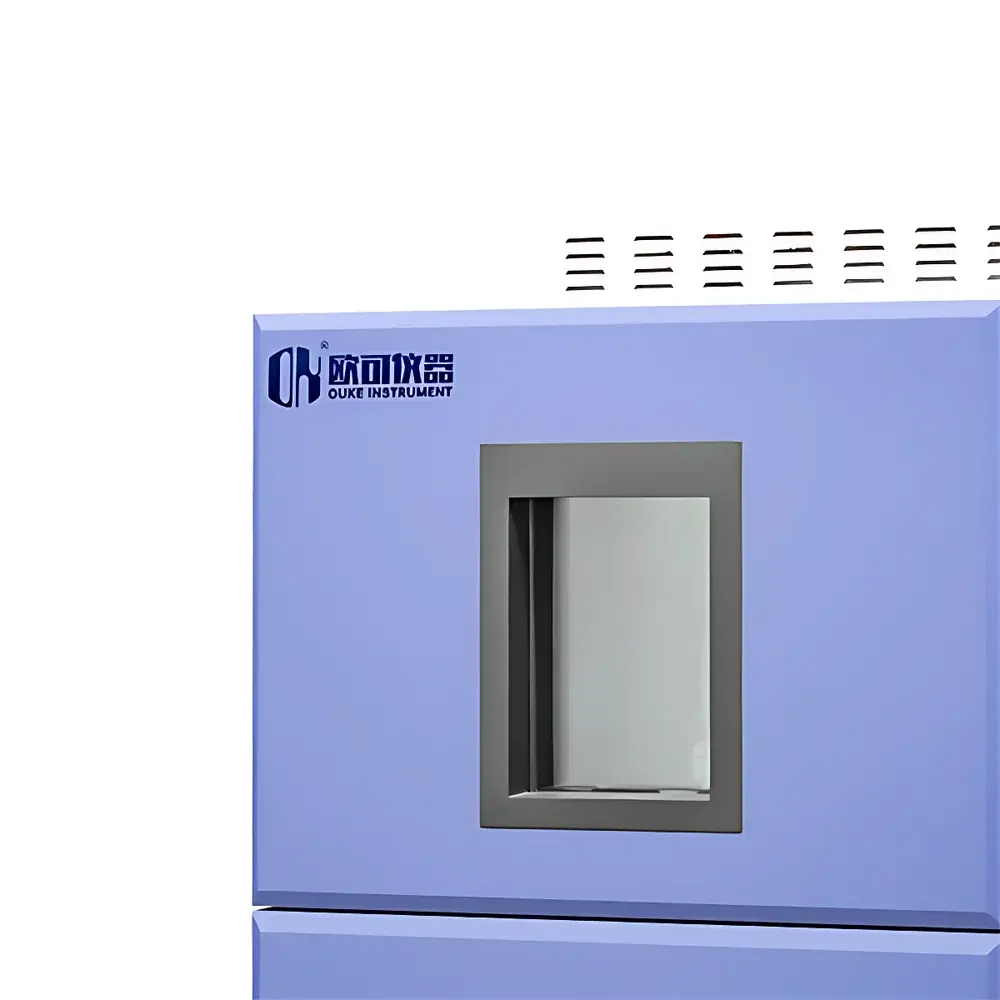
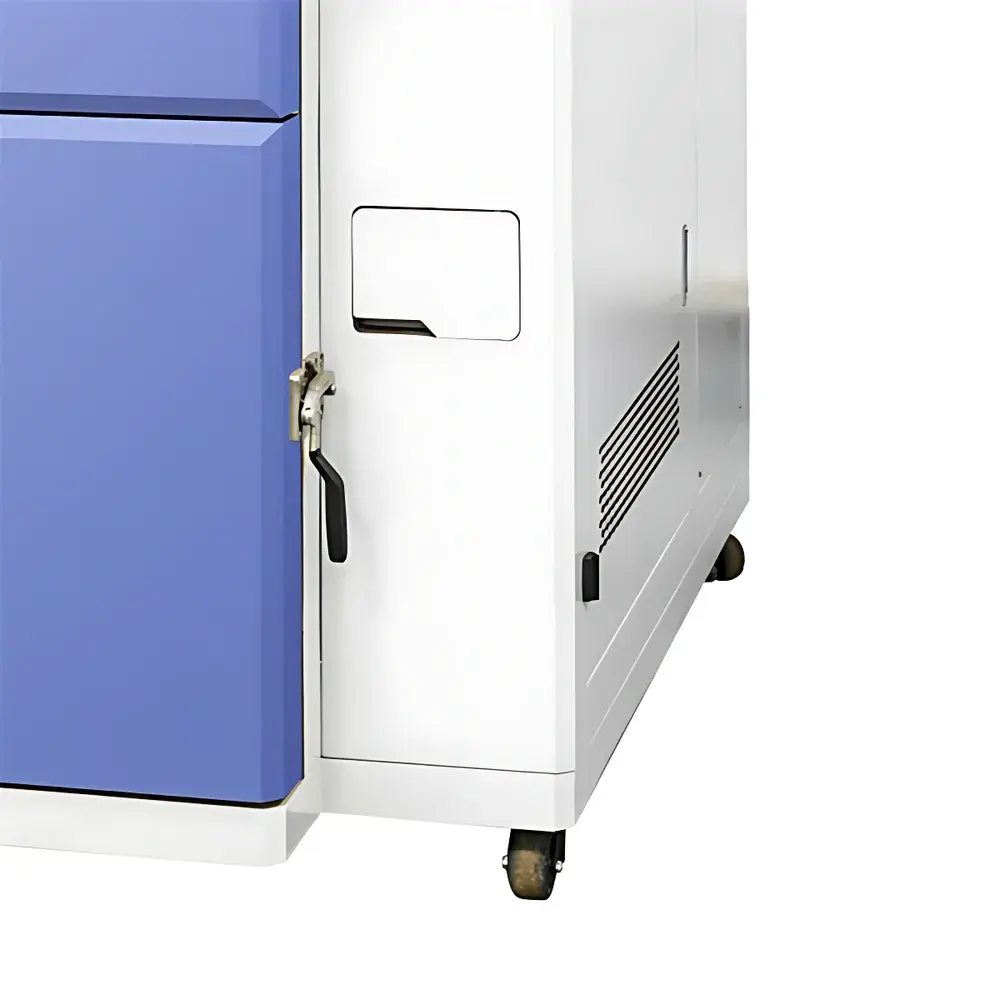
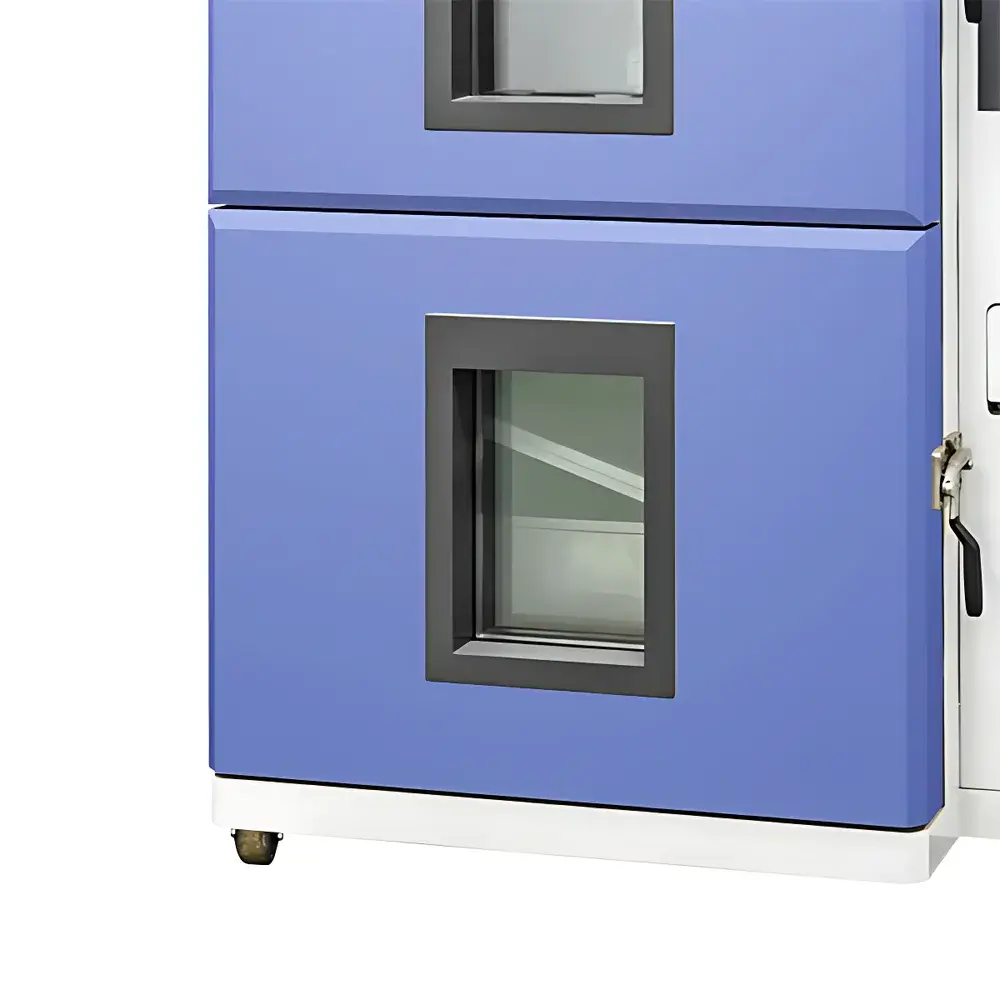
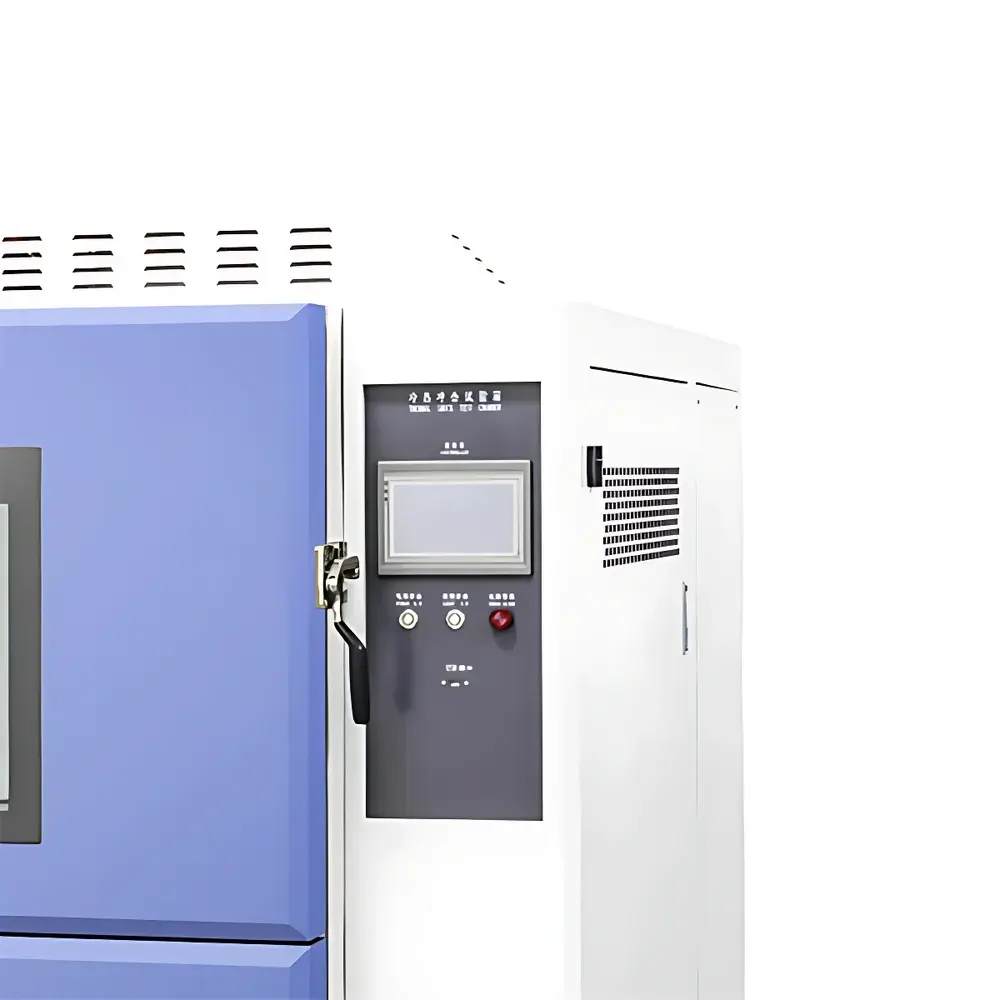
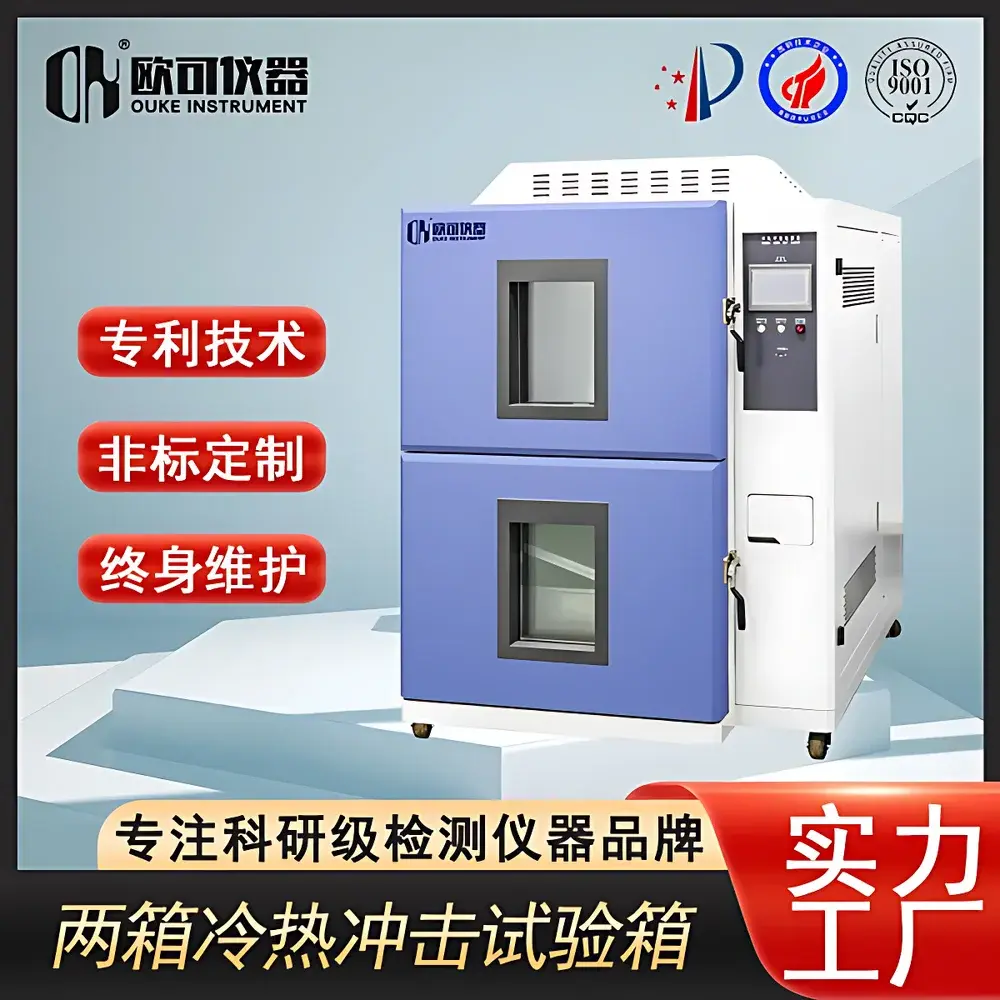
OK-TS-80.001 Programmable Thermal Shock Test Chamber
| Brand | OK Instruments |
|---|---|
| Origin | Guangdong, China |
| Manufacturer Type | Direct Manufacturer |
| Model | OK-TS-80.001 |
| High-Temperature Range | +150 °C |
| Low-Temperature Range | −50 °C |
| Thermal Shock Range | −50 °C to +150 °C |
| Temperature Stability | ±2 °C |
| Heating Rate | 10 °C/min |
| Cooling Rate | 10 °C/min |
Overview
The OK-TS-80.001 Programmable Thermal Shock Test Chamber is an industrial-grade environmental test system engineered for accelerated reliability evaluation of electronic components, automotive modules, aerospace assemblies, and polymer-based materials under rapid, repetitive temperature transitions. It operates on the principle of controlled thermal shock—inducing mechanical stress through coefficient-of-thermal-expansion (CTE) mismatch at material interfaces—enabling detection of latent defects such as solder joint fatigue, delamination, interconnect cracking, and seal integrity failure. Designed in compliance with dual-chamber (hot/cold) configuration, the chamber utilizes a motor-driven transfer basket to shuttle test specimens between independently conditioned zones, eliminating thermal mass interference and ensuring precise, repeatable transition timing. This architecture supports both step-stress and ramp-and-soak thermal shock profiles per IEC 60068-2-14 (Test N), ASTM D5229/D5229M, and MIL-STD-810H Method 503.5.
Key Features
- Dual-zone independent temperature control: Separate high-temperature (+150 °C) and low-temperature (−50 °C) chambers with individually regulated refrigeration and heating circuits
- Programmable transfer mechanism: Servo-controlled basket with position feedback and dwell-time synchronization, enabling sub-second transfer (<5 s typical) between zones
- Binary cascade refrigeration system: Composed of two hermetically sealed German semi-hermetic compressors operating in tandem—one for high-stage (R404A) and one for low-stage (R23)—integrated via an evaporative condenser for efficient inter-stage heat exchange
- Water-cooled condensing system: Requires external cooling tower (10 m³/h flow rate, 32 °C inlet) for stable operation under continuous thermal cycling duty cycles
- Energy modulation control: Variable-speed compressor drives and proportional expansion valves maintain consistent ramp rates while minimizing power consumption and thermal overshoot
- Stainless steel 304 interior chamber with non-reflective finish; double-layer vacuum-insulated door with electrically heated anti-condensation seal
- Compliance-ready controller: 7-inch color touchscreen HMI with built-in profile editor, real-time data logging (1 Hz resolution), and audit trail capability aligned with GLP/GMP documentation requirements
Sample Compatibility & Compliance
The OK-TS-80.001 accommodates test specimens up to 300 mm × 300 mm × 250 mm (W × D × H) within the transfer basket. Its chamber geometry and airflow design ensure uniform temperature distribution (±2 °C stability across working volume per IEC 60068-3-5) and minimize thermal gradients during dwell phases. The system meets or exceeds performance criteria specified in multiple international and industry-specific standards, including: IEC 60068-2-14 (Test N), GB/T 2423.22–2002, GJB 150.5–2009, MIL-STD-810H Method 503.5, EIA-364-32, and QC/T 17–1992. All calibration and verification procedures follow ISO/IEC 17025 traceable protocols using NIST-traceable PT100 sensors. Optional validation packages support IQ/OQ documentation for regulated environments subject to FDA 21 CFR Part 11 and EU Annex 11 requirements.
Software & Data Management
The embedded control firmware supports multi-segment programmable profiles—including dwell time, ramp rate, cycle count, and fault recovery logic—with up to 100 user-defined programs stored locally. Data export is available via USB 2.0 or Ethernet (Modbus TCP) in CSV format, compatible with LIMS integration and statistical process control (SPC) platforms. Real-time trending graphs display chamber temperatures, basket position status, and compressor discharge pressures. Audit logs record all operator actions, parameter changes, and alarm events with timestamps and user IDs—enabling full traceability for quality audits. Optional PC-based software (OK-EnviroLink™) provides remote monitoring, automated report generation (PDF/Excel), and deviation analysis against pre-set acceptance thresholds.
Applications
- Qualification testing of PCBAs, IC packages, and wafer-level chip-scale packages (WLCSP) for consumer electronics and telecom infrastructure
- Reliability screening of EV battery modules, power inverters, and ADAS sensor housings under automotive thermal cycling conditions
- Material compatibility assessment of encapsulants, conformal coatings, and adhesive bonds used in avionics and defense electronics
- Process validation for reflow soldering, die attach, and underfill curing processes where CTE mismatch is a critical failure driver
- Accelerated life testing of optical connectors, MEMS devices, and medical device housings exposed to extreme ambient shifts
FAQ
What is the maximum allowable specimen weight for the transfer basket?
The standard basket supports loads up to 15 kg. Custom baskets rated for 30 kg are available upon request.
Does the system include integrated data logging and export functionality?
Yes—continuous 1 Hz logging is enabled by default, with timestamped CSV exports via USB or network interface.
Is external cooling water mandatory for operation?
Yes. A dedicated closed-loop cooling tower delivering 10 m³/h at ≤32 °C inlet temperature is required for sustained operation above 85% duty cycle.
Can the chamber be validated for ISO 17025-compliant calibration?
Yes. Factory-installed Class A PT100 sensors and optional third-party validation kits support full uncertainty budgeting per ISO/IEC 17025 Annex A.3.
How is thermal shock transition time measured and verified?
Transition time is defined as the duration from 10% to 90% of target temperature delta, measured per IEC 60068-3-10 using calibrated handheld probes positioned at three spatial locations within the basket volume.
Related Products



