
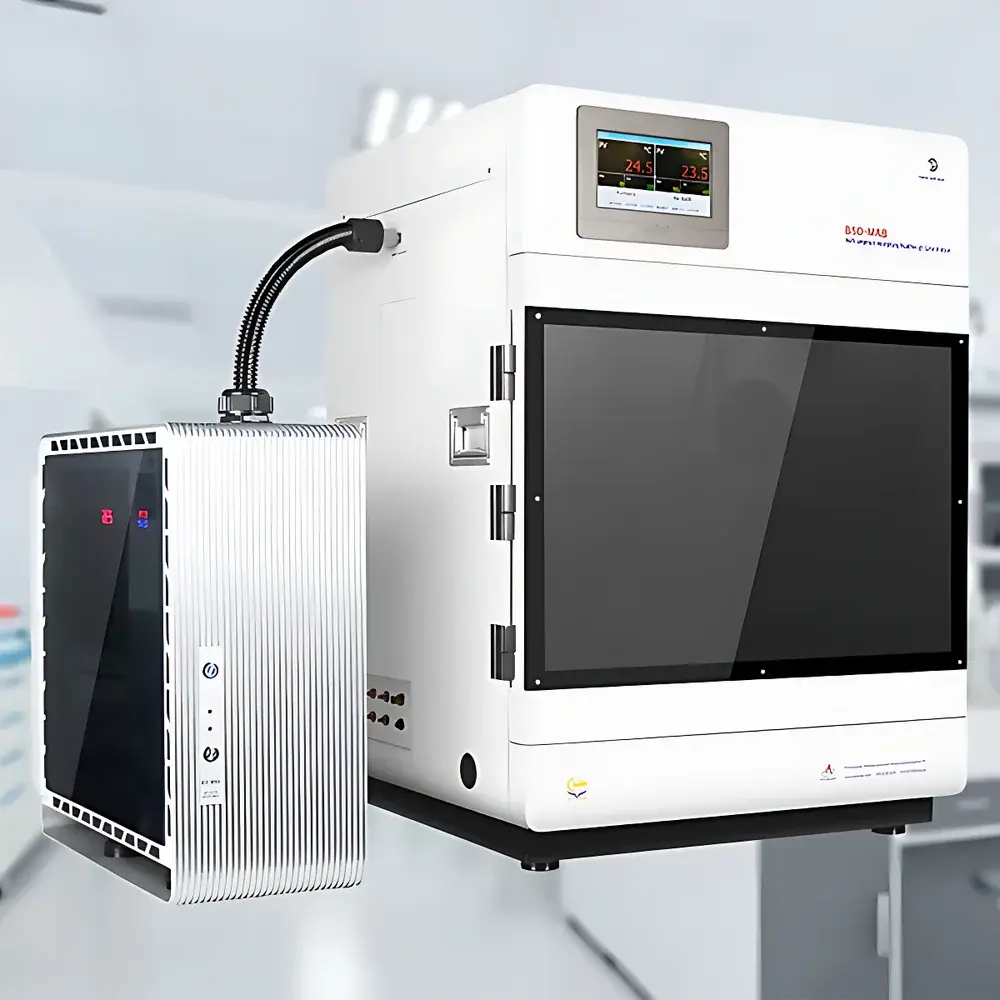
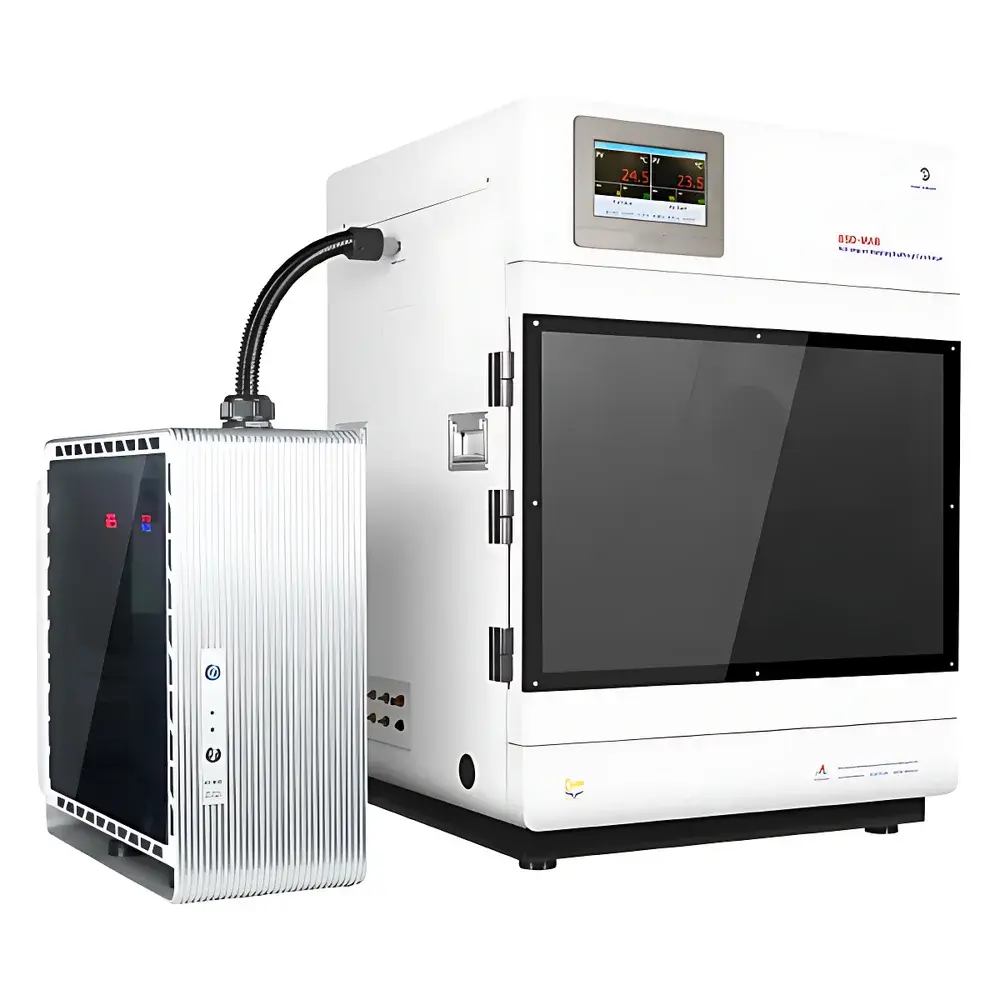
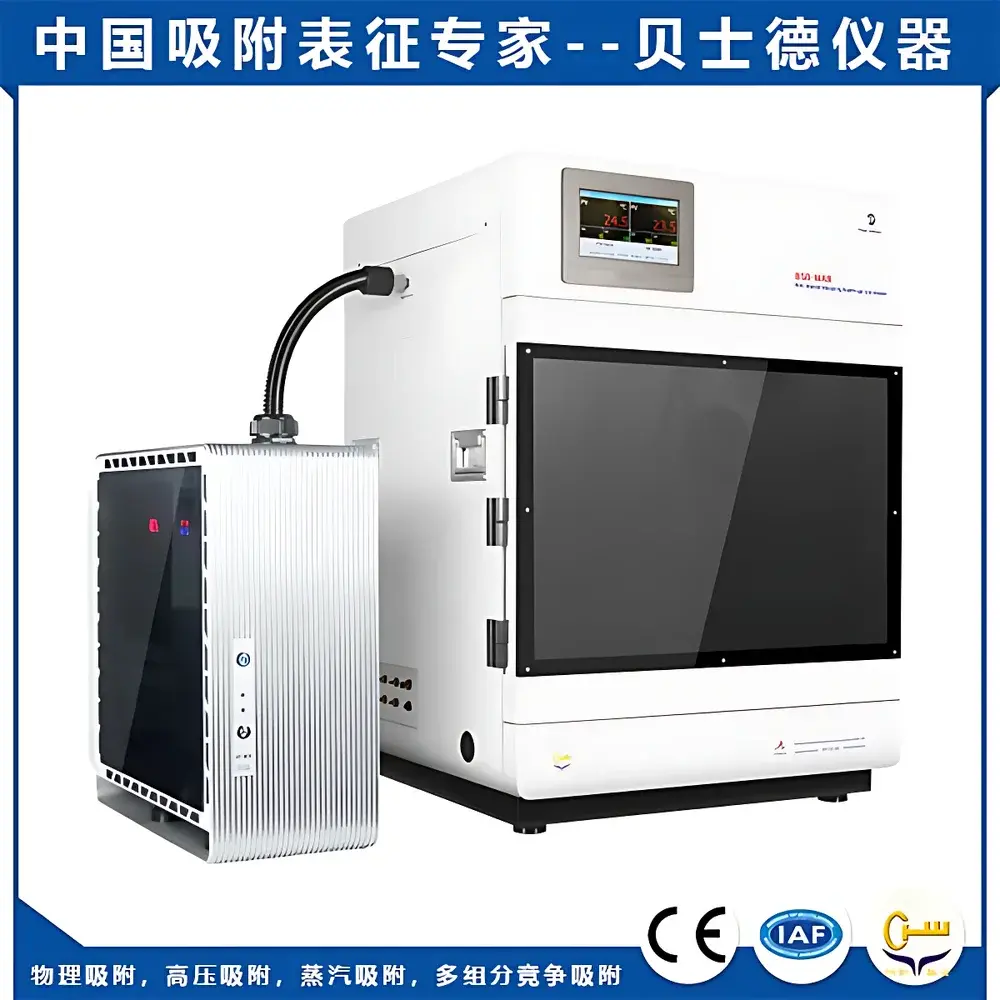
Beishide BSD-MABX Multicomponent Competitive Adsorption Analyzer with Breakthrough Curve Monitoring
| Brand | Beishide Instrument |
|---|---|
| Origin | Beijing, China |
| Manufacturer Type | Direct Manufacturer |
| Country of Origin | China |
| Model | BSD-MABX |
| Price Range | USD 70,000 – 140,000 (FOB) |
| Gas Mixture Compatibility | Binary and multicomponent gas–gas, gas–vapor, vapor–vapor systems |
| Mass Flow Controllers (MFCs) | 4–8 configurable channels |
| Breakthrough Columns | Standard 2 mL and 8 mL stainless-steel columns |
| Adsorption Pressure Range | Ambient to 10 MPa (optional high-pressure modules: 1, 3, or 10 MPa) |
| Adsorption Temperature Range | Circulating water bath: −20 °C to 80 °C |
| programmable high-temperature furnace | ambient to 600 °C (custom up to 800 °C) |
| Detection Systems | Integrated TCD |
Overview
The Beishide BSD-MABX Multicomponent Competitive Adsorption Analyzer is an engineered platform for dynamic breakthrough curve measurement under controlled pressure, temperature, and compositional conditions. It operates on the principle of fixed-bed adsorption kinetics, where a multicomponent gas or vapor mixture flows through a packed column containing solid adsorbent (e.g., activated carbon, zeolites, MOFs), and real-time effluent composition is monitored to generate time-resolved breakthrough profiles. Unlike equilibrium-based techniques (e.g., static volumetric or gravimetric sorption), the BSD-MABX replicates industrially relevant transient operating conditions—enabling quantitative determination of dynamic adsorption capacity, selectivity, mass transfer coefficients, breakthrough times, saturation thresholds, and regeneration behavior. Its design supports rigorous process development for pressure swing adsorption (PSA), temperature swing adsorption (TSA), air purification, natural gas upgrading (CH4/CO2/N2 separation), and low-concentration pollutant capture (e.g., ppm-level VOCs, SO2, NH3). The system complies with core methodology frameworks outlined in ASTM D3612 (gas adsorption), ISO 15901-2 (pore structure and adsorption kinetics), and USP (adsorbent characterization for pharmaceutical gas purification).
Key Features
- Modular gas delivery architecture with 4–8 independently calibrated mass flow controllers (MFCs), supporting precise stoichiometric control across multicomponent feeds—including non-corrosive gases, water vapor, organic vapors (TVOC), and low-concentration acidic/basic species (SO2, NOx, NH3 at ≤100 ppm).
- Dual-column configuration with interchangeable stainless-steel (≤200 °C) and high-purity quartz columns (≤800 °C), enabling in situ thermal activation without atmospheric exposure and direct transition to breakthrough analysis.
- Integrated high-sensitivity thermal conductivity detector (TCD) with column-embedded Pt100 temperature sensors for real-time, spatially resolved thermal monitoring—eliminating external lag and ensuring thermodynamic fidelity.
- Expandable detection ecosystem: native interface for online quadrupole mass spectrometry (INFICON BSD-MASS, 1–100 amu, 1.8 ms/amu scan speed) or gas chromatography (SHIMADZU GC with TCD/FID options), permitting speciation and quantification of ≥3 components simultaneously.
- Comprehensive environmental control: dual-zone temperature management (cryogenic water bath: −20 °C to 80 °C; high-temp furnace: ambient to 600 °C), vacuum-assisted activation (<1 Pa), programmable steam generation (P/P0 = 0.1–99.99%), and backflush-capable gas routing for accelerated regeneration studies.
- Pressure-flexible operation: standard ambient-to-10 MPa capability with optional high-pressure modules (1, 3, or 10 MPa), allowing isobaric breakthrough testing under PSA-relevant conditions and accurate pressure-dependent selectivity mapping.
Sample Compatibility & Compliance
The BSD-MABX accommodates diverse adsorbent morphologies—including powders, pellets, monoliths, and coated monoliths—with bed heights scalable from milligrams to grams. It supports adsorption studies involving corrosive analytes (SO2, H2S, NH3) at trace concentrations via chemically resistant fluidic pathways (fluoroelastomer seals, passivated stainless steel). All hardware and software workflows adhere to GLP-compliant data integrity requirements: full audit trail logging, user-access controls, electronic signatures, and 21 CFR Part 11–ready metadata tagging for raw sensor outputs, method parameters, and calibration records. System validation documentation includes IQ/OQ protocols aligned with ISO/IEC 17025 for testing laboratories.
Software & Data Management
The proprietary Beishide ADSORB-PRO software provides synchronized acquisition of flow, pressure, temperature, and concentration signals at 10 Hz resolution. It enables automated breakthrough onset detection (based on derivative thresholding), multi-parameter regression fitting (e.g., Thomas, Yoon–Nelson, BDST models), and comparative selectivity indexing across temperature/pressure gradients. Export formats include CSV, HDF5, and MATLAB-compatible .mat files. Raw data archives are immutable and timestamped; all processing steps are logged with version-controlled algorithms. Optional integration with LIMS platforms via OPC UA ensures traceability from instrument to enterprise QA/QC systems.
Applications
- Design and optimization of industrial PSA/TSA units for hydrogen purification, biogas upgrading, and oxygen/nitrogen separation.
- Dynamic evaluation of air filtration media—quantifying service life, saturation volume, and efficiency decay for TVOC, formaldehyde, SO2, and NH3 at indoor-relevant concentrations (ppb–ppm).
- Mechanistic investigation of competitive adsorption energetics using temperature-programmed desorption (TPD) coupled with breakthrough analysis.
- Validation of molecular simulation predictions (e.g., GCMC, MD) against experimental multicomponent uptake kinetics under realistic partial pressures.
- Regeneration cycle assessment—including thermal, vacuum, and purge-gas assisted recovery—and long-term cyclic stability testing (>100 cycles).
- Co-adsorption and displacement phenomena in mixed-vapor systems (e.g., H2O/ethanol/benzene) critical for solvent recovery and dehumidification.
FAQ
Can the BSD-MABX quantify adsorption selectivity for three or more co-fed components?
Yes—when interfaced with online MS or GC, it delivers time-resolved molar fractions for ≥3 components, enabling calculation of dynamic selectivity ratios (αij) as a function of bed residence time and saturation level.
Is in situ adsorbent activation possible without breaking vacuum or exposing to ambient air?
Yes—the integrated furnace and vacuum pump support programmed thermal/vacuum activation within the sealed column assembly, followed by immediate breakthrough testing under inert purge.
What is the lowest detectable concentration for NH3 or SO2 using the standard TCD configuration?
The base TCD achieves ~10 ppm detection for NH3 and SO2; for sub-ppm sensitivity, the optional thermal desorption–GC/FID or absorption–spectrophotometry add-on modules provide validated LODs of 16×10−12 g/mL (NH3) and 14×10−12 g/mL (SO2).
Does the system support variable-flow breakthrough experiments to assess mass transfer limitations?
Yes—MFCs allow real-time ramping or stepwise modulation of total flow rate while maintaining constant partial pressures, facilitating Sherwood number correlation and intraparticle diffusion coefficient estimation.
Are calibration protocols and reference standards included for regulatory submissions?
All systems ship with NIST-traceable calibration certificates for MFCs, pressure transducers, and temperature sensors; certified gas mixtures (e.g., CH4/CO2/N2, VOC blends) and SOP templates for ASTM/ISO-compliant reporting are available upon request.



