
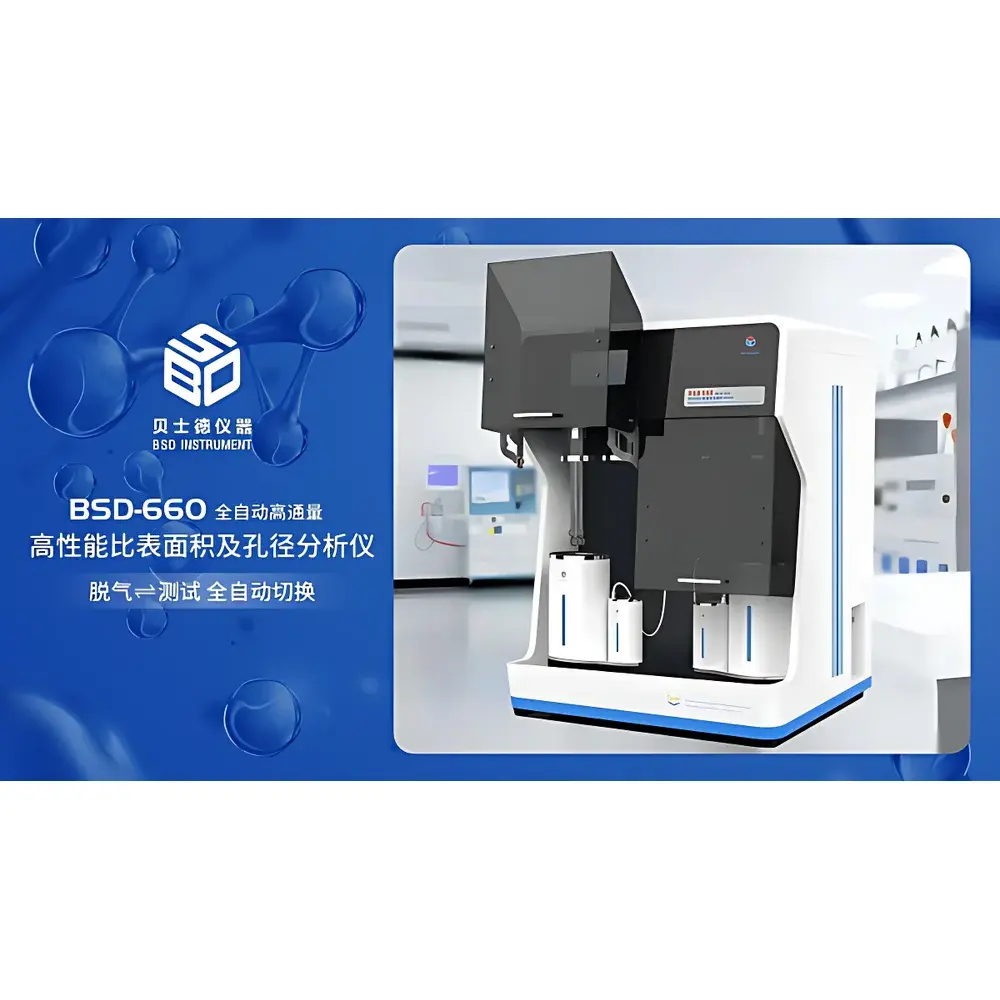
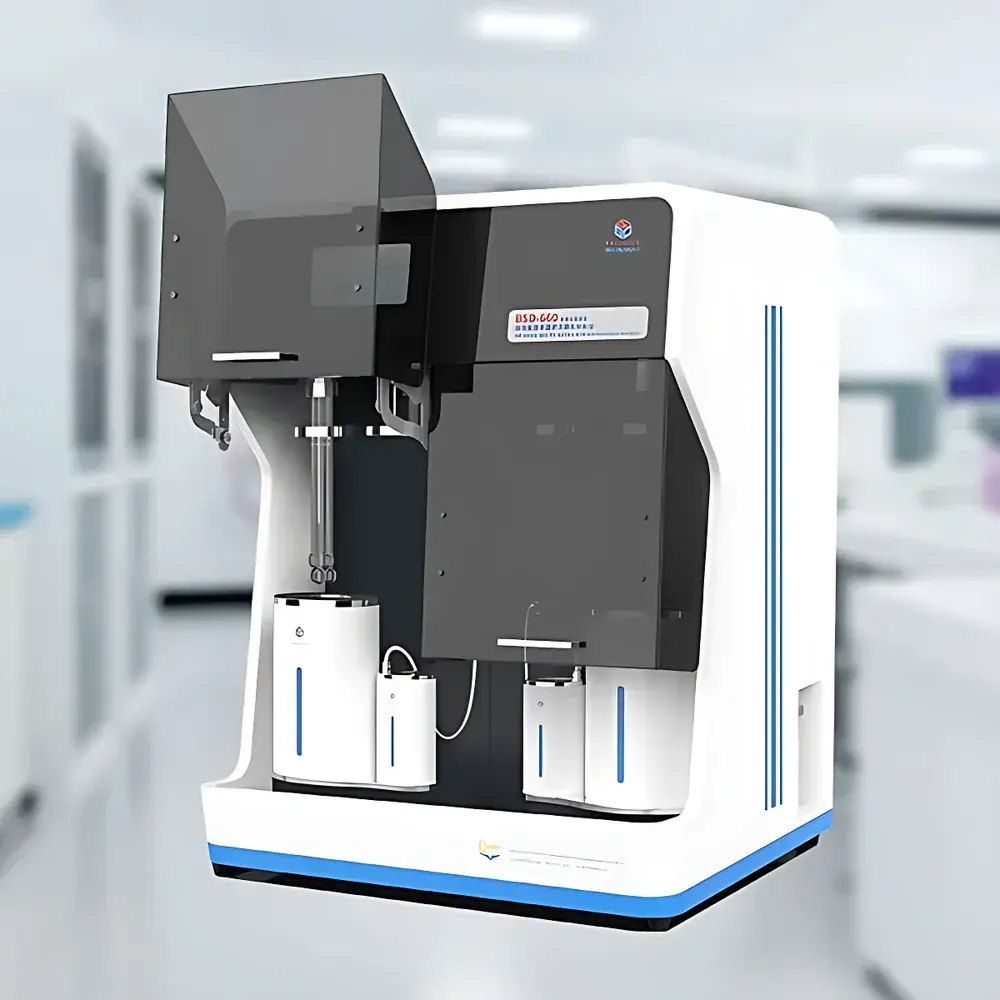
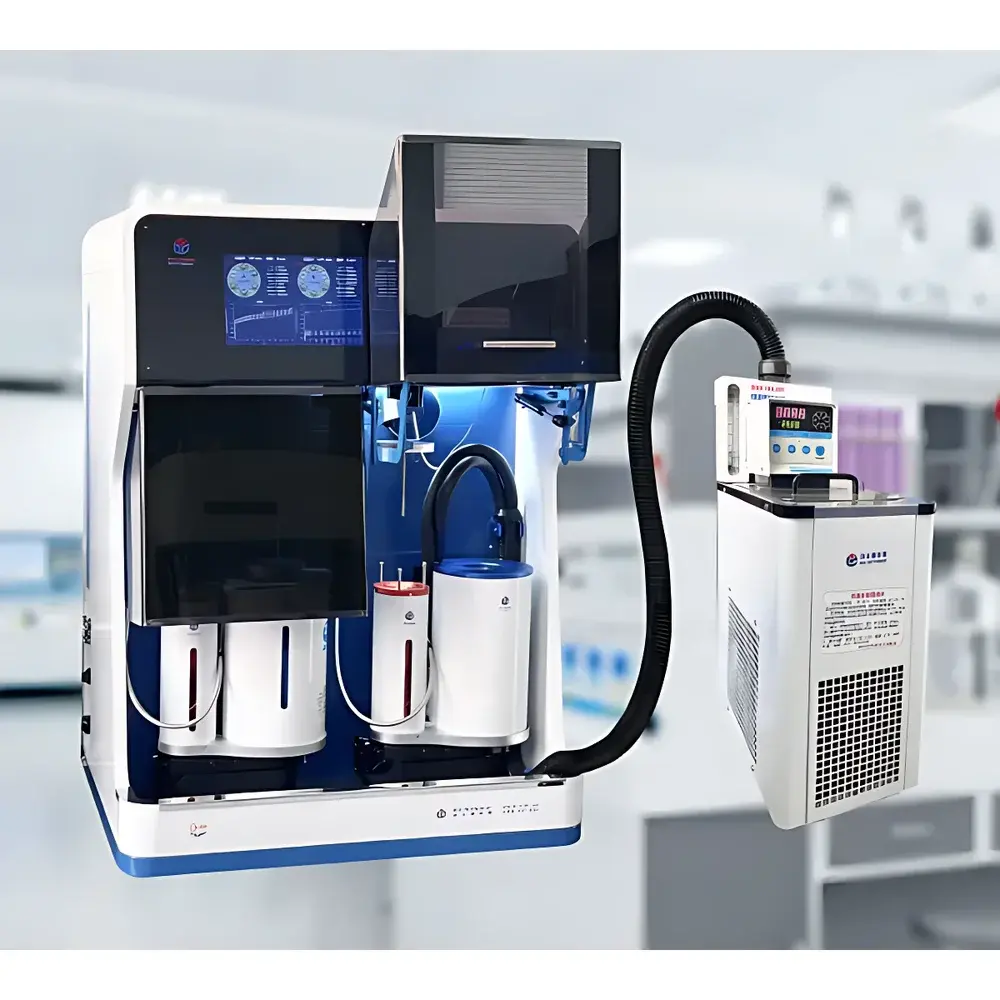
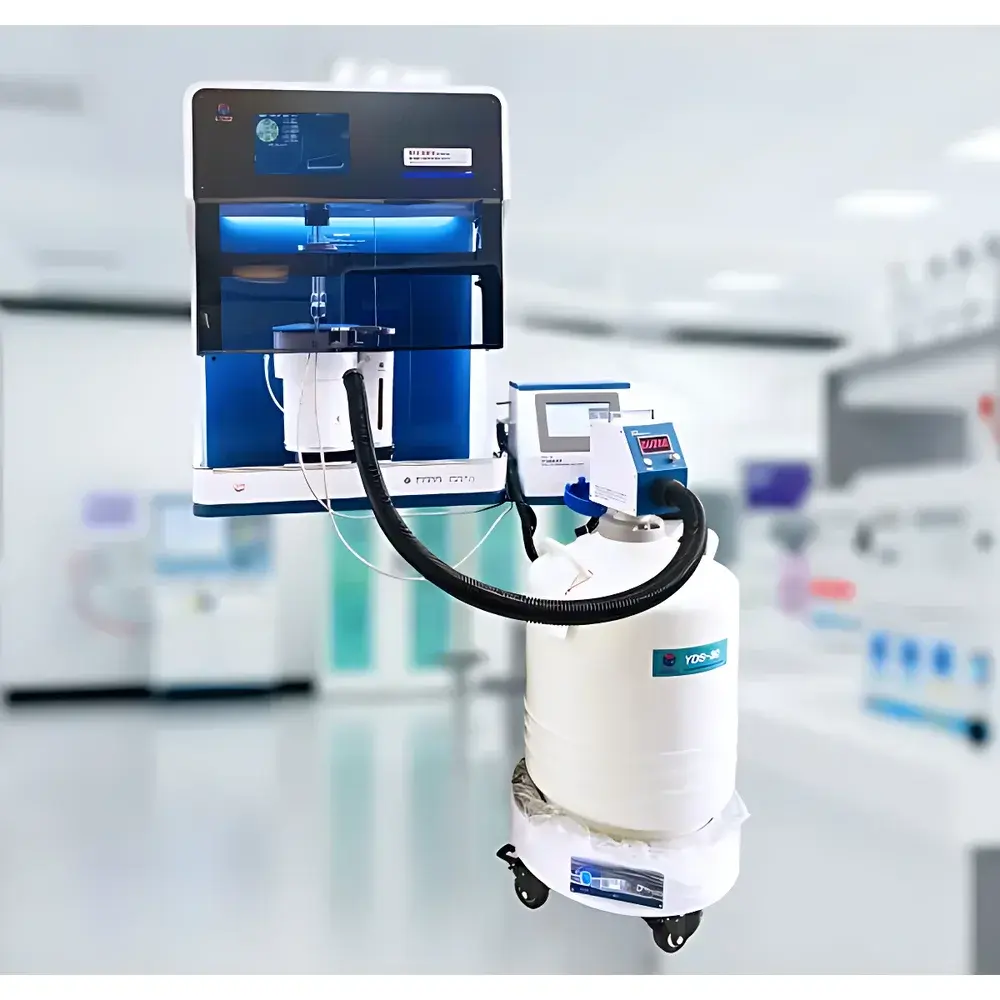
Beishide BSD-660A6S Specific Surface Area and Pore Size Analyzer
| Brand | Beishide Instrument |
|---|---|
| Origin | Beijing, China |
| Manufacturer Type | Manufacturer |
| Product Category | Domestic |
| Model | BSD-660A6S |
| Instrument Type | Specific Surface Area and Pore Size Analyzer |
| Measurement Principle | Static Volumetric Method (Static Capacity Method) |
| Number of Analysis Stations | 1–4 |
| Pore Size Range | 0.35–500 nm |
| Pressure Range | Ambient Pressure |
| Repeatability | ≤ ±1.0% |
| Vacuum Level | Up to 1×10⁻⁹ Pa |
| BET Surface Area Range | ≥0.0005 m²/g |
| Temperature Control Accuracy | Better than ±0.1°C (RT–400°C) |
| Adsorption Gases | N₂, O₂, Ar, CO, CO₂, H₂, CH₄, C₂H₆, etc. |
| Optional Functions | Cryogenic temperature control (100 K–80°C), corrosive gas compatibility, vapor adsorption, LIMS integration |
Overview
The Beishide BSD-660A6S Specific Surface Area and Pore Size Analyzer is a high-precision, fully automated physical adsorption instrument engineered for quantitative characterization of porous and non-porous solid materials using the static volumetric (gas adsorption) method. It operates on the fundamental principles of gas adsorption isotherm measurement—primarily nitrogen at 77 K—to determine specific surface area via the Brunauer–Emmett–Teller (BET) theory, pore size distribution across micropores (0.35–2 nm), mesopores (2–50 nm), and macropores (50–500 nm) using density functional theory (DFT) and non-local DFT (NLDFT) models, and total pore volume via t-plot or BJH methods. Designed for research laboratories and quality control environments requiring regulatory compliance and high-throughput operation, the BSD-660A6S integrates advanced vacuum architecture, thermally stabilized gas handling, and intelligent process automation to ensure metrological traceability, inter-laboratory reproducibility, and long-term operational stability.
Key Features
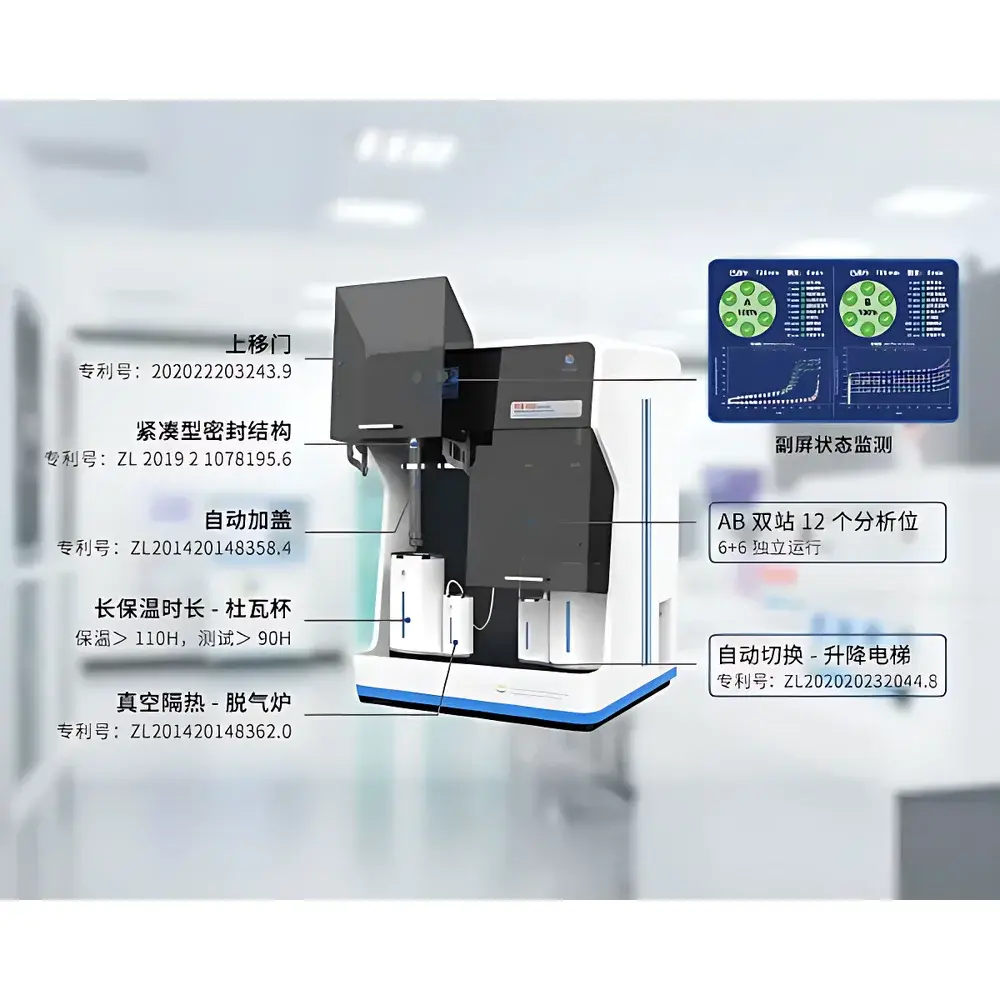
- Fully automated workflow: Integrated dual-stage process control enables sequential, unattended sample degassing followed by adsorption analysis—eliminating manual tube transfer between degas furnace and cryostat.
- Multi-station flexibility: Configurable for 1–4 independent analysis stations; optional high-throughput configurations support up to 12 samples per batch with synchronized degassing and measurement cycles.
- Helium-free dead-volume calibration: Patented sequence—helium pycnometry at ambient temperature → vacuum degassing → adsorption measurement—eliminates helium carryover into micropore analysis, improving accuracy in ultramicroporous materials (e.g., MOFs, zeolites).
- Pressure-controlled anti-flying degassing: Real-time pressure feedback modulates furnace temperature ramping and vertical lift mechanism to suppress sample dispersion during high-temperature degassing—critical for low-density powders (e.g., aerogels, battery cathodes).
- Thermally isolated, fully heated gas manifold: Entire pneumatic path maintained at 40 ± 0.01 °C to minimize thermal transients and ensure consistent adsorptive equilibrium conditions.
- Motorized liquid nitrogen delivery: Brushless DC-driven turbo pump enables precise, contamination-free LN₂ dosing without pressurized cylinders or manual refilling—enhancing safety and repeatability in cryogenic measurements.
- ISO/GB-compliant temperature stabilization: “Auto-Zone Servo” technology maintains adsorption chamber thermal uniformity with <0.10% drift in equivalent dead volume over 24 h—outperforming conventional isothermal jackets and level-sensor systems.
Sample Compatibility & Compliance
The BSD-660A6S supports a broad spectrum of industrial and academic materials, including but not limited to lithium-ion battery cathode/anode powders (LiCoO₂, Si/C composites), metal–organic frameworks (MOFs), covalent organic frameworks (COFs), activated carbons, silica gels, zeolites, metal oxides (TiO₂, Al₂O₃), hydroxides, inorganic salts, and polymer-based adsorbents. Its modular gas handling system accommodates non-corrosive gases (N₂, Ar, CO₂), flammable gases (H₂, CH₄), and—when equipped with optional corrosion-resistant components—halogenated or acidic gases (NH₃, SO₂). The instrument conforms to ISO 9277:2010, GB/T 19587–2017, ISO 15901-1/2/3:2005–2007, ASTM D3663, and USP , supporting GLP/GMP-aligned data integrity through audit-trail-enabled software and optional 21 CFR Part 11 compliance modules.
Software & Data Management
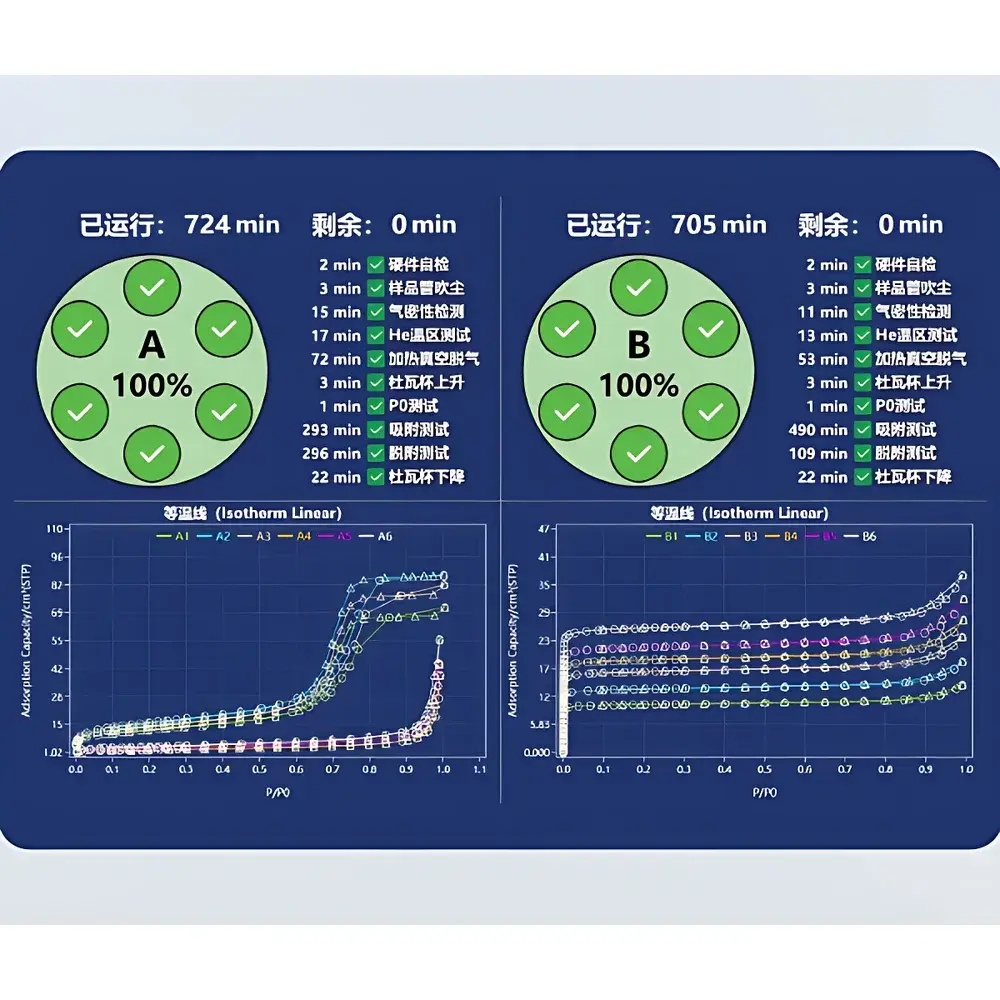
The proprietary BDSoft™ platform provides full instrument control, real-time monitoring, and standardized reporting in accordance with ISO/IEC 17025 requirements. Key capabilities include programmable degas profiles (ramp/hold steps, pressure thresholds), automatic endpoint detection based on pressure decay kinetics, multi-point BET fitting with linear/non-linear regression validation, DFT/NLDFT kernel selection per material class, and export of raw isotherms in ASTM E2919-compliant CSV format. An open API and native LIMS interface enable bidirectional data exchange with laboratory information management systems, facilitating automated report generation, metadata tagging, and electronic signature workflows for regulated environments.
Applications
- Quality assurance of catalyst supports and adsorbents in petrochemical and environmental engineering.
- R&D of next-generation battery electrode materials—quantifying surface accessibility, pore tortuosity, and Li⁺ ion transport pathways.
- Characterization of pharmaceutical excipients and amorphous solid dispersions for dissolution performance prediction.
- Development and validation of hydrogen storage media (e.g., Mg-based hydrides, porous carbons) under controlled gas atmospheres.
- Regulatory submission support for nanomaterials under REACH, FDA guidance, and ICH Q5C.
- Academic studies in surface science, colloid chemistry, and heterogeneous catalysis requiring sub-nanometer resolution pore structure data.
FAQ
What adsorption theories are implemented in the BSD-660A6S software?
BET, Langmuir, t-plot, αs-plot, BJH, Dollimore-Heal, DH, NLDFT, and QSDFT models are embedded—with material-specific kernel libraries for carbon, silica, alumina, and zeolite surfaces.
Can the instrument perform water vapor adsorption analysis?
Yes—when fitted with vapor-compatible valves, cold traps, and humidity-controlled gas lines, it supports IUPAC Type II and Type V isotherm acquisition from 5% to 95% RH.
Is remote monitoring and diagnostics supported?
Yes—via secure HTTPS web interface with live status dashboard, alarm logging, and firmware update capability over LAN/WAN.
How does the system ensure traceable calibration?
Certified reference materials (CRM) such as NIST SRM 1930 (silica gel) and SRM 2976 (activated carbon) are preloaded in the calibration library; user-defined CRMs can be registered with uncertainty propagation.
What vacuum performance is required for micropore analysis?
The integrated dual-stage turbomolecular pumping system achieves ≤1×10⁻⁹ Pa base pressure—meeting ISO 15901-3 requirements for reliable ultramicropore (<0.7 nm) quantification.



