
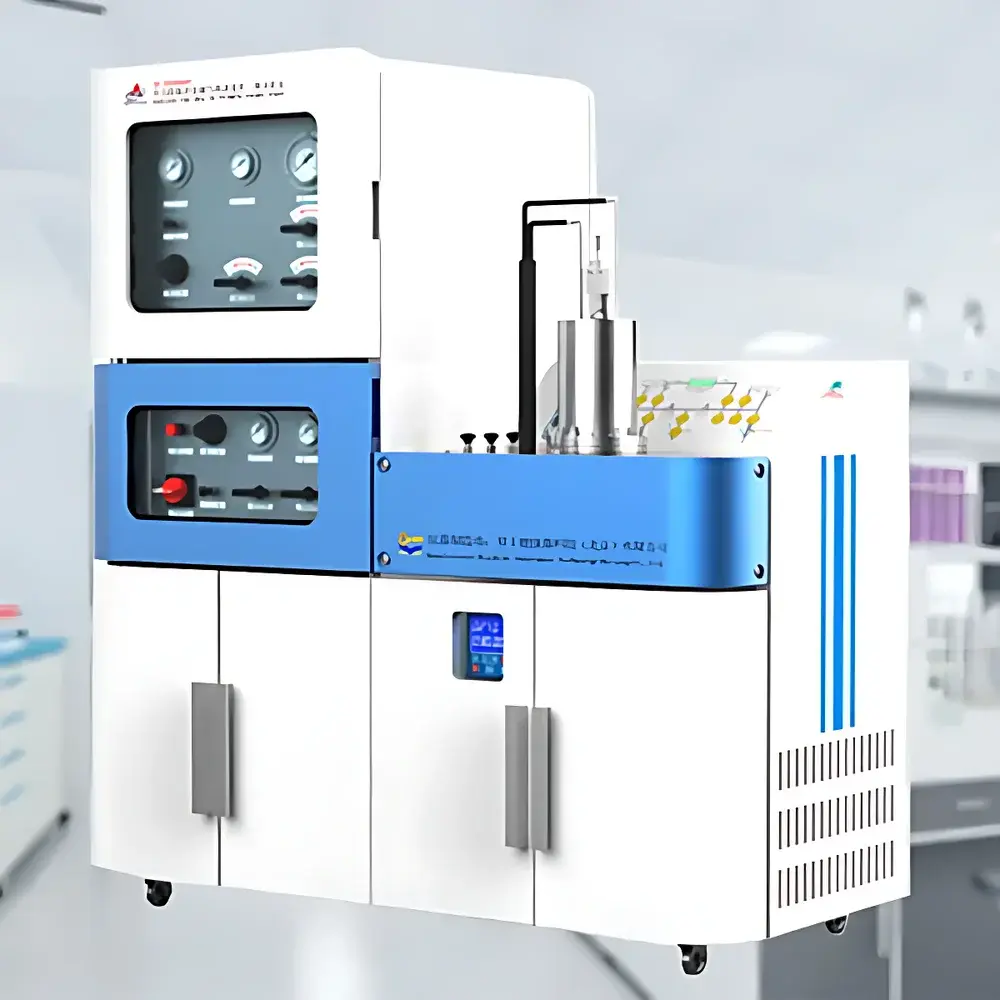
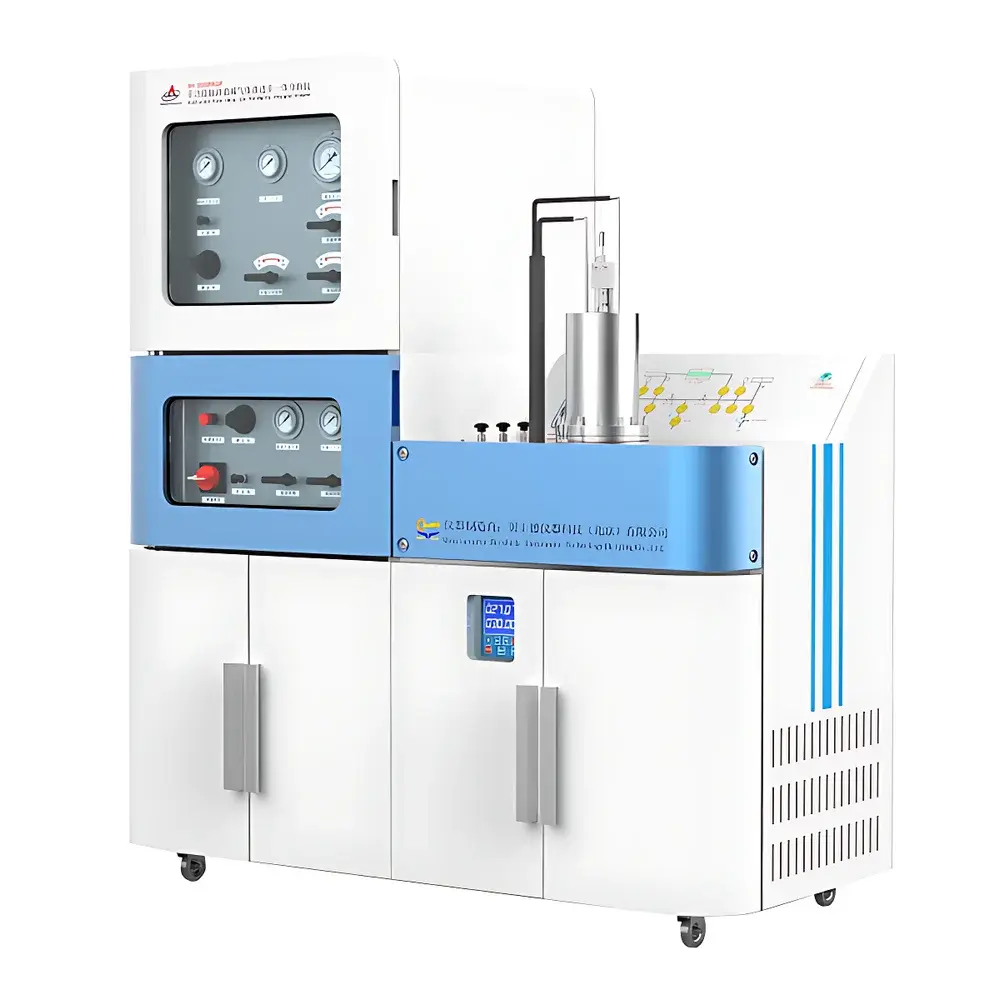
Beishide BSD-PAGP Automated High-Pressure Permeability & Porosity Analyzer
| Brand | Beishide Instrument |
|---|---|
| Origin | Beijing, China |
| Manufacturer Type | Manufacturer |
| Model | BSD-PAGP |
| Pricing Range | USD 70,000 – 140,000 (FOB) |
| Measurement Method | Static Volumetric Method |
| Temperature Range | −10 °C to +80 °C (±0.1 °C stability) |
| Pressure Range | 0–69 MPa |
| Ultimate Vacuum | 1×10⁻² to 1×10⁻⁶ Pa |
Overview
The Beishide BSD-PAGP Automated High-Pressure Permeability & Porosity Analyzer is a research-grade instrument engineered for precise characterization of low- to ultra-low-permeability porous media under simulated reservoir conditions. It employs the static volumetric method—compliant with ASTM D3034 and ISO 15136—to quantify gas permeability, porosity, pore volume, grain volume, and true density of geological cores, coal samples, shale, and engineered porous materials. The system integrates fully automated confining pressure (up to 70 MPa), axial pressure (optional), high-pressure test gas delivery (up to 20 MPa), and precision temperature control (−10 °C to +80 °C, ±0.1 °C). Its dual-pressure-sensor architecture, stainless-steel fluidic pathways rated to 30 MPa hydrostatic test pressure, and helium-leak-tested manifold ensure metrological integrity across extended measurement cycles. Designed for geomechanical laboratories, petroleum R&D centers, and carbon sequestration research facilities, the BSD-PAGP supports reproducible evaluation of transport properties under realistic in-situ stress and thermal gradients.
Key Features
- Automated confining and axial pressure application (0–70 MPa) via servo-controlled hydraulic intensifier, eliminating manual pumping and enabling programmable pressure ramps and holds.
- Dual high-accuracy pressure sensing: imported 0–70 MPa transducers (0.1% FS) for confining/axial systems; two 0–200 bar transducers (0.1% FS) for upstream/downstream test gas manifolds.
- Modular core holder design accommodating 1″ (19–51 mm height) and 1.5″ (19–76 mm height) cylindrical specimens; rapid interchange via standardized quick-connect fittings and interchangeable end caps.
- Integrated temperature monitoring: embedded Pt100 sensors within the core holder body and thermal chamber, delivering real-time feedback with ±0.1% accuracy and active PID-controlled stabilization.
- Ultra-low dead-volume test chambers (5 mL minimum) optimized for sub-millidarcy permeability measurements; optional expansion chambers available for mid-to-high permeability validation (1–1000 mD).
- Full stainless-steel (316 SS) gas path construction, validated to 30 MPa hydrostatic pressure; all valves are pneumatically actuated diaphragm-type units rated to 20 MPa with zero-leak sealing performance (>5×10⁶ operational cycles).
- Factory-certified helium leak testing per ISO 10648-2 using INFICON HeliTest™ spectrometer, ensuring background leakage <1×10⁻⁹ mbar·L/s throughout the sealed system.
Sample Compatibility & Compliance
The BSD-PAGP accepts standard cylindrical rock core plugs conforming to API RP 40 and ISO 15136 geometries. Compatible sample matrices include sandstone, carbonate, shale, coal, ceramic filters, and sintered metal foams. Test gases include He, N₂, CH₄, CO₂, and air—each selected based on molecular kinetics and adsorption behavior relevant to subsurface flow modeling. The instrument meets mechanical safety requirements per EN 13445 and pressure equipment directive PED 2014/68/EU. All pressure containment components undergo ASME Section VIII Div. 1 hydrostatic certification. Data acquisition complies with GLP principles; audit trails, user access logs, and electronic signature support align with FDA 21 CFR Part 11 readiness when deployed with validated software configurations.
Software & Data Management
The proprietary Beishide PAGP Control Suite provides real-time visualization of differential pressure decay, temperature drift, and volumetric equilibration curves. Raw sensor data (pressure, temperature, time) are timestamped at 100 Hz and stored in HDF5 format for traceability. Automated calculation modules derive absolute permeability (using Darcy’s law with Klinkenberg correction), effective porosity, bulk volume, grain volume, and true density per ASTM D2607 and ISO 15901-2. Export options include CSV, Excel, and PDF report templates compliant with internal QA/QC workflows. Optional LIMS integration supports structured metadata tagging (sample ID, operator, date, pressure/temperature setpoints) and secure cloud backup via TLS 1.3 encrypted transmission.
Applications
- Quantification of stress-dependent permeability anisotropy in unconventional reservoirs under triaxial loading.
- Evaluation of CO₂–brine–rock interaction effects on pore throat geometry during carbon capture and storage (CCS) feasibility studies.
- Calibration of numerical flow simulators (e.g., TOUGH2, CMG) using experimentally derived relative permeability endpoints.
- Characterization of proppant-pack conductivity degradation under cyclic pressure loading in hydraulic fracturing research.
- Validation of digital rock physics (DRP) models against physical benchmark measurements at reservoir-relevant confining stresses.
- Quality assurance of filtration media used in high-pressure hydrogen purification systems.
FAQ
What pressure ranges does the BSD-PAGP support for confining, axial, and test gas applications?
Confining and axial pressure: 0–70 MPa; test gas pressure: 0–20 MPa; system overpressure rating: 30 MPa (hydrostatically verified).
Is vacuum pretreatment integrated or optional?
Vacuum degassing is available as a factory-installed option using a turbomolecular pump achieving ≤1×10⁻⁷ Pa base pressure.
How is temperature uniformity maintained across the core holder and fluid lines?
The entire core holder assembly and adjacent gas manifolds reside within a single thermally insulated chamber with forced-air circulation and dual-stage PID control, minimizing thermal gradients to <0.2 °C across the measurement zone.
Can the system accommodate non-standard core dimensions?
Yes—custom core holders can be fabricated per user specifications, including rectangular or irregular cross-sections, subject to mechanical compatibility review and finite-element stress validation.
What calibration standards are supplied with the instrument?
NIST-traceable pressure transducer calibrations (certified annually), certified reference gases (He, N₂), and geometric volume standards (certified glass syringes) are included in the initial commissioning package.



