
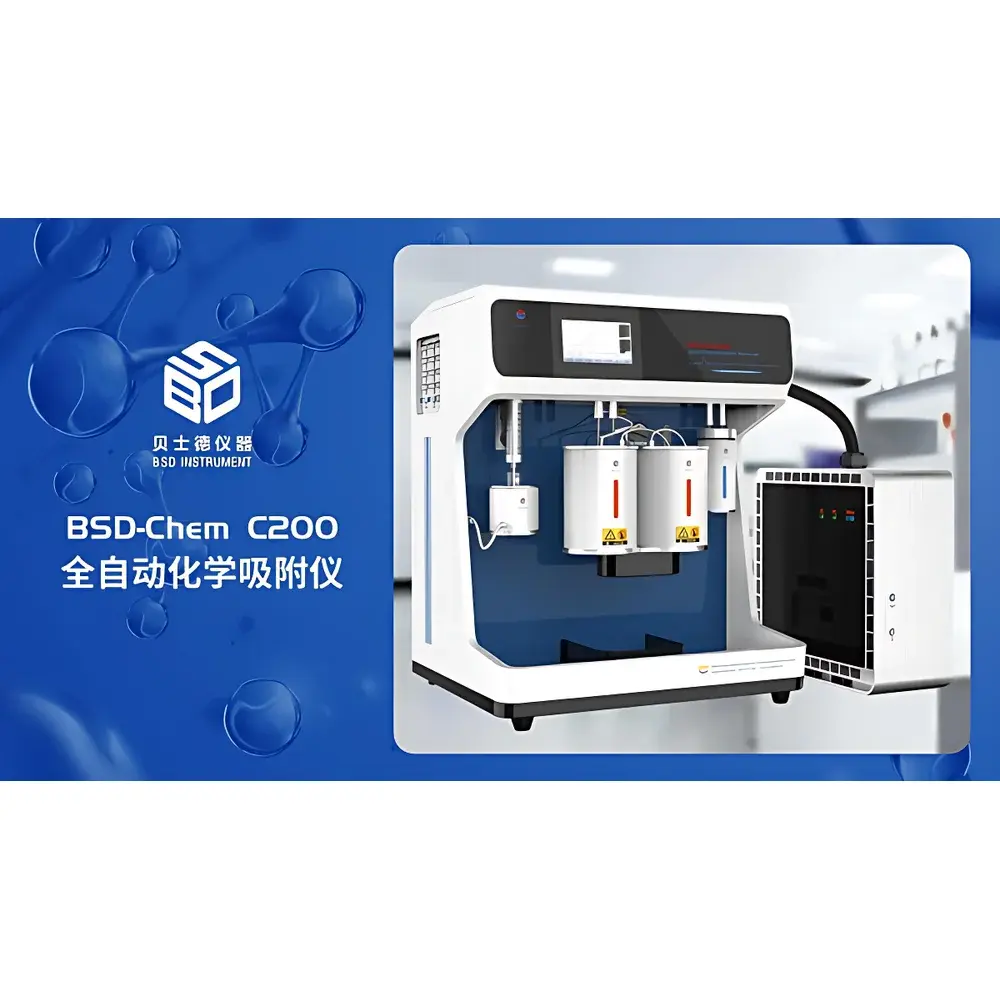
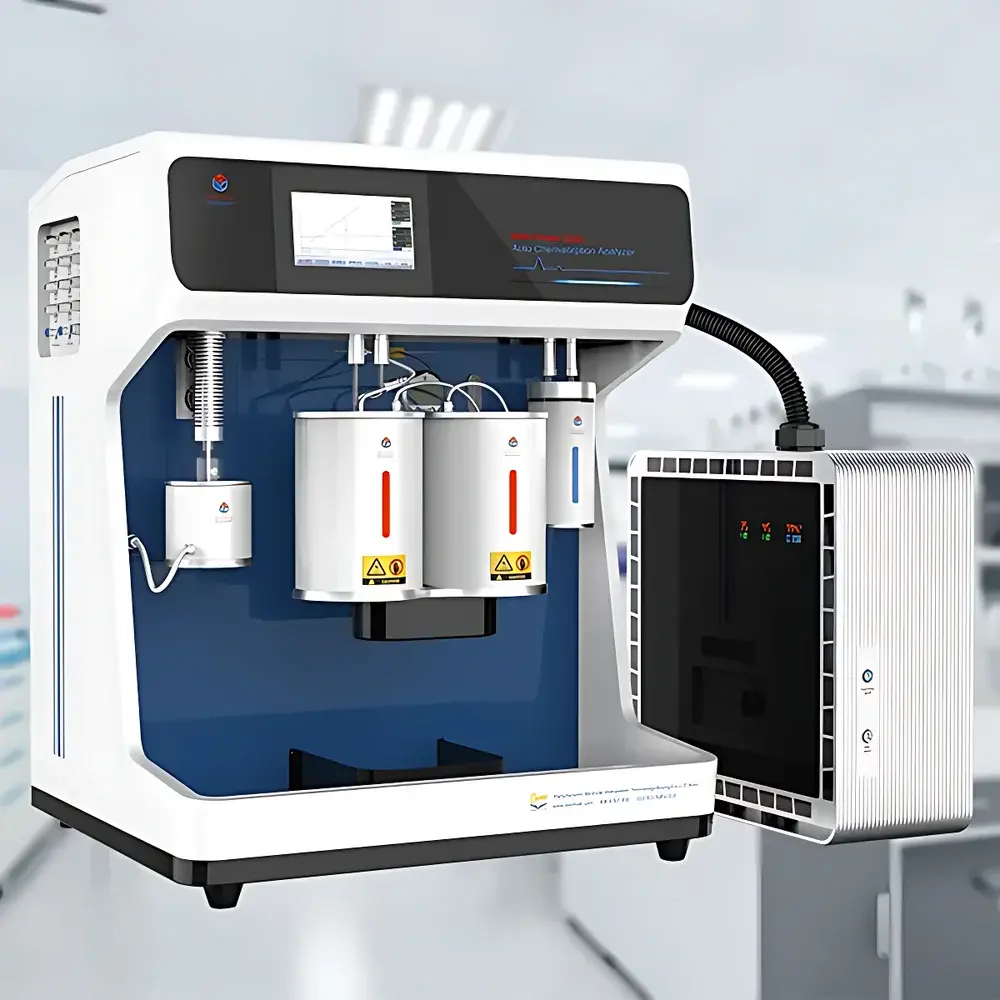
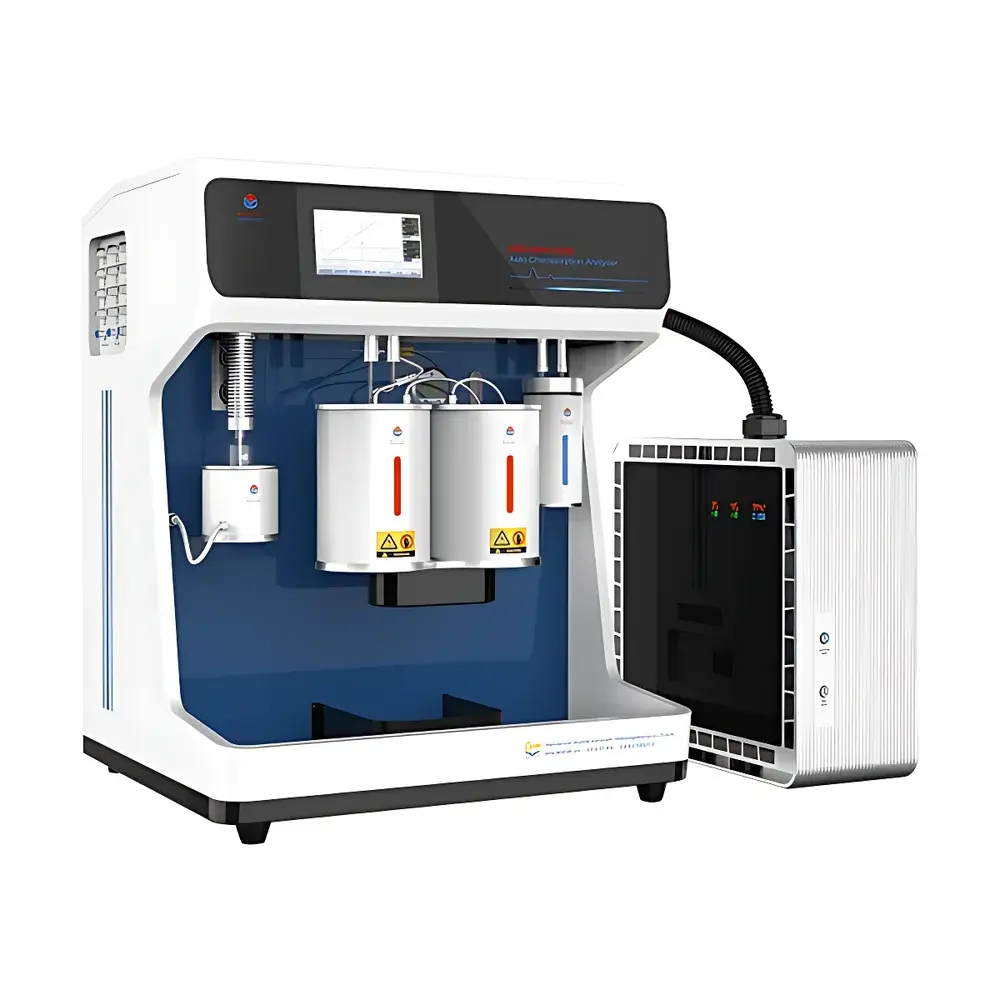
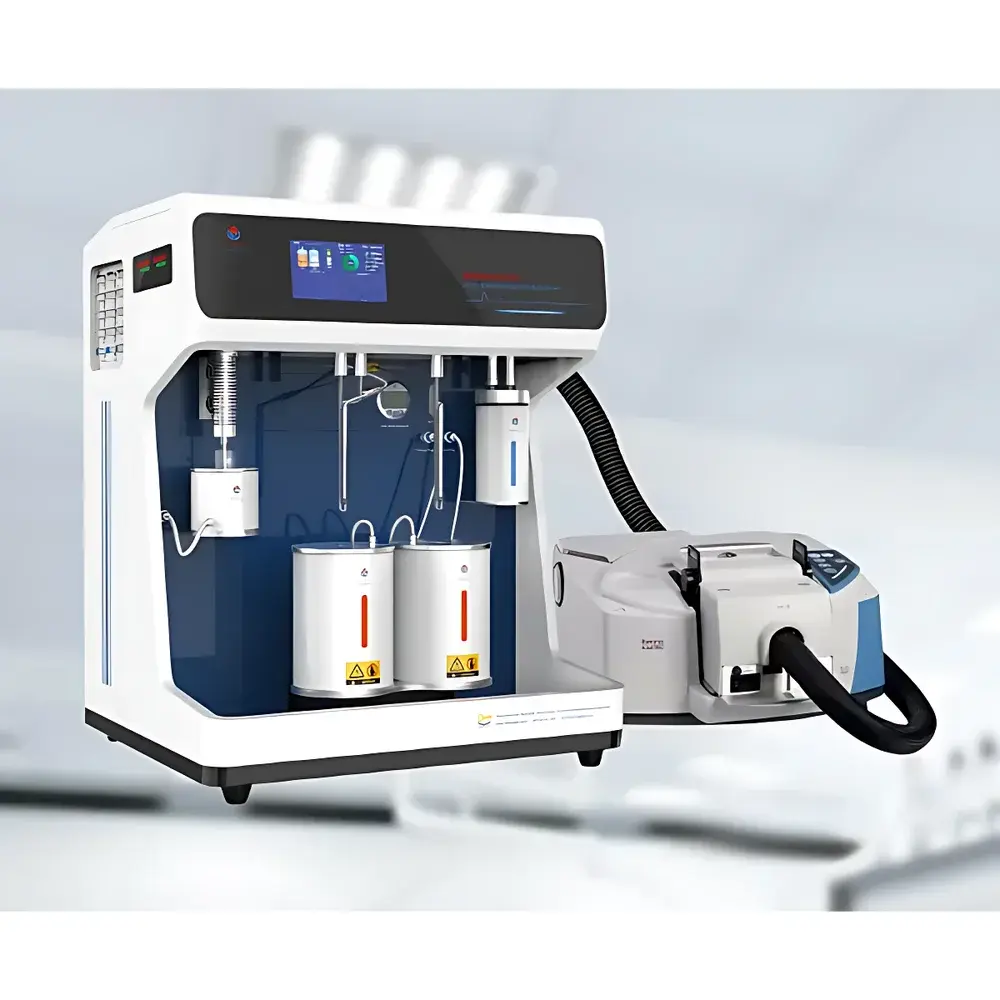
Beishide BSD-Chem C200 Automated Temperature-Programmed Chemisorption Analyzer
| Brand | Beishide Instrument |
|---|---|
| Origin | Beijing, China |
| Manufacturer Type | OEM Manufacturer |
| Product Category | Domestic |
| Model | BSD-Chem C200 |
| Instrument Type | Chemisorption Analyzer |
| Measurement Principle | Continuous Flow Method |
| Gas Inlet Ports | 12 channels |
| Heating Temperature Range | Ambient to 1200 °C |
| Isothermal Stability | ±0.1 °C from ambient to 60 °C |
| Ramp Rate | 1–100 °C/min |
| Pressure Range | Atmospheric (standard) |
| Test Capabilities | 1. Temperature-Programmed Desorption (TPD), 2. Temperature-Programmed Reduction (TPR), 3. Temperature-Programmed Oxidation (TPO), 4. Temperature-Programmed Surface Reaction (TPSR), 5. Temperature-Programmed Sulfidation (TPS), 6. Pulse Titration, 7. Desorption Activation Energy (E<sub>d</sub>), 8. Pre-exponential Factor for Desorption (A<sub>d</sub>), 9. Desorption Order (n), 10. Adsorption Activation Energy (E<sub>a</sub>), 11. Enthalpy of Adsorption (ΔH), 12. Pre-exponential Factor for Adsorption (A<sub>a</sub>) |
Overview
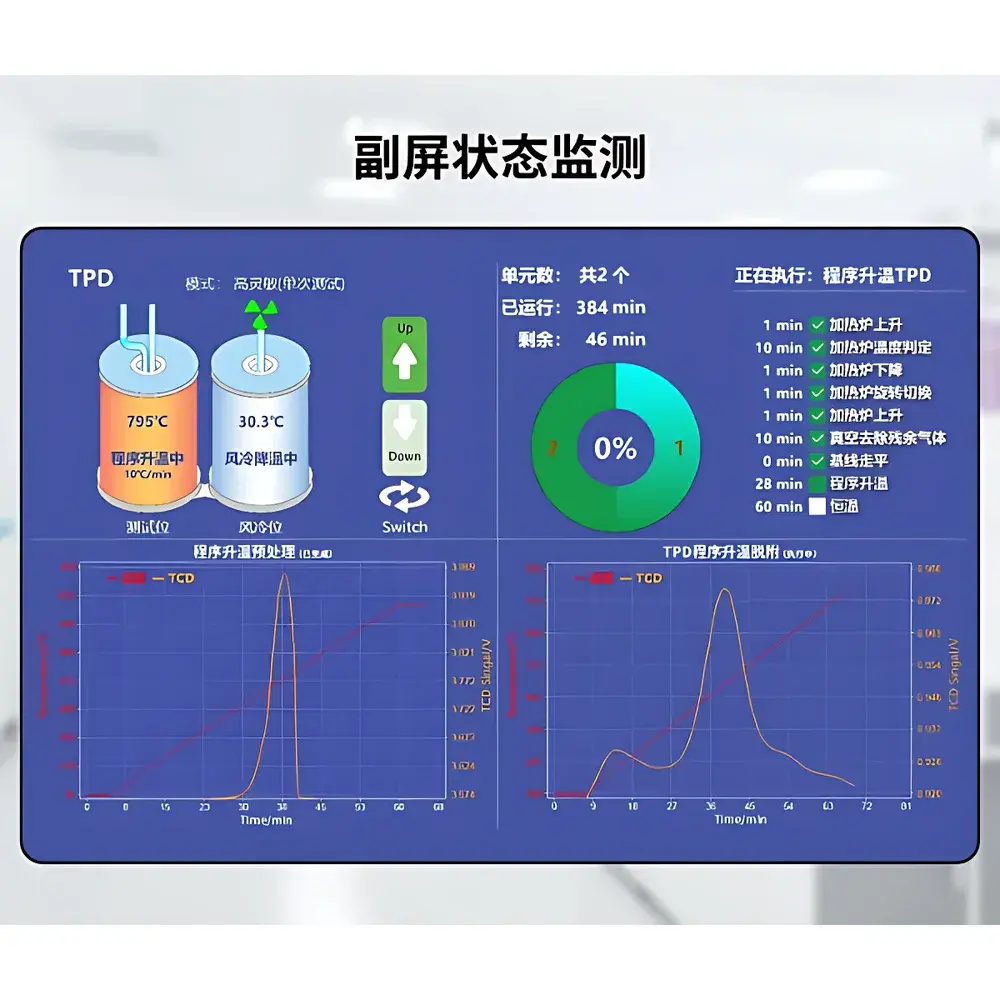
The Beishide BSD-Chem C200 is an automated, high-precision temperature-programmed chemisorption analyzer engineered for quantitative characterization of surface adsorption/desorption behavior, catalytic active sites, and reaction kinetics under controlled gas-phase environments. It operates on the continuous flow principle, integrating dual high-temperature furnaces (ambient to 1200 °C), vacuum-assisted gas-line purging, and thermally stabilized detection systems to ensure reproducible, trace-level quantification of transient gas species during thermal ramping protocols. Designed for catalyst development, material science research, and heterogeneous catalysis validation, the instrument supports full ISO/ASTM-compliant execution of TPD, TPR, TPO, TPSR, and TPS experiments — with built-in capability for kinetic parameter extraction (Ea, Ed, ΔH, Aa, Ad, n) via integrated data modeling algorithms aligned with Arrhenius and Redhead formalisms.
Key Features
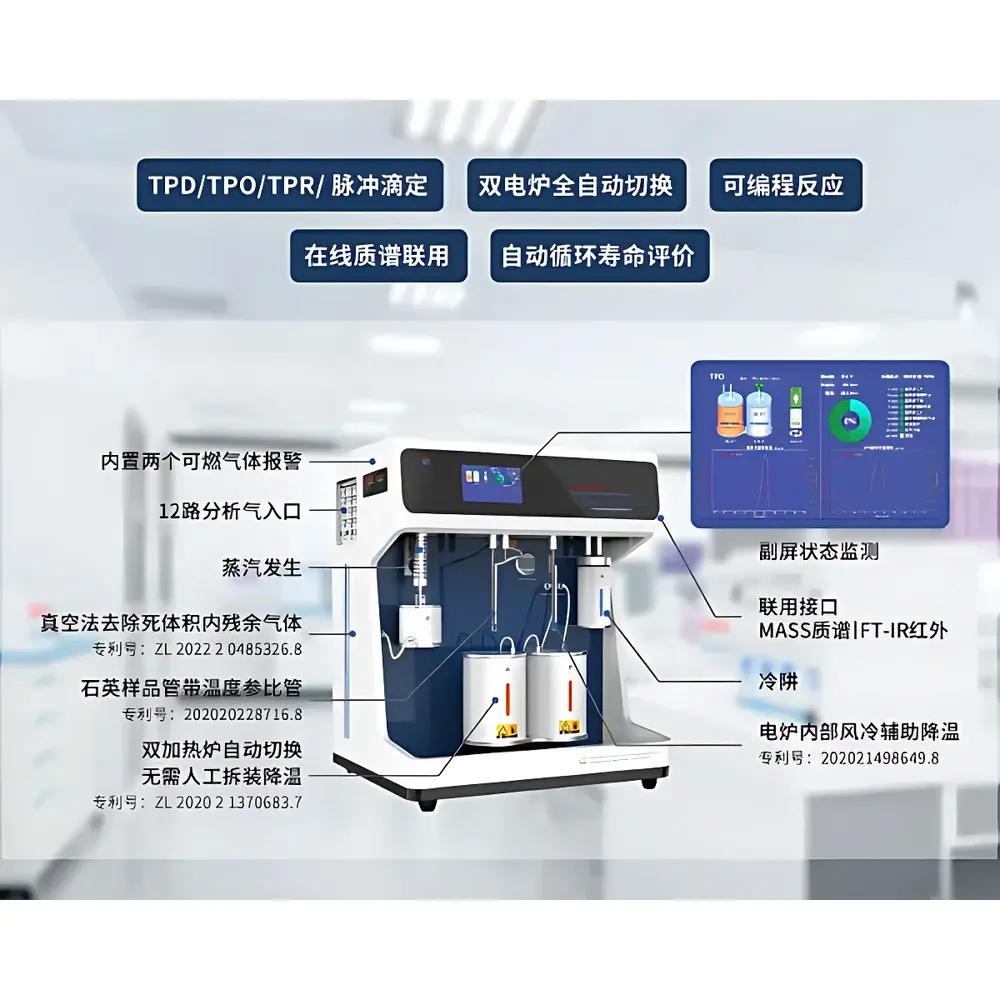
- Dual Independent High-Temperature Furnaces: Two programmable furnaces (ambient–1200 °C), automatically switched via motorized translation and vertical lift mechanisms — enabling uninterrupted sequential testing without manual cooldown delay; patented design (ZL202021370683.7).
- Vacuum-Assisted Gas-Line Purge: Integrated vacuum pump eliminates residual gas in dead volumes prior to analysis; multi-cycle evacuation-and-refill protocol ensures baseline stability and minimizes signal drift — patented (ZL202220485326.8).
- Temperature-Referenced U-Shaped Quartz Sample Tube: Equipped with a dedicated temperature reference tube co-located with the sample, ensuring real-time thermal equivalence between sensor and catalyst bed — critical for accurate kinetic modeling (ZL202020228716.8).
- Active Air/N₂ Cooling System: Embedded air-cooling ducts and thermal feedback sensors enable rapid furnace cooldown (<15 min from 1200 °C to 100 °C); vacuum-insulated furnace housing improves energy efficiency and operator safety (ZL202021498649.8).
- Multi-Gas Delivery Architecture: 12 independent gas inlets with three mass flow controllers (MFCs) supporting simultaneous blending of up to three reactive gases; compatible with corrosive gases (e.g., H₂S, NH₃, Cl₂), vapors (H₂O, alcohols), and inert carriers.
- Configurable Detection Options: Standard TCD with dual-mode operation (“High Sensitivity” and “Wide Dynamic Range”); optional coupling to INFICON quadrupole mass spectrometers (100/200/300 amu) or Thermo Fisher Nicolet FT-IR systems (iS20/iS5/Summit) for speciated product identification.
Sample Compatibility & Compliance
The BSD-Chem C200 accommodates solid heterogeneous catalysts (oxides, supported metals, zeolites, MOFs), powders, pellets, and monoliths in standard U-tube geometry. Its vacuum-integrated gas handling, cold trap (−40 °C), and steam generator support analyses involving moisture-sensitive or vapor-phase reactants — including NH₃-TPD, CO-TPR, O₂-TPO, and H₂S-TPS. The system meets GLP/GMP-aligned operational requirements: full audit trail logging, user access control, electronic signature support, and 21 CFR Part 11–ready software architecture. All thermal and flow calibrations are traceable to NIST standards; furnace temperature uniformity conforms to ASTM E220 and ISO/IEC 17025 calibration guidelines.
Software & Data Management
Control and analysis are performed via Beishide’s ChemStudio v4.x platform — a Windows-based application supporting method scripting, multi-step sequence programming, real-time chromatogram overlay, and kinetic modeling modules. Raw TCD/MS/FT-IR signals are time-stamped and synchronized with temperature ramp profiles. Batch processing enables automated calculation of activation energies using peak maximum methods (Redhead), isoconversional analysis (Friedman, Ozawa-Flynn-Wall), and model-fitting routines (e.g., first-order desorption, Langmuir-Hinshelwood kinetics). Export formats include CSV, ASCII, and ASTM E1447-compliant .dx files. Data integrity is ensured through encrypted local storage, automatic backup, and configurable retention policies compliant with ISO 15189 and FDA data archival expectations.
Applications
- Quantitative determination of acid/base site density and strength distribution via NH₃/CO₂-TPD on zeolites and metal oxides.
- Redox behavior mapping of transition metal catalysts (e.g., Ni, Co, Fe) using H₂-TPR and O₂-TPO under variable heating rates.
- In-situ monitoring of surface reaction intermediates during Fischer-Tropsch, methanation, or selective catalytic reduction (SCR) via TPSR coupled with MS/FT-IR.
- Catalyst deactivation studies: cyclic TPR-TPD sequences to evaluate sintering, coking, or sulfur poisoning resistance over 100+ cycles.
- Adsorption thermodynamics: derivation of ΔH, ΔS, and equilibrium constants from van’t Hoff plots across multiple isotherms.
- Surface sulfidation kinetics of Mo/Al₂O₃ hydrodesulfurization catalysts using H₂S-TPS with pulse titration calibration.
FAQ
What distinguishes the BSD-Chem C200 from single-furnace chemisorption analyzers?
The dual-furnace architecture eliminates mandatory cooldown delays between pretreatment and analysis steps — increasing throughput by up to 3× for multi-condition screening. Each furnace operates independently with full thermal zoning and real-time diagnostics.
Can the system perform quantitative pulse titration with certified accuracy?
Yes: calibrated pulse loops (0.5 mL, 1 mL, 5 mL) deliver sub-μL precision; integration with MFC-controlled carrier flow enables stoichiometric active-site counting per ASTM D7213 and ISO 11545 protocols.
Is vacuum pumping required for all test modes?
Vacuum purging is enabled by default before each analysis step but can be disabled for specific atmospheric-pressure protocols requiring continuous gas flow without evacuation.
How does the temperature reference tube improve kinetic analysis accuracy?
By placing the thermocouple within a thermally coupled reference channel adjacent to the sample zone, spatial thermal lag is eliminated — reducing temperature uncertainty to ±0.3 °C at 1200 °C, essential for reliable Ea/Ed calculation.
Does the software support third-party instrument integration?
Yes: ChemStudio provides TCP/IP and RS232 interfaces for bidirectional communication with external mass spectrometers, FT-IR spectrometers, and gas chromatographs — enabling synchronized multi-detector acquisition and cross-platform data fusion.



