
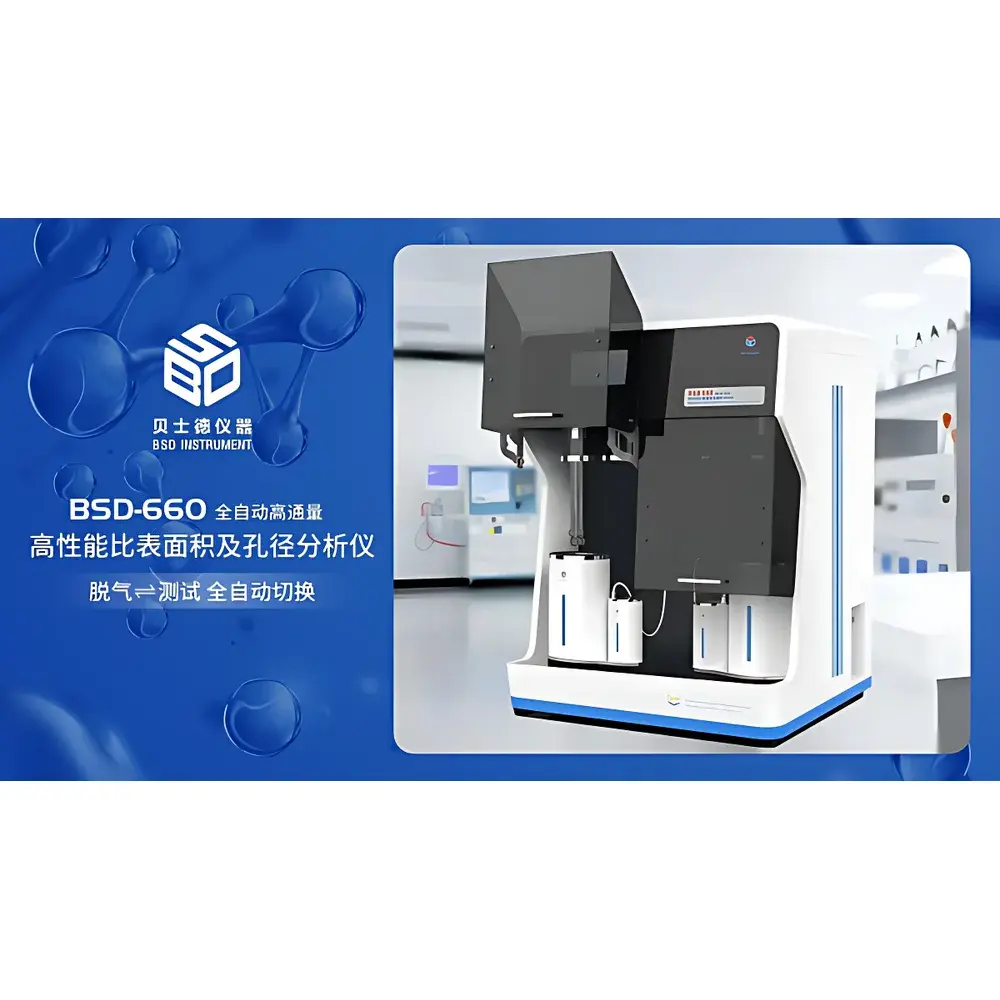
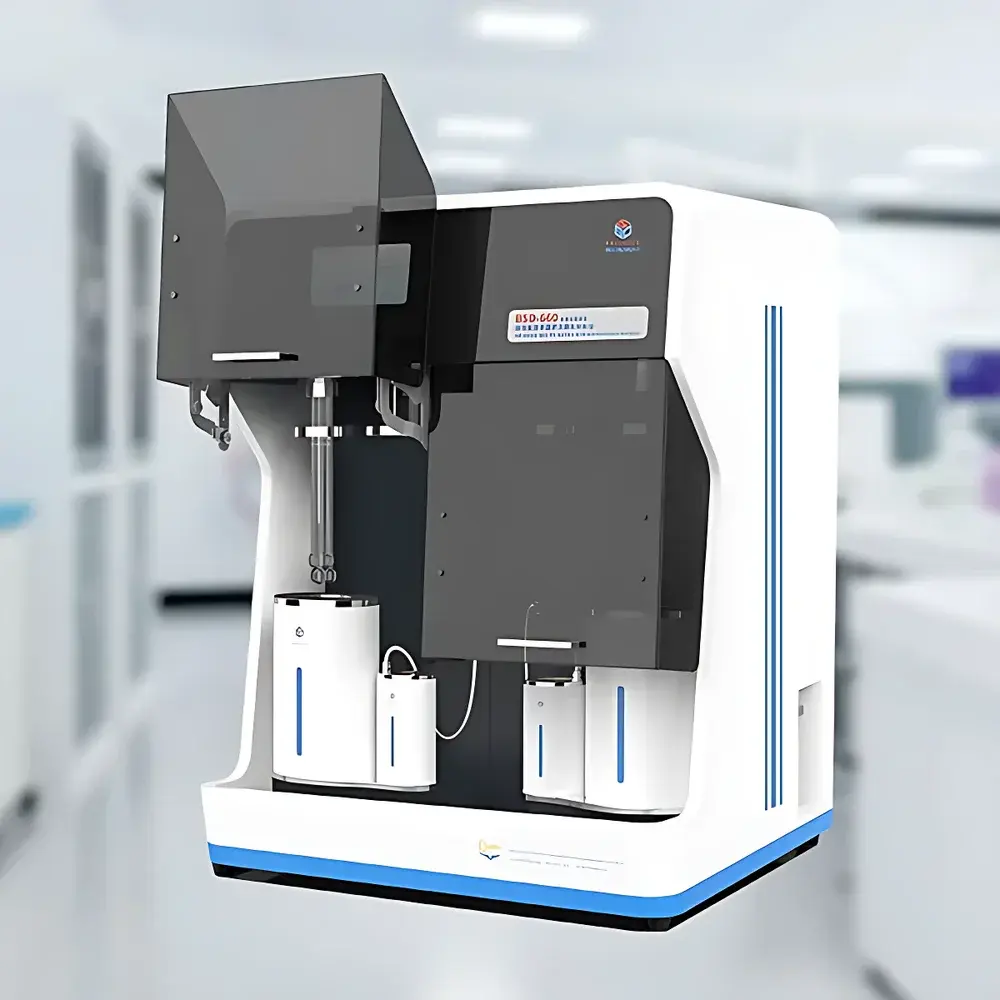
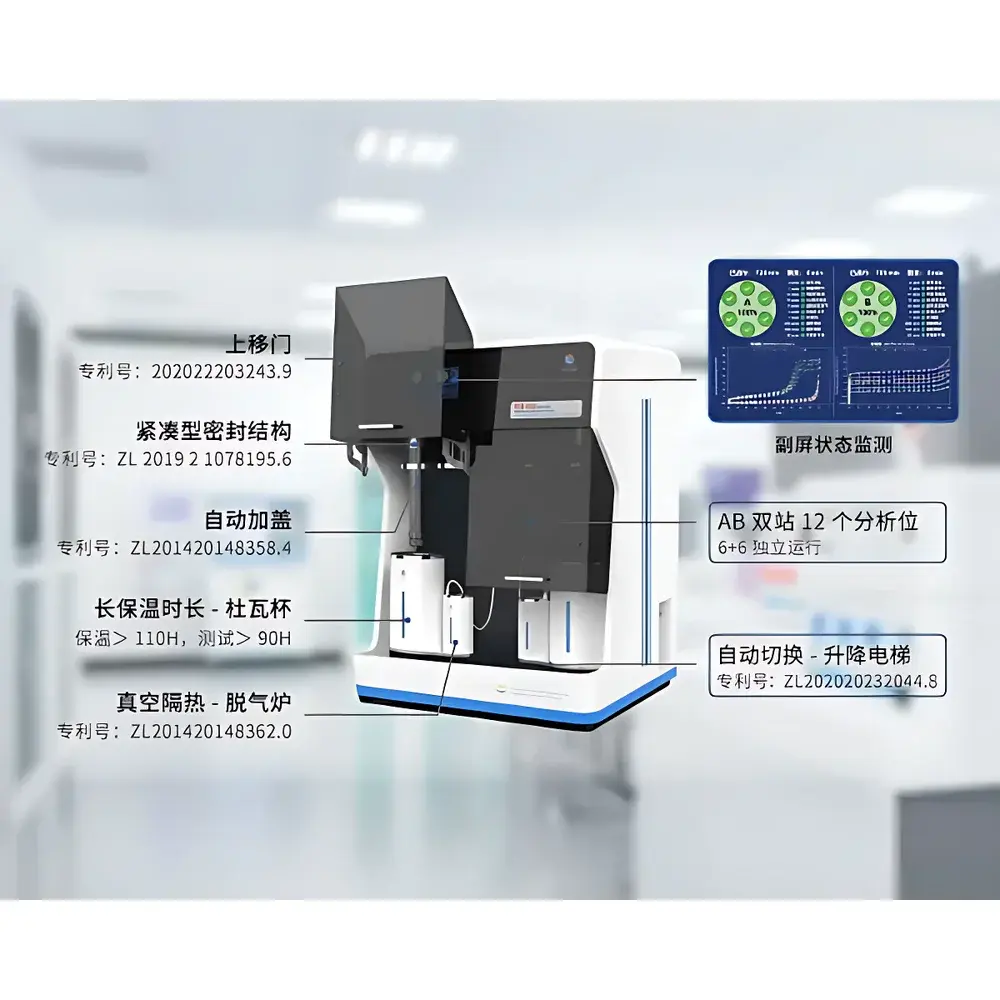
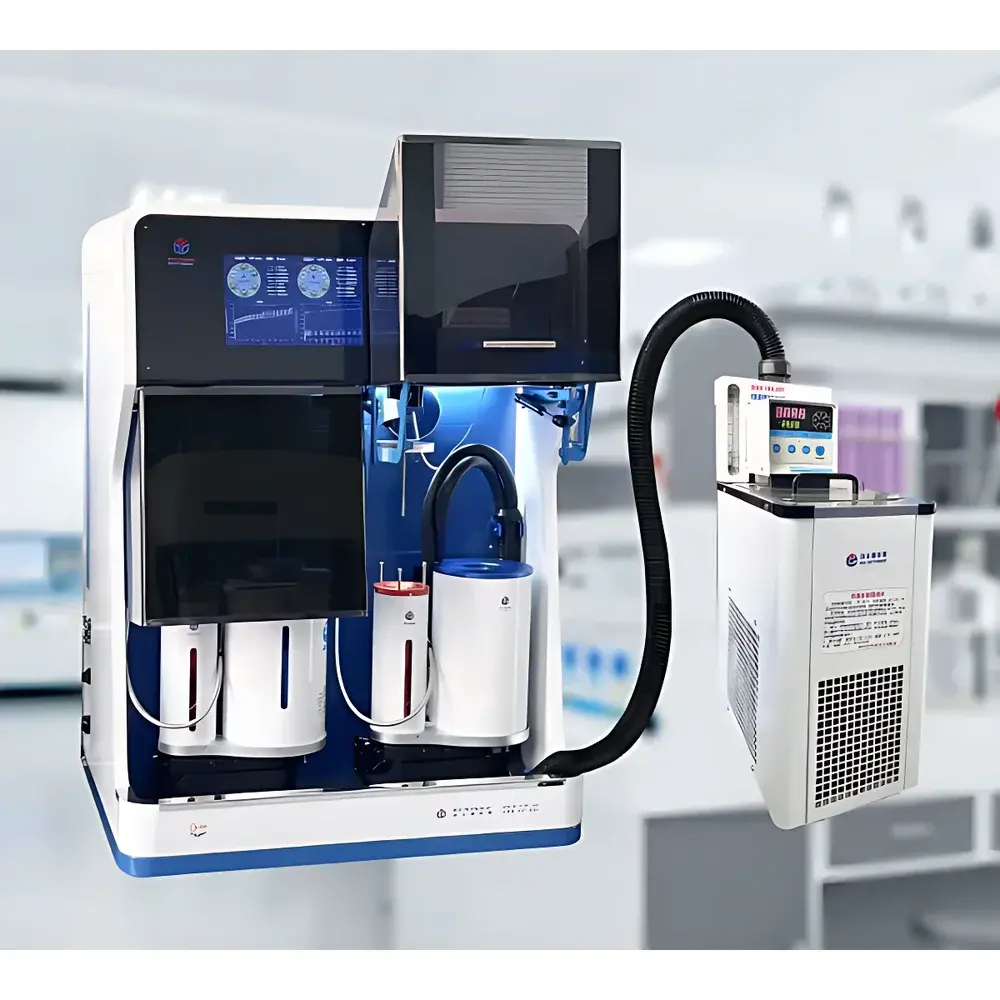
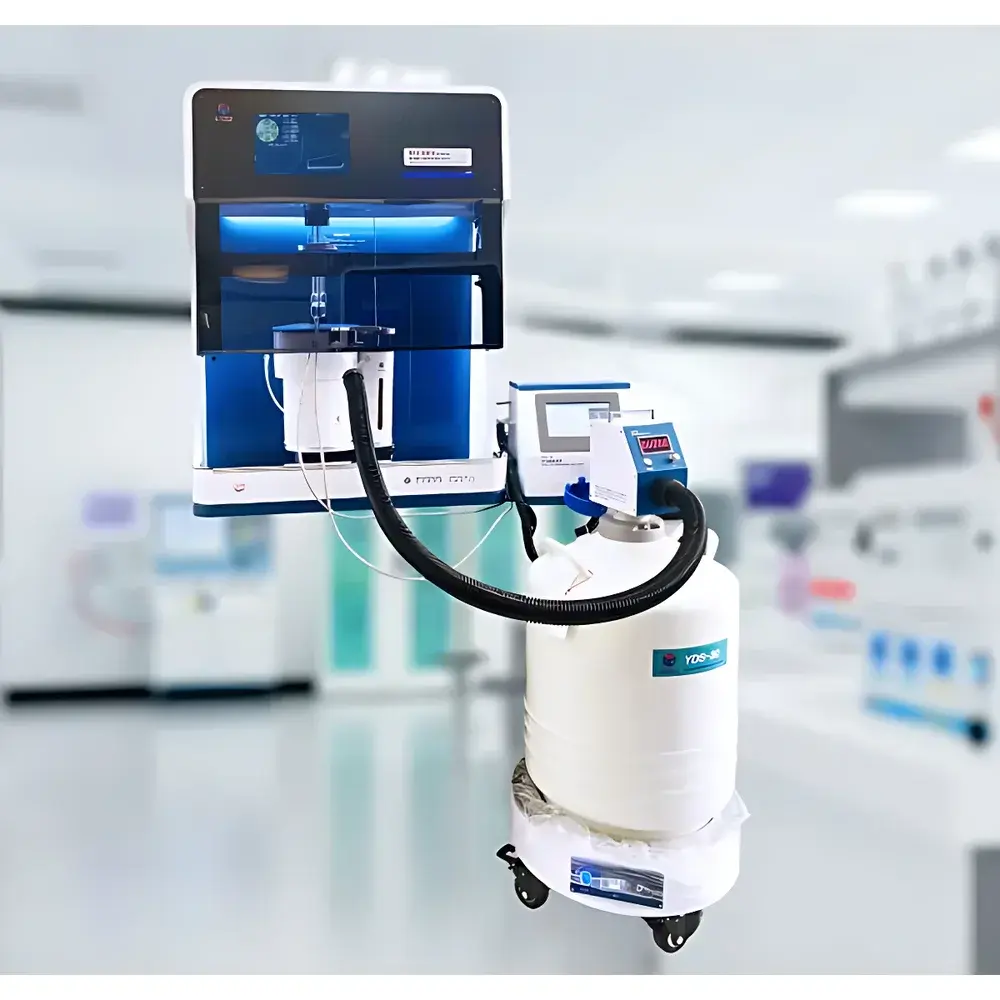
Beishide BSD-660 Advanced Fully Automated Physical Adsorption Analyzer for Specific Surface Area and Pore Size Distribution
| Brand | Beishide Instrument |
|---|---|
| Origin | Beijing, China |
| Manufacturer Type | Original Equipment Manufacturer (OEM) |
| Product Category | Domestic |
| Model | BSD-660 |
| Instrument Type | Specific Surface Area and Pore Size Analyzer |
| Measurement Principle | Static Volumetric Method |
| Number of Analysis Stations | 3 / 6 / 9 / 12 configurable |
| Pore Size Range | 0.35–500 nm |
| Analytical Theories Supported | BET surface area, BJH pore size distribution (mesopores), DR & HK (Original) micropore analysis, DFT-based pore modeling, IASTL multi-component adsorption modeling |
| Repeatability | ≤0.5% RSD (certified standard reference materials) |
Overview
The Beishide BSD-660 is an advanced, fully automated physical adsorption analyzer engineered for high-precision characterization of specific surface area, pore volume, and pore size distribution across micro-, meso-, and macroporous materials. Operating on the static volumetric principle, it precisely measures gas adsorption and desorption isotherms under controlled temperature and pressure conditions—enabling rigorous application of internationally recognized theoretical models including BET, BJH, DR, HK (Original), and DFT. Designed for research-grade reproducibility and industrial-scale throughput, the BSD-660 supports nitrogen, argon, carbon dioxide, oxygen, hydrogen, methane, ethane, and other non-corrosive or corrosive gases (with optional configurations), making it suitable for catalysts, MOFs, COFs, HOFs, activated carbons, zeolites, battery electrode materials, metal oxides, and pharmaceutical excipients. Its architecture integrates ultra-high vacuum capability (≤1×10⁻⁹ Pa), thermally stabilized gas manifolds (±0.01 °C), and a patented dual-stage molecular pump system for rapid, contamination-free degassing.
Key Features
- Fully automated workflow: Integrated degassing → equilibration → adsorption/desorption → data acquisition without manual intervention.
- Modular station configuration: Selectable 3-, 6-, 9-, or 12-station setups to match laboratory throughput requirements.
- Patented “pressure-controlled heating” (PCH) degassing: Dynamically regulates furnace position and ramp rate based on in-situ pressure feedback to prevent sample fluidization and mass loss—critical for fragile micro-porous powders.
- Helium-free dead-volume calibration protocol: Pre-measurement helium pycnometry at constant temperature, followed by in situ vacuum degassing—eliminating helium carryover that compromises micropore quantification accuracy.
- Automated thermal zone stabilization: Servo-controlled liquid nitrogen level management ensures <0.10% drift in adsorption chamber equivalent volume over 24 hours—significantly enhancing long-duration isotherm fidelity.
- Motorized cryogenic transfer: Electric turbo liquid nitrogen pump enables silent, variable-speed, spill-free LN₂ replenishment with no external pressurization required.
- Hermetic multi-sample sealing: Six sample tubes sealed simultaneously per station using a precision gasketed manifold—reducing setup time by >70% versus sequential sealing.
- Full-system thermostatic control: Entire pneumatic circuit maintained at 40 °C ±0.01 °C to minimize thermal transients during low-pressure measurements.
- Compliance-ready architecture: Supports 21 CFR Part 11-compliant electronic signatures, audit trails, and role-based access control when integrated with validated LIMS environments.
Sample Compatibility & Compliance
The BSD-660 accommodates diverse solid-state samples—from non-porous battery cathode materials (e.g., NMC, LFP) and metal powders to highly porous frameworks (MOFs, COFs, silica aerogels, activated carbons). It complies with ISO 9277:2010, GB/T 19587–2017 (BET), GB/T 21650.2–2008 (mesopore analysis), and GB/T 21650.3–2011 (micropore analysis), as well as ASTM D3663 and USP . Optional corrosion-resistant gas modules enable safe operation with HCl, NH₃, SO₂, and other reactive species under GLP/GMP-aligned procedures. All hardware and firmware design elements adhere to IEC 61000-6-3 (EMC) and IEC 61010-1 (safety) standards.
Software & Data Management
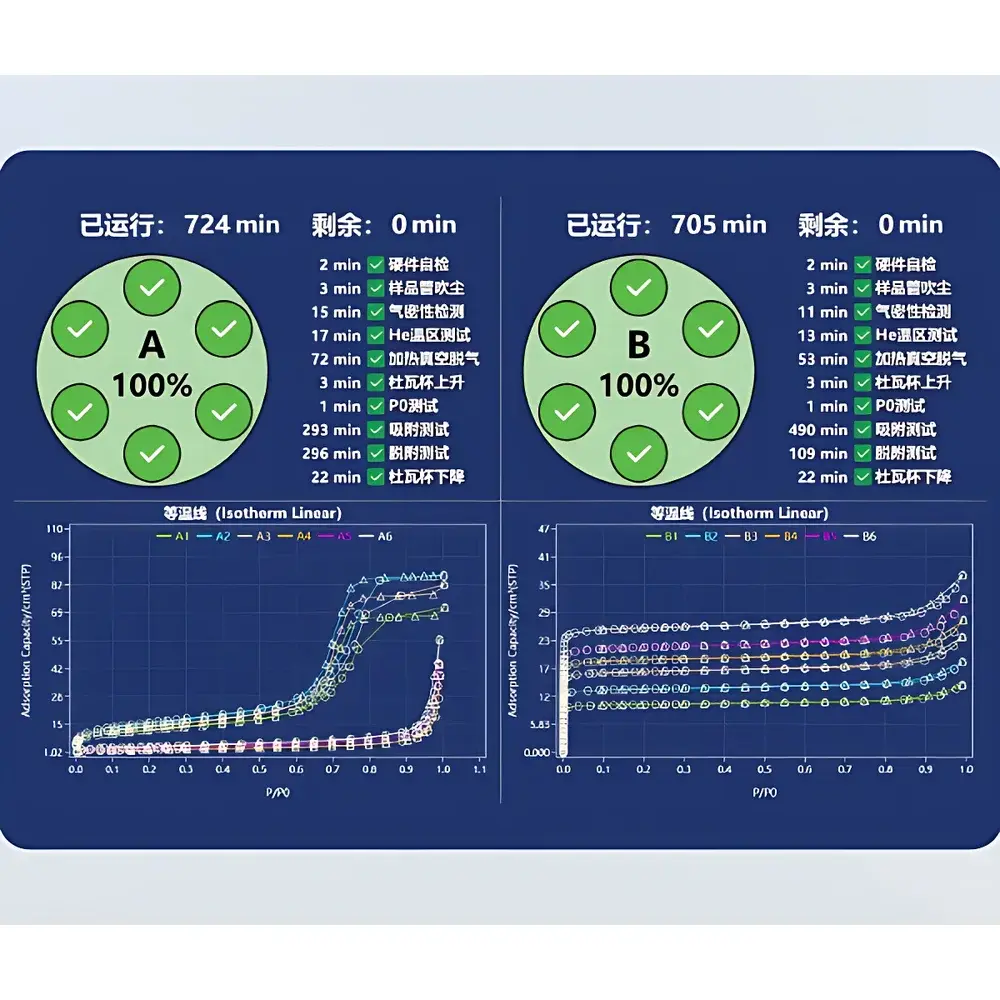
The proprietary BSD-Analyzer software provides real-time isotherm visualization, automated model selection (BET linear/nonlinear, t-plot, αs-method), and DFT kernel library matching (N₂@77K, Ar@87K, CO₂@273K). Raw data export is supported in ASCII, CSV, and CDF formats; metadata tagging includes operator ID, instrument serial number, calibration certificate traceability, and environmental log (temperature/humidity). An open API allows bidirectional integration with enterprise LIMS platforms via HTTPS/RESTful endpoints. Audit trail records capture all parameter modifications, result approvals, and user logins—fully compliant with FDA 21 CFR Part 11 requirements for regulated laboratories.
Applications
- Quality control of porous catalysts and supports in petrochemical refining.
- Structure–performance correlation studies for MOF-based gas storage and separation membranes.
- Stability assessment of battery electrode materials through cyclic adsorption/desorption testing.
- Pharmaceutical solid-state characterization per ICH Q5A guidelines (surface energetics, moisture sorption).
- Carbon capture material development using CO₂ isotherms at sub-ambient temperatures.
- Regulatory submission support for nanomaterial safety dossiers (OECD TG 121, REACH Annex VI).
FAQ
What vacuum level does the BSD-660 achieve, and how is it maintained?
The system reaches ≤1×10⁻⁹ Pa using dual-stage turbomolecular pumping, with continuous monitoring via Bayard-Alpert gauge and active pressure regulation during degassing and analysis.
Can the BSD-660 perform water vapor adsorption analysis?
Yes—when equipped with the BSD-660MV configuration and optional temperature-controlled vapor dosing module, it supports precise water, ethanol, and organic vapor isotherms from –10 °C to 80 °C.
How does the instrument ensure measurement repeatability across multiple stations?
Each station features independent pressure transducers, temperature sensors, and calibrated volume manifolds, with inter-station variance validated to ≤0.5% RSD using certified SRM 1990 and 2975 reference materials.
Is remote monitoring and diagnostics supported?
Yes—the embedded web server enables secure HTTPS access for real-time status viewing, alarm notification, and diagnostic log retrieval without local software installation.
What documentation is provided for regulatory validation?
Factory acceptance test (FAT) reports, IQ/OQ protocols, metrological traceability certificates (NIM/China), and full 21 CFR Part 11 compliance documentation are included with each system shipment.



