
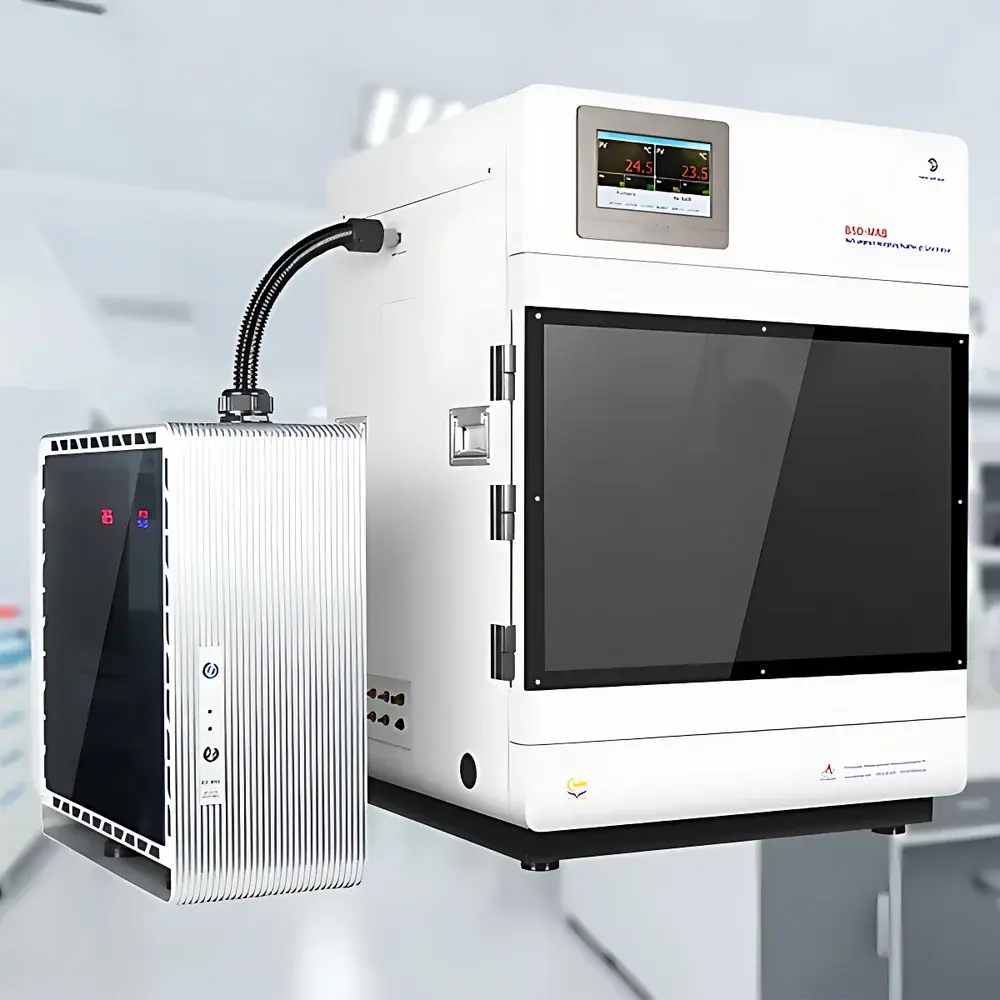
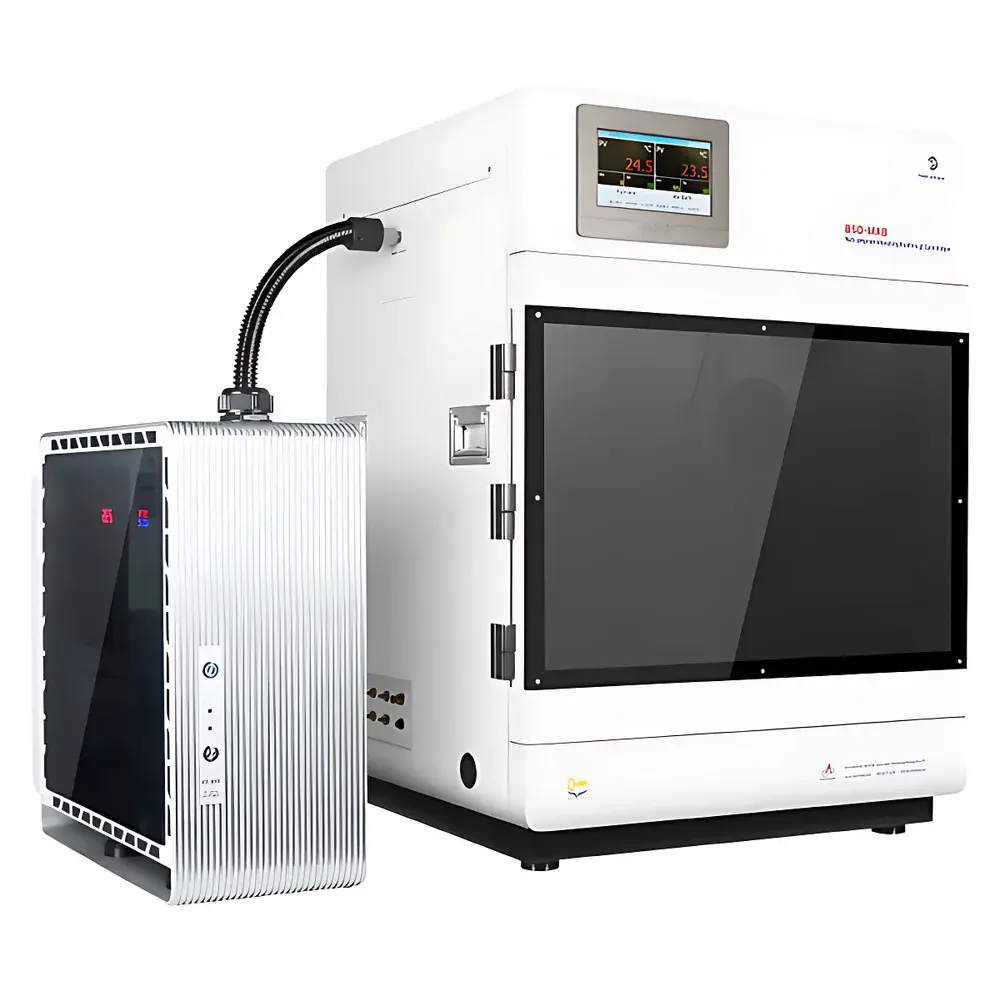
Beishide Instrument BSD-MAB Multicomponent Competitive Adsorption Breakthrough Curve Analyzer
| Brand | Beishide Instrument |
|---|---|
| Origin | Beijing, China |
| Manufacturer Type | Direct Manufacturer |
| Country of Origin | China |
| Model | BSD-MAB |
| Price Range | USD 70,000 – 140,000 |
| Gas Mixture Compatibility | Gas–Gas, Gas–Vapor, Vapor–Vapor |
| Mass Flow Controllers (MFCs) | 4–8 units |
| Breakthrough Column Options | Standard 2 mL and 8 mL packed columns |
| Adsorption Pressure Range | Ambient to 10 MPa |
| Adsorption Temperature Range | Circulating water bath: −20 °C to 80 °C |
| High-temperature furnace | Ambient to 600 °C |
| Detection Systems | Integrated online quadrupole mass spectrometer (QMS) |
Overview
The Beishide Instrument BSD-MAB Multicomponent Competitive Adsorption Breakthrough Curve Analyzer is an engineered platform for dynamic, quantitative characterization of adsorption behavior under realistic process conditions. It operates on the principle of fixed-bed breakthrough chromatography—where a controlled mixture of gaseous or vapor-phase components flows through a packed bed of solid adsorbent, and time-resolved effluent composition is monitored to generate breakthrough curves. This methodology directly replicates industrial-scale adsorption processes such as pressure swing adsorption (PSA), temperature swing adsorption (TSA), and catalytic guard bed operation. Unlike static equilibrium measurements (e.g., volumetric or gravimetric sorption), the BSD-MAB captures kinetic selectivity, competitive displacement, saturation front propagation, and mass transfer limitations—parameters essential for scaling fixed-bed designs, optimizing regeneration cycles, and validating adsorbent performance in multicomponent environments.
Key Features
- Modular gas delivery system with 4–8 independently calibrated mass flow controllers, enabling precise control of binary to quaternary gas/vapor mixtures—including reactive, condensable, or corrosive species.
- Dual-temperature capability: integrated circulating chiller for sub-ambient operation (−20 °C) and high-temperature furnace (up to 600 °C), supporting both cryogenic separation studies and high-temperature desorption/TPD experiments.
- Configurable breakthrough column assembly with standardized 2 mL and 8 mL stainless-steel or quartz-packed beds; column geometry, packing density, and internal diameter are documented per test protocol to ensure reproducibility.
- Real-time, multi-channel detection architecture: primary online quadrupole mass spectrometer (QMS) with unit-mass resolution and <1 ppm detection limit for VOCs, SO2, NH3, CO2, CH4, and hydrocarbons; optional TCD or GC integration for orthogonal validation and compound identification.
- Full-pressure operation up to 10 MPa, compliant with ISO 15901-2 and ASTM D3663 standards for high-pressure adsorption testing; all wetted parts constructed from electropolished 316L stainless steel or passivated alloys.
- Automated sequence control via embedded PLC and PC-based interface, supporting programmable step changes in flow rate, composition, temperature, and pressure—enabling transient-state analysis and cyclic adsorption/desorption profiling.
Sample Compatibility & Compliance
The BSD-MAB accommodates a broad spectrum of porous adsorbents—including activated carbons, zeolites, silica gels, metal–organic frameworks (MOFs), and carbon molecular sieves—in granular, pelletized, or extrudate form (particle size range: 0.2–5 mm). It supports testing under inert, oxidizing, or reducing atmospheres (N2, He, Ar, H2, CO2, air, humidified streams). All hardware and software modules comply with GLP documentation requirements: audit trails, user access levels, electronic signatures, and raw data immutability align with FDA 21 CFR Part 11. Test protocols adhere to ISO 12213-3 (natural gas analysis), ASTM D5228 (carbon adsorption capacity), and ISO 15901-2 (high-pressure physisorption), facilitating regulatory submission and interlaboratory comparison.
Software & Data Management
The proprietary BreakthroughStudio™ software provides synchronized acquisition, visualization, and modeling of multi-parameter breakthrough datasets. It includes built-in tools for derivative analysis (dt/dC), moment calculation (first/second moments), linear driving force (LDF) and pore diffusion model fitting, and equilibrium selectivity (α) extraction via Yoon–Nelson or Thomas model regression. All raw sensor outputs (mass spectra, TCD voltages, thermocouple readings) are timestamped, stored in HDF5 format, and exportable to CSV, MATLAB (.mat), or ASTM E1447-compliant XML. Data integrity is preserved through SHA-256 checksums, version-controlled method files, and automatic backup to network-attached storage (NAS) or cloud repositories configured per institutional IT policy.
Applications
- Design and validation of PSA/TSA units for air separation (O2/N2), biogas upgrading (CH4/CO2), and hydrogen purification (H2/CO2/CH4).
- Performance benchmarking of MOF-based adsorbents for low-concentration VOC capture (<10 ppmv) in indoor air, automotive cabin filtration, and flue gas post-combustion treatment.
- Quantification of competitive adsorption coefficients (Ki/Kj) and co-adsorption inhibition effects in multi-pollutant systems (e.g., SO2 + NOx + H2O on γ-Al2O3).
- Dynamic evaluation of adsorbent aging, poisoning resistance, and regeneration stability over ≥100 adsorption–desorption cycles under simulated industrial duty cycles.
- Correlation of breakthrough behavior with structural parameters (BET surface area, micropore volume, heterogeneity index) derived from complementary N2/Ar physisorption measurements.
FAQ
What detection sensitivity can be achieved for trace pollutants like NH3 or formaldehyde?
The integrated QMS achieves sub-ppm detection limits (0.1–0.5 ppmv) for polar VOCs and inorganic gases under standard operating conditions; sensitivity is enhanced by cryo-focusing and signal averaging in low-concentration regimes.
Can the system perform simultaneous adsorption and desorption profiling within a single experiment?
Yes—via programmable pressure/temperature ramping and flow reversal, the BSD-MAB supports full cyclic adsorption–regeneration studies with real-time effluent monitoring during both loading and purge phases.
Is calibration traceable to national standards?
All MFCs are factory-calibrated against NIST-traceable reference gases (N2, CO2, CH4); QMS mass scale and sensitivity are verified using perfluorotributylamine (PFTBA) and certified gas mixtures prior to each campaign.
How is column packing consistency ensured across repeated tests?
A gravimetric packing station with ±0.1 mg resolution and vibration-assisted settling protocol is included; bed void fraction is calculated from measured bulk density and skeletal density (via He pycnometry) and logged with every run.
Does the system support custom column geometries for proprietary adsorbent forms?
Yes—custom column inserts (diameters 6–25 mm, lengths 50–300 mm), sintered metal frits, and thermocouple-integrated cartridges are available as OEM options with mechanical drawings provided by the user.



