
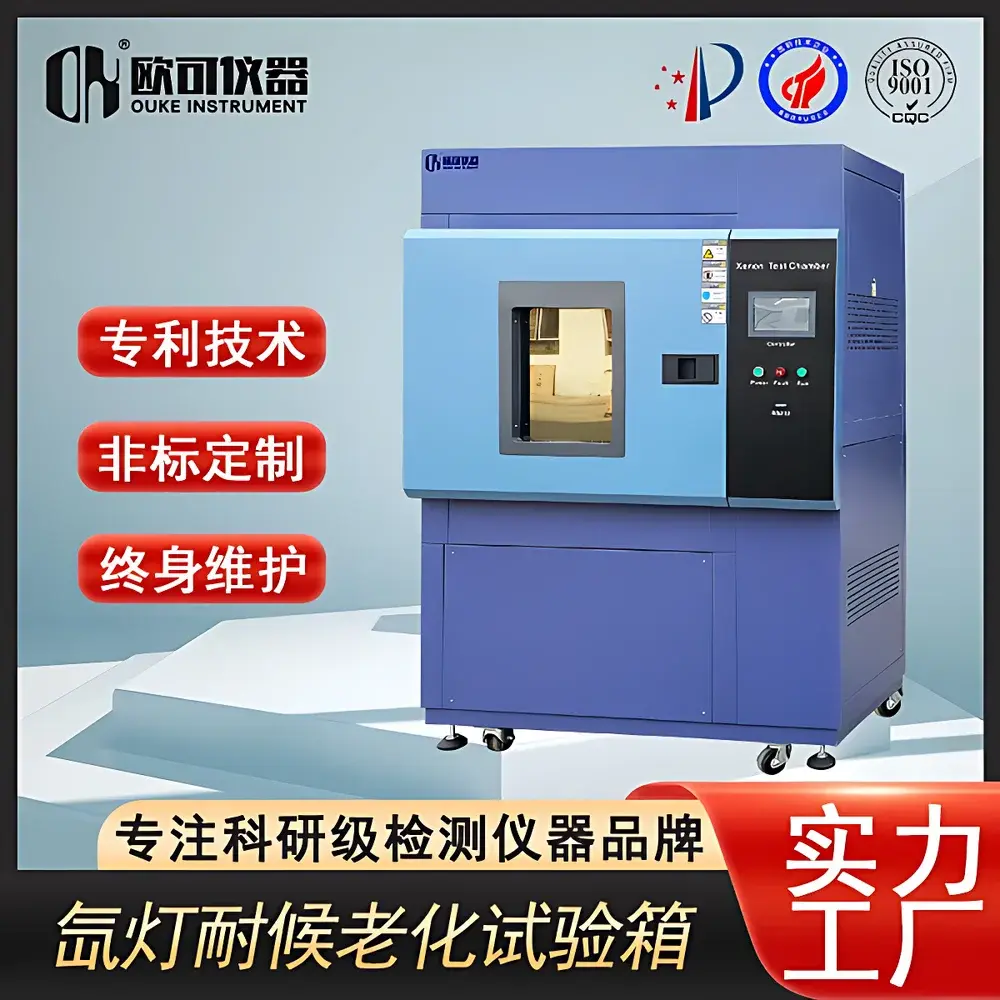
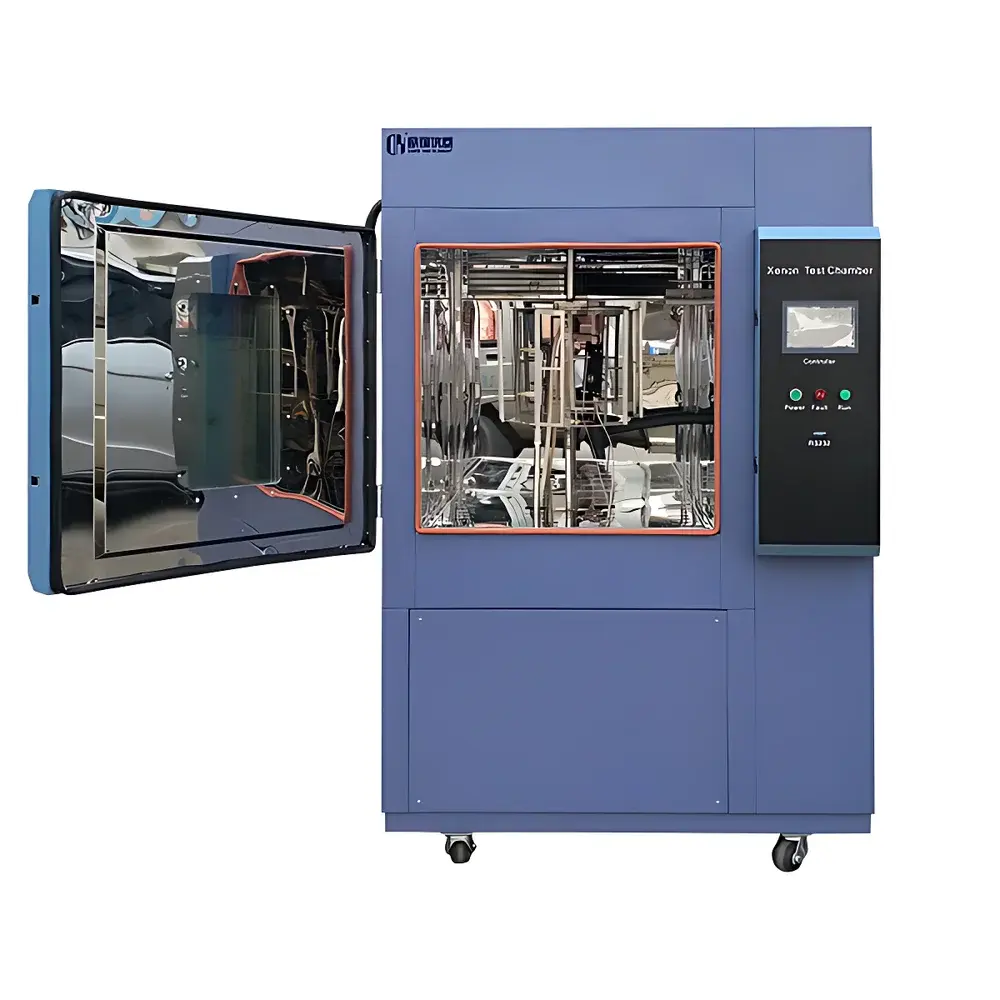
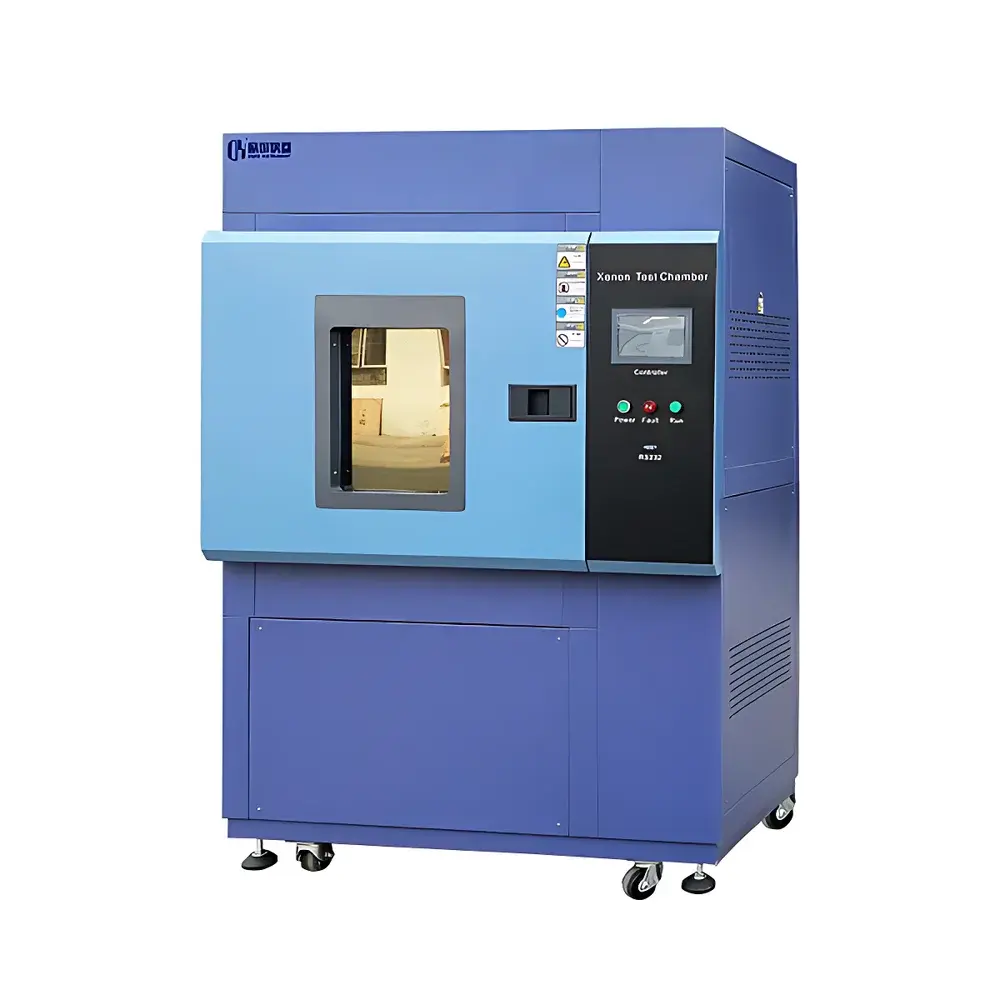
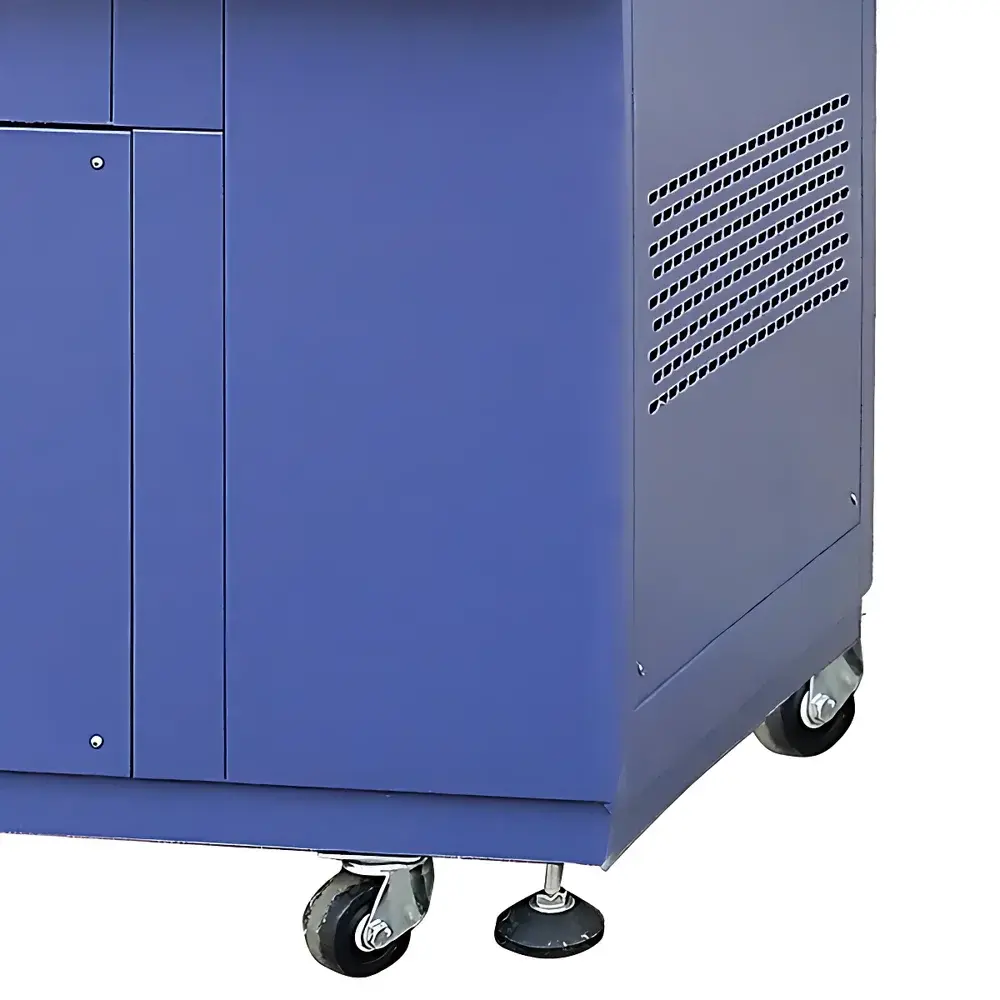
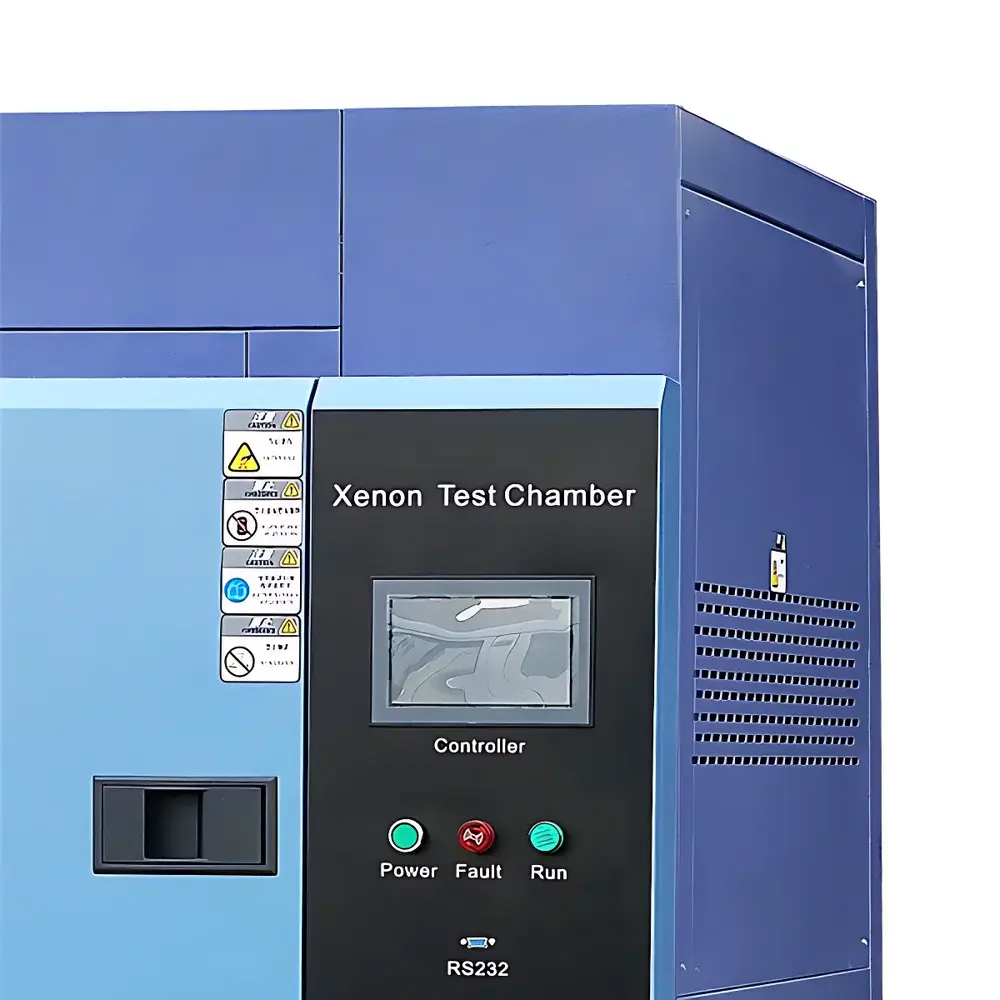
OK-XD-225 Xenon Arc Weathering Test Chamber
| Brand | OK Instruments |
|---|---|
| Origin | Guangdong, China |
| Manufacturer Type | Direct Manufacturer |
| Model | OK-XD-225 |
| Xenon Lamp Power Options | 1.8 kW / 2.5 kW / 6 kW (Lamp Lifetime: 1500 h) |
| Irradiance Range | ≤1200 W/m² |
| Light Exposure Duration | 1–999 h/min/sec (Programmable) |
| Humidity Range (Light Cycle) | 20–75 %RH |
Overview
The OK-XD-225 Xenon Arc Weathering Test Chamber is an engineered environmental simulation system designed to replicate full-spectrum solar radiation—spanning ultraviolet (UV), visible, and near-infrared (NIR) wavelengths—in conjunction with controlled temperature, relative humidity, and water spray cycles. It operates on the principle of xenon arc irradiation, where a high-intensity xenon lamp emits light closely matching terrestrial sunlight (AM 1.5G spectrum), enabling accelerated aging assessments under standardized climatic stressors. Unlike narrowband UV exposure systems, this chamber delivers photometrically accurate spectral power distribution (SPD), making it suitable for evaluating photochemical degradation mechanisms—including pigment fading, polymer chain scission, surface chalking, gloss loss, cracking, delamination, and mechanical property deterioration—under conditions representative of real-world outdoor exposure.
Key Features
- Xenon Light Source Architecture: Equipped with air- or water-cooled xenon lamps (1.8 kW, 2.5 kW, or 6 kW options), delivering stable spectral output calibrated to CIE No. 85 and ISO 4892-2 reference spectra; lamp lifetime rated at 1500 hours under standard operating conditions.
- Optical Filtering System: Interchangeable quartz outer filters and borosilicate inner filters allow configuration for multiple exposure conditions—e.g., daylight through window glass (Daylight-Q/B), direct sunlight (Daylight-B/SL), or extended UV (Extended UV-Q/B)—ensuring compliance with ASTM G155, ISO 4892-2, and GB/T 16422.2.
- Precise Environmental Control: Independent regulation of black panel temperature (BPT) up to 120 °C and chamber air temperature (CAT) within ±1.0 °C accuracy; programmable RH control (20–75 %RH during light cycles) via steam humidification and refrigerated dehumidification.
- Water Interaction Simulation: Front-mounted spray nozzles deliver deionized water in synchronized intervals to simulate rain erosion, thermal shock, and moisture absorption; optional condensation cycle available via controlled cold plate operation.
- Uniform Sample Exposure: Motor-driven rotating sample rack ensures consistent irradiance distribution across all test specimens (standard capacity: 48 × 75 mm samples); irradiance monitored in real time using a calibrated broadband radiometer traceable to NIST standards.
- Intelligent Control Interface: Programmable microprocessor-based controller supports multi-step exposure profiles—including light/dark transitions, ramped temperature/humidity sequences, and spray timing—with data logging, password protection, and alarm-triggered shutdown.
Sample Compatibility & Compliance
The OK-XD-225 accommodates flat, rigid, or semi-flexible specimens up to 30 mm thickness and 500 mm × 500 mm footprint. It supports testing of polymers, coatings, textiles, automotive trim, architectural sealants, photovoltaic encapsulants, and packaging films. The chamber meets essential regulatory and quality framework requirements: calibration procedures align with ISO/IEC 17025; operational protocols support GLP-compliant documentation; and software audit trails comply with FDA 21 CFR Part 11 when paired with validated firmware. Test methods executed on this platform are directly referenced in SAE J2527 (automotive exterior), AATCC TM16 (textile colorfastness), ISO 11341 (paints and varnishes), and IEC 61215-2 (PV module qualification).
Software & Data Management
The integrated controller records irradiance (W/m²), BPT/CAT, RH%, spray status, and elapsed time at user-defined intervals (minimum 1-second resolution). Exportable CSV files enable post-test statistical analysis in third-party platforms (e.g., JMP, MATLAB). Optional PC-based software provides remote monitoring, report generation (PDF/Excel), trend visualization, and deviation alerts. All parameter changes, manual overrides, and system faults are timestamped and stored in non-volatile memory for full traceability—critical for internal audits and supplier qualification programs.
Applications
- Automotive OEMs and Tier-1 suppliers validating exterior paint durability, headlamp lens yellowing resistance, and interior trim UV stability per SAE J2412 and J2527.
- Coatings manufacturers conducting QUV-to-xenon correlation studies and developing UV-stabilized acrylic, polyurethane, and fluoropolymer formulations.
- Plastics processors assessing long-term weatherability of PVC window profiles, PP automotive bumpers, and HDPE outdoor furniture under cyclic thermal-moisture stress.
- Textile laboratories measuring color change (ΔE* CIELAB) and tensile retention in awning fabrics, military uniforms, and geotextiles per AATCC TM16 and ISO 105-B02.
- Photovoltaic material developers qualifying EVA encapsulant discoloration, backsheet hydrolysis, and adhesive bond strength degradation under IEC 61215-2 MQT10 and MQT17.
- Regulatory testing labs performing pre-certification aging for CE marking, UL 746C, and China Compulsory Certification (CCC) requirements.
FAQ
What standards does the OK-XD-225 support?
It fully complies with ISO 4892-2, ASTM G155, GB/T 16422.2, and enables method implementation for SAE J2527, AATCC TM16, ISO 11341, and IEC 61215-2.
How is irradiance stability maintained over lamp life?
The system incorporates closed-loop irradiance feedback using a calibrated broadband sensor; automatic power compensation adjusts lamp current to maintain setpoint intensity within ±5% tolerance.
Can the chamber operate without water spray?
Yes—spray function is fully programmable and may be disabled for dry-heat or dark-cycle segments while maintaining independent temperature and humidity control.
Is calibration documentation provided with shipment?
Each unit ships with a factory calibration certificate covering irradiance, temperature, and humidity sensors, traceable to national metrology institutes.
What maintenance is required for routine operation?
Scheduled tasks include quarterly optical filter inspection, biannual lamp replacement (at ~1500 h), annual radiometer recalibration, and monthly cleaning of humidity sensors and spray nozzles.



