
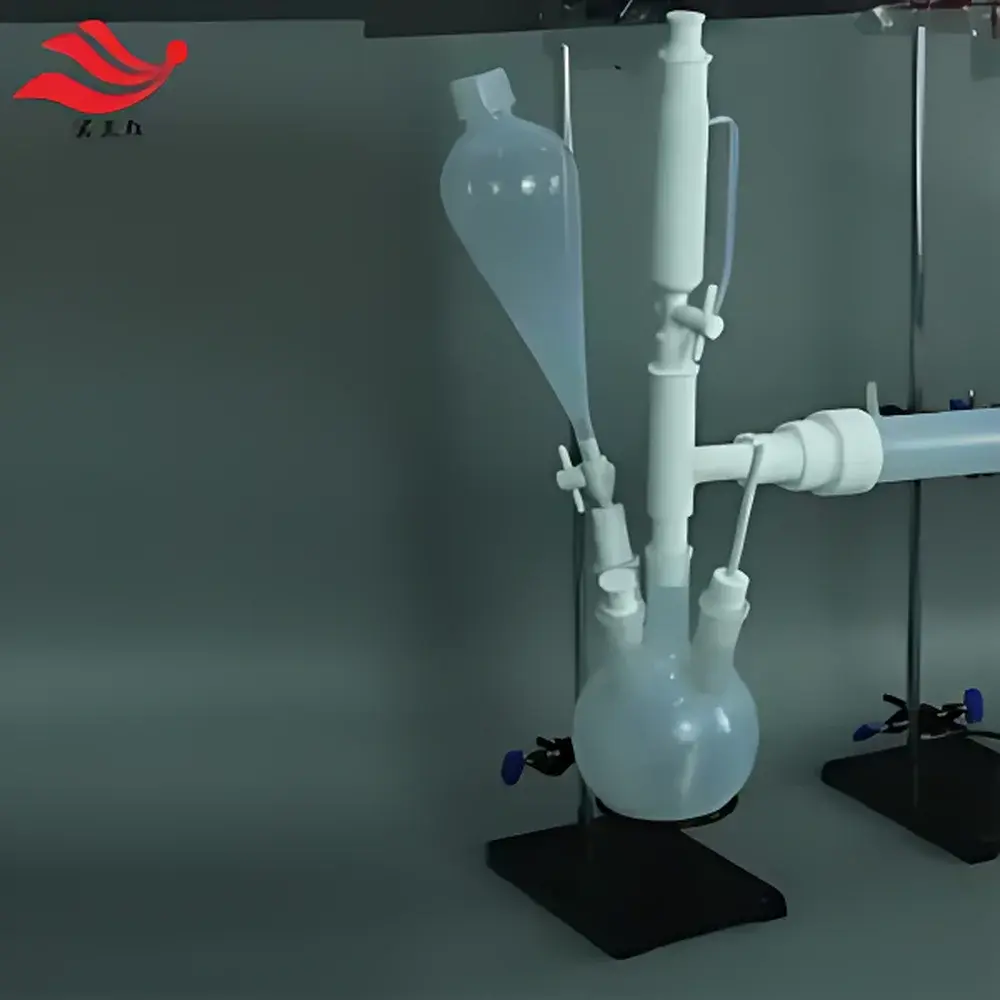
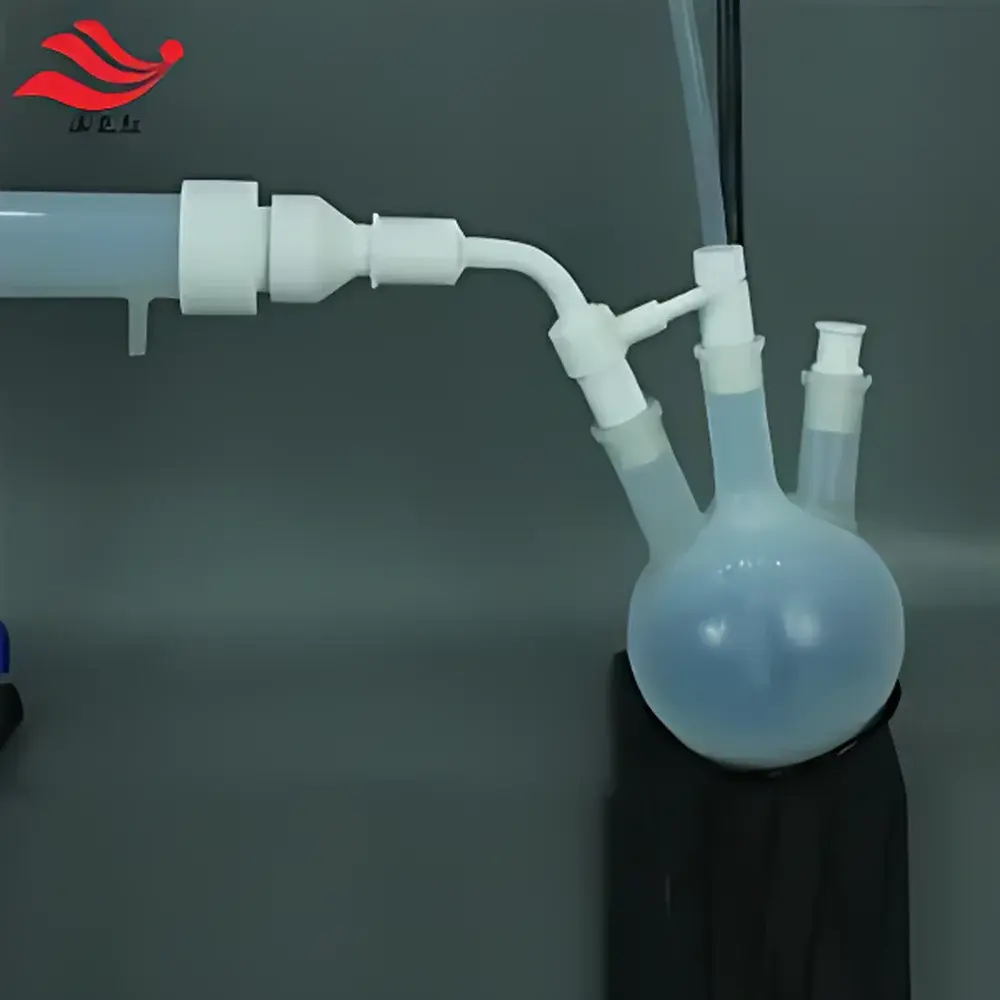
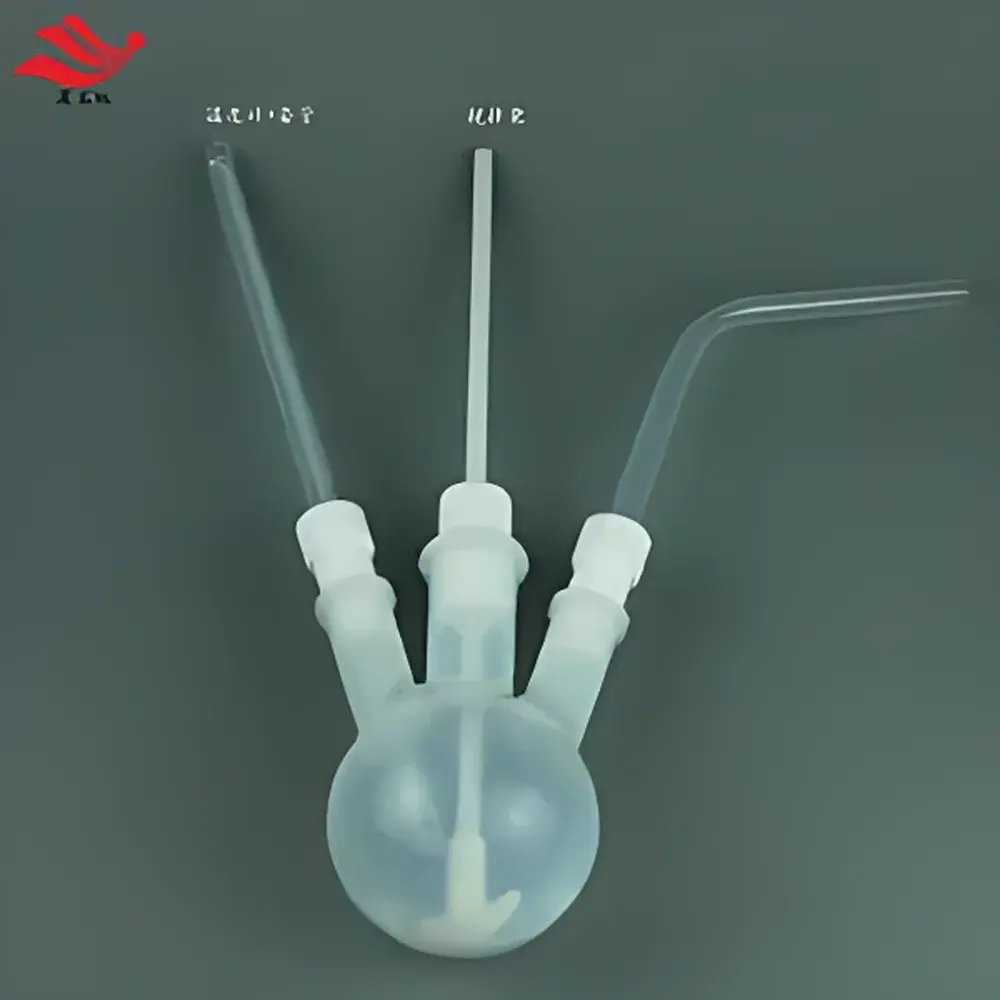
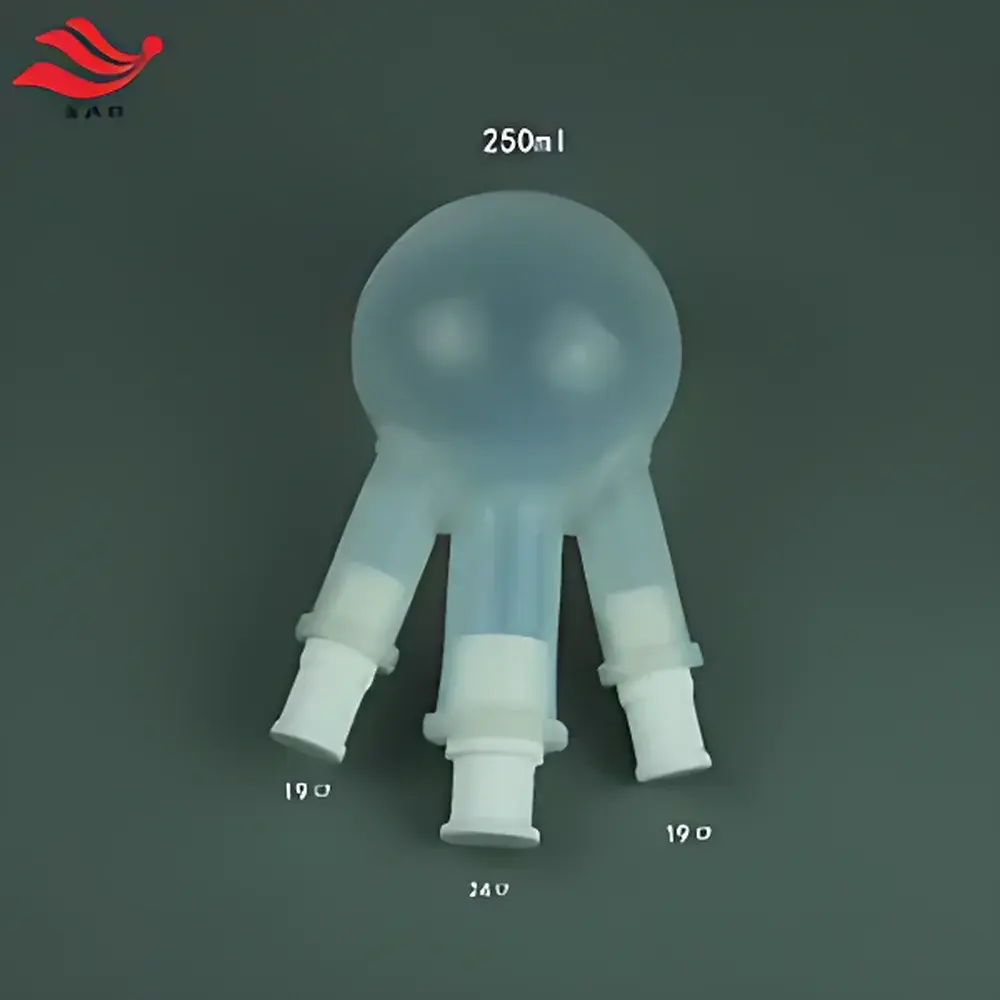
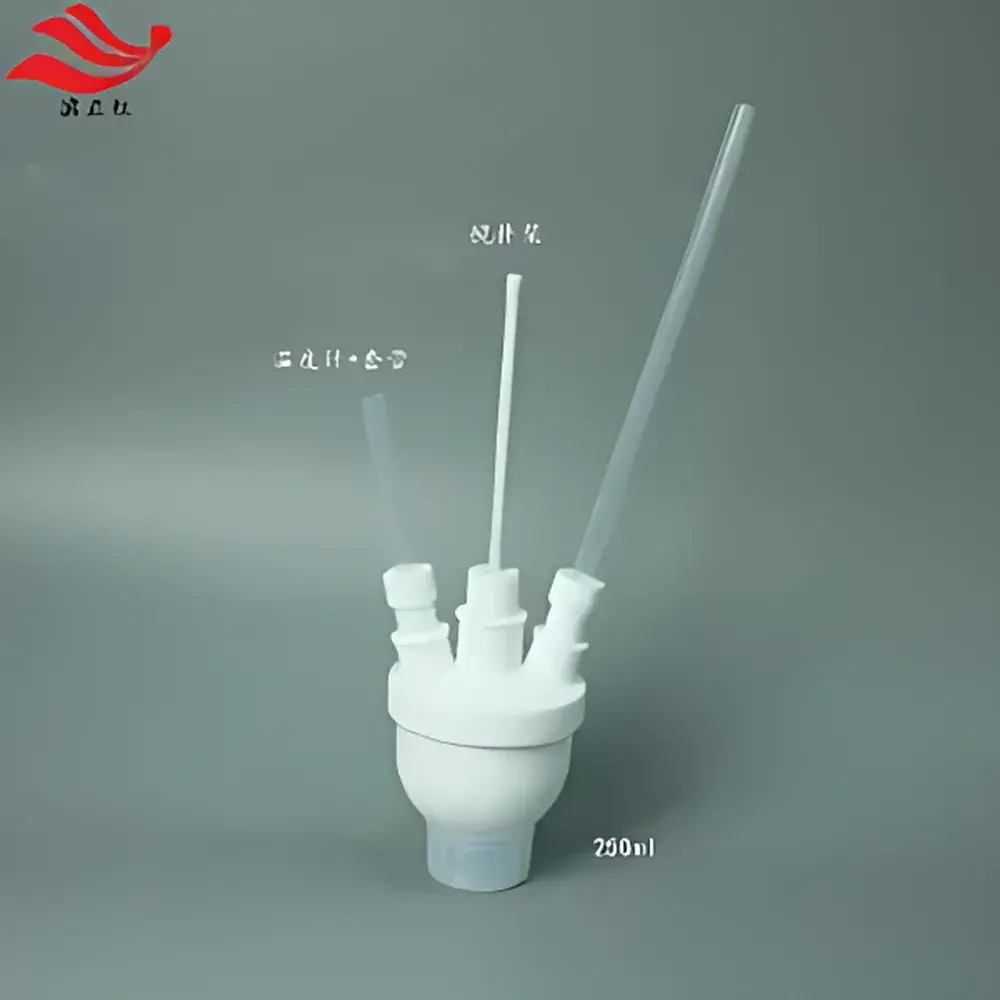
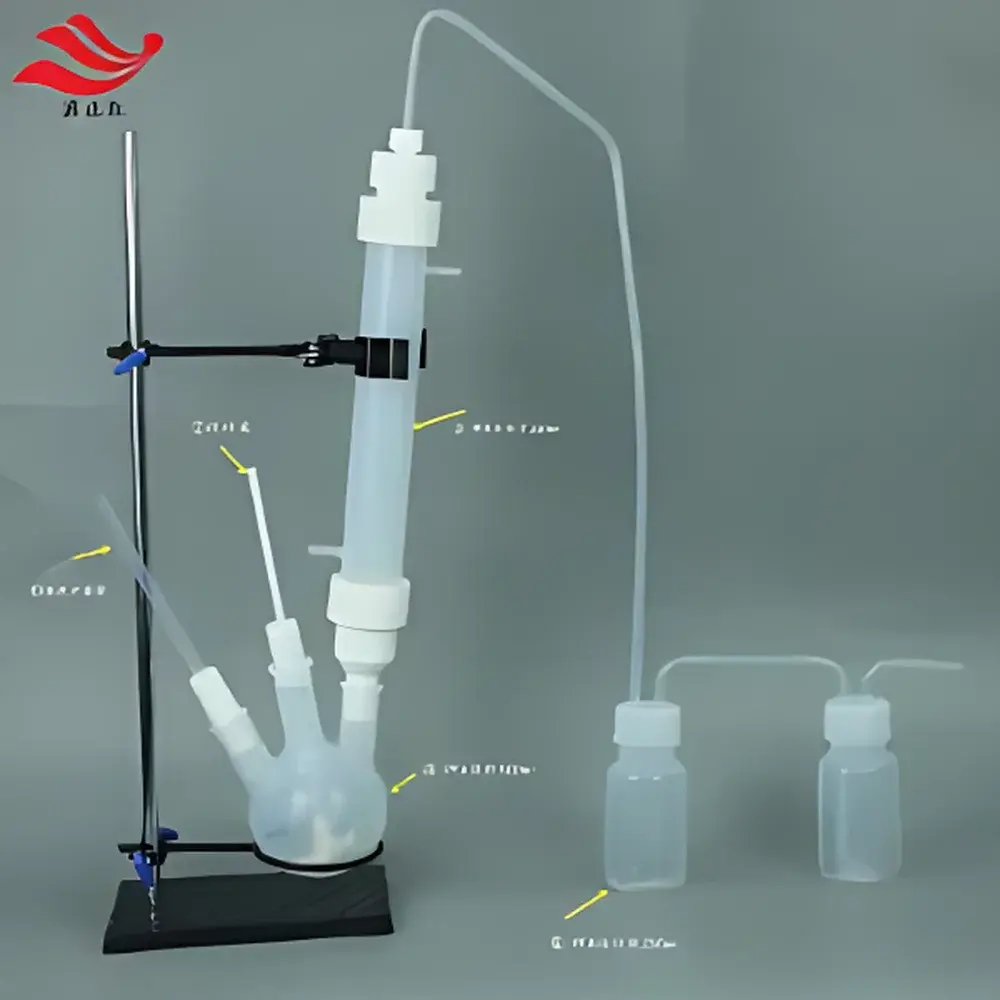
PFA Transparent Fluorinated Ethylene Propylene (FEP) Round-Bottom Reaction Flask – 500 mL, Single-Neck or Multi-Neck Configuration
| Brand | Nanjing Binzhenghong |
|---|---|
| Origin | Jiangsu, China |
| Manufacturer Type | Direct Producer |
| Origin Category | Domestic (China) |
| Model | SP-250 / SP-500 / SP-1000 mL |
| Price Range | USD 140 – 2,300 (FOB) |
| Neck Configurations | 1–4 necks (SP-500) |
| Standard Taper Ground Glass Joints | 19/24 |
| Material | High-Purity PFA (Perfluoroalkoxy Alkane) |
| Volume Options | 100–5000 mL |
| Joint Sizes Available | 17/19/24/29 standard taper |
| Base Options | Round-bottom (standard), flat-bottom (custom) |
| Closure Type | Threaded PFA caps with integrated sealing interface |
Overview
The PFA Transparent Round-Bottom Reaction Flask (Model SP-500) is a high-performance laboratory vessel engineered for aggressive chemical synthesis and HF-based etching processes. Constructed from virgin perfluoroalkoxy alkane (PFA), this flask exhibits exceptional resistance to hydrofluoric acid (HF), molten alkali metals, chlorine trifluoride, and other highly corrosive reagents at elevated temperatures (continuous use up to 260 °C). Unlike opaque polytetrafluoroethylene (PTFE) vessels, PFA offers optical clarity—enabling real-time visual monitoring of reaction progress, phase separation, crystallization, or gas evolution without compromising chemical inertness. Its round-bottom geometry ensures uniform thermal distribution during heating or cooling, while the precision-machined standard taper joints (19/24) guarantee leak-tight, reproducible connections with complementary PFA or glass accessories—including condensers, thermometers, dropping funnels, and reflux adapters. Designed specifically for applications where both material compatibility and process observability are critical, the SP-500 serves as a core component in semiconductor wafer cleaning, rare-earth metal purification, nuclear fuel reprocessing support systems, and analytical sample digestion workflows.
Key Features
- Optically transparent PFA construction enables direct visual inspection under UV–vis wavelengths without leaching or haze formation
- Chemical resistance validated per ASTM D543 against 48% aqueous HF at 80 °C for >1,000 hours with <0.1% mass loss
- Round-bottom design optimized for magnetic stirring, oil bath immersion, and rotary evaporation compatibility
- Single-neck (standard) or configurable multi-neck variants (up to 4 necks for SP-500) accommodate simultaneous addition, temperature sensing, inert gas purging, and reflux
- Threaded PFA caps with dual-seal geometry (O-ring + tapered interference fit) ensure vapor-tight closure and simplified cleaning
- Joint compatibility with ISO 385 and DIN 12877 standard taper dimensions (19/24) permits interchangeability with borosilicate glass and fluoropolymer labware
- No plasticizers, fillers, or stabilizers—compliant with USP Class VI and FDA 21 CFR 177.1550 for extractables testing
Sample Compatibility & Compliance
This flask is routinely employed in environments requiring strict adherence to corrosion-resistant containment protocols. It complies with ISO 17025 calibration traceability requirements when used in accredited analytical laboratories performing HF-mediated digestion per EPA Method 3052 or ASTM E1775. The PFA matrix demonstrates no detectable fluorine ion leaching (<0.05 ppm) after exposure to boiling 48% HF for 72 h, meeting ICH Q5C stability-indicating container criteria. For GMP-regulated pharmaceutical development, the vessel supports GLP audit trails when paired with documented cleaning validation (residue recovery ≤10 ppb via IC analysis). All units undergo helium leak testing (≤1×10⁻⁹ mbar·L/s) and batch-certified dimensional inspection per ASME B16.5 Annex F.
Software & Data Management
While the SP-500 is a passive containment device, its integration into automated reactor platforms (e.g., ChemSpeed AutoMate, ThalesNano H-Cube Pro) requires digital asset tagging. Each flask carries a laser-etched serial number linked to a manufacturer’s Certificate of Conformance (CoC), including raw material lot traceability, melt flow index (MFI = 8–10 g/10 min @ 372 °C/5 kg), and FTIR spectral verification of PFA homopolymer structure. Optional RFID-enabled base plates (sold separately) allow inventory tracking within LIMS systems compliant with ISO/IEC 17025:2017 clause 7.9.
Applications
- Hydrofluoric acid digestion of silicate minerals, ceramics, and geological samples prior to ICP-MS analysis
- In-situ monitoring of fluorination reactions in fine chemical synthesis (e.g., aryl fluoride preparation)
- High-purity solvent handling for lithium-ion battery electrolyte formulation
- Low-background radiochemical separations involving actinide complexes
- Calibration standard preparation for fluoride ion-selective electrode (ISE) validation
- Long-term storage of ultra-trace metal standards (sub-ppt level) without wall adsorption
FAQ
Is this flask suitable for vacuum distillation?
Yes—rated for full vacuum (≤1 mbar) at 25 °C; maximum allowable vacuum decreases linearly to 50 mbar at 260 °C per ASTM D638 tensile data.
Can I autoclave the PFA flask?
No—autoclaving exceeds PFA’s continuous service temperature limit; dry heat sterilization at ≤250 °C for ≤30 min is permissible.
What joint size is recommended for HF condenser coupling?
A 24/40 standard taper joint is preferred for condenser attachment due to enhanced surface contact area and reduced risk of HF vapor bypass.
Does the transparency degrade over time with UV exposure?
No measurable yellowing or haze occurs after 1,000 h of accelerated UV aging (ISO 4892-2, cycle A), confirming UV-stabilized PFA formulation.
Are custom neck configurations available beyond 4 necks for the 500 mL size?
No—structural integrity limits SP-500 to a maximum of 4 necks; for ≥5 necks, the SP-1000 mL variant must be selected.



