
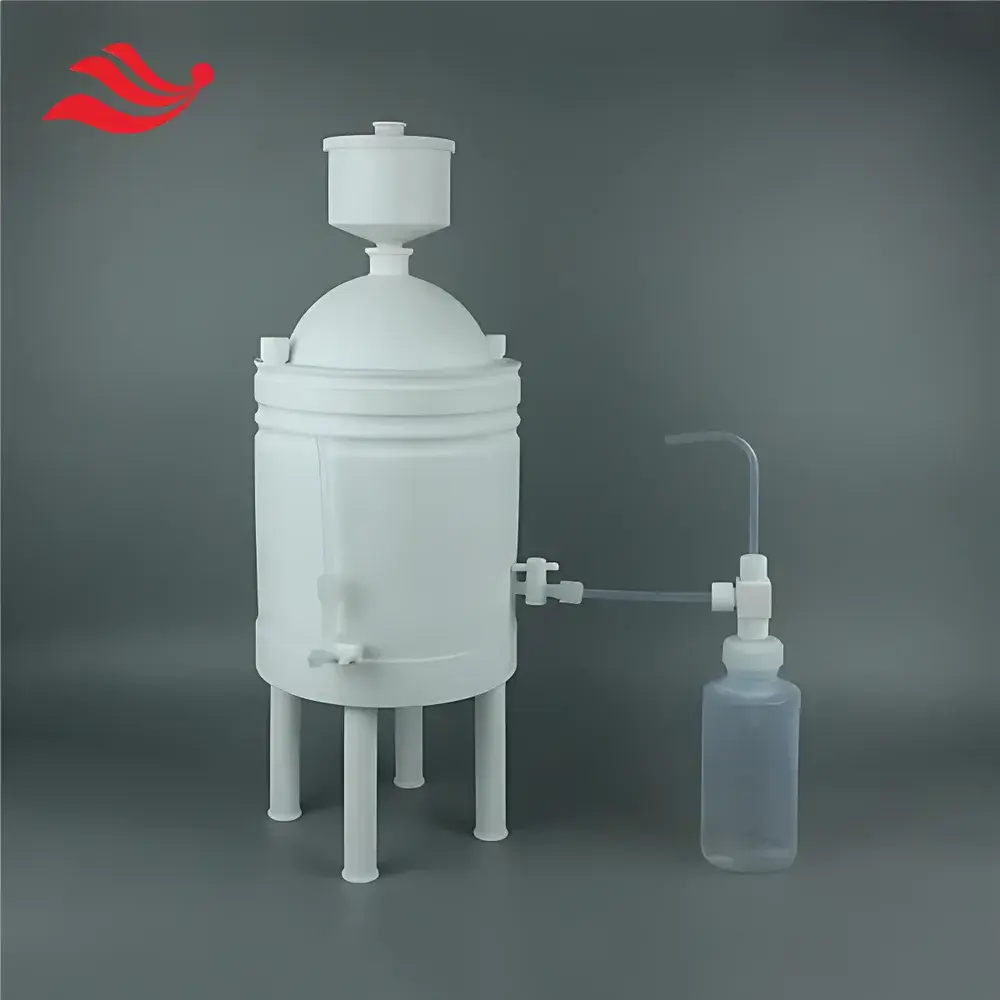
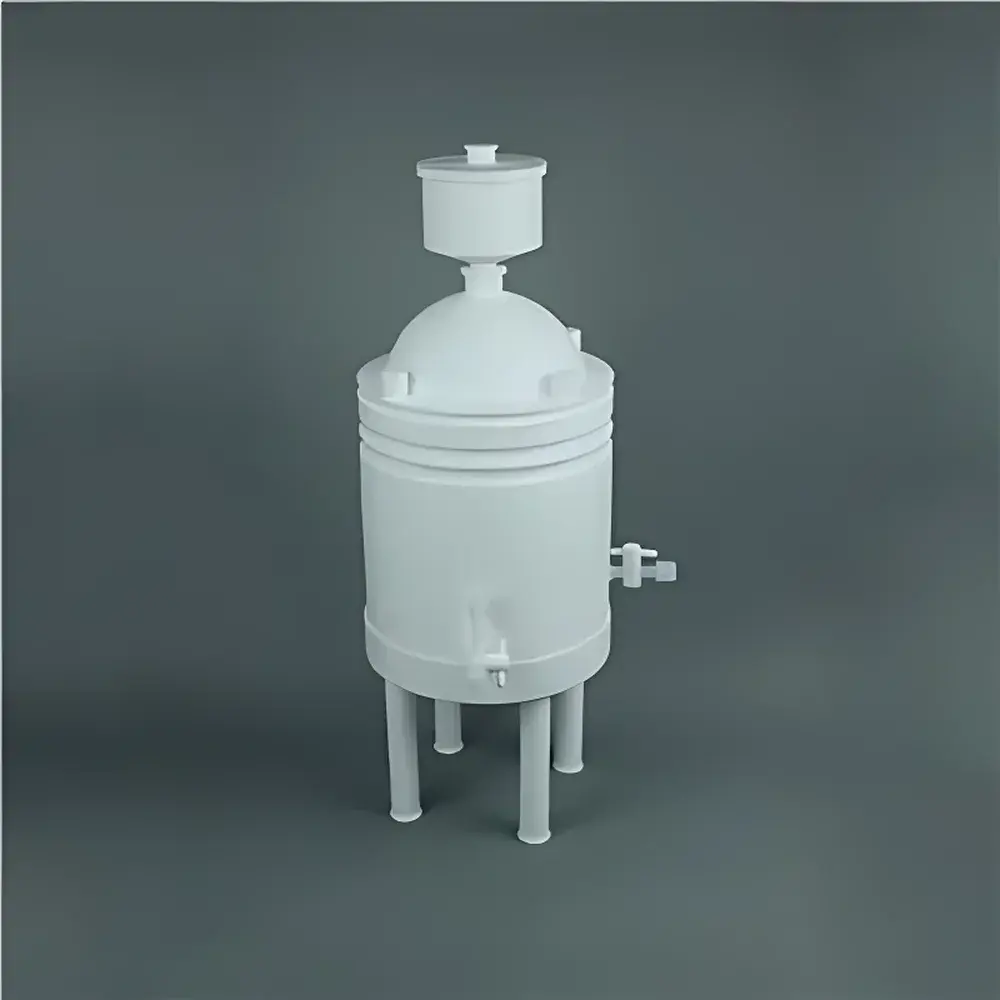
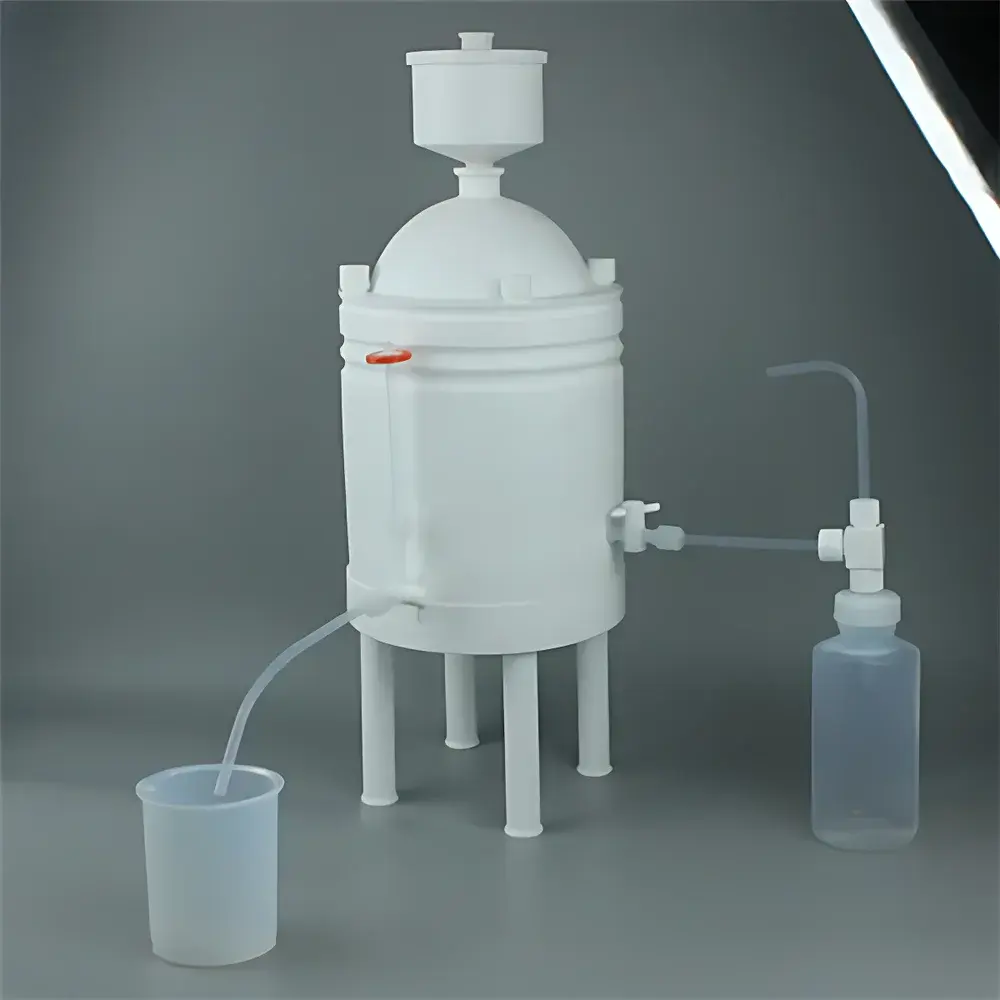
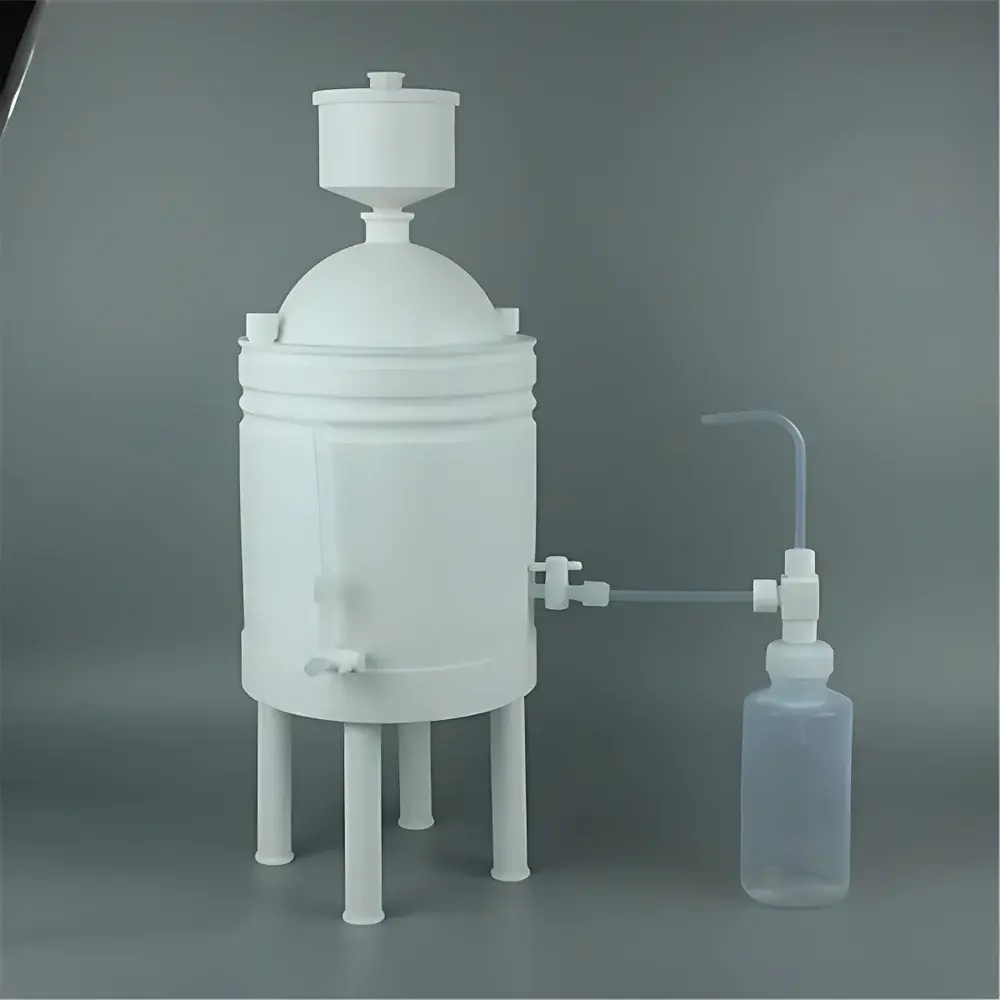
Binzhenghong CH-1000 Ultra-Pure Acid Distillation System (Sub-Boiling Distiller)
| Brand | Binzhenghong |
|---|---|
| Origin | Jiangsu, China |
| Manufacturer Type | OEM Manufacturer |
| Product Category | Domestic |
| Model | CH-1000 |
| Instrument Type | Sub-boiling Distillation Apparatus |
| Capacity | 1000 mL |
| Production Rate | 50 mL/h |
| Temperature Control | PID Digital Display |
| Temperature Accuracy | ±1 °C |
| Construction Materials | FEP, PTFE, Silicone |
| Voltage | 220 V / 50 Hz |
| Power | 350 W |
Overview
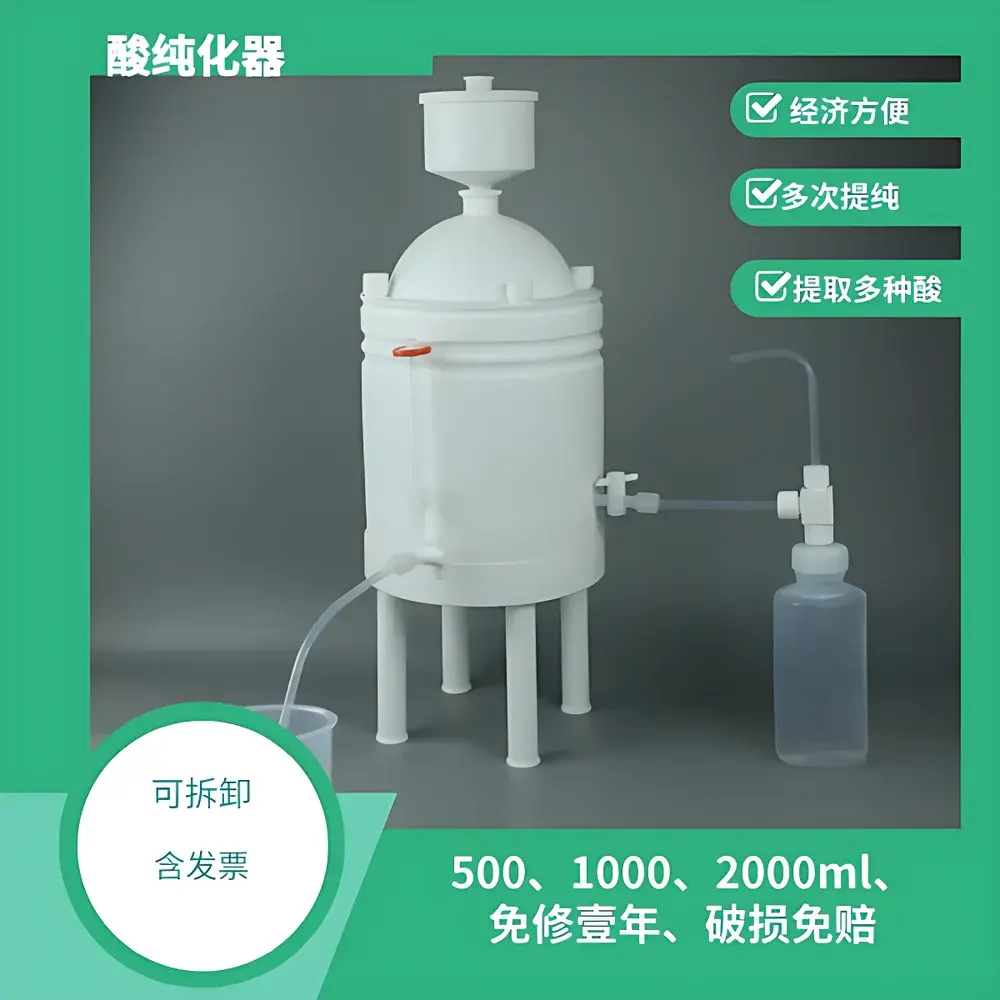
The Binzhenghong CH-1000 Ultra-Pure Acid Distillation System is a laboratory-grade sub-boiling distiller engineered for the production of ultra-trace-metal-free acids essential in high-sensitivity analytical applications. Operating on the principle of thermal radiation-driven sub-boiling evaporation, the system maintains the bulk liquid temperature below its atmospheric boiling point—thereby minimizing volatile impurity carryover and suppressing aerosol formation. Acid vapors generated under controlled thermal conditions are condensed in an all-fluoropolymer (FEP/PTFE) condensation path and collected as purified reagent-grade acid. This method is fundamentally distinct from conventional boiling distillation and aligns with established protocols for trace-metal analysis where contamination control is paramount—particularly in ICP-OES, ICP-MS, and HR-ICP-MS sample preparation workflows requiring detection limits at or below 0.1 pg/g.
Key Features
- Fully enclosed, inert fluoropolymer pathway: All wetted components—including evaporation chamber, vapor conduit, condenser, and collection vessel—are constructed from high-purity FEP and PTFE to eliminate metal leaching, adsorption, and surface catalysis.
- Sub-boiling operation with precision PID temperature regulation: Digital temperature control ensures stable thermal profiles within ±1 °C, enabling reproducible evaporation kinetics across multiple batches and operators.
- Integrated dry-run protection: Automatic thermal cutoff prevents overheating when the feed reservoir reaches low-volume thresholds, extending component service life and ensuring operational safety.
- Modular, tool-free disassembly: The distillation chamber and condenser assembly are designed for rapid separation and ultrasonic cleaning—critical for preventing cumulative residue buildup and maintaining long-term purity performance.
- Low-volatility acid compatibility: Validated for safe and efficient purification of nitric acid (HNO₃), hydrochloric acid (HCl), hydrofluoric acid (HF), ammonium hydroxide (NH₄OH), and select low-boiling organic solvents such as methanol and acetonitrile.
Sample Compatibility & Compliance
The CH-1000 is routinely deployed in laboratories adhering to ISO/IEC 17025, ASTM D512, ASTM D1129, and USP water conductivity specifications. Its design supports GLP-compliant documentation practices through consistent batch traceability and operator-independent process parameters. All materials meet FDA 21 CFR §177.1550 (fluorinated polymers) and EU Regulation (EC) No 1935/2004 for food-contact suitability—ensuring regulatory acceptability in environmental, pharmaceutical, and geochemical QA/QC environments. Independent verification by third-party ICP-MS labs (e.g., China University of Geosciences Key Lab of Geological Processes and Mineral Resources) confirms post-distillation metal impurities consistently below 0.01 ppb (ng/g) for >30 elements including Be, Cr, Fe, Ni, Zn, Cd, Pb, U, and rare earths.
Software & Data Management
The CH-1000 operates as a standalone analog-controlled instrument with no embedded firmware or digital interface. Temperature setpoints, runtime duration, and output volume are manually recorded per batch in laboratory notebooks or LIMS-integrated log sheets. For audit readiness, users are advised to retain calibration logs for the integrated digital thermometer (NIST-traceable certificate optional), maintenance records for FEP gaskets and heating elements, and ICP-MS validation reports per acid lot. While the unit does not support FDA 21 CFR Part 11 electronic signatures, its mechanical simplicity and deterministic thermal behavior facilitate straightforward qualification (IQ/OQ/PQ) under GMP-aligned validation frameworks.
Applications
- Preparation of matrix-matched calibration standards and blanks for ICP-MS multi-element analysis.
- Purification of HF for silicate dissolution prior to zircon Hf-isotope or U–Pb geochronology.
- Generation of ultra-pure HNO₃ for semiconductor wafer cleaning and trace contaminant leaching studies.
- Reagent recertification in accredited environmental testing labs performing EPA Method 200.8 or ISO 17294-2.
- On-site reagent conditioning in mobile geochemical field labs where commercial high-purity acids are logistically constrained.
FAQ
What acids can be purified using the CH-1000 system?
The system is validated for HNO₃, HCl, HF, NH₄OH, and selected low-boiling organics (e.g., methanol). It is not suitable for sulfuric acid (H₂SO₄), phosphoric acid (H₃PO₄), or perchloric acid (HClO₄) due to thermal decomposition risks and material compatibility limitations.
How many distillation cycles are required to achieve sub-0.01 ppb metal content?
A single pass typically reduces total dissolved metals from ~10 ppb to ≤0.01 ppb for most elements. For ultra-low-background applications (e.g., nuclear forensics), a second pass may be performed—but empirical validation via ICP-MS is required for each acid lot and target analyte.
Is the CH-1000 compatible with cleanroom Class 1000 (ISO 6) environments?
Yes—the unit generates no particulate emissions, requires no external cooling water, and emits negligible VOCs during operation. Optional stainless-steel housing upgrades are available for enhanced static dissipation and ESD compliance.
Can Teflon collection bottles be directly attached to the condensate outlet?
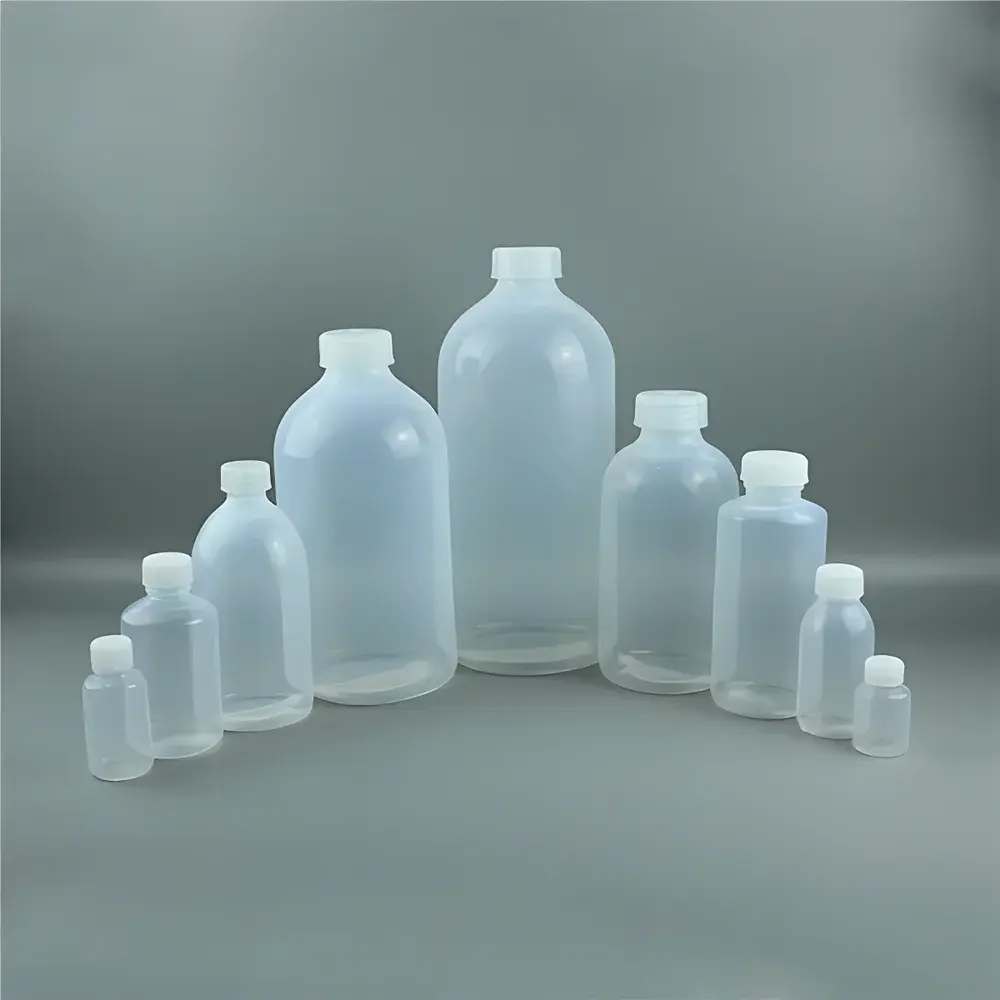
Yes. The standard 6-mm FEP tubing outlet is compatible with common PFA or FEP narrow-mouth reagent bottles (e.g., Savillex™, Nalgene™ Teflon®-FEP series) using compression fittings or solvent-welded adapters.
What maintenance intervals are recommended for optimal performance?
FEP gaskets should be inspected and replaced every 12 months or after 200 distillation cycles. The heating element surface must be wiped with deionized water after each use; full chamber disassembly and ultrasonic cleaning in 5% HNO₃ is recommended quarterly.



