
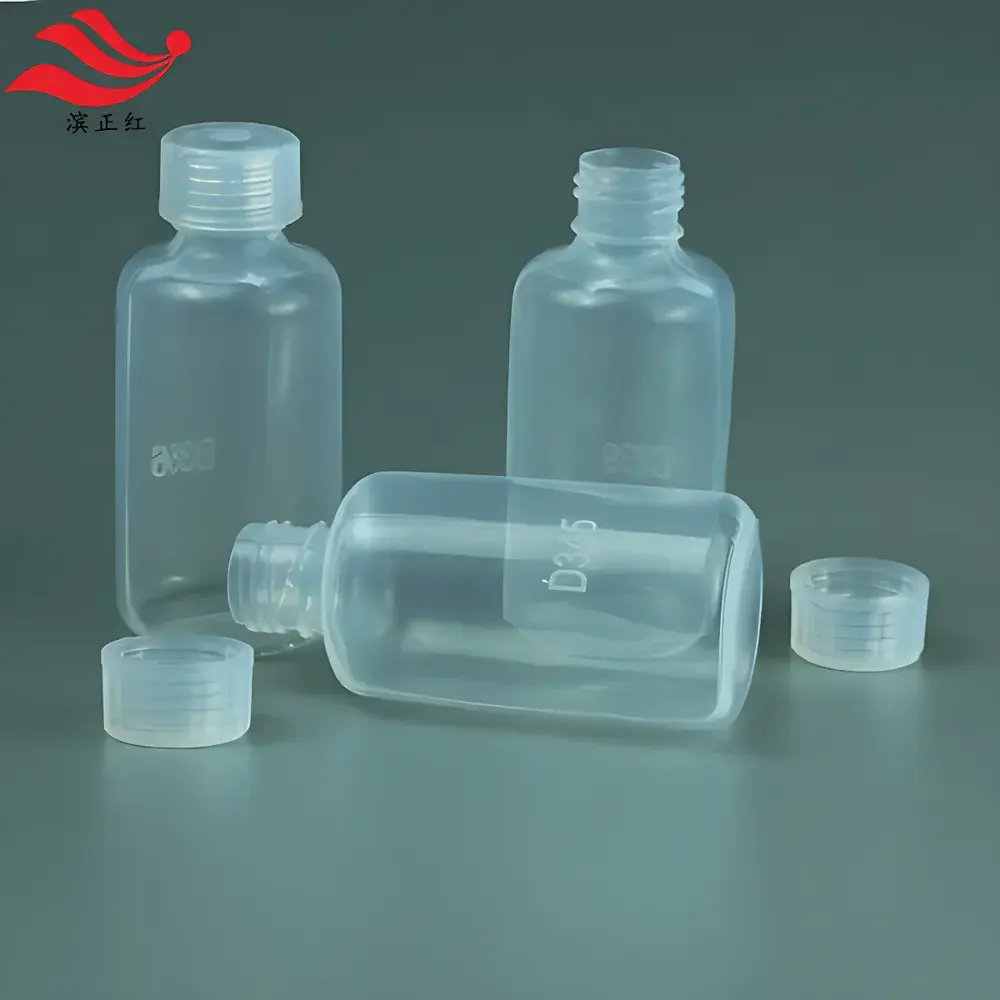
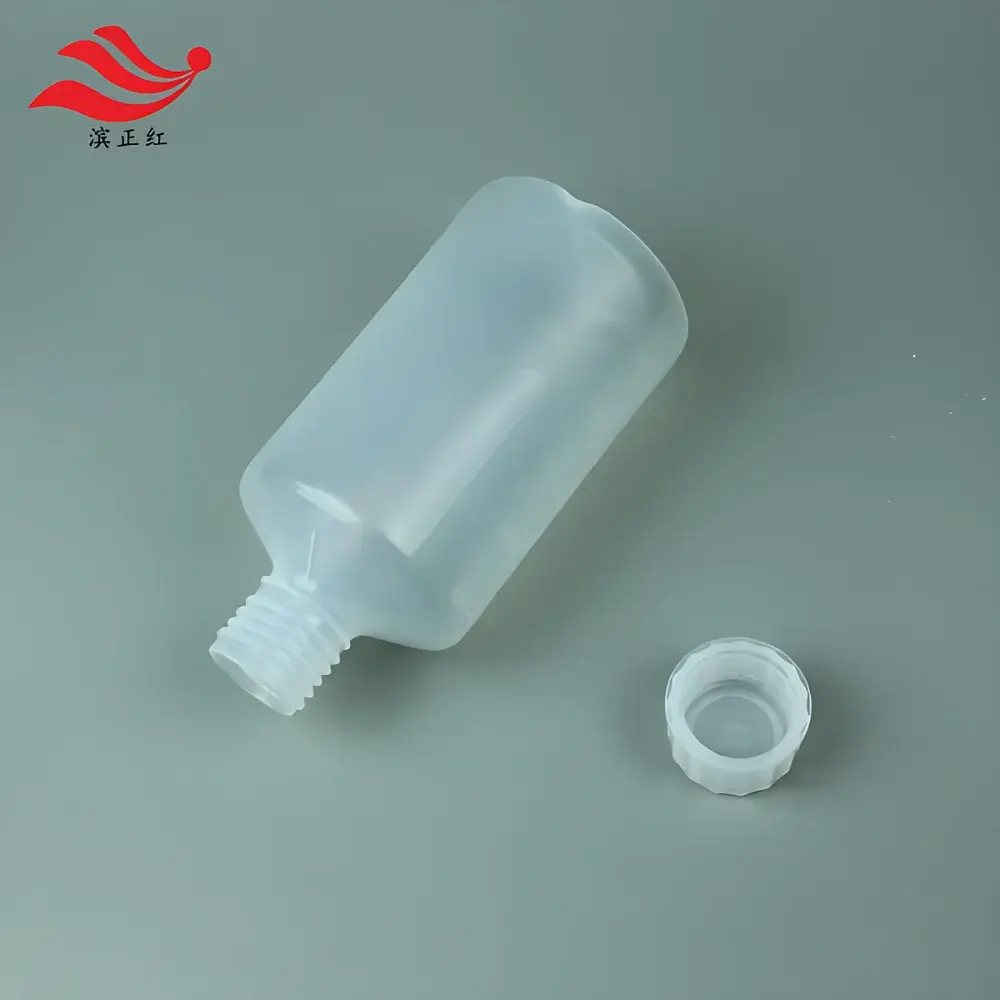
Binzhenghong PFA Sampling Vials for Semiconductor Ultra-Pure Standards (UPSSS Grade) – HF-Resistant, Low-Background, Transparent Fluoropolymer Vials
| Brand | Binzhenghong |
|---|---|
| Origin | Jiangsu, China |
| Manufacturer Type | Direct Producer |
| Region Classification | Domestic (China) |
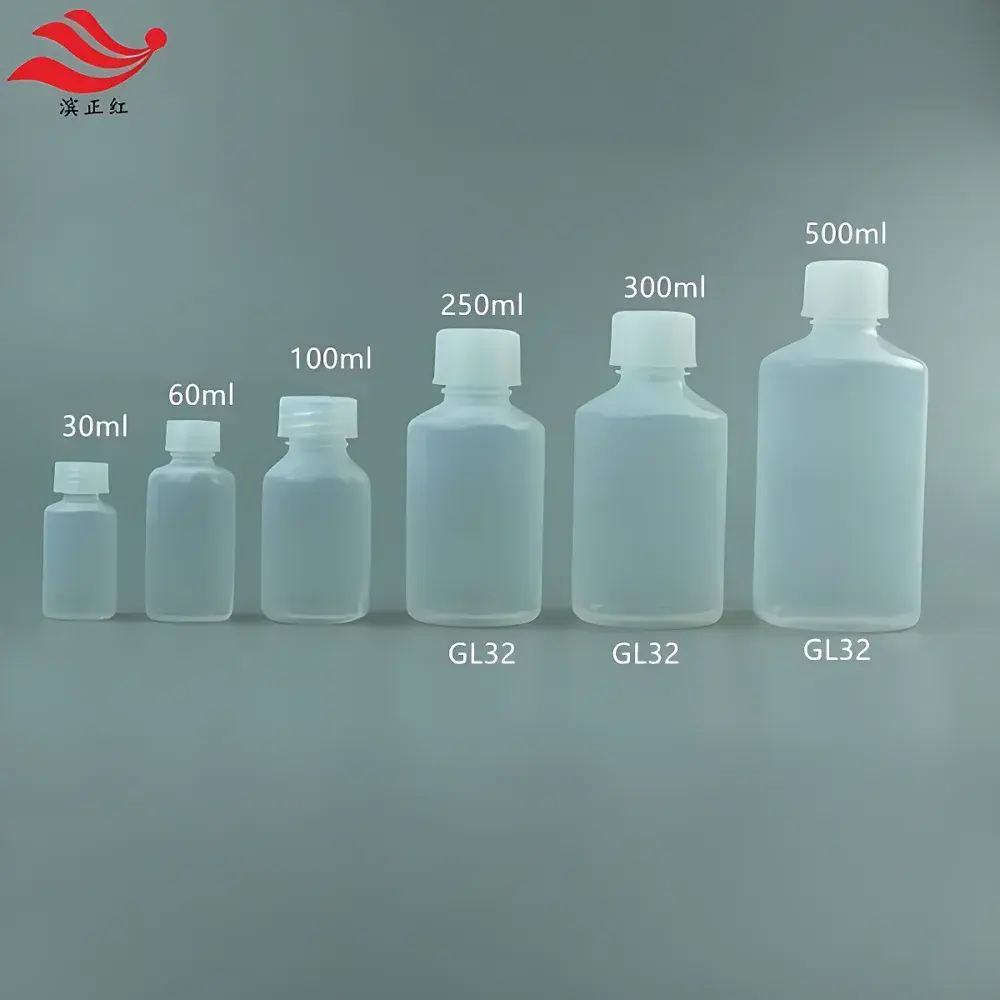
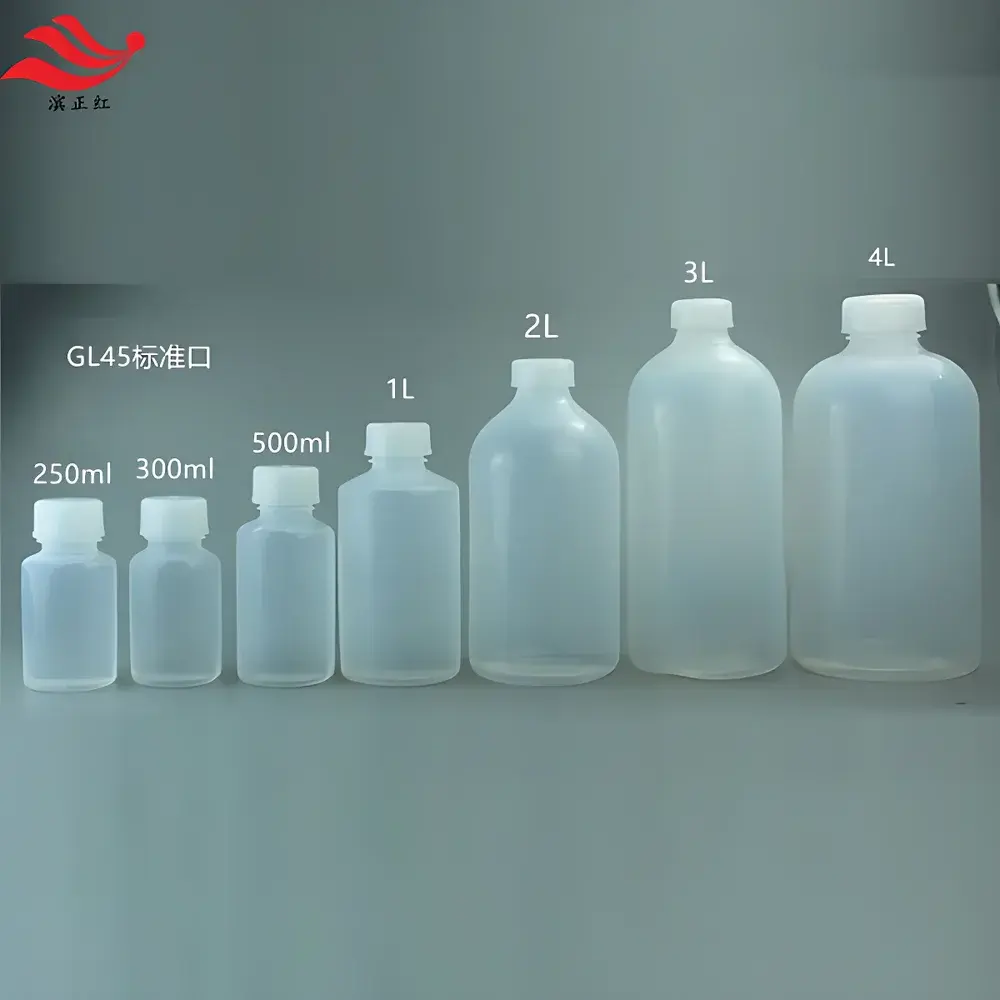
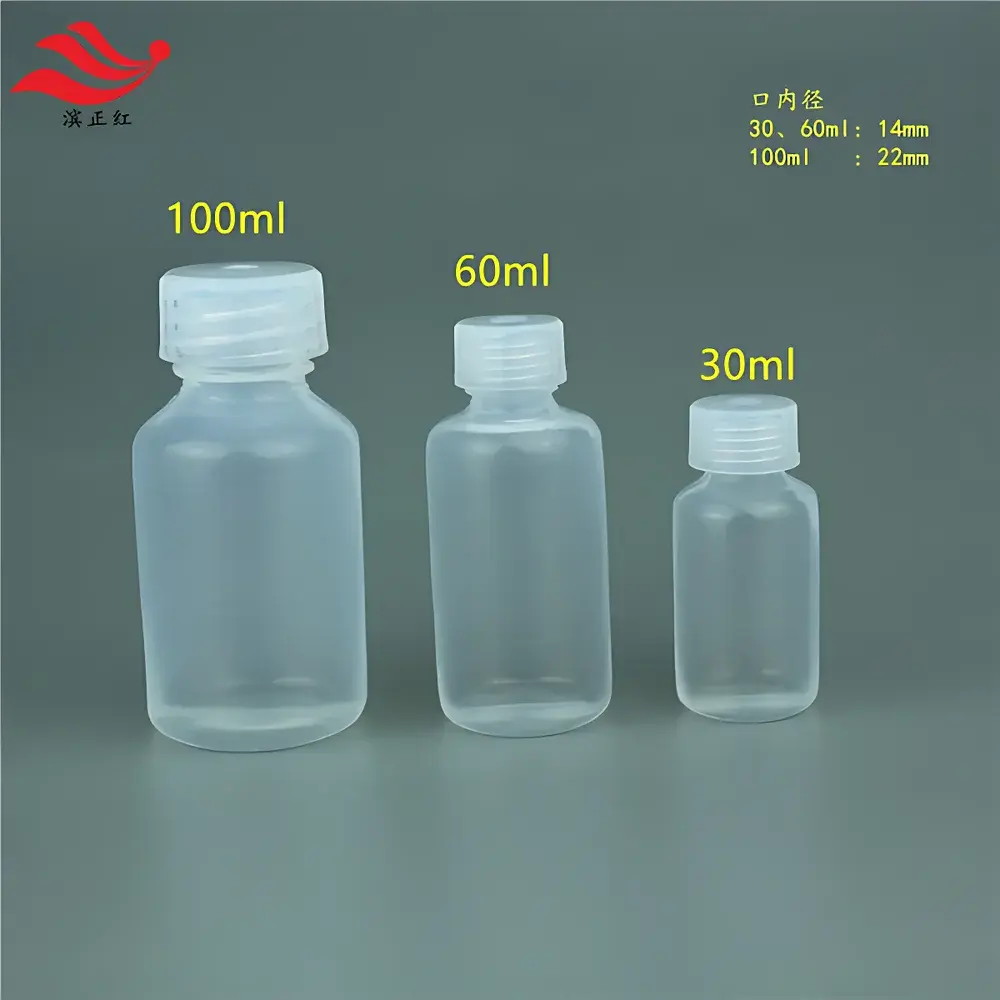
| Capacity Range | 25–4000 mL |
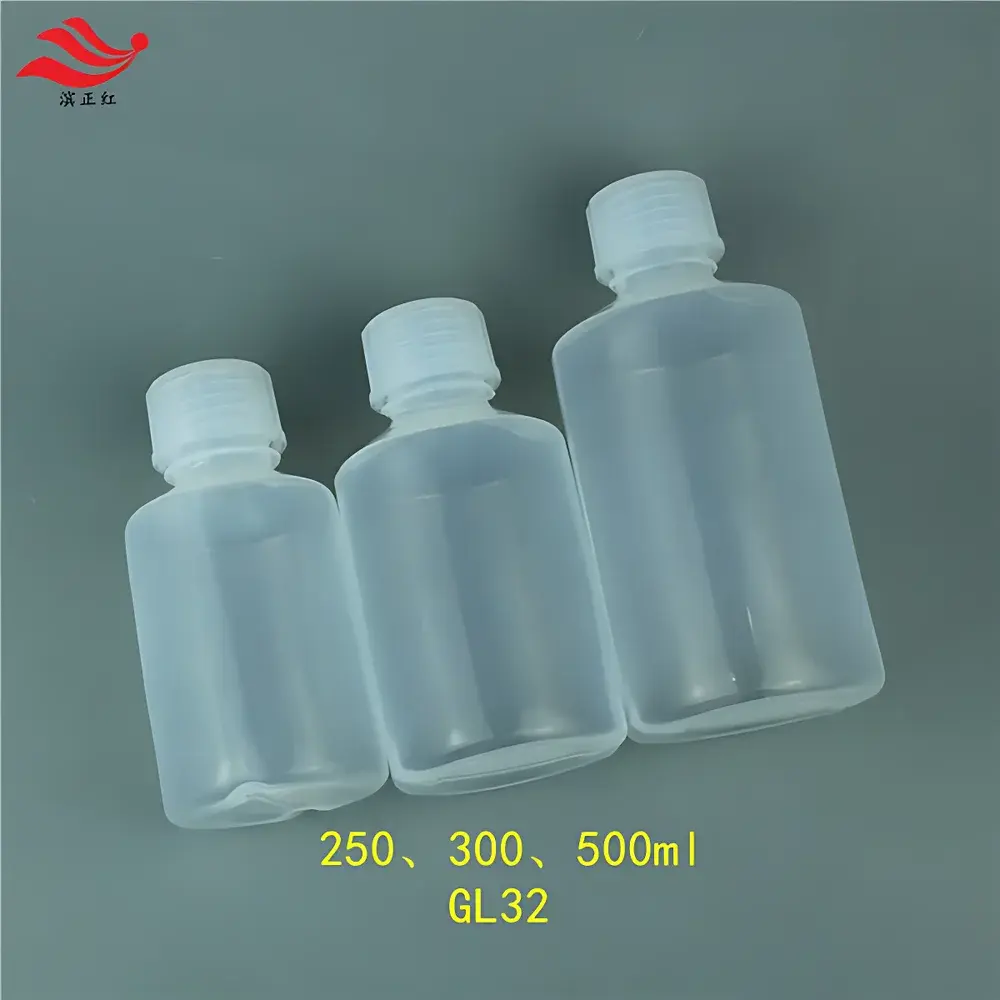
| Neck Finish | GL32 & GL45 |
| Material | PFA (Perfluoroalkoxy alkane) |
| Compliance | Ultra-low extractables, non-leaching, inert to hydrofluoric acid (HF), ASTM F2897-compliant fluoropolymer formulation |
| Transparency | Optical-grade clarity |
| Base Specification | USP Class VI, ISO 10993-5/10 tested |
Overview
The Binzhenghong PFA Sampling Vials are engineered specifically for ultra-high-purity applications in semiconductor process development, wafer cleaning validation, and advanced materials characterization. Designed to meet UPSSS (Ultra-Pure Semiconductor Standards) requirements, these vials utilize molded, seamless PFA resin—selected for its exceptional chemical resistance, thermal stability (−200 °C to +260 °C), and near-zero elemental leachability. Unlike glass or standard HDPE/PP containers, PFA exhibits complete inertness toward concentrated hydrofluoric acid (HF), ammonium hydroxide (NH₄OH), hydrogen peroxide (H₂O₂), and other aggressive chemistries used in front-end-of-line (FEOL) wet benches. The vials are manufactured in a certified cleanroom environment (ISO Class 5), with rigorous particulate control, trace metal screening (<10 pg/mL for Al, Fe, Cr, Ni, Na, K), and batch-certified ICP-MS analytical reports available upon request. Their optical-grade transparency enables real-time visual inspection of sample homogeneity, phase separation, or precipitate formation without opening the container—critical for maintaining integrity during transport and storage of photoresist developers, etch inhibitors, and CMP slurries.
Key Features
- Material integrity: Fully fused PFA construction eliminates seams, weld lines, or mold parting lines—reducing surface area for potential adsorption or particle generation.
- HF compatibility: Demonstrated resistance to ≥49% aqueous HF at ambient and elevated temperatures (up to 80 °C), validated per ASTM D543 and SEMI F57 test protocols.
- Ultra-low background: Pre-cleaned via multi-stage ultrapure water (18.2 MΩ·cm) rinsing and nitrogen purging; certified for ≤0.1 ppb total organic carbon (TOC) and ≤0.05 EU/mL endotoxin levels.
- Dimensional precision: Tight tolerance control on neck geometry (GL32: Ø32 mm × 12 mm height; GL45: Ø45 mm × 15 mm height) ensures compatibility with automated liquid handlers, autosampler racks, and robotic dispensing systems.
- Thermal resilience: Withstands repeated autoclaving (121 °C, 20 min) and freeze-thaw cycling without delamination or haze formation.
Sample Compatibility & Compliance
These vials are qualified for use with Class 1–10 cleanroom environments and conform to multiple international material safety and purity benchmarks. They comply with SEMI C1–0312 (Specification for High-Purity Fluoropolymer Containers), pass USP and extractables testing, and support GLP/GMP documentation workflows through lot-specific CoA (Certificate of Analysis) and CoC (Certificate of Conformance). Each production lot undergoes full ICP-MS screening for >30 elements—including boron, phosphorus, arsenic, and transition metals critical to dopant control—and is traceable to raw resin lot numbers from certified PFA polymer suppliers. The vials are not intended for long-term storage of strong oxidizers above 60 °C without pressure-rated closures.
Software & Data Management
While inherently hardware-based, the vials integrate seamlessly into LIMS (Laboratory Information Management Systems) and electronic lab notebook (ELN) platforms via standardized barcode labeling (optional 2D DataMatrix etching available). Batch-level analytical data—including TOC, IC, ICP-MS, and particle count reports—is archived in secure cloud repositories with audit-trail enabled access logs compliant with FDA 21 CFR Part 11 and ISO/IEC 17025 requirements. Traceability extends from raw material receipt through final packaging, supporting full chain-of-custody documentation for internal quality audits or external regulatory inspections.
Applications
- Storage and transport of high-purity process chemicals: SC1 (NH₄OH:H₂O₂:H₂O), SC2 (HCl:H₂O₂:H₂O), BOE (Buffered Oxide Etch), and dilute HF solutions.
- Calibration standard containment for ICP-MS, ICP-OES, and TXRF instrumentation in fab metrology labs.
- Reference material preservation for particle counting (e.g., ISO 21501-4) and trace anion/cation analysis (IC).
- Long-term stability studies of photoresist formulations and post-apply bake (PAB) solvents under inert atmosphere.
- Sampling of ultrapure water (UPW) streams for TOC, silica, and metal contamination trending.
FAQ
Are these vials suitable for use with concentrated hydrofluoric acid (>40%) at elevated temperatures?
Yes—validated up to 49% HF at 80 °C for 72 hours with no observable weight loss, haze, or elemental leaching beyond specification limits.
Do you provide lot-specific certificates of analysis (CoA)?
Yes—each shipment includes a CoA listing ICP-MS results for ≥30 elements, TOC, particle counts (≥0.5 µm), and extractables data per USP .
Can these vials be sterilized using gamma irradiation?
No—gamma exposure degrades PFA mechanical properties; autoclaving or dry heat (150 °C, 2 h) is recommended for sterility assurance.
What closure options are available?
Standard configurations include PFA-lined polypropylene screw caps (GL32/GL45) and optional PTFE-faced silicone septa for gas-tight sampling; custom closures available upon engineering review.
Is there a minimum order quantity (MOQ) for custom labeling or etching?
Yes—MOQ is 500 units for laser-etched DataMatrix codes; standard barcodes have no MOQ.



