
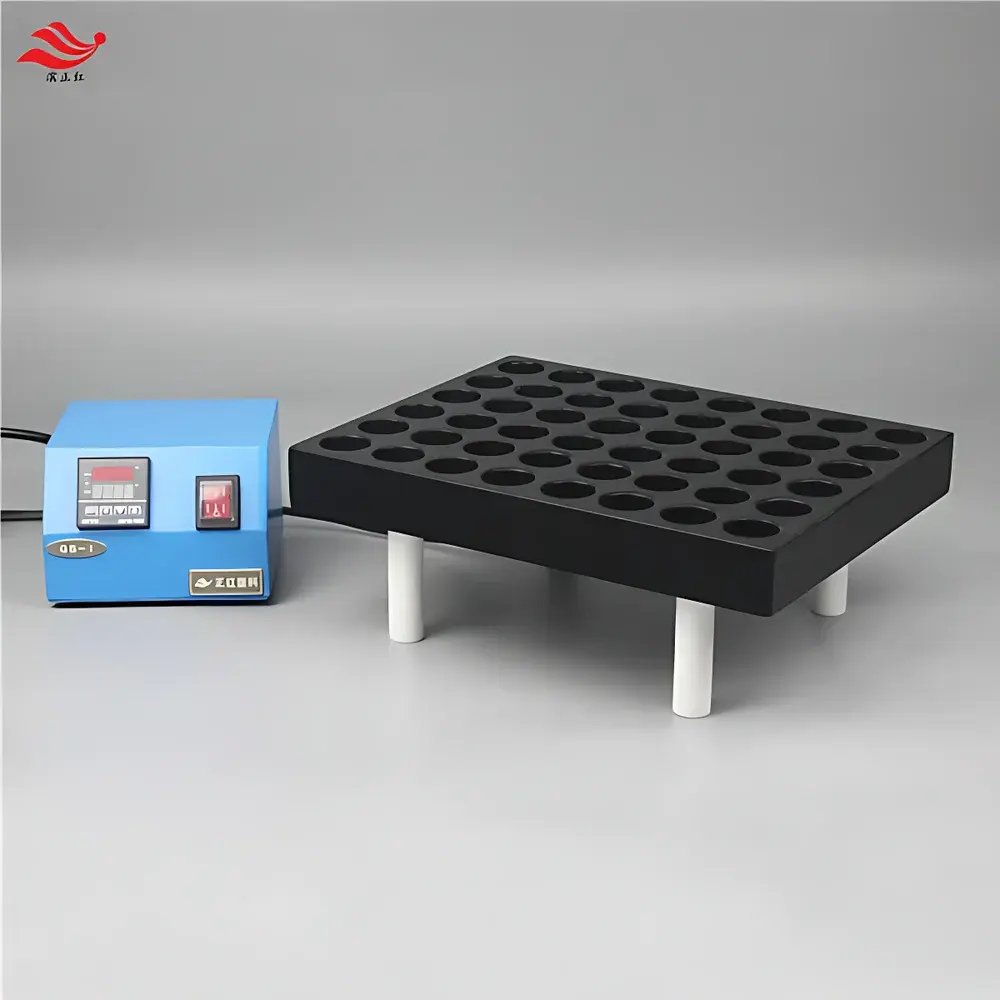
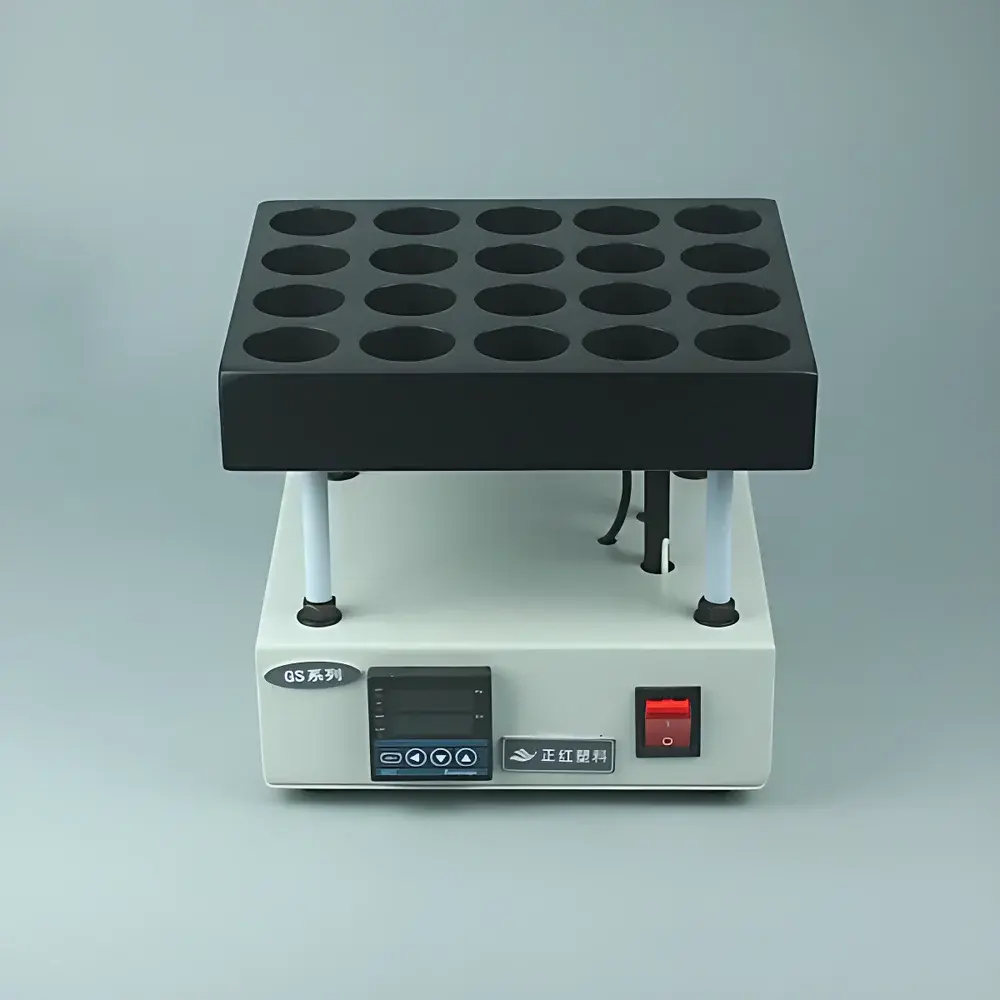
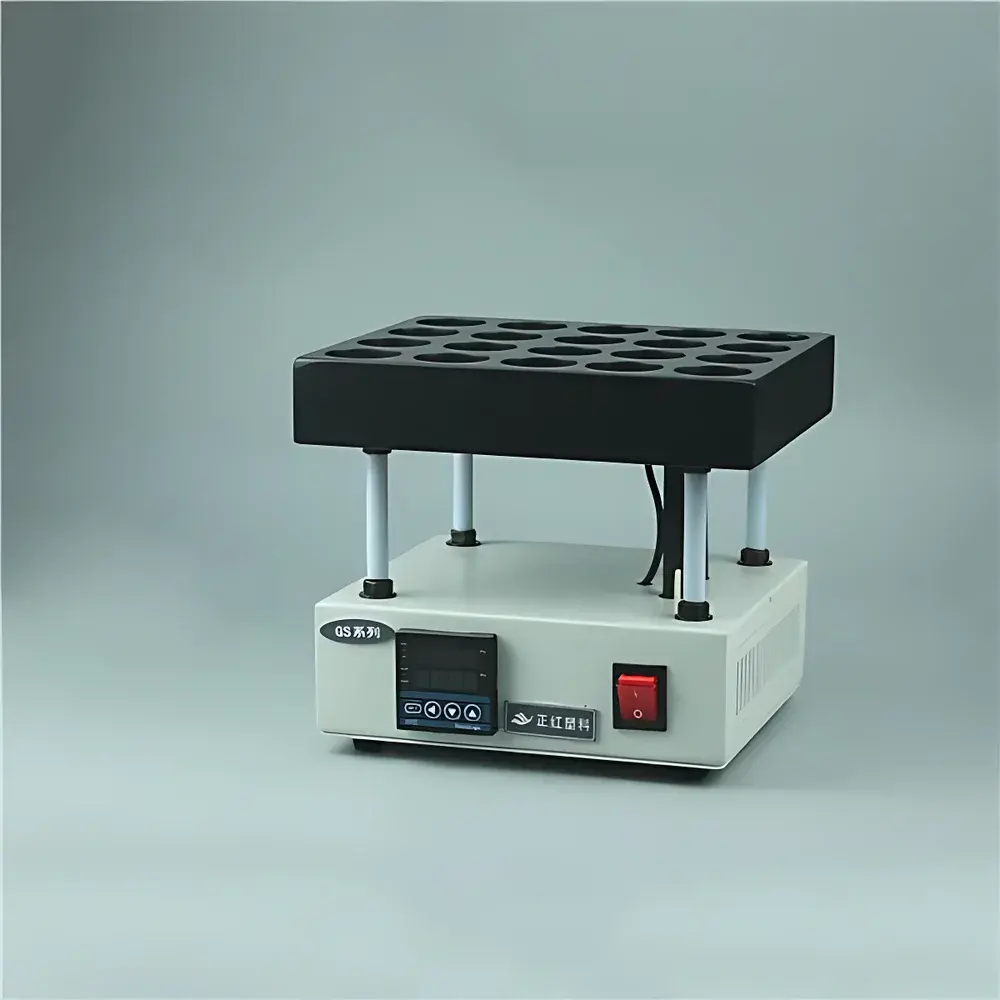
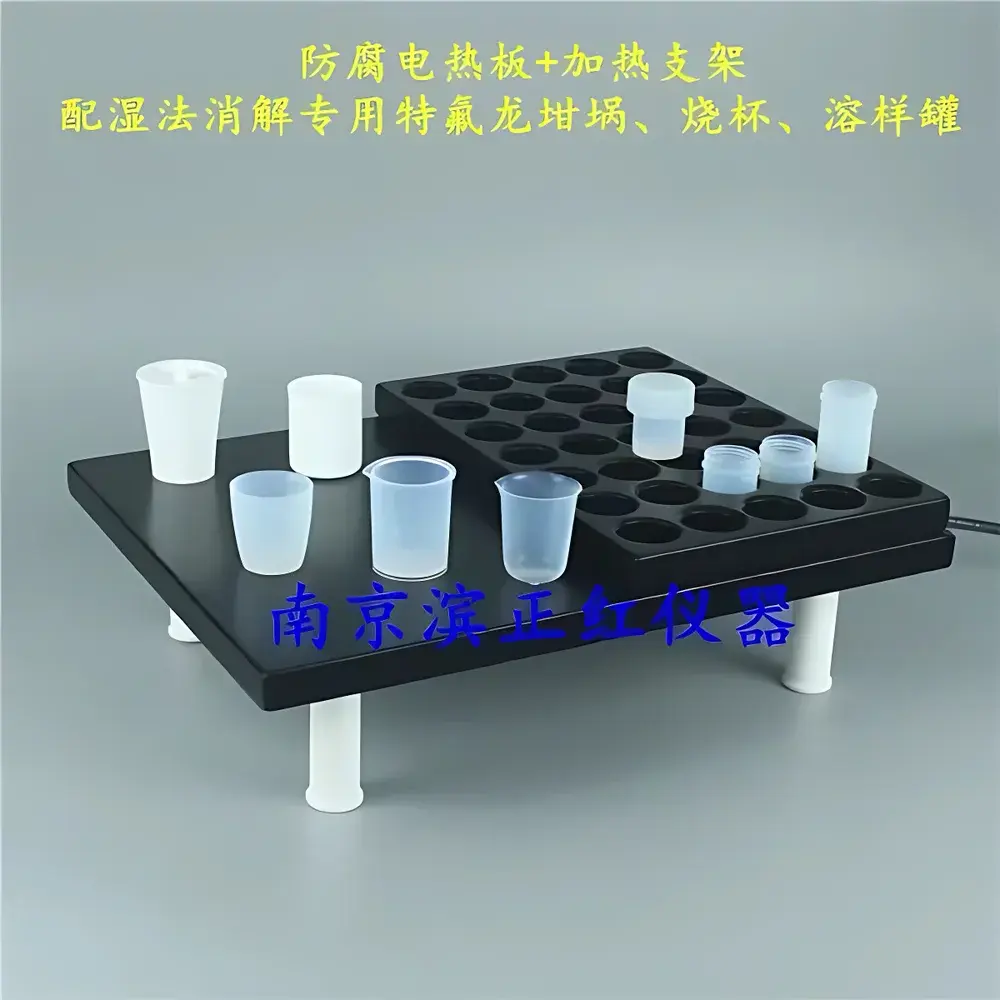
Binzhenghong NJ-GS Multi-Function Digital Display Digestion Evaporator & Electric Hotplate
| Brand | Binzhenghong |
|---|---|
| Origin | Jiangsu, China |
| Manufacturer Type | Direct Manufacturer |
| Country of Origin | China |
| Model | NJ-GS |
| Heating Power | 2 kW |
| Max. Heating Temperature | 260 °C |
| Temperature Uniformity | ±1 °C |
| Surface Dimensions | Customizable |
| Heating Zone Dimensions | Customizable |
| Display Type | Digital PID Controller with LCD |
Overview
The Binzhenghong NJ-GS Multi-Function Digital Display Digestion Evaporator & Electric Hotplate is an engineered solution for post-digestion acid removal (commonly termed “acid evaporation” or “acid fuming”) in trace elemental analysis workflows. Designed specifically for laboratories performing microwave-assisted, high-pressure, or open-vessel acid digestion—particularly prior to analysis by Atomic Absorption Spectroscopy (AAS), Atomic Fluorescence Spectrometry (AFS), Inductively Coupled Plasma Optical Emission Spectrometry (ICP-OES), or ICP-Mass Spectrometry (ICP-MS)—this instrument delivers precise, reproducible thermal control across multiple sample vessels simultaneously. Its core operating principle relies on uniform, circumferential resistive heating combined with PID-regulated digital temperature feedback, enabling stable operation from ambient to 260 °C. Unlike conventional planar hotplates or single-zone block heaters, the NJ-GS employs a 360° wrap-around heating architecture that ensures consistent thermal transfer to the base and sidewalls of digestion vessels—including PFA vials, quartz crucibles, Teflon-lined microwave rotor inserts (e.g., CEM, Milestone,屹尧/YiYao, Anton Paar), and borosilicate glassware—minimizing thermal gradients and reducing analyte loss via volatile acid decomposition.
Key Features
- Digital LCD interface with real-time temperature display, audible alarm, auto-shutdown, and programmable timer functionality
- PID-controlled heating system with ±1 °C temperature uniformity across the entire active zone
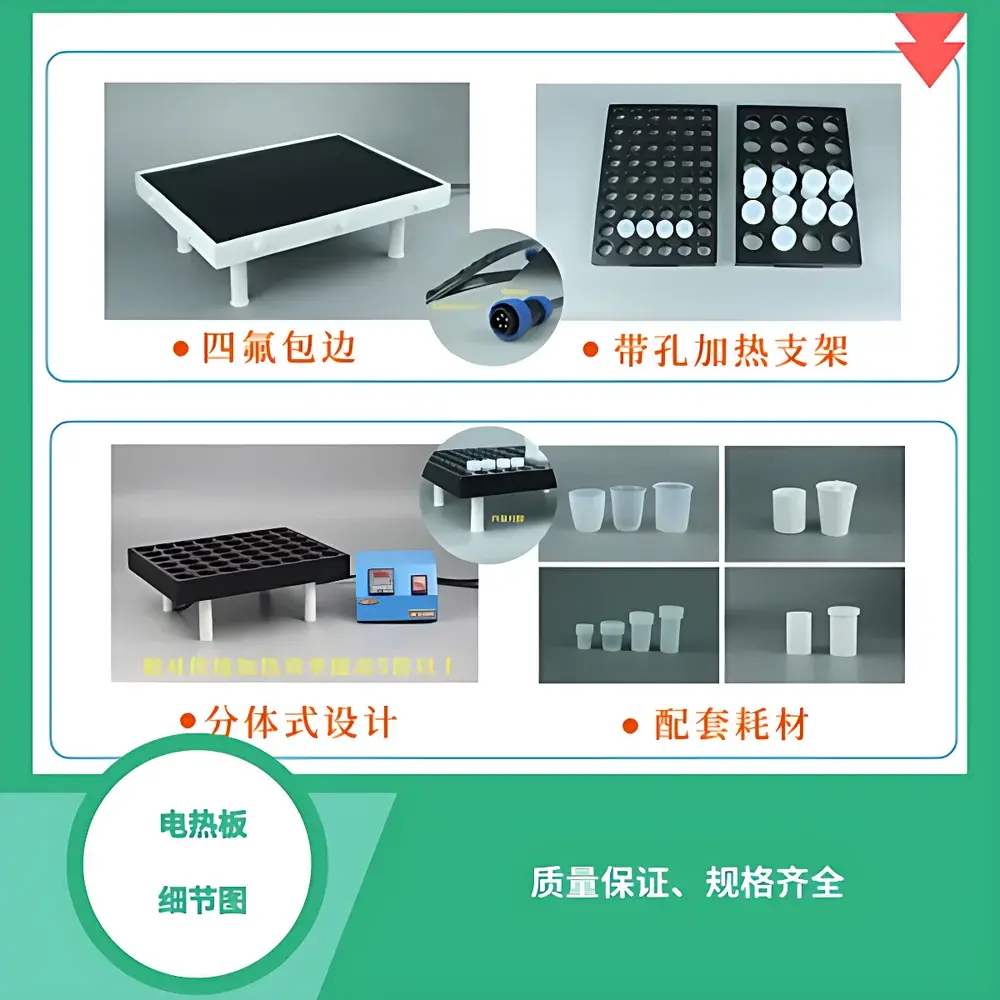
- Robust aluminum alloy heating block with electropolished surface and PTFE (Teflon®) anti-corrosion coating for long-term resistance to HNO₃, HF, HCl, and aqua regia vapors
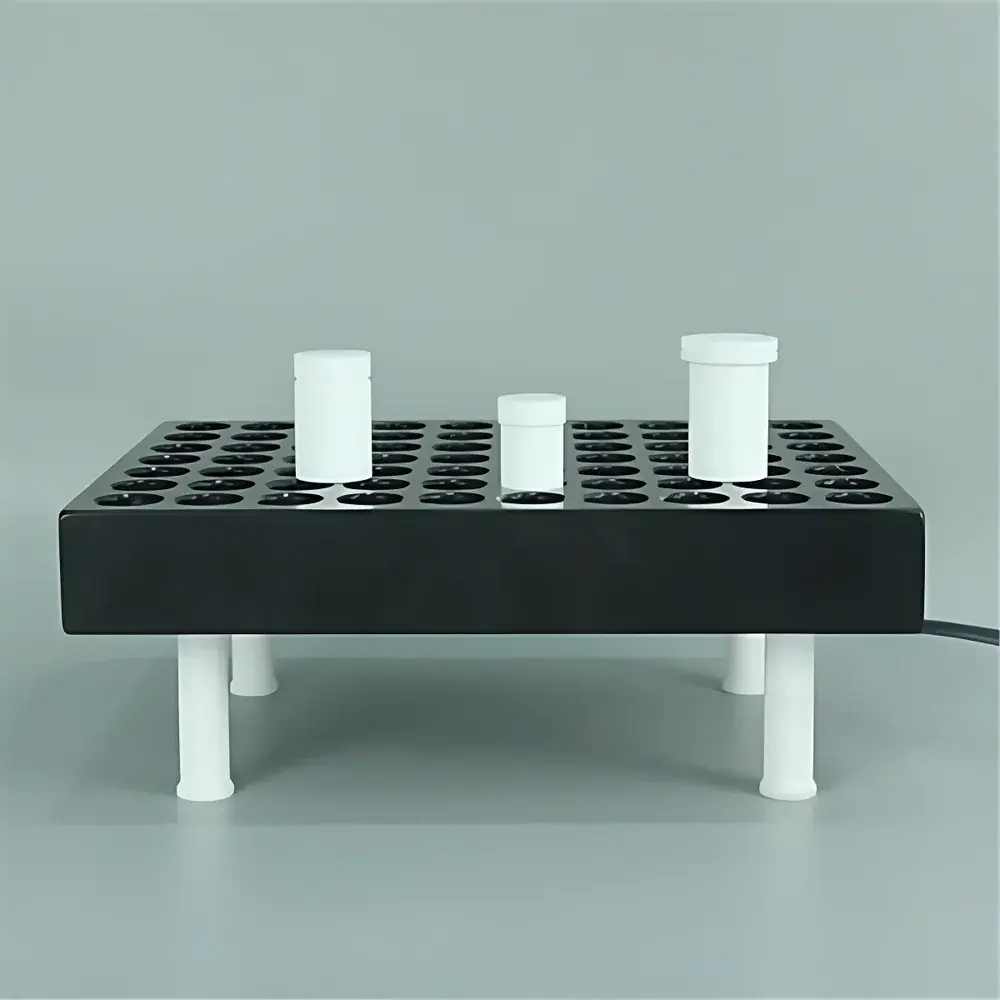
- Modular design: heating plate and control unit are physically separable; all exposed electronics are fully encapsulated with perfluoroalkoxy (PFA) tubing to prevent acid vapor ingress
- Configurable well layout—available in standard configurations of 12, 16, 20, 24, 36, 42, 54, 63, or 72 positions—with customizable well diameter and depth to accommodate diverse vessel geometries
- High-power 2 kW heating element enables rapid ramp rates: typical time to reach 200 °C ranges between 5–30 minutes, depending on well depth and load mass
- Continuous operational capability exceeding 48 hours at sustained temperatures up to 260 °C, validated under laboratory-grade environmental conditions
- Optional segmented temperature programming (multi-step ramp/soak profiles) supports method-specific digestion protocols requiring controlled dehydration or stepwise volatilization
Sample Compatibility & Compliance
The NJ-GS accommodates a broad range of digestion consumables including PFA, quartz, borosilicate glass, and high-purity polypropylene vessels. It is routinely deployed in laboratories adhering to ISO/IEC 17025, USP , EPA Methods 3050B, 3051A, and 3052, as well as ASTM D5681 and GB/T 5009 series standards. While the device itself does not carry CE or UL certification, its construction and operational parameters align with GLP-compliant sample preparation practices when integrated into validated analytical workflows. All PFA-wrapped electrical interfaces meet IEC 61000-4 electromagnetic compatibility requirements for laboratory environments.
Software & Data Management
The NJ-GS operates via embedded firmware with no external PC dependency. Temperature setpoints, dwell times, and alarm thresholds are stored locally in non-volatile memory. Data logging is not natively supported; however, optional RS-232 or USB-to-serial adapters enable integration with third-party LIMS or ELN systems for audit-trail recording. The instrument satisfies basic FDA 21 CFR Part 11 readiness when used in conjunction with compliant data acquisition software—specifically, it supports user-defined password protection, event timestamping (power-on, setpoint change, alarm trigger), and immutable parameter history upon request.
Applications
- Post-microwave digestion acid removal for heavy metal quantification in food, soil, and biological matrices
- Residual acid elimination prior to hydride generation-AFS for As, Se, Sb, Bi, Te, and Hg analysis
- Pre-concentration of digested environmental water samples for ICP-MS trace element profiling
- Routine QA/QC sample preparation in pharmaceutical excipient testing per ICH Q2(R2)
- Method development for multi-acid digestion schemes involving mixed HNO₃–HF–HClO₄ systems
- High-throughput sample drying and carbon-free ashing support in agricultural and forensic labs
FAQ
What types of digestion vessels are compatible with the NJ-GS?
Standard configurations support PFA vials (up to 50 mL), quartz crucibles (10–30 mL), borosilicate glass tubes, and OEM microwave digestion inner vessels from CEM, Milestone, YiYao, and Anton Paar.
Can the NJ-GS be used for closed-vessel digestion?
No—it is designed exclusively for open-vessel acid evaporation and concentration. Closed-vessel digestion requires pressurized reactors and is outside its operational scope.
Is calibration traceable to national standards?
Yes. Each unit undergoes factory calibration using NIST-traceable RTD probes; calibration certificates are available upon request with documented uncertainty budgets.
How is temperature uniformity verified across wells?
Uniformity is measured per ISO 17025 Annex B using a 9-point grid thermocouple array placed directly on the heated surface under no-load conditions at 150 °C and 200 °C.
Does the instrument support remote monitoring?
Not natively—but analog voltage output (0–5 V) and Modbus RTU over RS-485 are available as factory-installed options for integration into centralized lab automation platforms.



