
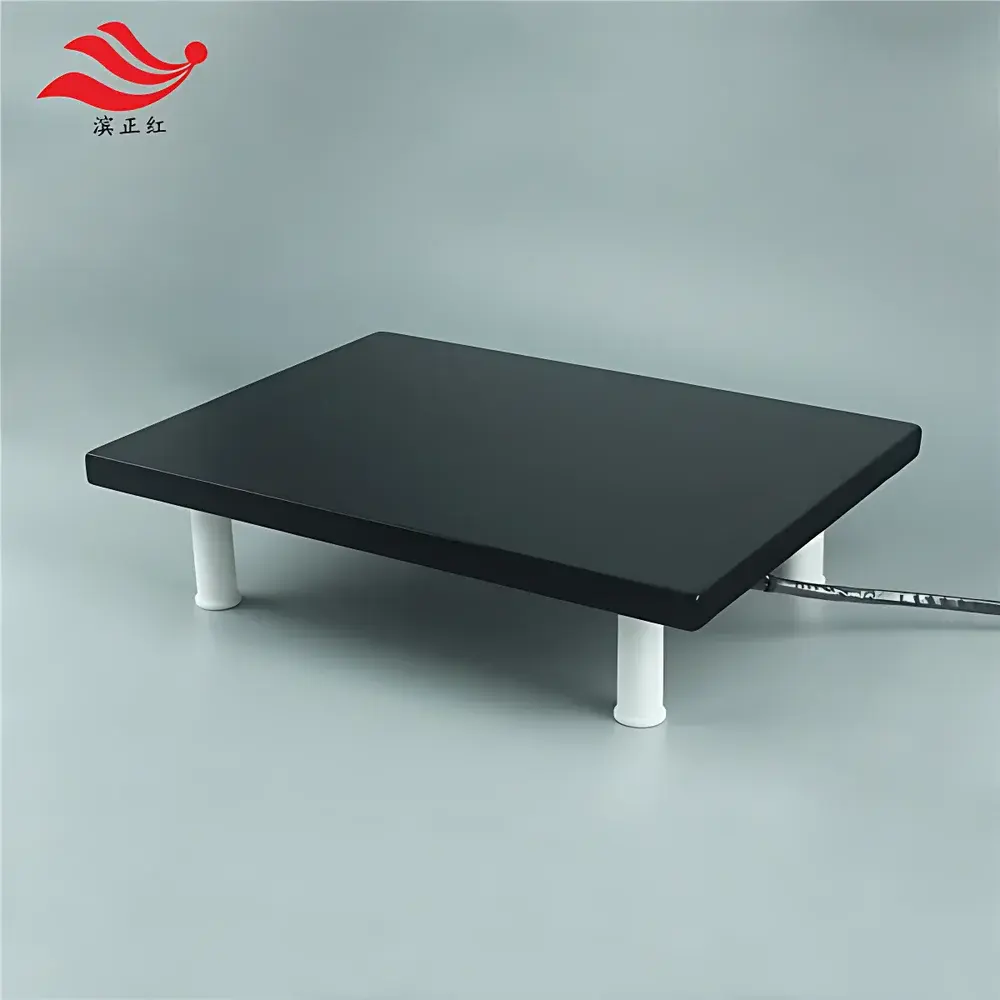
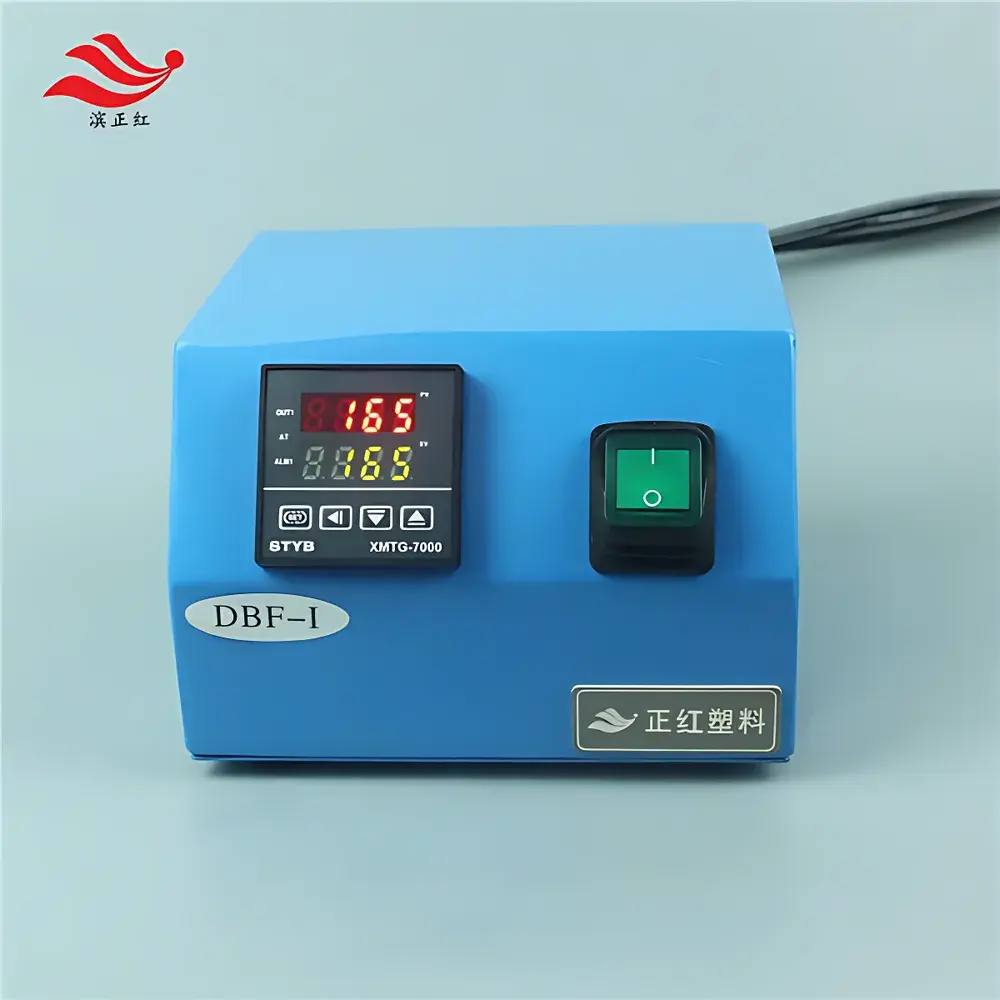
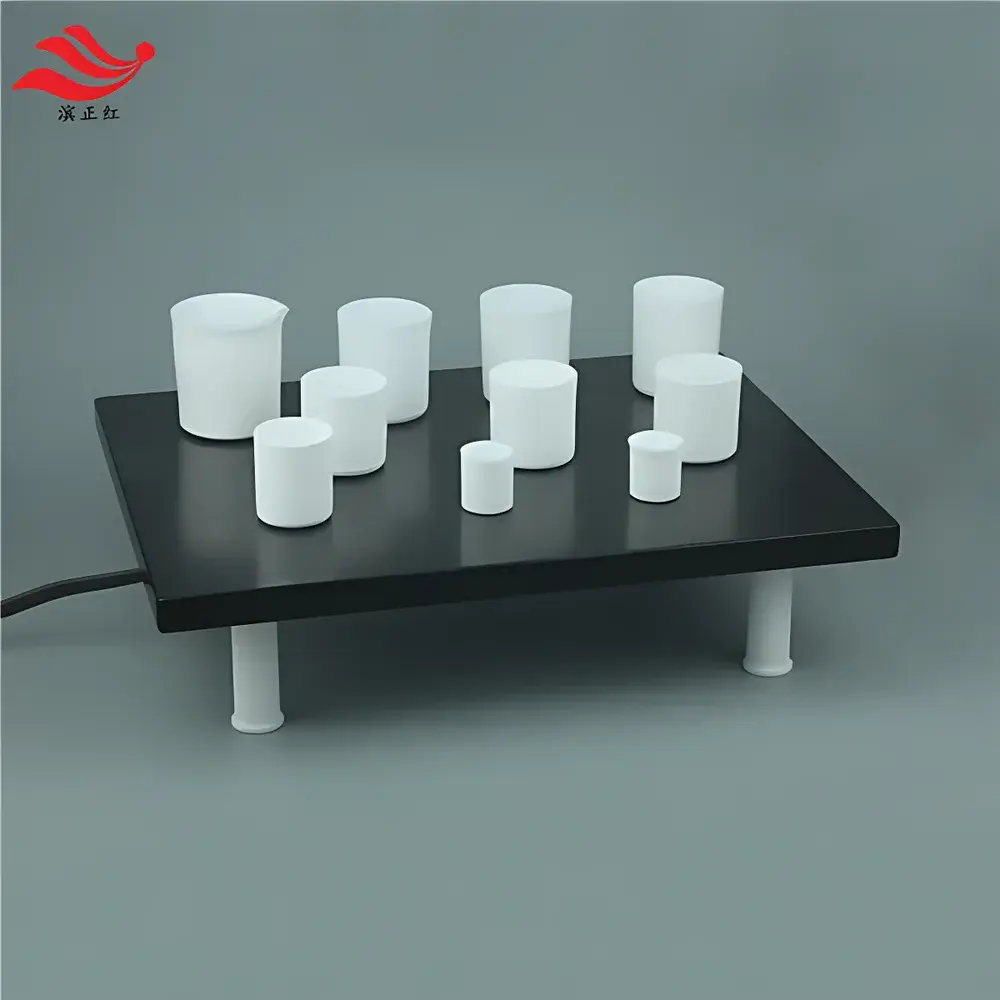
Binzhenghong NJ-DBF-I/II Corrosion-Resistant PID-Controlled Digital Heating Plate with High-Temperature Aluminum or Graphite Heating Surface
| Brand | Binzhenghong |
|---|---|
| Origin | Jiangsu, China |
| Manufacturer Type | Direct Manufacturer |
| Product Origin | Domestic (China) |
| Model | NJ-DBF-I / NJ-DBF-II |
| Heating Surface Material | Precision Cast Aluminum or High-Purity Graphite |
| Maximum Operating Temperature | 260 °C |
| Temperature Control Accuracy | ±1 °C |
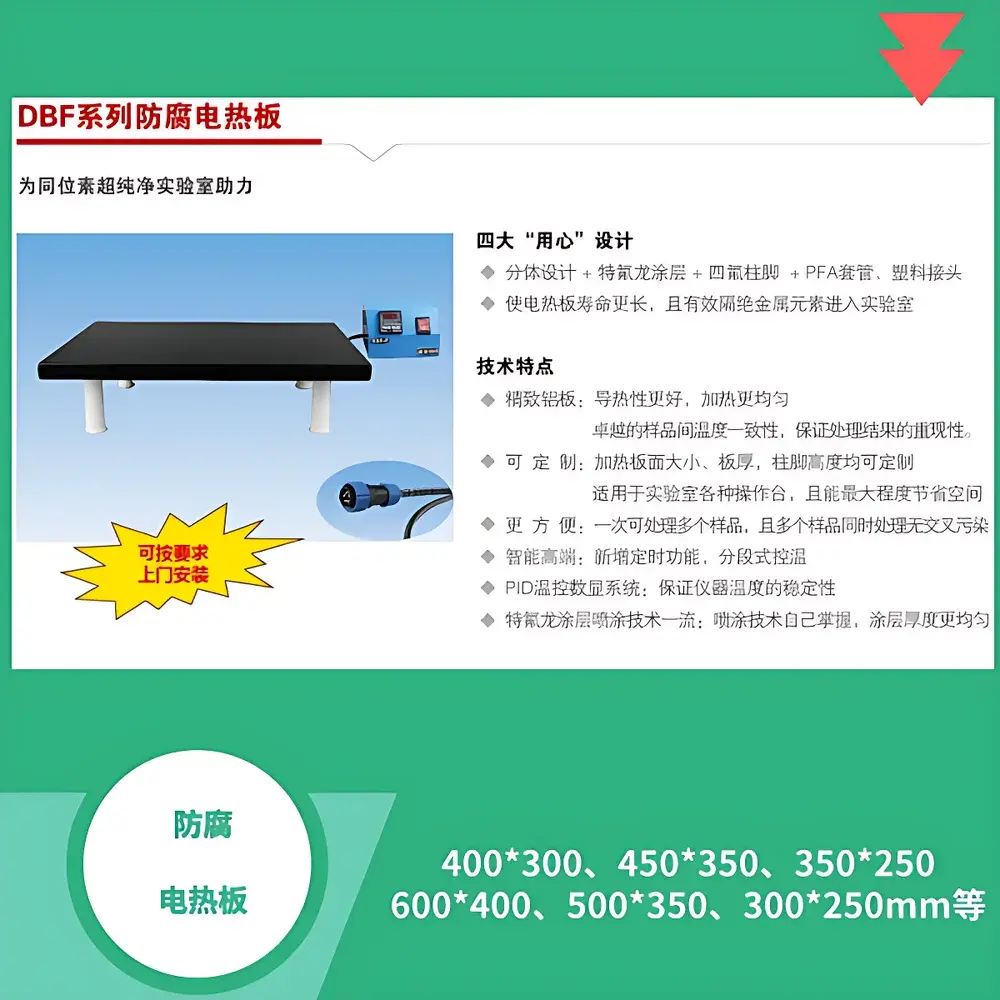
| Heating Zone Dimensions | 600×400 mm, 400×300 mm, 450×350 mm (customizable) |
| Power Rating | 2 kW / 3 kW |
| Input Voltage/Frequency | 220 V / 50 Hz |
| Continuous Operation Time | Up to 48 h |
| Control Interface | Digital PID Controller with LED Display |
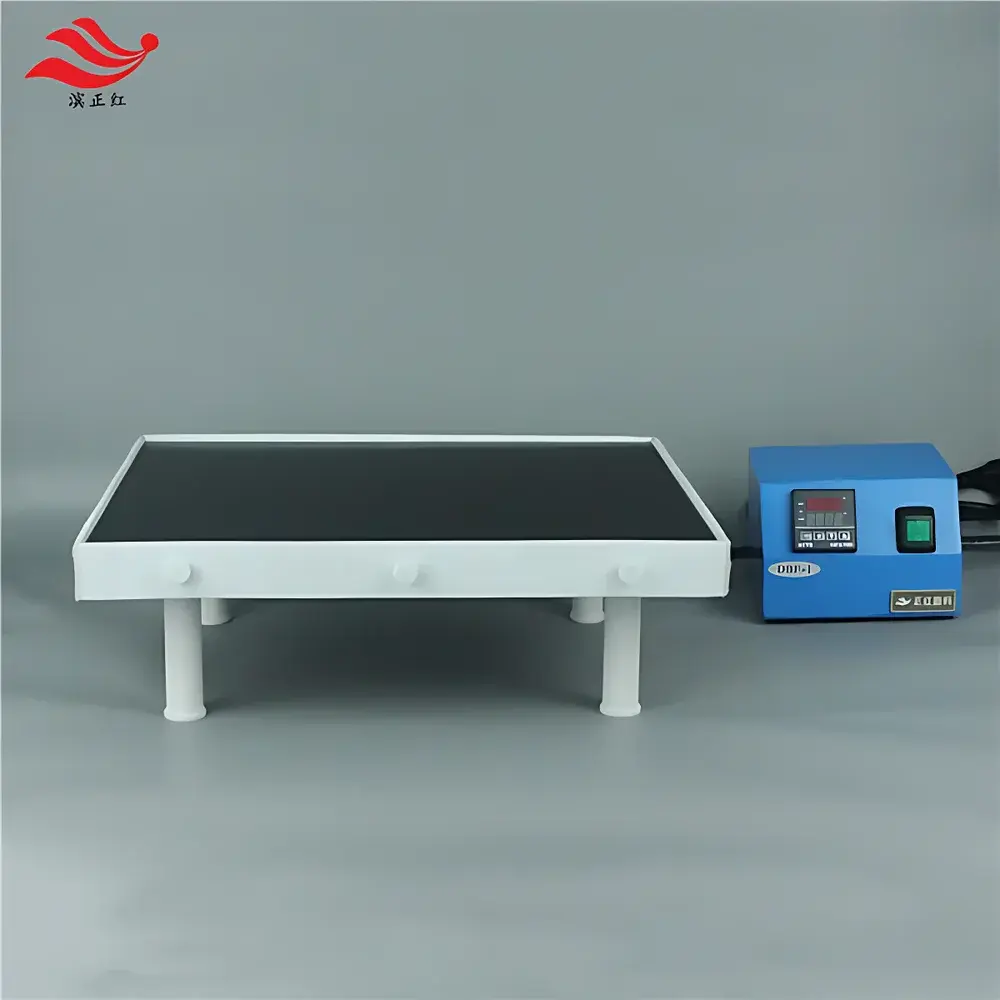
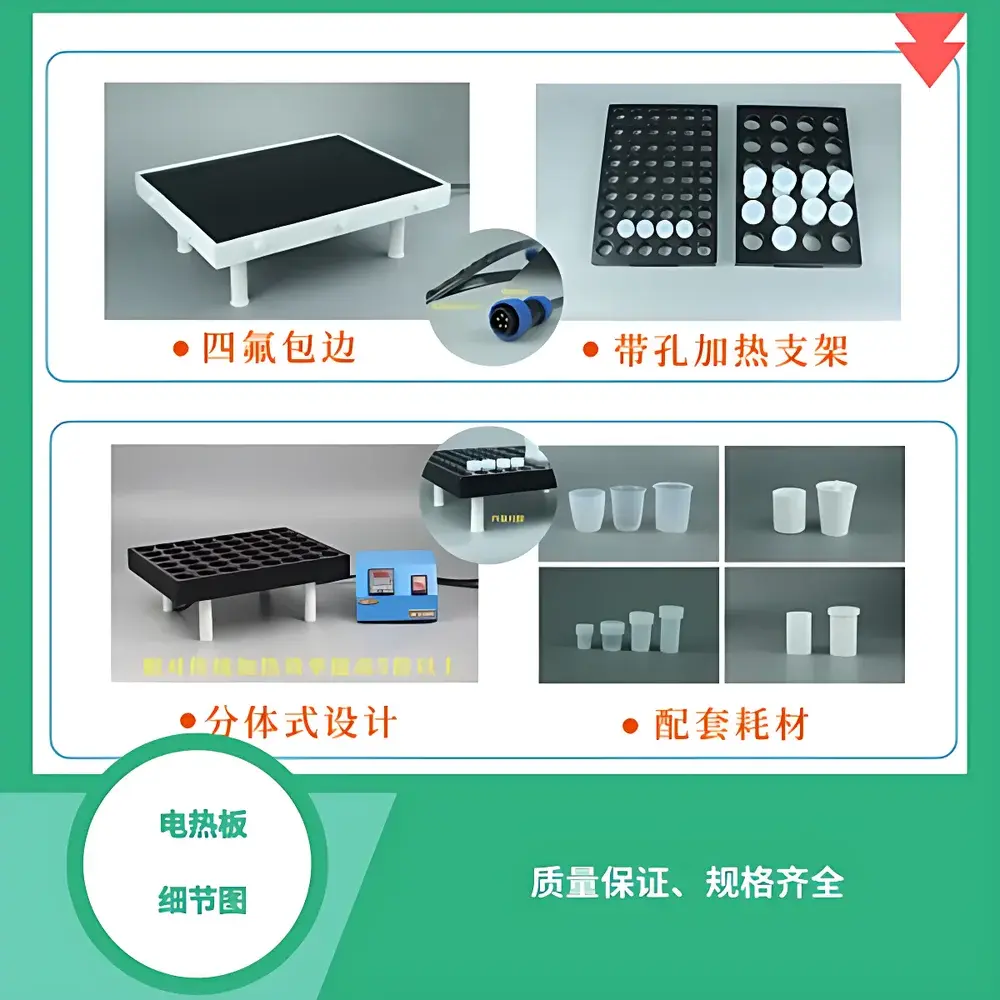
| Structural Design | Split Configuration (Heater Base + Remote Controller) |
| Corrosion Protection | Full PTFE (Teflon®) Coating on All Exposed Surfaces |
| Foot Design | PTFE-Coated Adjustable Feet |
| Cable Assembly | PFA-Insulated Signal & Power Cables (Standard 1.5 m |
| Connector Type | Aviation-Grade Sealed Connector |
| Optional Accessories | PTFE-Coated Multi-Well Sample Holder Kits (e.g., 2×200×300 mm for 600×400 mm Plate) |
Overview
The Binzhenghong NJ-DBF-I/II Corrosion-Resistant Digital Heating Plate is an engineered thermal platform designed for demanding laboratory environments where chemical resistance, temperature stability, and sample integrity are critical. Unlike conventional stainless-steel or ceramic hotplates, this instrument utilizes either precision-cast aluminum or high-purity graphite as the primary heat-transfer medium—both surfaces fully coated with industrial-grade polytetrafluoroethylene (PTFE) to ensure inertness against strong acids (e.g., HNO₃, HF, aqua regia), alkalis, and organic solvents. Its PID-controlled digital thermostat delivers precise setpoint regulation from ambient to 260 °C with ±1 °C accuracy across the entire heating zone, enabling reproducible evaporation, digestion, drying, and pre-concentration protocols in analytical chemistry, environmental testing, and materials science workflows. The split-system architecture physically isolates the electronic controller from the heating base—allowing remote placement outside fume hoods or corrosive vapor zones—thereby extending service life and ensuring long-term calibration stability under GLP-compliant operation.
Key Features
- Chemically inert PTFE-coated heating surface eliminates metal ion leaching and cross-contamination between samples—critical for trace-metal analysis (e.g., EPA Method 3050B, ISO 11466).
- Uniform thermal distribution verified by ASTM E220–22-compliant mapping: ≤±2 °C deviation across full 600×400 mm zone at 200 °C.
- Split configuration with aviation-grade sealed connector enables full separation of heater base and control unit—supporting installation inside Class II biosafety cabinets or acid digestion fume hoods without compromising electronics integrity.
- PFA-insulated signal and power cables resist degradation at elevated temperatures and provide dielectric strength >3 kV, meeting IEC 61000-4-5 surge immunity requirements.
- Adjustable PTFE-coated leveling feet ensure stable operation on uneven benchtops while preventing thermal transfer to underlying surfaces via integrated PTFE thermal barrier layers.
- Dual-material platform option: Cast aluminum offers rapid thermal response (t₉₀ < 8 min to 200 °C); graphite provides superior thermal mass and stability for extended unattended runs (up to 48 h continuous duty).
Sample Compatibility & Compliance
The NJ-DBF series accommodates standard borosilicate glassware (e.g., 100–1000 mL beakers, digestion vessels, Petri dishes), PTFE-lined Teflon® vessels, and quartz crucibles. Its non-reactive surface supports EPA, ISO, and ASTM methods requiring acid-resistant heating platforms—including heavy metal digestion (USP , ISO 17294-2), soil extraction (ISO 11466), and pharmaceutical residual solvent removal (ICH Q3C). All exposed structural components—including housing brackets, fasteners, and cable glands—are passivated and PTFE-coated to meet ISO 9001-certified manufacturing standards. The device complies with CE marking requirements (2014/30/EU EMC Directive, 2014/35/EU LVD Directive) and supports audit-ready documentation for FDA 21 CFR Part 11–aligned validation when paired with optional electronic loggers.
Software & Data Management
While the base model operates via front-panel LED interface, optional RS-485 or USB-to-serial modules enable integration with LabVIEW™, MATLAB®, or custom SCADA systems for automated temperature ramping, data logging, and alarm triggering. The PID controller stores up to 10 user-defined programs with slope control and hold steps. When connected to validated third-party software, full audit trails—including operator ID, timestamped setpoints, actual temperature history, and deviation alerts—are generated in CSV or XML format, satisfying GLP/GMP record retention mandates per ISO/IEC 17025:2017 Clause 7.5.3.
Applications
- Acid digestion of environmental samples (soil, sludge, sediment) prior to ICP-MS or AAS analysis.
- Controlled evaporation of aqueous extracts in pesticide residue testing (AOAC 2007.01).
- Drying and ashing of biological tissues in clinical and forensic toxicology labs.
- Pre-concentration of low-volume water samples for microcontaminant detection (e.g., PFAS, pharmaceuticals).
- Heating of corrosion-prone reagents (e.g., bromine, chlorine dioxide solutions) in synthetic chemistry workflows.
- Calibration support for thermogravimetric analyzers (TGA) and differential scanning calorimeters (DSC).
FAQ
Is the heating surface truly metal-free during operation?
Yes—the entire active surface, mounting frame, and all hardware in contact with samples or vapors are fully encapsulated in PTFE. No bare metal is exposed, eliminating risk of catalytic interference or contamination.
Can the controller be mounted inside a fume hood?
No—the controller must remain outside corrosive atmospheres. The split design and PFA-shielded cabling are specifically intended to enable safe external placement while maintaining full functionality.
What maintenance is required to sustain corrosion resistance?
Annual inspection of PTFE coating integrity using visual and tactile assessment is recommended. Avoid abrasive cleaning agents; use only PTFE-compatible solvents (e.g., isopropanol) and soft lint-free cloths.
Does the system support external temperature probe input for chamber monitoring?
Yes—optional PT100 input port allows real-time feedback from external probes placed inside reaction vessels, enabling closed-loop process control beyond surface temperature.
Are custom heating zone dimensions available for OEM integration?
Yes—standard configurations include 400×300 mm and 600×400 mm, but bespoke sizes (including circular or irregular geometries) can be manufactured under NDA with lead times of 6–8 weeks.




