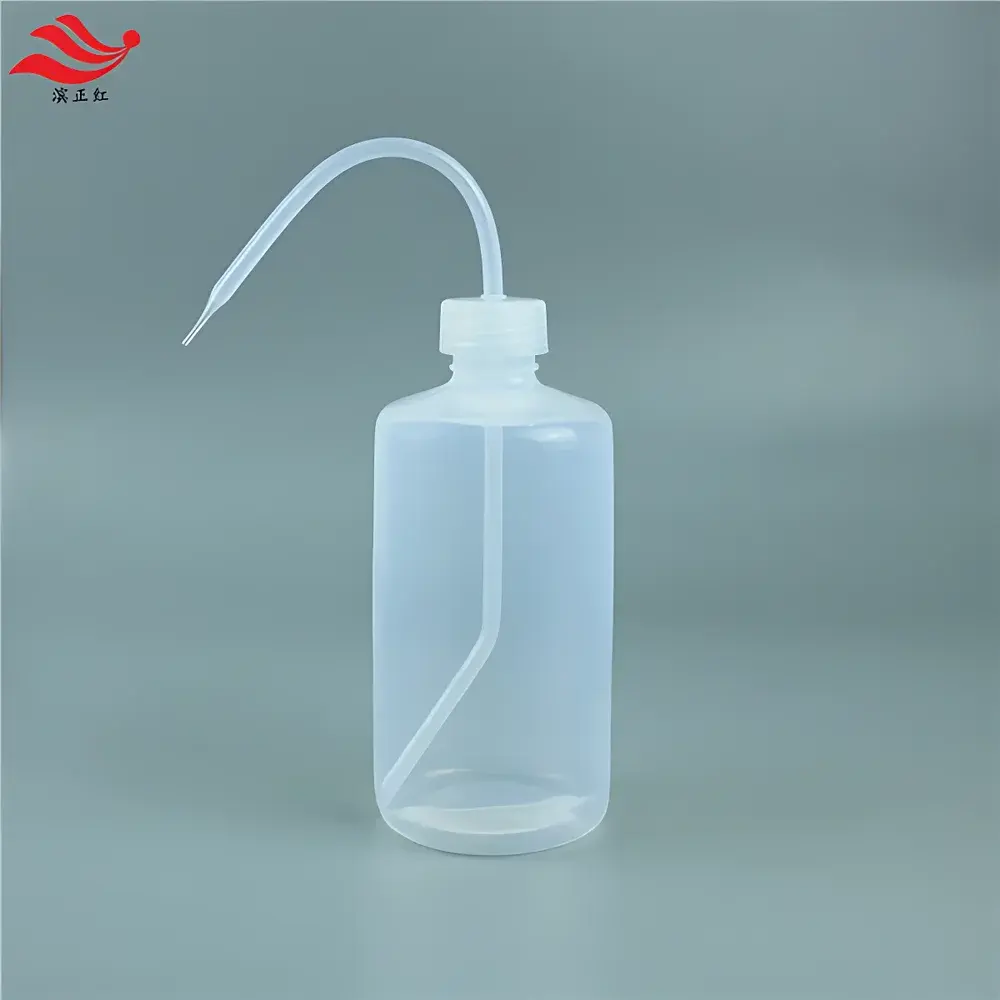
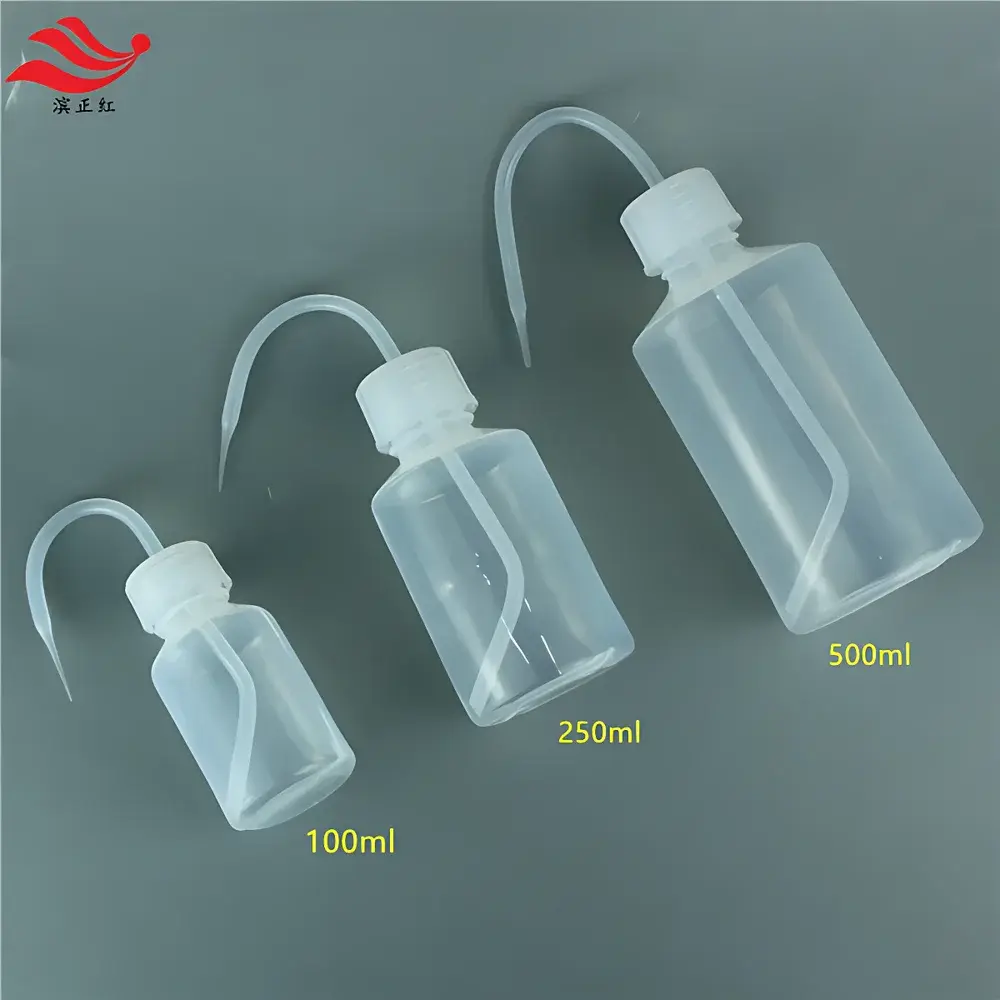
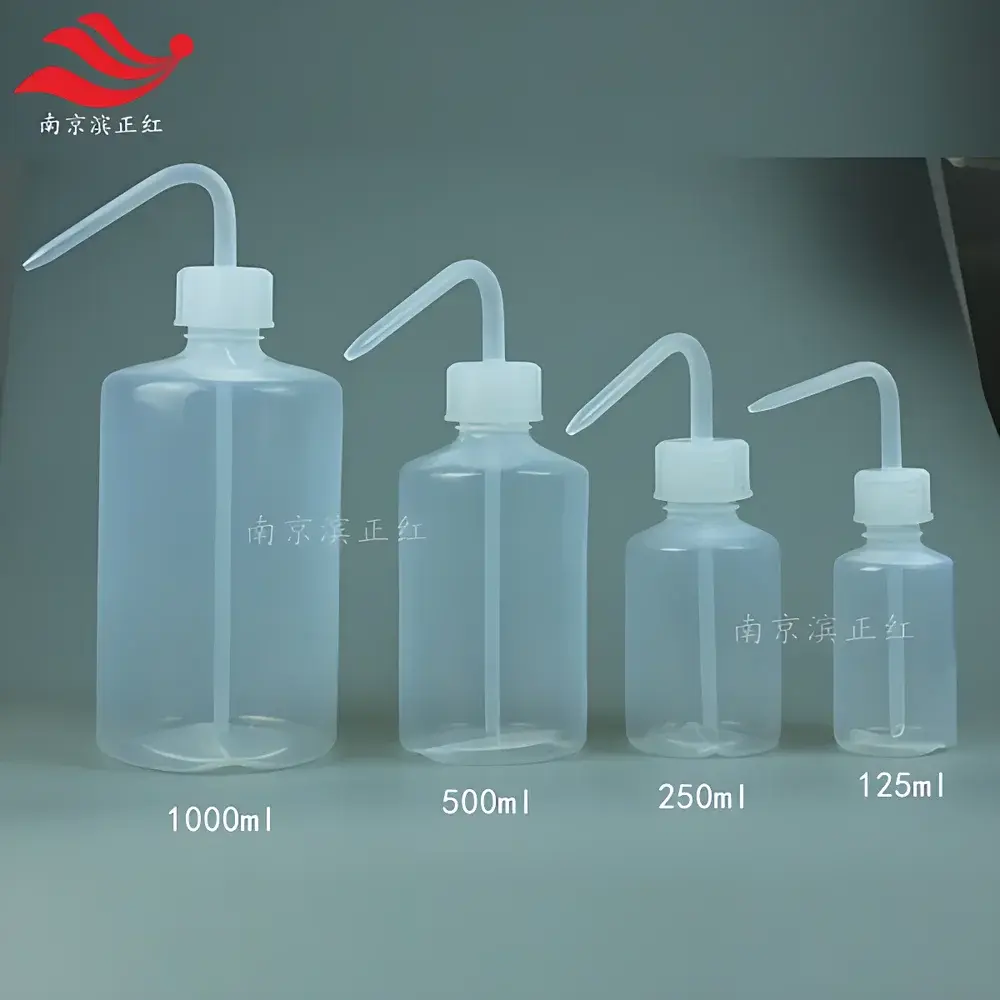
Binzhenghong NJ-XP FEP/PFA Narrow-Mouth & Wide-Mouth Graduated Wash Bottles (100 mL, 250 mL, 500 mL)
| Brand | Binzhenghong |
|---|---|
| Origin | Jiangsu, China |
| Manufacturer Type | Direct Manufacturer |
| Country of Origin | China |
| Model | NJ-XP |
| Pricing | Available Upon Request |
| Material | High-Purity FEP or PFA |
| Volume Options | 30 mL, 60 mL, 100 mL, 250 mL, 300 mL, 500 mL, 1000 mL |
| Max. Sterilization Temp | 121°C (autoclave-compatible with cap fully loosened) |
| Continuous Use Temp Range | −200 °C to +205 °C |
| Chemical Resistance | Full resistance to aqua regia, hydrofluoric acid (HF), concentrated HNO₃/H₂SO₄/HCl, and all common organic solvents |
| Refractive Index | ~1.34 (lowest among fluoropolymers) |
| Extractables/Leachables | <0.1 µg/cm² per USP <661.1> |
| Compliance | Meets ASTM D4897-22 (fluoropolymer performance), ISO 15223-1:2021 (labeling for medical/lab devices), and GLP/GMP handling requirements for trace analysis |
Overview
The Binzhenghong NJ-XP series represents a class of high-purity, chemically inert wash bottles engineered specifically for ultra-trace analytical workflows where contamination control, thermal stability, and solvent compatibility are non-negotiable. Constructed entirely from virgin-grade fluorinated ethylene propylene (FEP) or perfluoroalkoxy alkane (PFA), these bottles operate on positive-displacement squeeze mechanics—enabling precise, dropwise delivery of reagents, rinse solutions, or calibration standards without carryover or residual film formation. Unlike polyethylene or polypropylene alternatives, FEP/PFA exhibits near-zero extractables, negligible surface energy, and molecular-level inertness, making it the material of choice for ICP-MS sample introduction, EPA Method 200.8 preparation, USP compliant storage, and ISO/IEC 17025-accredited laboratories requiring documented traceability in reagent handling.
Key Features
- Monolithic construction: Bottle body, neck, and integrated tapered nozzle are injection-molded as a single unit—eliminating threaded joints, gaskets, or adhesive interfaces that could harbor particulates or leachables.
- Optical clarity & low refractive index (1.34): Enables visual verification of liquid level and meniscus without parallax distortion; ideal for volumetric dispensing in absence of graduated markings.
- Autoclavable design: Fully compatible with steam sterilization at 121 °C / 15 psi for 20 minutes—provided the cap is completely disengaged prior to loading into the autoclave chamber to prevent pressure-induced deformation.
- Dropwise flow control: Ergonomic squeeze-body geometry and calibrated nozzle orifice (0.3–0.5 mm ID) allow reproducible single-drop dispensing (±0.02 mL/drop, validated per ASTM E2877-21) for rinsing electrodes, conditioning ICP torch injectors, or adding internal standards.
- Ultra-low surface adsorption: Surface energy <15 mN/m ensures no retention of polar analytes (e.g., PFAS, metal chelates, nucleotides) during transfer—critical for recovery validation in EPA 537.1 and ISO 17294-2 applications.
Sample Compatibility & Compliance
These wash bottles are validated for direct contact with Class I–III reagents per CLSI GP26-A5, including hydrofluoric acid (up to 49%), fuming nitric acid, bromine trifluoride, anhydrous HF–NH₄F etchants, and high-boiling-point solvents (e.g., NMP, DMSO, DMF). Their wall thickness (≥1.2 mm at shoulder) meets ASTM D4897-22 mechanical integrity thresholds for repeated compression cycling (>10,000 actuations without creep). Each batch undergoes ion chromatography screening for Na⁺, K⁺, Cl⁻, SO₄²⁻, and NO₃⁻ residuals (<5 ppt detection limit), with full CoA documentation available upon request. Devices conform to ISO 15223-1 labeling requirements and support 21 CFR Part 11-compliant electronic recordkeeping when used within validated LIMS-integrated workflows.
Software & Data Management
While inherently hardware-only, the NJ-XP wash bottle integrates seamlessly into digitally governed lab environments. Its consistent dispense volume enables traceable calibration against gravimetric standards (e.g., Mettler Toledo XP204 with 0.01 mg readability), with data exportable via RS232 or USB to ELN platforms such as LabArchives or Benchling. For GxP-regulated labs, usage logs—including operator ID, date/time stamp, and solution identity—can be captured via barcode-scanned labels affixed to each bottle, satisfying audit trail requirements under FDA 21 CFR Part 11 and EU Annex 11.
Applications
- Preparation of sub-ppt calibration standards for ICP-MS, HR-ICP-MS, and TIMS analysis.
- Rinsing quartz cuvettes, optical cells, and AAS nebulizers without silica leaching.
- Delivery of HF-based digestants in semiconductor wafer cleaning SOPs (SEMI F57-0218).
- Storage and transfer of certified reference materials (CRMs) per ISO Guide 35, including NIST SRM 3100 series.
- On-bench dilution of high-purity acids (e.g., Seastar Baseline™, Baker Instra-Analyzed™) in cleanroom Class 1000 environments.
- Controlled addition of internal standards (e.g., Rh-103, In-115) in clinical LC-MS/MS workflows per CLIA and CAP guidelines.
FAQ
Can NJ-XP FEP wash bottles be used for long-term storage of hydrofluoric acid?
Yes—FEP demonstrates no measurable weight loss or surface etching after 30-day immersion in 49% HF at 25 °C per ASTM D543-20 testing protocols.
Is the nozzle interchangeable between narrow-mouth and wide-mouth variants?
No—the nozzle geometry is permanently fused during molding; narrow-mouth units feature a 45° tapered tip optimized for pipette tip rinsing, while wide-mouth versions use a 90° straight outlet for bulk solution transfer.
Does the bottle meet USP for pharmaceutical excipient contact?
Yes—certified test reports confirm compliance with USP extractables profiling using simulated extraction solvents (water, 50% ethanol, n-hexane) at 50 °C for 72 hours.
How is volume calibration performed for trace-level work?
Gravimetric calibration is recommended: Dispense 10 drops into a pre-tared tared vial on a microbalance, repeat 5×, calculate mean mass per drop, then convert using solution density (e.g., ρH₂O = 0.997044 g/mL at 25 °C).
Are replacement caps available separately?
No—caps are not sold individually due to critical sealing interface tolerances; full bottle replacement is required to maintain integrity per ISO/IEC 17025 clause 6.4.2.