
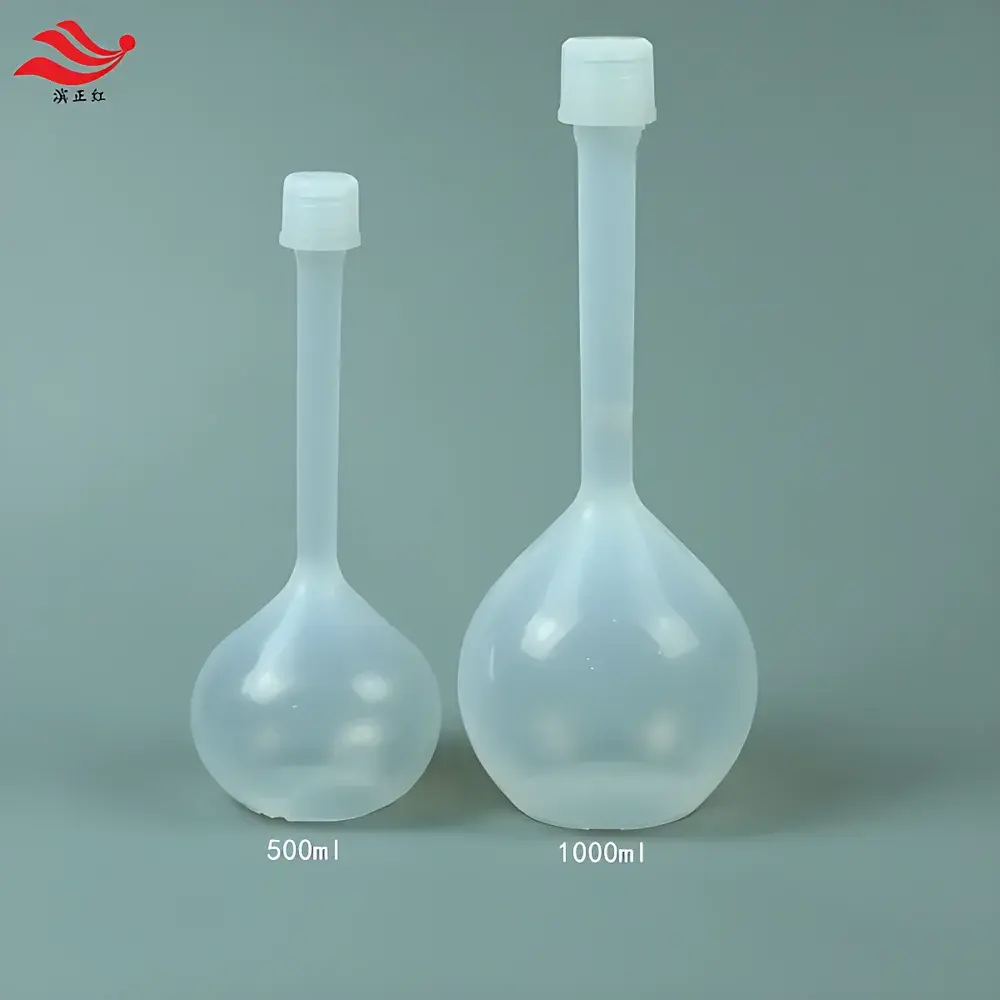
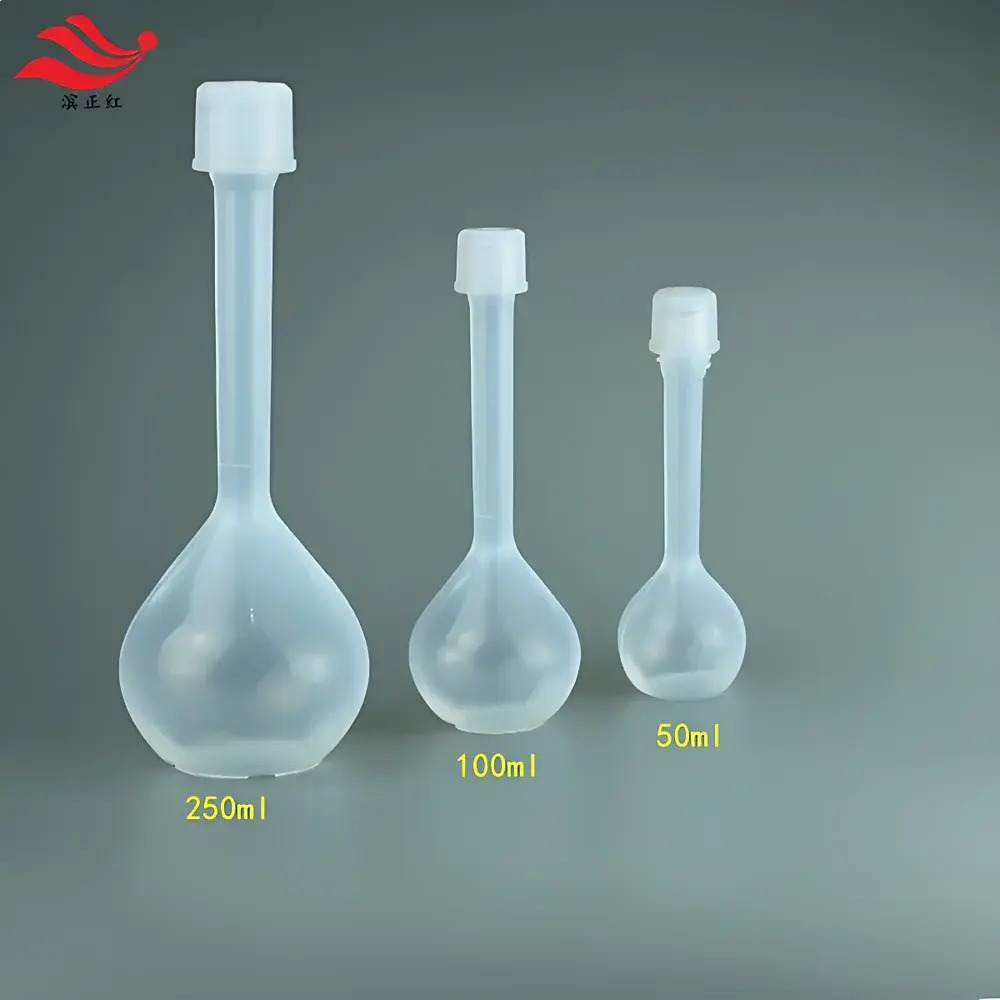
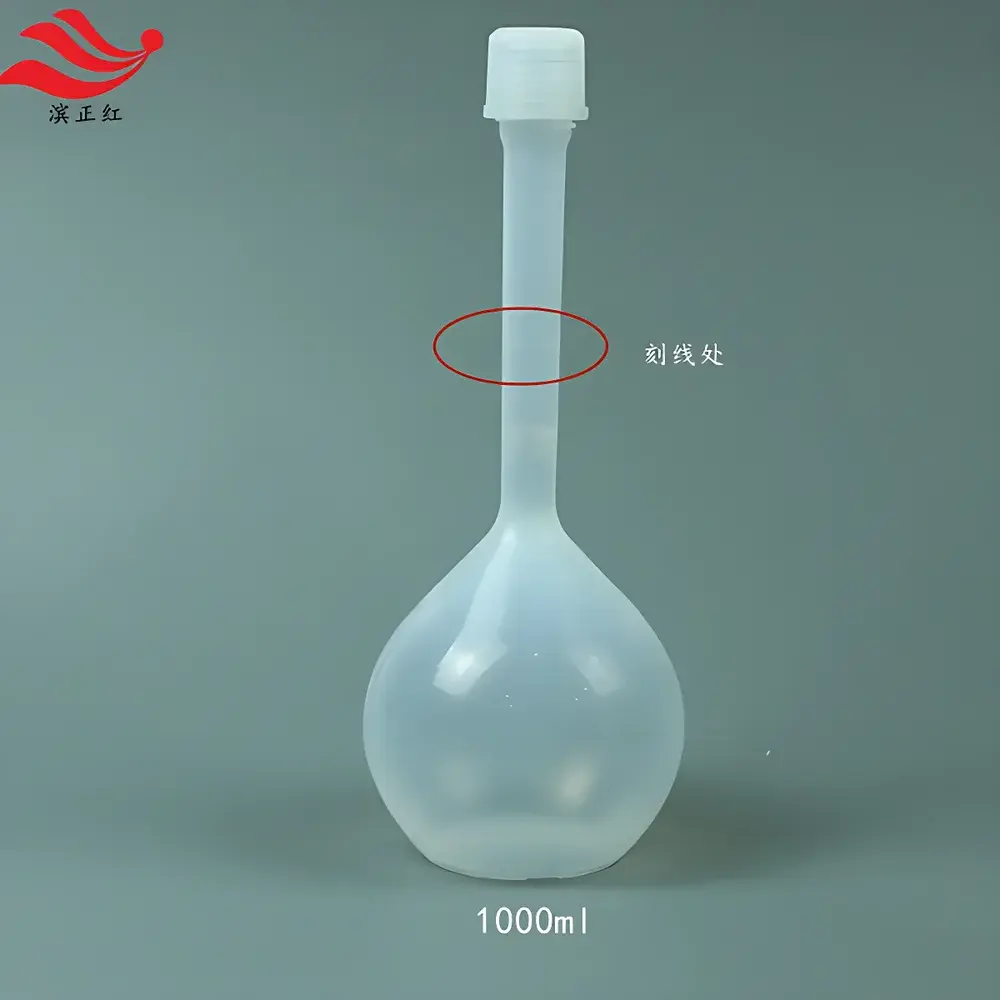
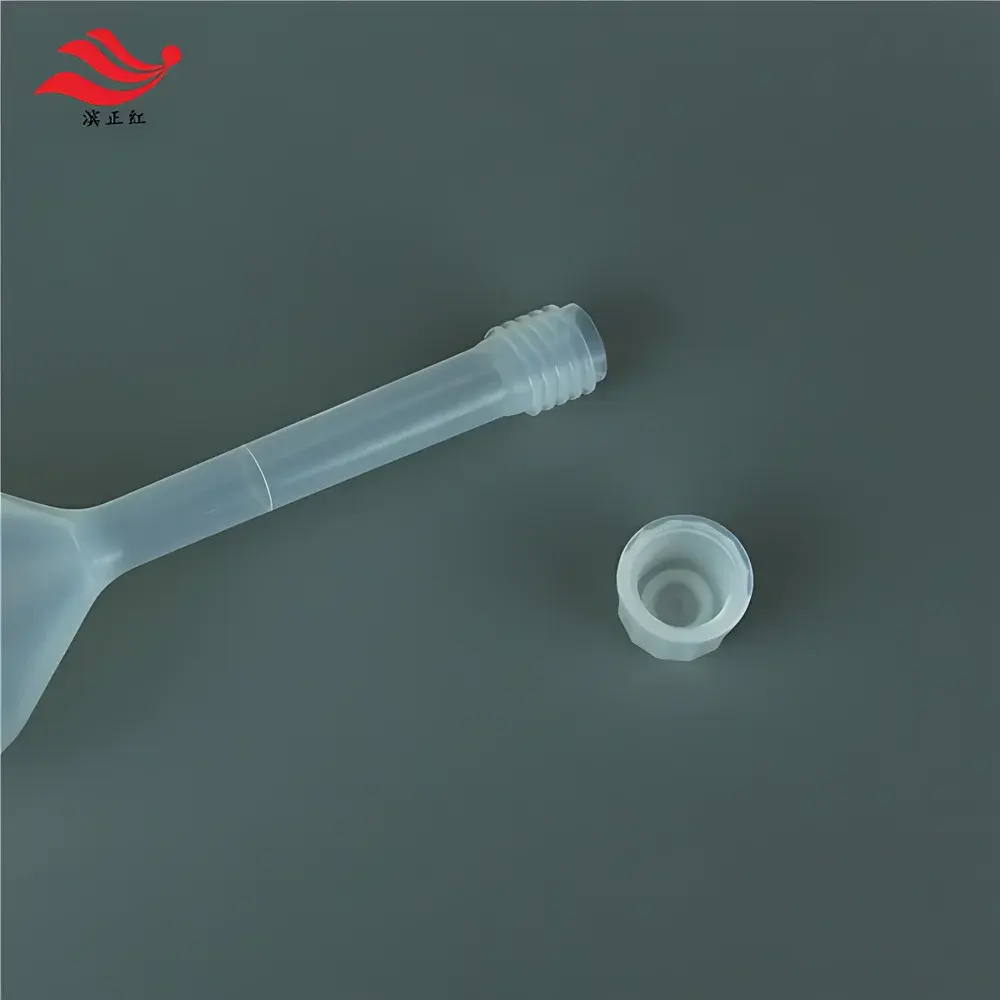
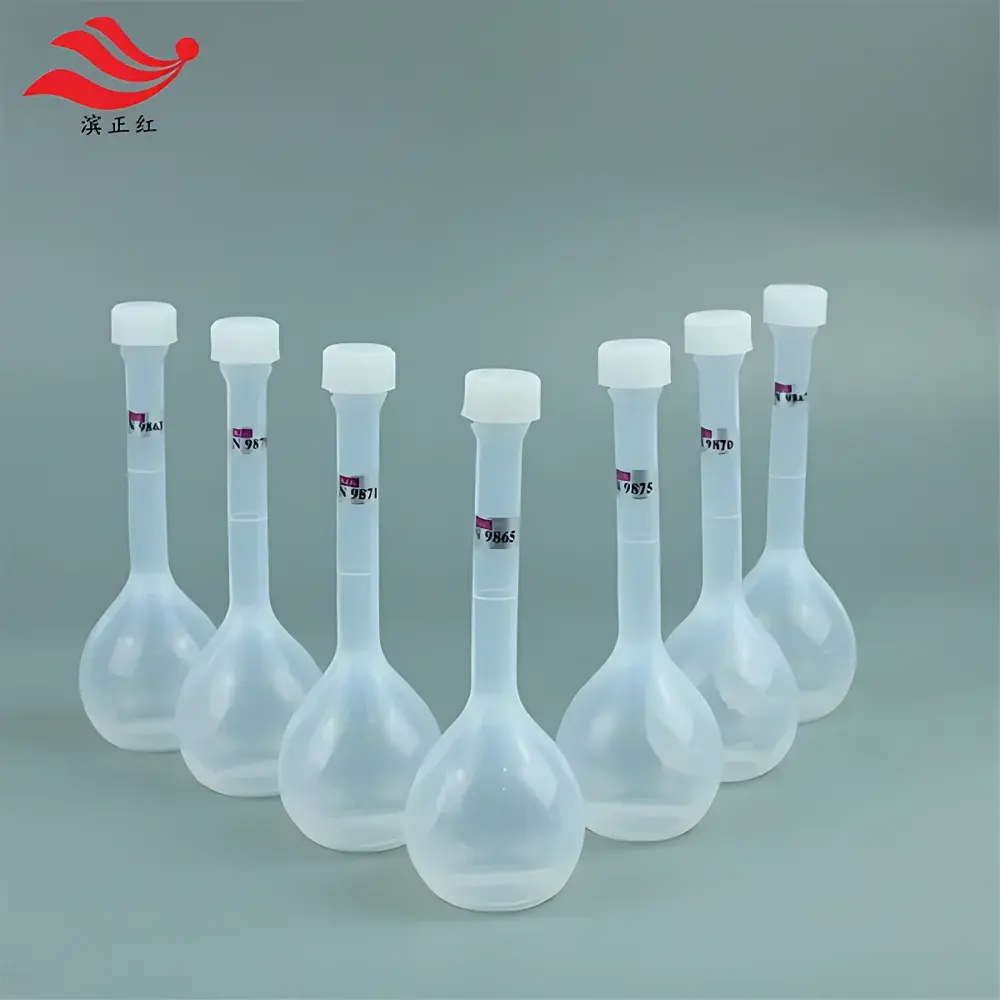
PFA Volumetric Flask – High-Purity Fluoropolymer Labware for Semiconductor, New Energy & Advanced Materials Applications
| Brand | Binzhenghong |
|---|---|
| Origin | Jiangsu, China |
| Manufacturer Type | Direct Producer |
| Country of Origin | China |
| Model | PFA Volumetric Flask |
| Price Range | USD 92–460 (FOB) |
| Volume Options | 10 mL to 1000 mL |
| Material | Perfluoroalkoxy Alkane (PFA), ASTM D4894 Compliant |
| Transparency | Optical-Grade Clarity |
| Calibration | Class A (ISO/IEC 17025 Traceable Optional) |
| Thermal Stability | –200 °C to +260 °C |
| Chemical Resistance | Resistant to HF, Aqua Regia, Fuming HNO₃, and Molten Alkalis |
| Surface Roughness (Ra) | <0.2 µm |
| Extractables Profile | Meets SEMI F57-0301 for Semiconductor Wafer Processing |
| Cleanliness | Pre-cleaned per SEMI F19-0301 (Class 100 Cleanroom Packaged) |
Overview
The Binzhenghong PFA Volumetric Flask is a high-purity, chemically inert volumetric standard engineered specifically for critical fluid handling in semiconductor fabrication, lithium-ion battery electrolyte formulation, photovoltaic precursor synthesis, and advanced materials R&D. Constructed entirely from perfluoroalkoxy alkane (PFA), this flask eliminates metal ion leaching, particulate shedding, and organic extractables that compromise trace-level analysis—making it indispensable where sub-part-per-trillion (ppt) contamination control is mandated. Unlike borosilicate glass or polypropylene alternatives, PFA offers superior resistance to hydrofluoric acid (HF), fuming nitric acid, molten sodium hydroxide, and aggressive fluorinated solvents commonly used in etch chemistry preparation and cathode slurry dilution. Its optical-grade transparency enables real-time visual inspection without compromising UV-VIS transmission integrity across 200–2500 nm. While PFA exhibits minimal thermal expansion (5.4 × 10⁻⁵ /°C), users must perform post-receipt calibration under controlled lab conditions (20 ± 0.5 °C, ISO 4787-compliant environment) prior to quantitative use—consistent with ISO/IEC 17025 accreditation requirements for volumetric accuracy.
Key Features
- Full-body PFA construction—no adhesive joints, threaded caps, or metallic components—to ensure zero elemental background in ICP-MS, GD-MS, or TXRF analysis.
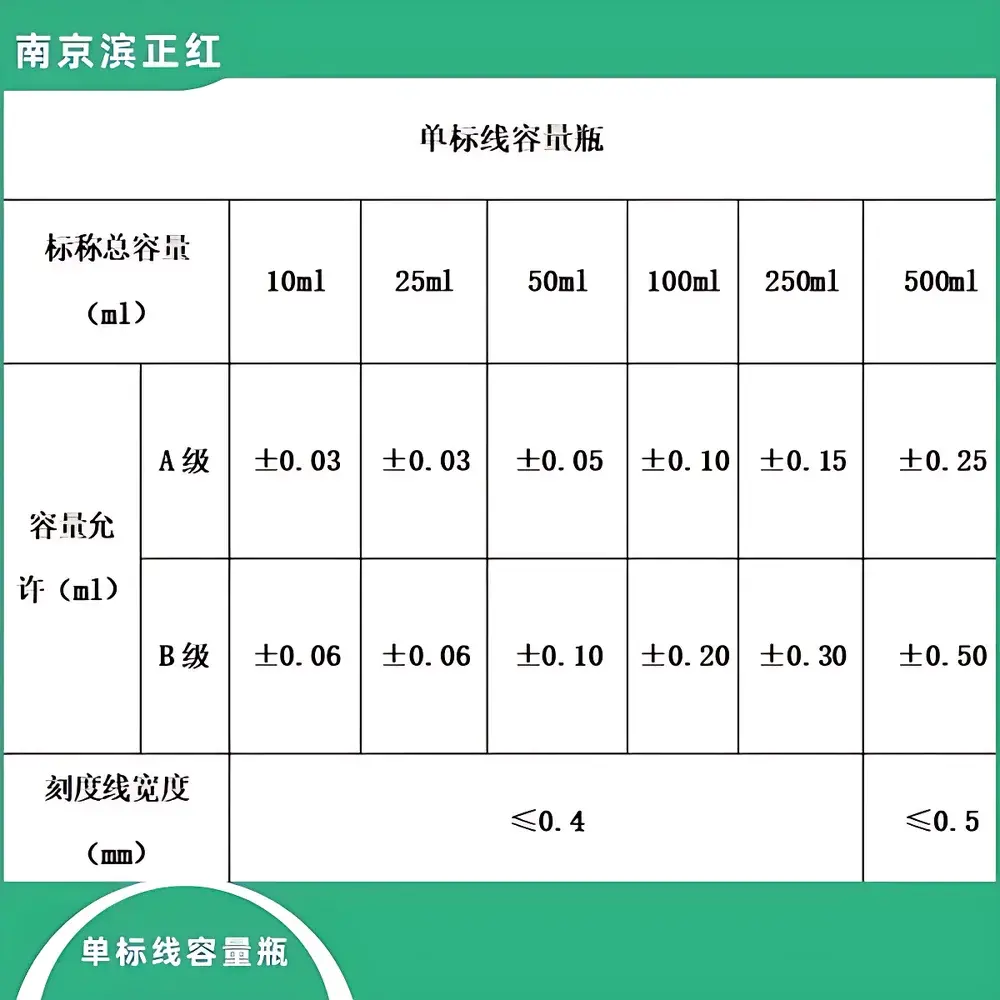
- Volume range from 10 mL to 1000 mL, each calibrated to ISO 4787:2021 Class A tolerances (e.g., ±0.02 mL at 10 mL; ±0.40 mL at 1000 mL) with optional NIST-traceable calibration certificate.
- Surface finish optimized to Ra 99.98% in ultrapure water protocols.
- Pre-cleaned and double-bagged in ISO Class 5 (Class 100) cleanrooms per SEMI F19-0301, with residual particle count ≤3 particles ≥0.5 µm per mL (verified by light obscuration).
- Thermal cycling stability tested over 500 cycles between –196 °C (liquid nitrogen immersion) and +260 °C—no microcracking, haze formation, or volume drift observed.
Sample Compatibility & Compliance
This volumetric flask is validated for use with high-purity reagents including 49% hydrofluoric acid (HF), 70% fuming nitric acid, anhydrous hydrogen fluoride (AHF), N-methyl-2-pyrrolidone (NMP), dimethyl carbonate (DMC), and lithium hexafluorophosphate (LiPF₆) solutions. It complies with SEMI F57-0301 (extractables limits for semiconductor process chemicals), USP (plastic packaging systems for pharmaceuticals), and ASTM D4894 (standard specification for fluoropolymer resins). Not intended for pressure applications or autoclaving above 135 °C. All units undergo helium leak testing (<1 × 10⁻⁹ mbar·L/s) and FTIR spectral verification to confirm absence of PTFE or FEP co-contamination.
Software & Data Management
As a passive volumetric device, the PFA flask does not integrate electronics or firmware. However, its calibration data—including individual serial-numbered tolerance reports, uncertainty budgets (k=2), and environmental test logs—can be imported into LIMS platforms (e.g., LabWare, Thermo Fisher SampleManager) via CSV or PDF. Binzhenghong provides digital calibration records compliant with FDA 21 CFR Part 11 (electronic signatures, audit trails, and record retention) upon request for GMP-regulated labs.
Applications
- Semiconductor: Dilution standards for dopant precursors (e.g., diborane, phosphine), HF-based cleaning solution preparation, and CMP slurry concentration verification.
- New Energy: Accurate volumetric dispensing of LiPF₆ in carbonate blends for battery electrolyte QC; trace-metal-free dilution of Ni-rich NMC cathode slurries.
- Advanced Materials: Preparation of perovskite precursor inks (e.g., PbI₂/MAI in DMF/DMSO), quantum dot ligand exchange solutions, and MOF synthesis media.
- Analytical Chemistry: Certified reference material (CRM) reconstitution, ICP-OES/ICP-MS calibration stock preparation, and EPA Method 200.8 compliance testing.
FAQ
Why must PFA volumetric flasks be recalibrated before first use?
Due to inherent viscoelastic relaxation in fluoropolymers post-molding and ambient humidity-induced dimensional hysteresis, initial volume deviation may exceed ISO 4787 Class A limits. Recalibration under user-specific temperature/humidity conditions ensures metrological traceability.
Can these flasks be used for hot concentrated sulfuric acid?
No. While PFA resists most strong acids, prolonged exposure to >95% H₂SO₄ above 80 °C causes gradual surface degradation and increased extractables—use quartz or Hastelloy-lined alternatives instead.
Is the cap included with the same PFA composition?
Yes. Caps are molded integrally from virgin PFA resin with PTFE-faced septa (optional); no adhesives or metal liners are employed.
What documentation accompanies each shipment?
Each unit ships with a Certificate of Conformance (CoC), material lot traceability sheet, cleanroom packaging log, and optional ISO/IEC 17025-accredited calibration report.
How should PFA flasks be cleaned between uses?
Rinse sequentially with ultra-pure water (18.2 MΩ·cm), followed by low-particulate IPA (SEMI Grade), then dry under Class 10 laminar flow—avoid ultrasonication or abrasive wiping to preserve surface integrity.



