
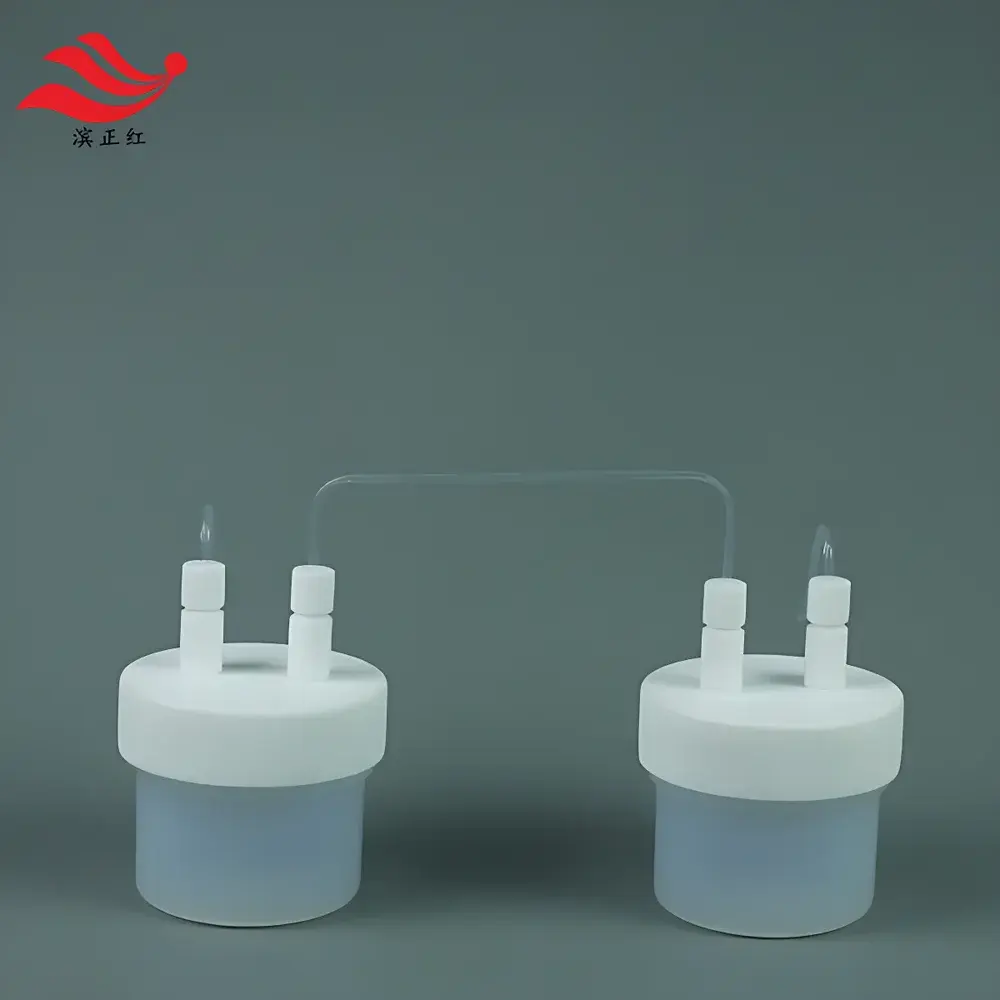
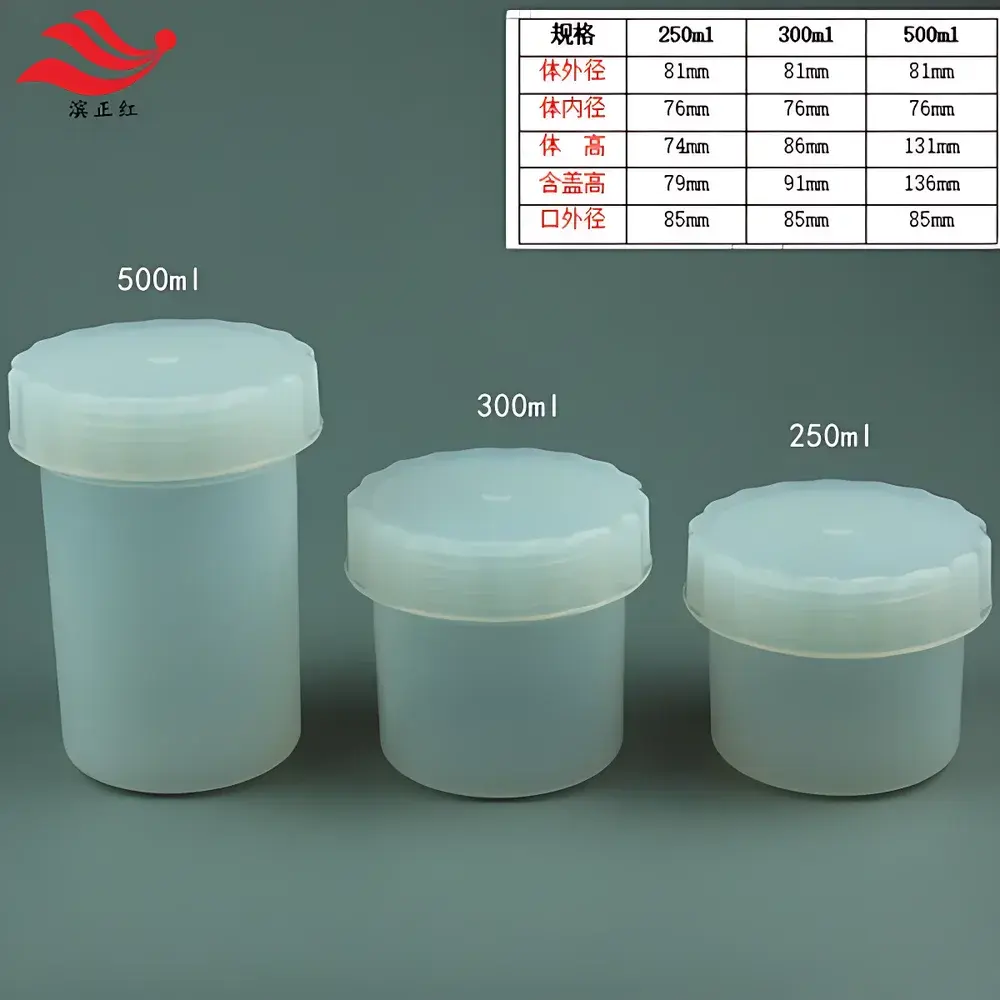
PFA Reaction Bottle, 240 mL Multi-Stage Series Absorption Vessel Set
| Brand | Binzhenghong |
|---|---|
| Origin | Jiangsu, China |
| Manufacturer Type | Direct Producer |
| Country of Origin | China |
| Capacity | 240 mL per Unit |
| Pricing | Upon Request |
Overview
The Binzhenghong PFA Reaction Bottle System (240 mL) is a modular, chemically inert multi-stage series absorption and digestion vessel assembly engineered for demanding trace-level analytical workflows. Constructed entirely from high-purity perfluoroalkoxy alkane (PFA), this system leverages the exceptional chemical resistance, ultra-low extractables, and thermal stability (–200 °C to +260 °C) of PFA to ensure sample integrity during aggressive acid digestions, gas scrubbing, sequential absorption, and low-background environmental or semiconductor-grade sample preparation. Unlike glass or standard polypropylene alternatives, PFA eliminates metal ion leaching, silicate interference, and organic volatiles—critical for ICP-MS, HG-AFS, EPA Method 200.8/6020B, and ISO 17294-2 compliant analyses. The vessels are designed for serial connection via PFA tubing and compression fittings, enabling controlled, laminar flow through multiple reaction zones under inert atmosphere or vacuum-assisted conditions.
Key Features
- Monolithic PFA construction—no adhesives, coatings, or metallic components—to guarantee sub-ppt contamination control and compatibility with HF, aqua regia, hot concentrated HNO₃, and H₂O₂.
- Modular 240 mL unit design with standardized conical bottom (30° taper), integrated PTFE-coated threaded cap, and dual-port configuration (inlet/outlet) for unidirectional or recirculating flow setups.
- Optimized wall thickness (≥2.5 mm) and reinforced neck geometry provide mechanical robustness during pressurized digestion (up to 10 bar at 200 °C) and ultrasonic cleaning cycles.
- Traceable lot certification provided for each production batch, including ICP-MS screening data for Al, Fe, Cr, Ni, Cu, Zn, Pb, and U at ≤0.1 ng/g in blank acid extracts.
- Autoclavable (121 °C, 20 min, saturated steam) and compatible with Class 100 cleanroom handling protocols.
Sample Compatibility & Compliance
This system supports aqueous, organic, and mixed-phase matrices across environmental (soil digests, airborne particulate filters), geochemical (rock powders, sediment cores), clinical (urine, serum after protein precipitation), and high-purity industrial (ultra-trace metal standards, electronic-grade solvents) applications. It complies with ASTM D5681 (digestion vessel performance criteria), ISO/IEC 17025:2017 requirements for equipment qualification, and supports GLP/GMP documentation frameworks through vendor-provided calibration certificates and material traceability records. For regulated laboratories, the PFA composition meets USP Class VI biocompatibility testing and FDA 21 CFR 177.1550 specifications for fluoropolymer food-contact materials—ensuring suitability in method validation and audit-ready environments.
Software & Data Management
As a passive hardware platform, the PFA Reaction Bottle System does not incorporate embedded electronics or firmware. Its integration into automated workflows relies on external instrumentation—including programmable peristaltic pumps (e.g., Watson-Marlow 323Du), pressure-controlled digestion blocks (e.g., CEM MARS 6), and real-time gas analyzers (e.g., Thermo Scientific iCAP TQ). All vessel configurations are fully compatible with LIMS-based sample tracking; barcode labels (pre-applied or user-assignable) support ASME BPE-compliant digital logbook entries. Documentation packages include full material declarations (REACH SVHC, RoHS 3), extractables study reports, and a Certificate of Conformance aligned with ISO 9001:2015 manufacturing controls.
Applications
- Multi-step wet digestion of refractory samples prior to ICP-OES/MS analysis, where sequential addition of HCl/HNO₃/HF mitigates cross-contamination between stages.
- Stack emission monitoring per EPA Method 26A—HCl and Cl₂ absorption in NaOH solution across three serial PFA bottles to quantify breakthrough and capture efficiency.
- Hydride generation pre-concentration for As, Se, Sb, Bi—where volatile species are selectively trapped and reduced in the final stage before atomization.
- Low-blank reagent purification via fractional distillation or reflux under N₂ purge, minimizing atmospheric particulate ingress.
- Long-term stability studies of reference materials under accelerated aging conditions (e.g., 85 °C/85% RH in sealed PFA arrays).
FAQ
Can these vessels be used with hydrofluoric acid (HF) at elevated temperatures?
Yes—PFA exhibits complete resistance to HF up to 260 °C; however, use requires strict adherence to OSHA 1910.1200 hazard communication protocols and dedicated PFA-handling tools.
Is custom porting or volume modification available?
Binzhenghong offers OEM services including laser-drilled inlet/outlet ports, integrated thermocouple wells, and volume variants (100 mL, 500 mL, 1 L) upon engineering review and minimum order quantity agreement.
Do you provide validation documentation for pharmaceutical QC use?
Upon request, IQ/OQ documentation templates, extractables protocols per USP , and risk assessments aligned with ICH Q5C and Q9 are supplied for GxP-regulated deployments.
What is the recommended cleaning protocol between uses?
Rinse sequentially with 10% v/v HNO₃, ultrapure water (18.2 MΩ·cm), and acetone; dry under Class 100 nitrogen purge—validated by blank analysis per ISO 17294-2 Annex A.



