
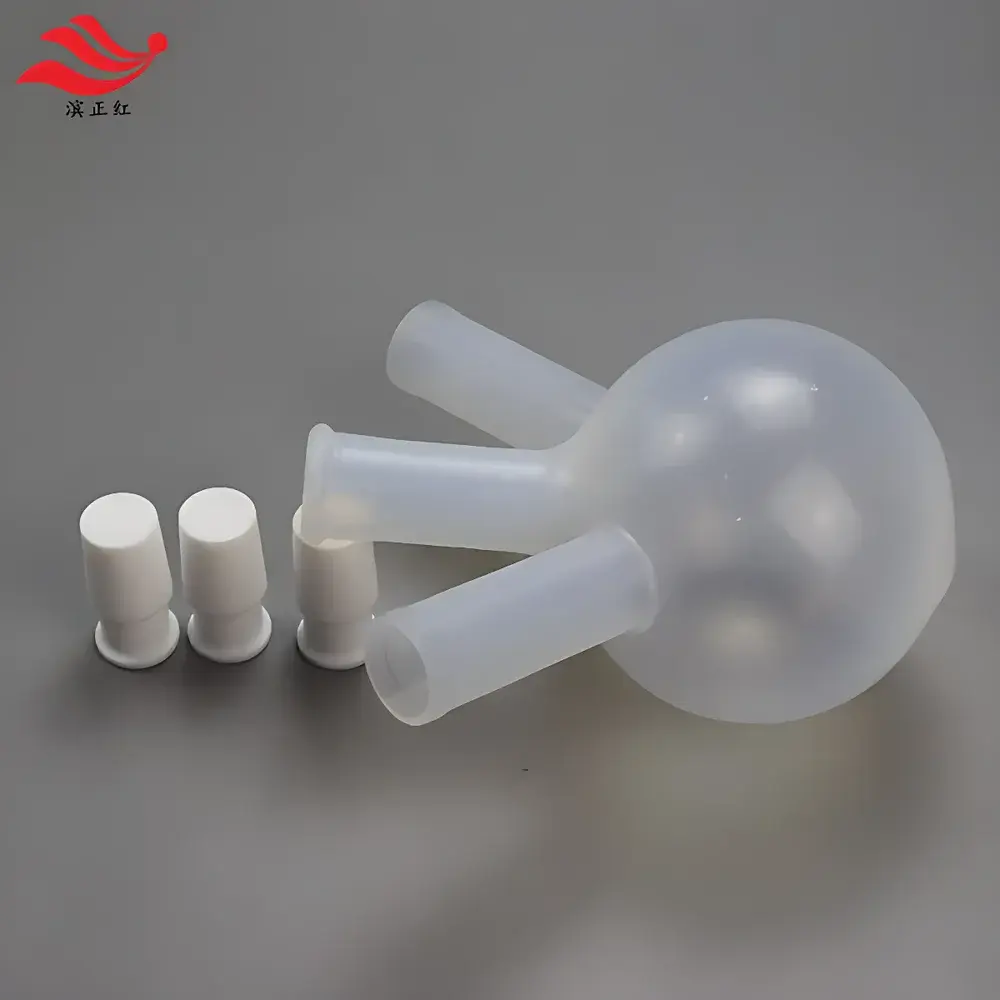
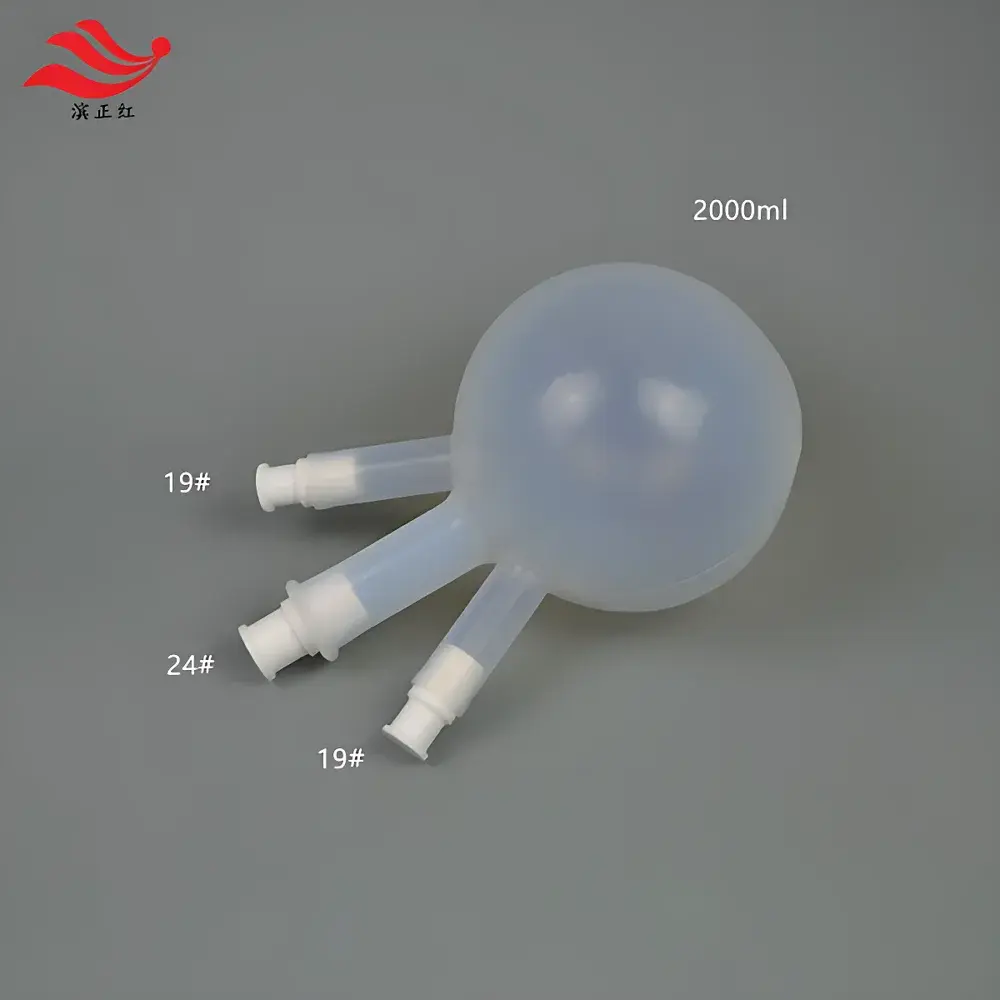
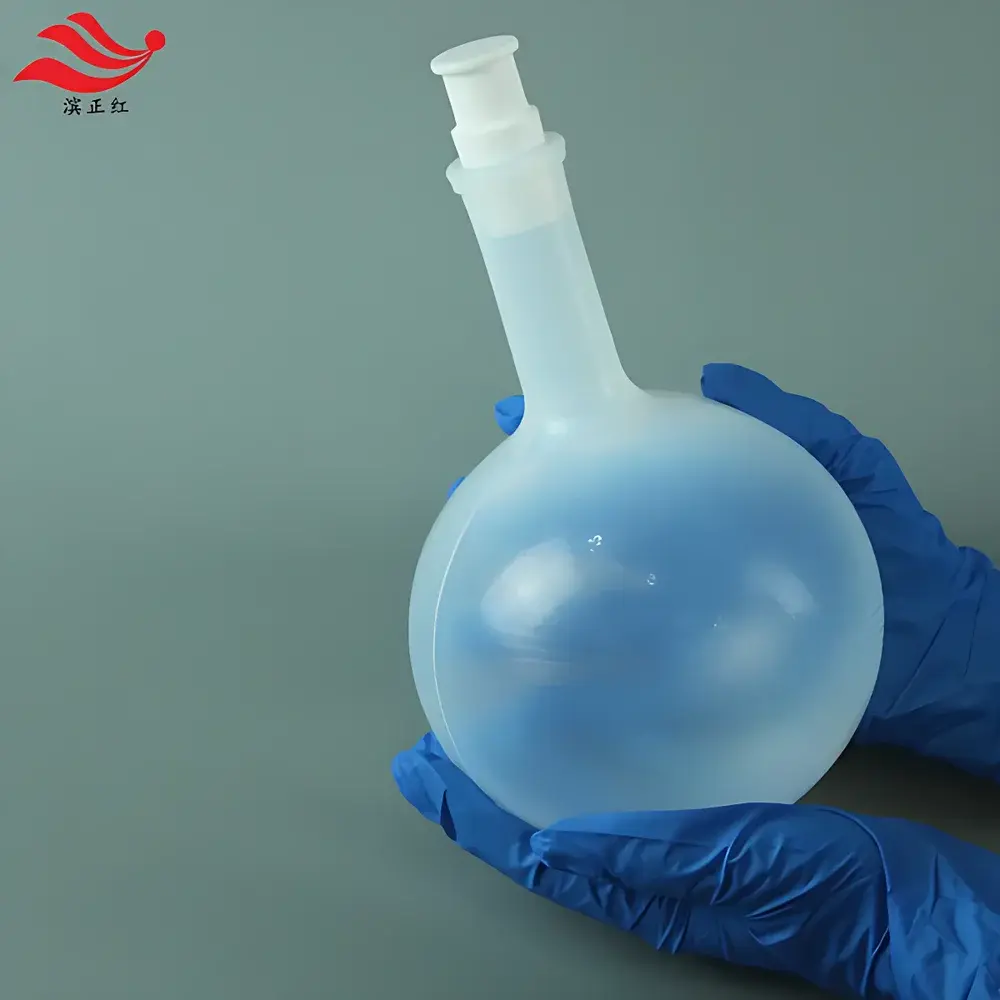
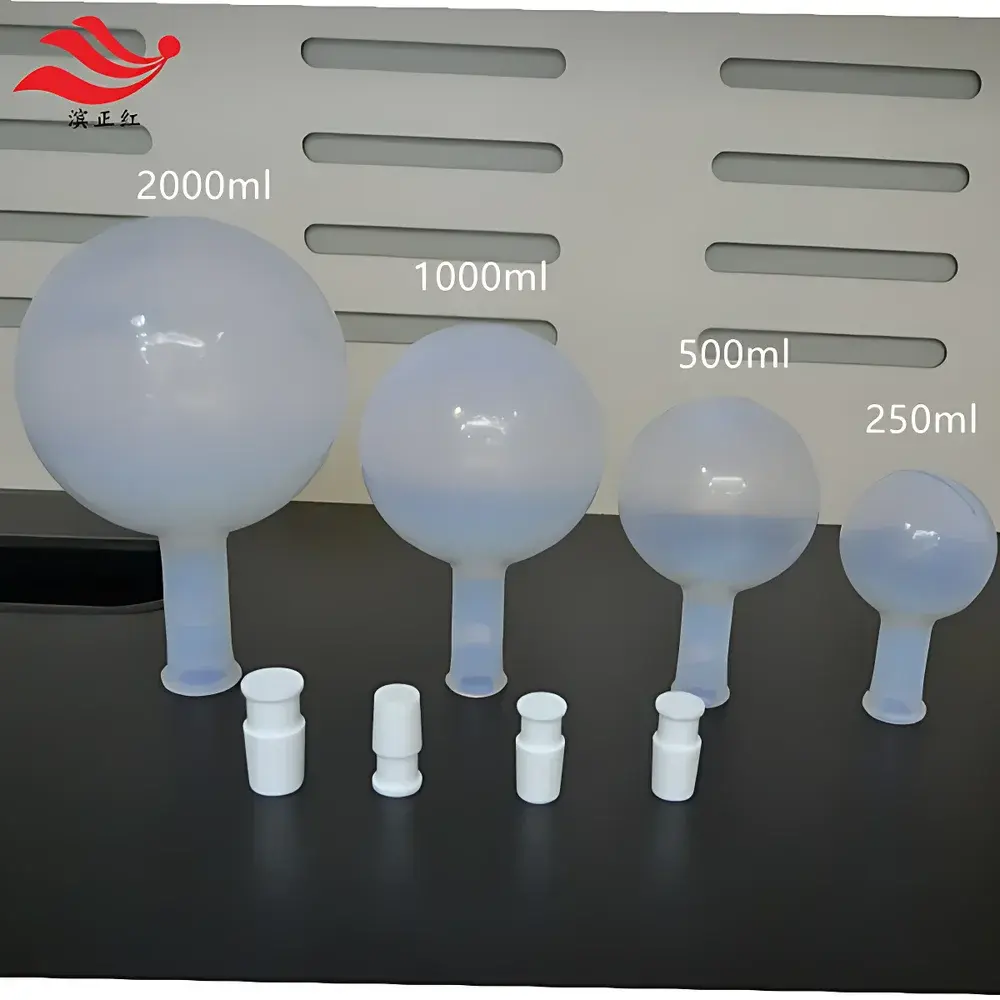
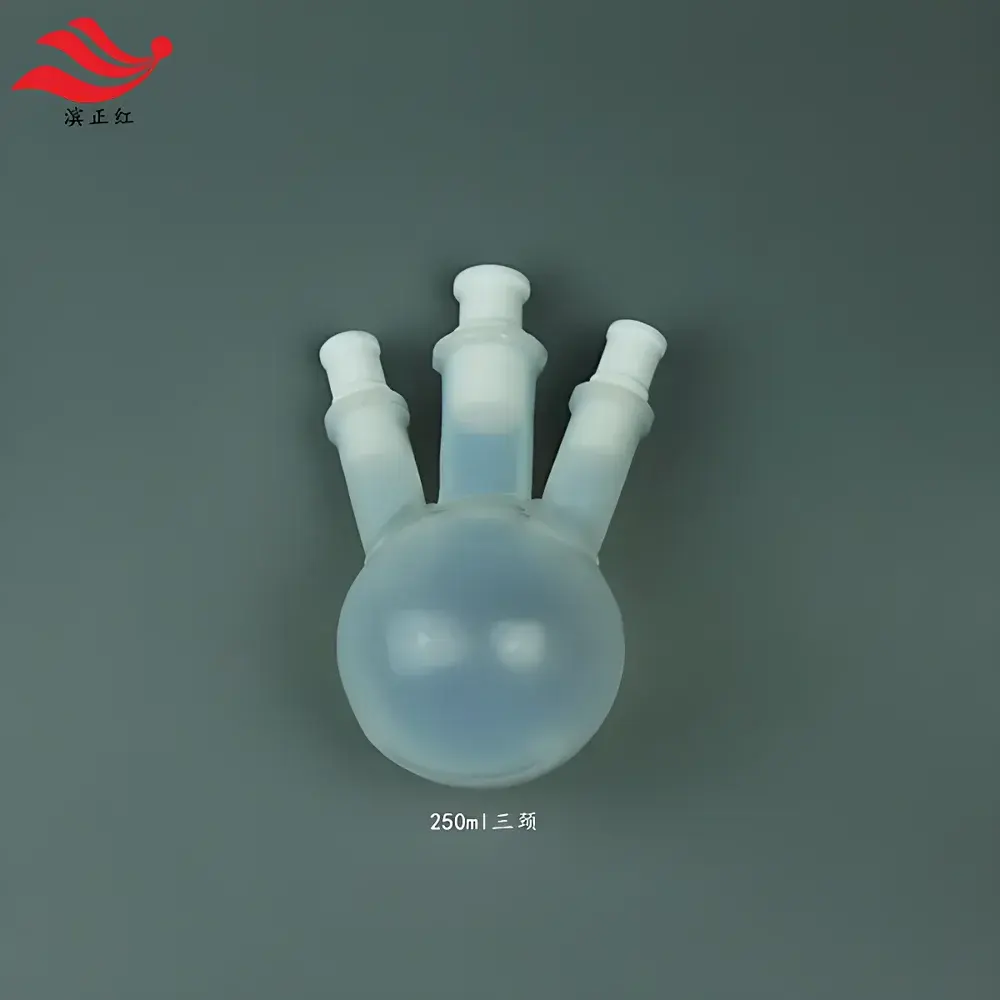
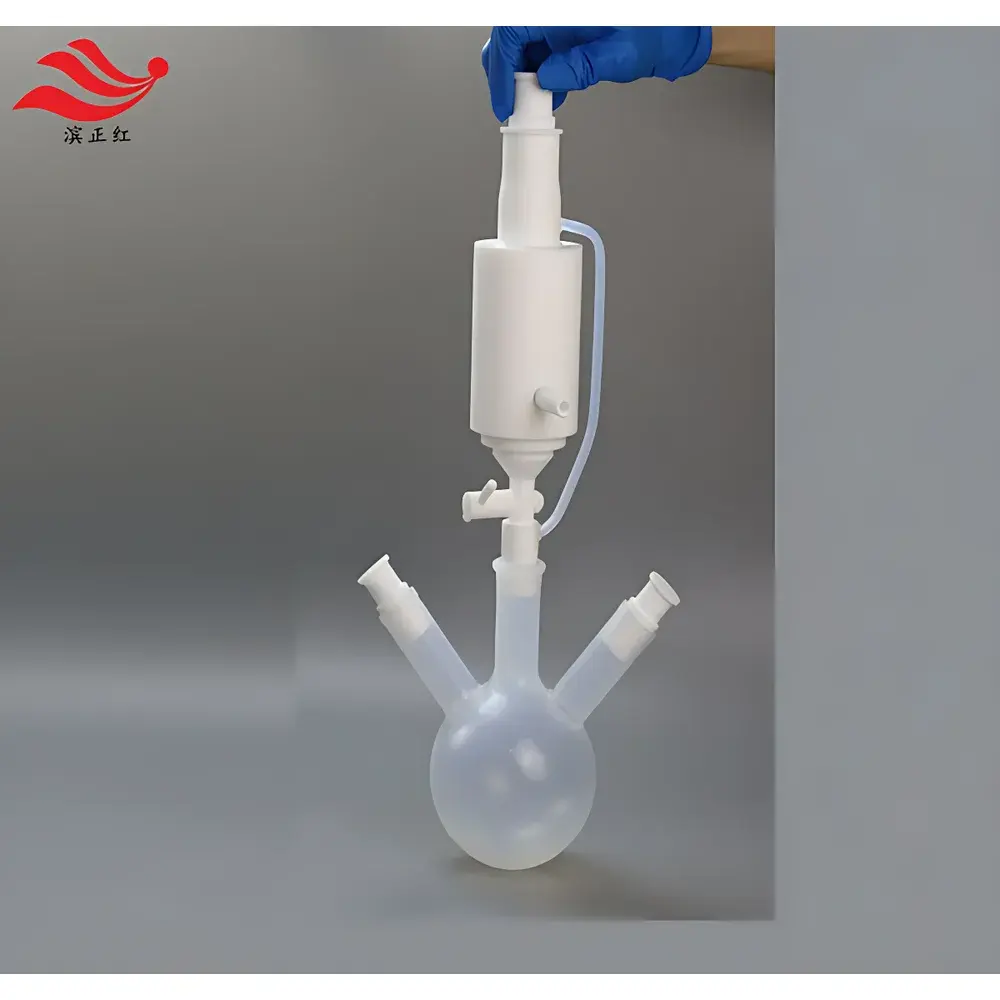
PFA Multi-Neck Round-Bottom Distillation Flask – 500 mL (24/40 Standard Taper Joints)
| Brand | Binzhenghong |
|---|---|
| Origin | Jiangsu, China |
| Manufacturer Type | Direct Producer |
| Capacity Range | 250–2000 mL |
| Material | Perfluoroalkoxy (PFA) |
| Neck Configuration | Customizable Single- or Multi-Neck (e.g., 24/40, 19/22, 14/20 standard taper joints) |
| Heating Method | Compatible with Water Bath & Oil Bath |
| Thermal Stability | Up to 260 °C Continuous Use |
| Chemical Resistance | Fully Resistant to HF, Aqua Regia, Fuming HNO₃, and All Organic Solvents |
| Transparency | Optical Clarity Comparable to Fused Silica |
| Compliance | Meets ASTM D4897-22 (Fluoropolymer Labware), ISO 17025 Traceability Requirements for Calibration Documentation |
Overview
The Binzhenghong PFA Multi-Neck Round-Bottom Distillation Flask is a high-purity, chemically inert laboratory vessel engineered for demanding purification, synthesis, and distillation applications where metal contamination, leaching, or thermal degradation must be rigorously excluded. Constructed from virgin perfluoroalkoxy alkane (PFA) resin—melt-processed under Class 100 cleanroom conditions—the flask exhibits exceptional transparency, near-zero extractables (<0.1 ng/cm² for Na⁺, K⁺, Fe³⁺ per USP ), and dimensional stability across −200 °C to +260 °C. Unlike borosilicate glass or PTFE-coated alternatives, monolithic PFA offers isotropic mechanical strength, zero porosity, and full compatibility with aggressive reagents including hydrofluoric acid, molten alkali metals, and chlorine trifluoride—making it indispensable in semiconductor precursor synthesis, nuclear fuel cycle analytics, and ultra-trace elemental analysis (e.g., ICP-MS sample introduction systems). The 500 mL variant features standardized 24/40 taper joints on all necks, enabling modular integration with condensers, thermowells, addition funnels, and vacuum manifolds without adapter-induced dead volume or sealing uncertainty.
Key Features
- Monolithic PFA construction—no fillers, binders, or laminates—to ensure batch-to-batch consistency and eliminate particulate shedding
- Optical clarity exceeding 92% transmittance at 400–800 nm, enabling real-time visual monitoring of phase separation, crystallization, or reflux behavior
- Multi-neck configurations (up to 5 ports) machined via CNC-controlled hot-forming to preserve wall thickness uniformity (±0.05 mm tolerance)
- Thermal shock resistance validated per ASTM C1525: withstands direct transfer from −196 °C (liquid N₂) to 220 °C oil bath without microcracking
- Surface roughness Ra < 0.2 µm (measured by profilometry), minimizing analyte adsorption and facilitating quantitative recovery of volatile organometallics
- Autoclavable at 121 °C / 15 psi for GLP-compliant sterilization without deformation or haze formation
Sample Compatibility & Compliance
This distillation flask is qualified for use with samples requiring Class 1 cleanliness per SEMI F57-0301 (semiconductor wet processing), EPA Method 1631E (ultra-trace mercury analysis), and ASTM D7260-20 (high-purity solvent handling). Its non-reactive surface eliminates catalytic decomposition of peroxides, azides, and diazo compounds. All flasks undergo helium leak testing (≤1×10⁻⁹ mbar·L/s) and are certified free of detectable heavy metals (ICP-MS LOD < 0.05 ppt for As, Cd, Pb, Hg). Documentation includes material traceability certificates (ASTM E2918), lot-specific FTIR spectral verification (peak match ≥99.5% vs. PFA reference), and thermal history logs from controlled cooling cycles.
Software & Data Management
While the flask itself is a passive component, its design supports digital lab workflows: joint dimensions comply with ISO 385-1:2021 for interoperability with automated distillation platforms (e.g., BUCHI R-300, KNF LABOPORT). Each unit carries a laser-etched QR code linking to a secure cloud archive containing raw manufacturing data—extrusion temperature profiles, rheology curves, and post-molding annealing parameters—enabling full audit trail per FDA 21 CFR Part 11 when integrated into validated purification SOPs.
Applications
- Purification of high-purity precursors for ALD/CVD processes (e.g., TiCl₄, Ta(NEt₂)₅)
- Distillation of halogenated solvents under inert atmosphere for electrochemical cell assembly
- Acid digestion vessels for geological matrices prior to HR-ICP-MS analysis
- Reaction monitoring of air-sensitive Grignard or organolithium reagents
- Preparation of calibration standards for environmental PFAS quantification (EPA 533, 1633)
FAQ
Can this flask be used under vacuum down to 10⁻³ mbar?
Yes—tested to 1×10⁻⁴ mbar at 200 °C with no outgassing spikes (TQMS verified; total hydrocarbon emission < 1×10⁻¹² g/s).
Is PFA compatible with microwave-assisted distillation?
No—PFA is transparent to microwaves but lacks dielectric loss; direct microwave heating requires susceptor integration. Water/oil bath remains the validated method.
What cleaning protocol restores baseline performance after HF exposure?
Rinse sequentially with deionized water → 5% NH₄OH (v/v) → ultrapure water (18.2 MΩ·cm); dry under nitrogen purge at 80 °C for 2 h.
Do multi-neck variants maintain volumetric accuracy per ISO 1042?
Yes—calibrated gravimetrically using certified water at 20 °C; 500 mL nominal capacity has ±0.5% tolerance (±2.5 mL) per ISO 1042 Class A requirements.
Is there a validated method for sterilizing PFA flasks prior to cell culture media distillation?
Autoclaving at 121 °C / 15 psi for 20 min is validated per ISO 13408-2; residual moisture content remains < 0.01% w/w post-cycle, confirmed by Karl Fischer titration.



