
Binzhenghong PFA Graduated Beakers for Polysilicon Processing
| Brand | Binzhenghong |
|---|---|
| Volume Range | 10 mL to 2 L |
| Material | Perfluoroalkoxy (PFA) |
| Temperature Resistance | −200 °C to +260 °C |
| Chemical Resistance | HF, Aqua Regia, Concentrated HNO₃/H₂SO₄/NaOH, Organic Solvents |
| Transparency | High Optical Clarity |
| Graduation Accuracy | ±1–2% (v/v) |
| Surface Finish | Non-porous, Non-stick, Electrostatically Neutral |
| Metal Blank Levels | <0.01 ppb Pb and U |
| Manufacturing | Seamless One-Piece Molding |
| Compliance | Suitable for ISO/IEC 17025 Traceable Work, ASTM D4809, USP <661.2>, GLP/GMP-Capable Labware |
Overview
Binzhenghong PFA Graduated Beakers are high-purity, fluoropolymer laboratory vessels engineered specifically for critical handling and transfer of ultra-trace and highly reactive samples in polysilicon refining, semiconductor material synthesis, and isotopic analysis workflows. Constructed from perfluoroalkoxy (PFA) resin—certified free of recycled content—the beakers deliver exceptional chemical inertness, thermal stability, and optical transparency unmatched by conventional PTFE or glassware. Unlike molded PTFE, PFA offers superior melt-processability while retaining near-identical resistance to aggressive media including hydrofluoric acid, aqua regia, molten alkalis, and halogenated solvents. Their seamless, one-piece rotational molding eliminates weld lines or crevices that could harbor contaminants or compromise cleaning validation—making them essential for Class 100 cleanroom environments and sub-part-per-trillion (ppt) elemental quantification.
Key Features
- Ultra-low elemental background: Certified blank levels <0.01 ppb for lead and uranium—validated per ASTM D5673 and ICP-MS traceability protocols.
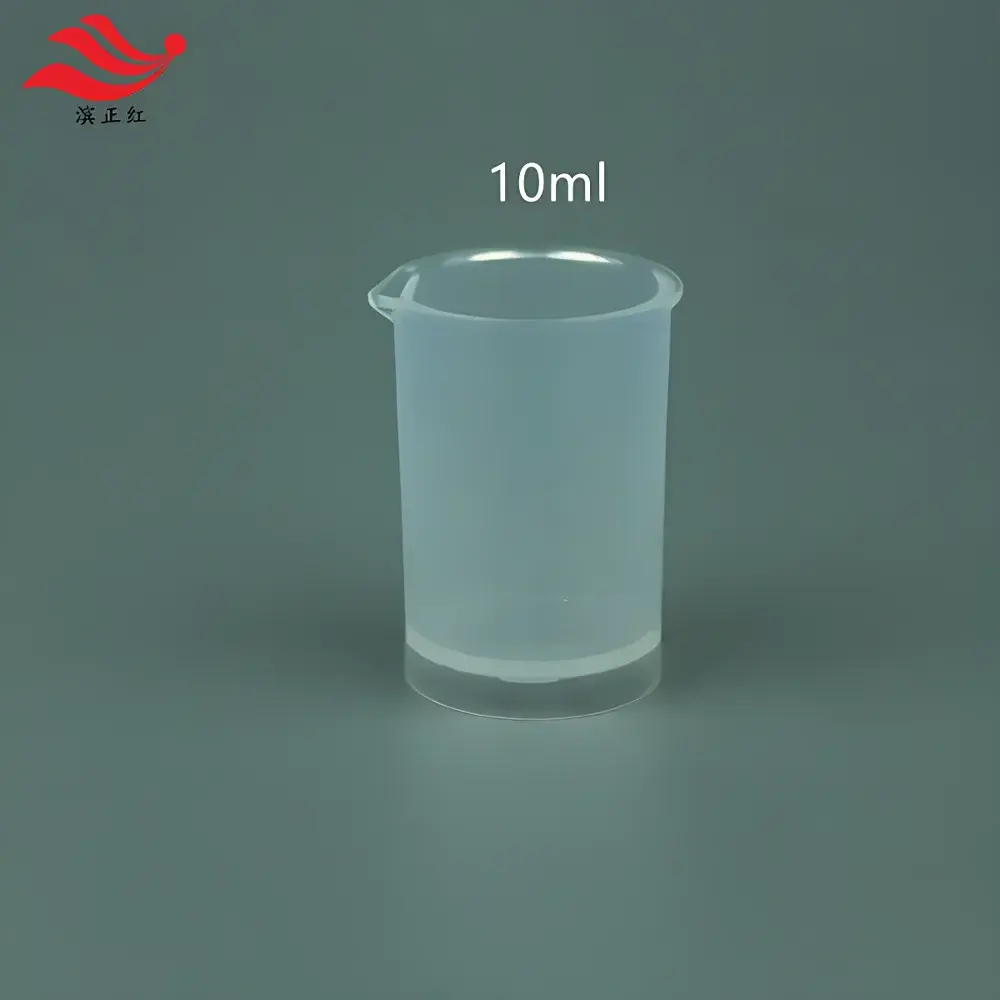
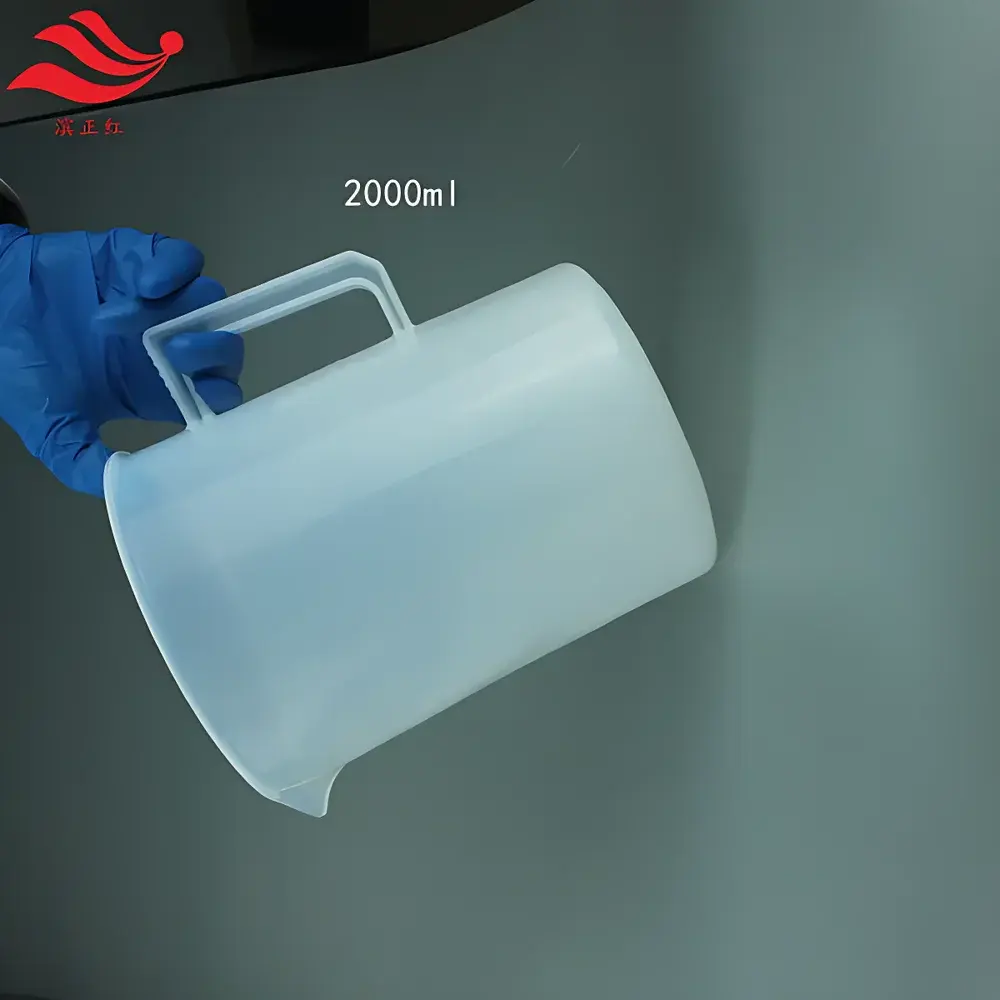
- Optically transparent walls with laser-etched, permanent graduations—enabling real-time visual monitoring of reaction progression, phase separation, or precipitation without vessel opening.
- Continuous temperature service range from −200 °C (liquid nitrogen immersion) to +260 °C (autoclave-compatible), maintaining dimensional stability and mechanical resilience across thermal cycling.
- Non-stick, non-porous surface with water contact angle >110°—preventing adsorption of metal ions, organometallics, or silane precursors; validated for ≤0.1 ng/cm² residual recovery in rinse studies.
- Electrostatically neutral surface (volume resistivity >10¹⁸ Ω·cm)—minimizing particle attraction and electrostatic discharge risks during dry powder handling of silicon nanopowders.
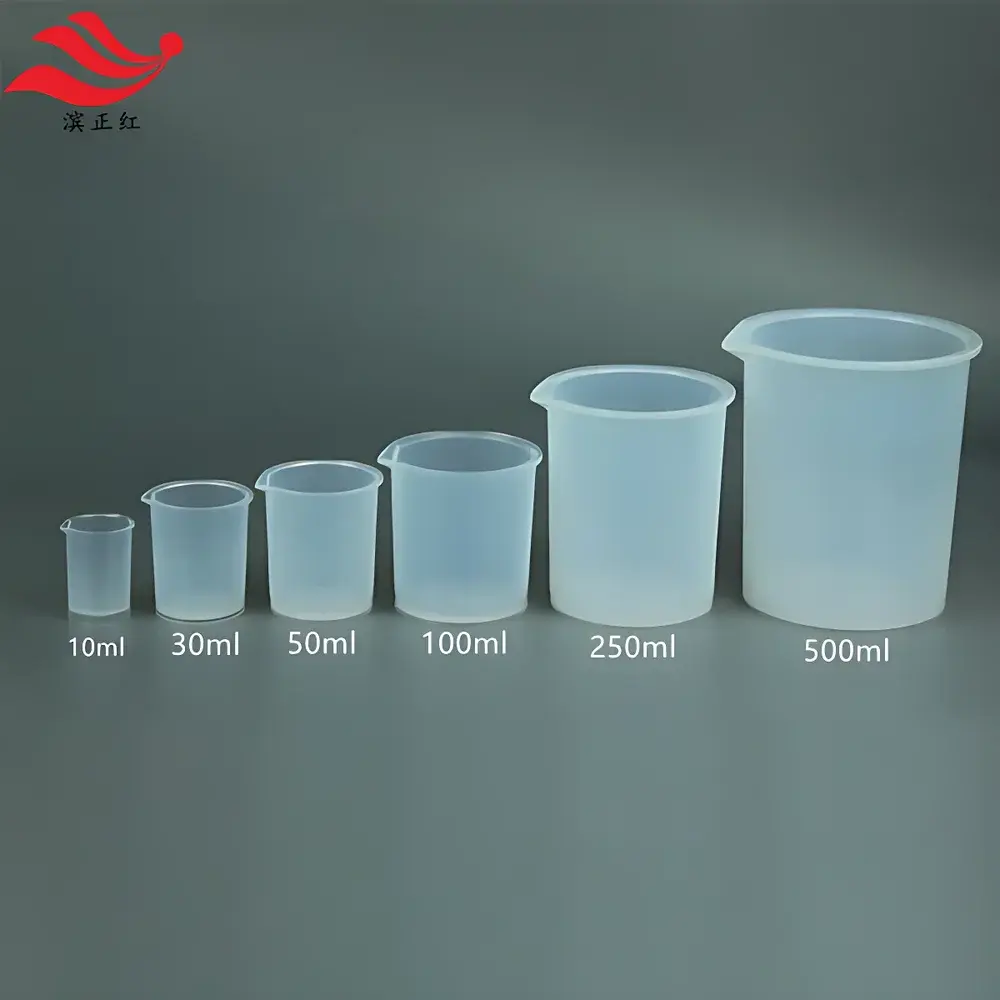
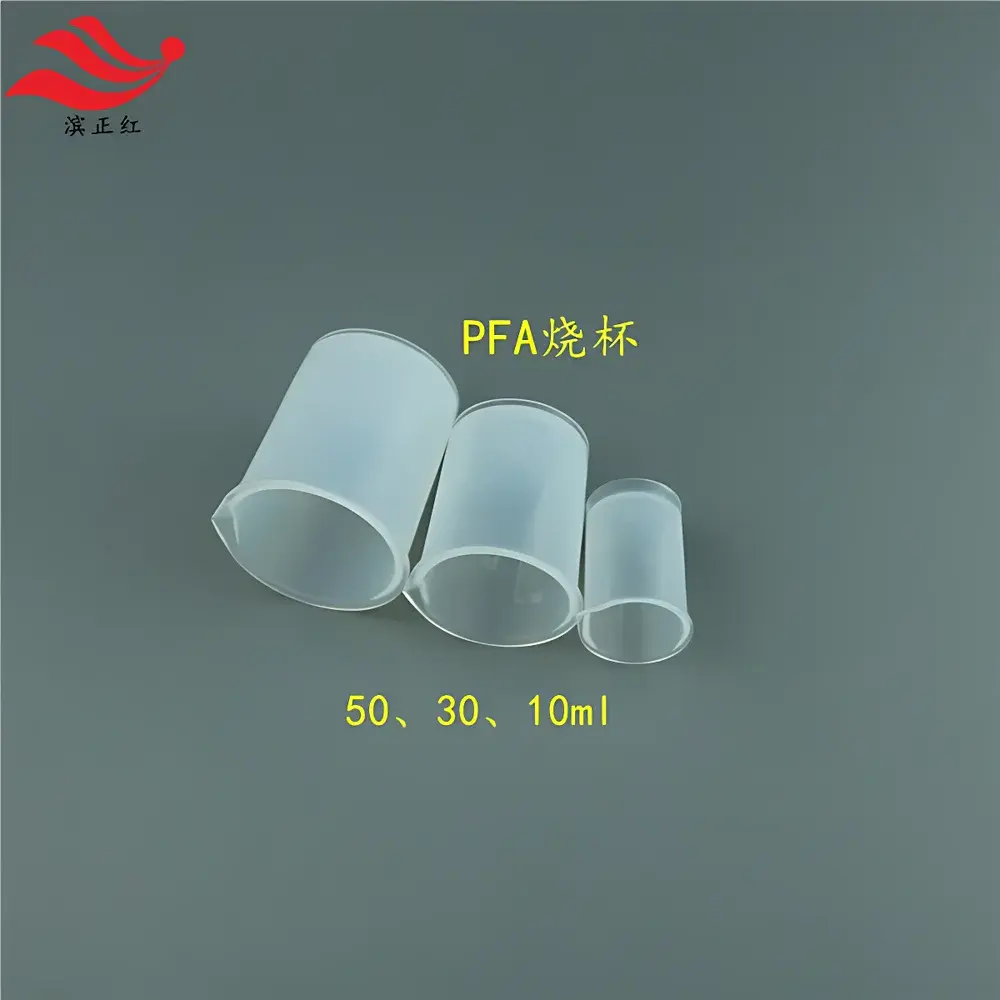
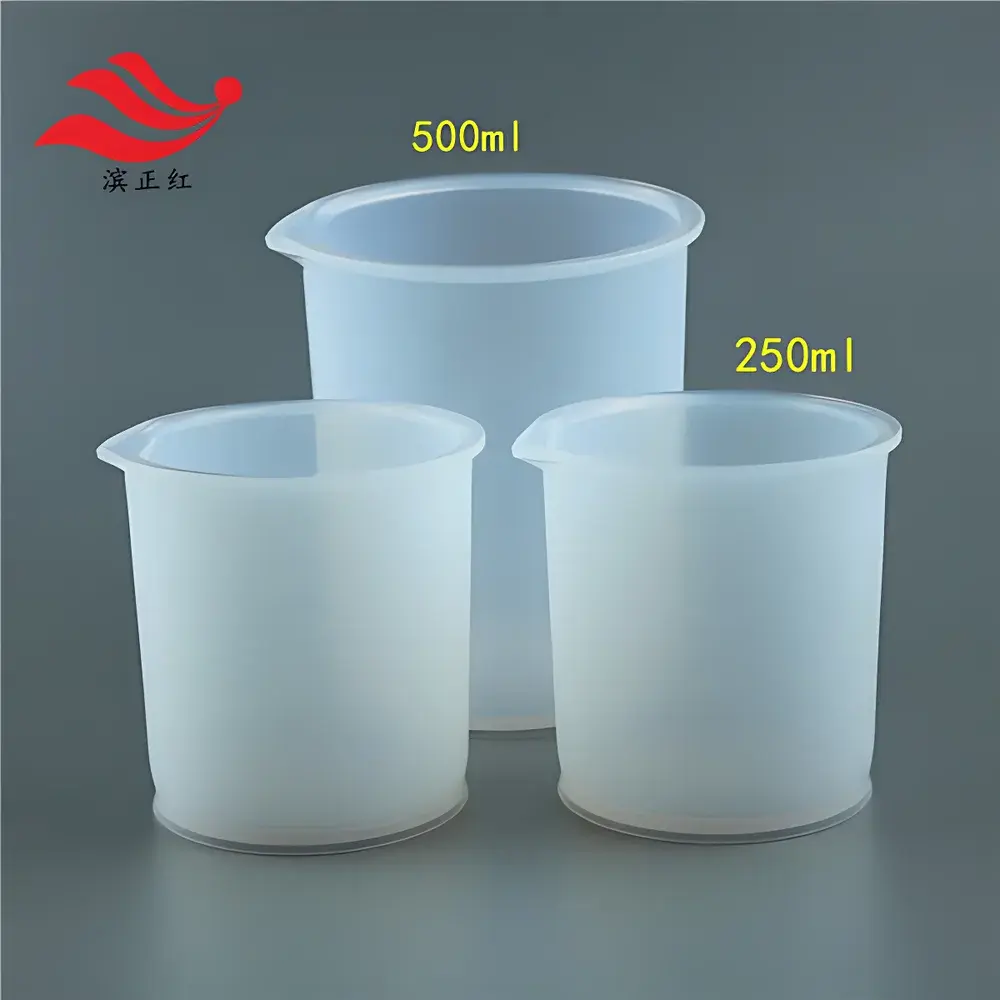
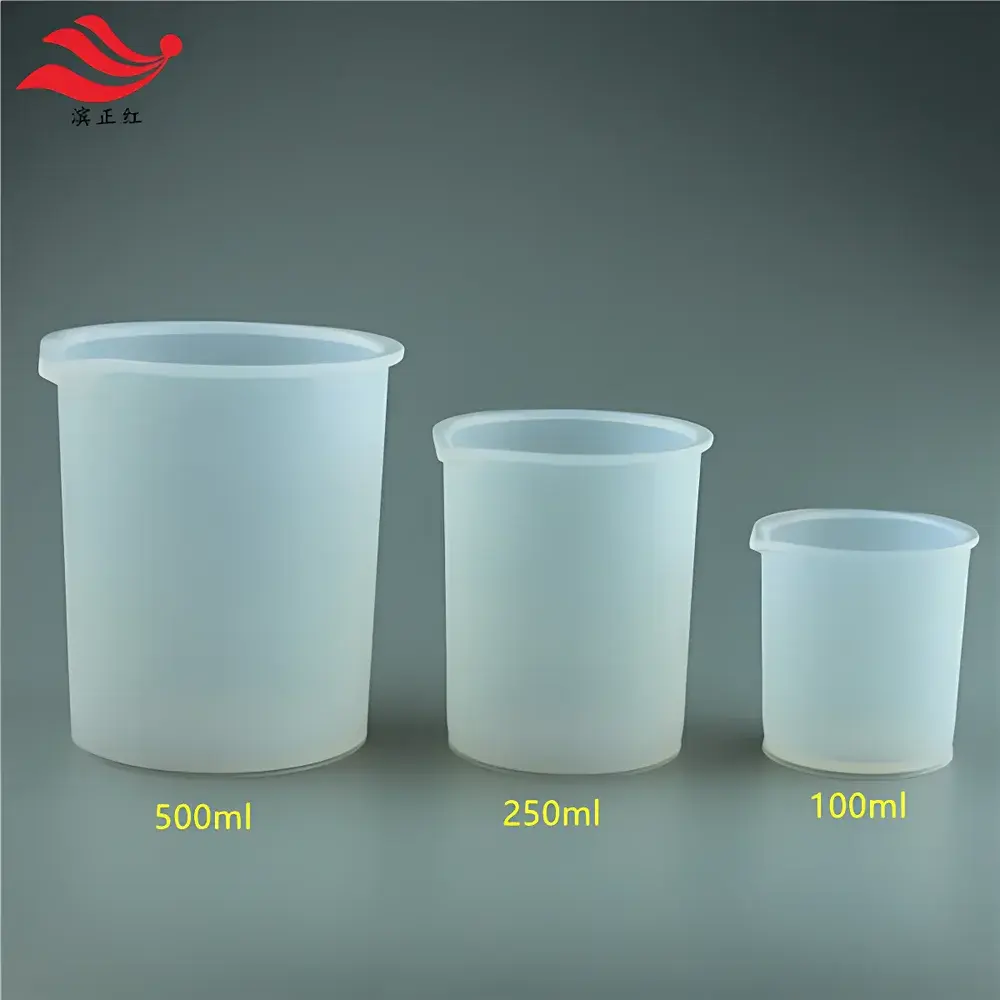
- Available in eight standard calibrated volumes (10, 30, 50, 100, 250, 500, 1000, and 2000 mL); 1 L and 2 L variants include ergonomic, chemically bonded PFA handles for secure handling under glovebox or fume hood conditions.
Sample Compatibility & Compliance
These beakers are routinely employed in processes involving high-purity silicon tetrachloride (SiCl₄), trichlorosilane (TCS), silane (SiH₄), and boron/phosphorus dopant solutions where leachable fluorides or metal impurities would degrade crystal lattice integrity. They meet the material compatibility requirements outlined in SEMI F57 (specifications for silicon wafer manufacturing equipment materials) and are referenced in JIS K 6801 for fluoropolymer labware qualification. All lots undergo batch-certified testing per ISO 15195 for metrological traceability, with CoA documentation supporting compliance with ISO/IEC 17025-accredited laboratories. For regulated environments, their inert surface supports 21 CFR Part 11–compliant electronic recordkeeping when used with validated weighing and dispensing systems.
Software & Data Management
While inherently passive devices, Binzhenghong PFA beakers integrate seamlessly into digital lab ecosystems via compatible balance interfaces (e.g., Mettler Toledo XPR series) and LIMS platforms such as LabVantage or Thermo Fisher SampleManager. Each beaker is supplied with a unique QR-coded label linking to its lot-specific Certificate of Analysis—including ICP-MS blank data, thermal history validation reports, and dimensional inspection records. The graduation accuracy (±1–2% v/v at 20 °C, calibrated per ISO 4787) is traceable to NIM (National Institute of Metrology, China) standards, enabling full audit trail generation for GLP audits and supplier qualification dossiers.
Applications
- Pre-concentration and evaporation steps in ICP-MS analysis of polysilicon feedstock purity (ASTM E2853).
- Safe transfer and temporary storage of HF-based etchants in photovoltaic cell fabrication lines.
- Inert reaction vessels for Grignard-type silane functionalization under anhydrous argon.
- Calibration standard preparation for atomic absorption spectroscopy (AAS) in semiconductor-grade reagent certification.
- Storage of certified reference materials (CRMs) for boron isotopic ratio measurement (δ¹¹B) via MC-ICP-MS.
- Intermediate containment during zone refining or fractional crystallization of metallurgical-grade silicon.
FAQ
Can these beakers be sterilized in an autoclave?
Yes—fully compatible with saturated steam sterilization at 121 °C, 15 psi for 20 minutes; repeated cycles do not degrade graduation legibility or dimensional fidelity.
Are the graduations resistant to HF exposure?
Yes—laser-etched markings are subsurface and chemically identical to the bulk PFA matrix; no delamination or fading occurs after prolonged immersion in 49% hydrofluoric acid.
Do you provide lot-specific certificates of analysis?
Yes—each shipment includes a signed CoA listing ICP-MS blanks for ≥22 elements (including Al, Cr, Fe, Ni, Cu, Zn, As, Cd, Pb, U), thermal stability test results, and dimensional verification data.
Is there risk of static charge buildup during powder transfer?
No—PFA’s intrinsic volume resistivity exceeds 10¹⁸ Ω·cm, eliminating triboelectric charging even during rapid pouring of nano-silicon powders in Class 10 cleanrooms.
How does PFA compare to quartz for high-temperature acid digestion?
Unlike quartz, PFA resists attack by HF and hot phosphoric acid—but has lower maximum continuous use temperature (260 °C vs. quartz’s 1100 °C); it is selected where chemical resistance outweighs thermal ceiling requirements.



