
English Product Name
| Brand | OK-SH |
|---|---|
| Origin | Imported |
| Manufacturer Type | Authorized Distributor |
| Temperature Range (Chamber) | 35 °C ±1 °C (NSS/ACSS) / 50 °C ±1 °C (CASS) |
| Saturation Tower Temperature | 47 °C ±1 °C (NSS/ACSS) / 63 °C ±1 °C (CASS) |
| Spray Rate | 1.0–2.0 mL/80 cm²/h (measured over ≥16 h) |
| Salt Solution Concentration | 5% NaCl (w/v) or 5% NaCl + 0.26 g/L CuCl₂·2H₂O (CASS) |
| Compressed Air Pressure | 1.00 ± 0.01 kgf/cm² |
| Internal Volume | 108–800 L (model-dependent) |
| Chamber Uniformity | ±2.0 °C |
| Power Supply | AC 220 V ±5%, 50 Hz ±0.5 Hz |
| Construction Material | Reinforced PVC with 3D structural bracing |
| Spray Nozzle | Precision borosilicate glass, rated for ≥4000 h operation without crystallization |
Overview
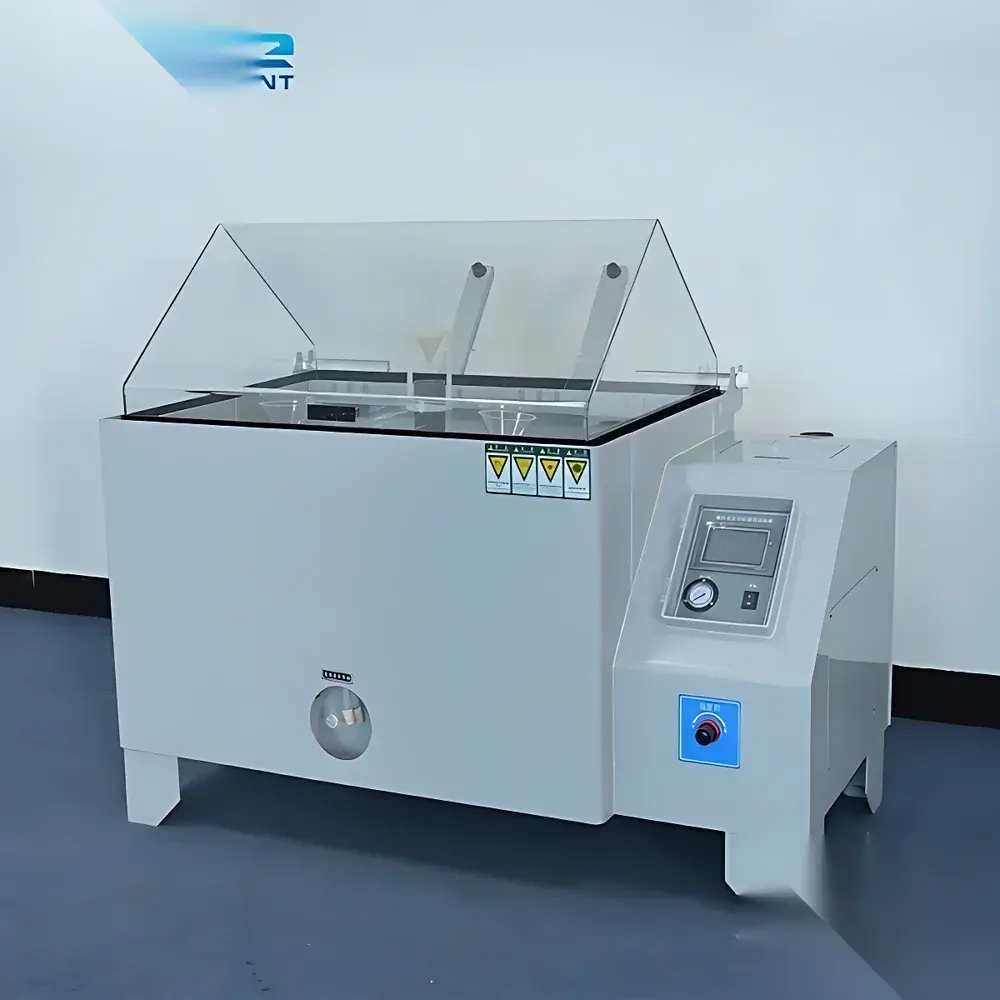
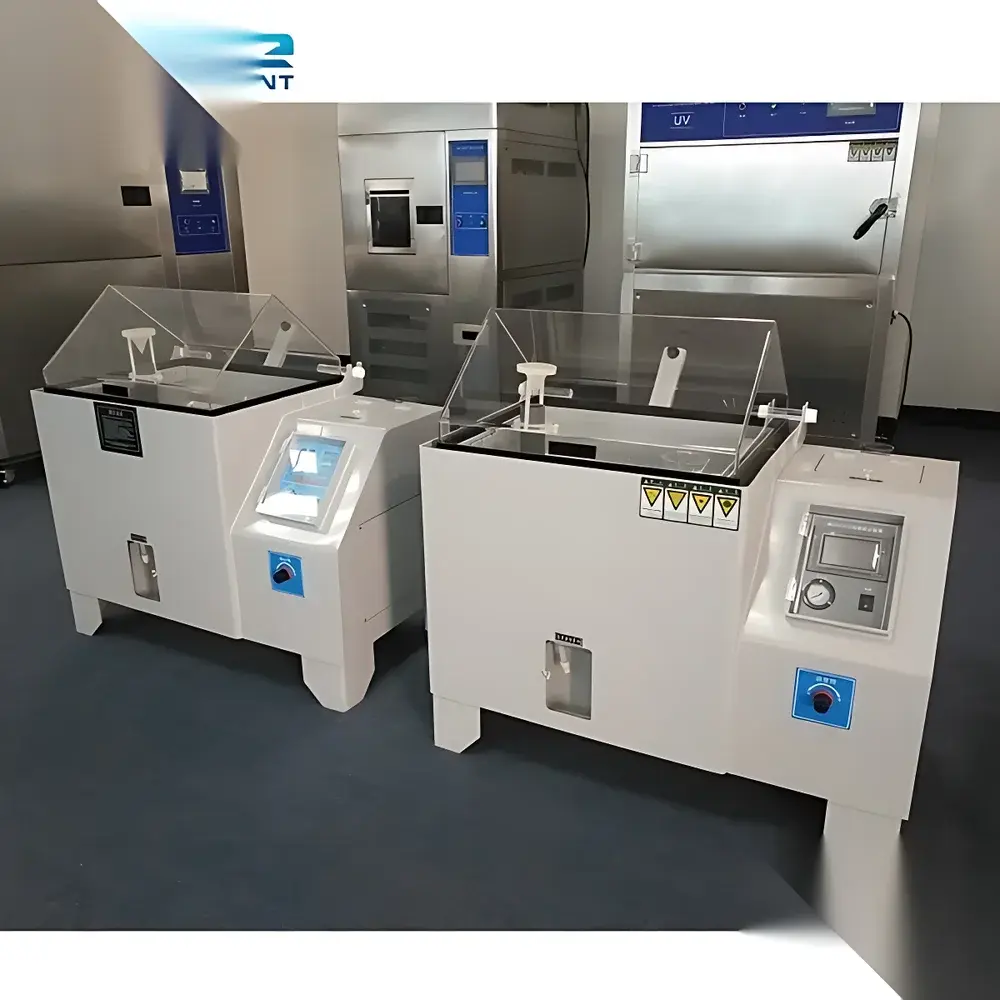
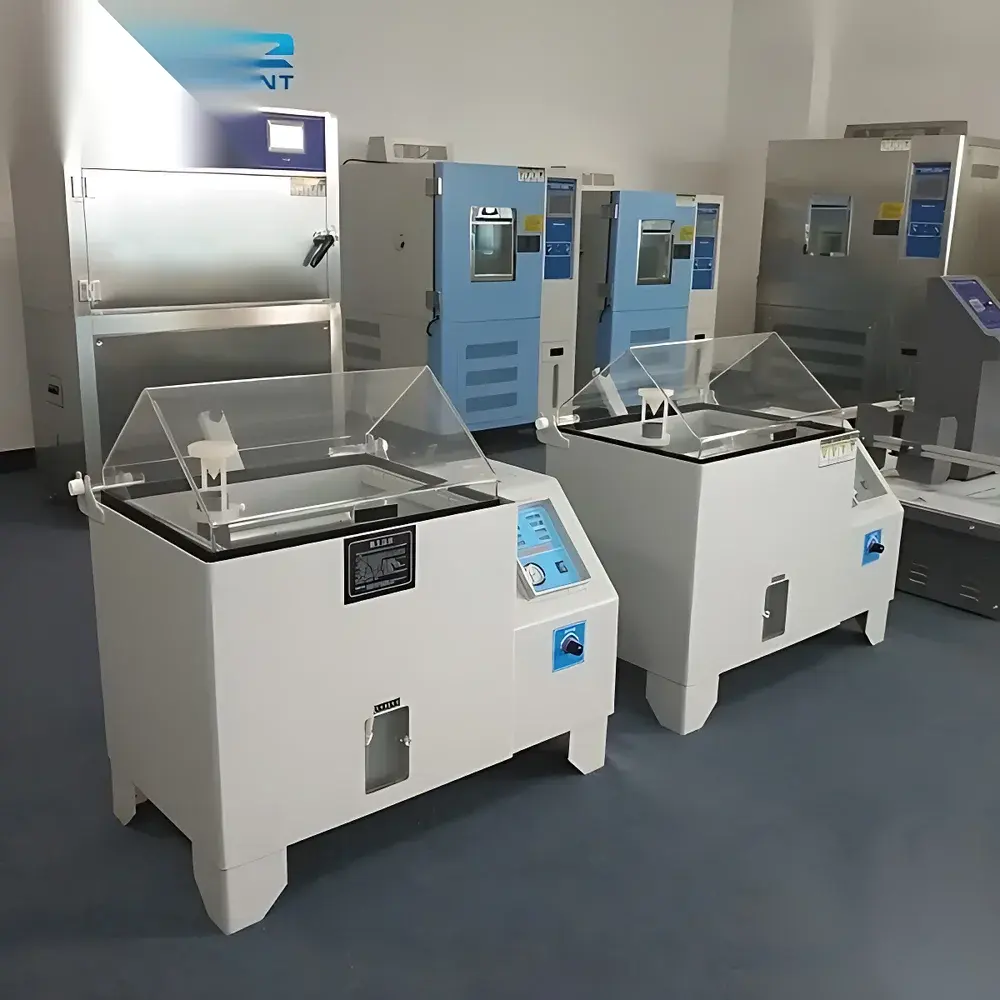
The OK-SH Series Salt Spray Test Chamber is an ASTM B117-23 and ISO 9227-compliant environmental test system engineered to evaluate the corrosion resistance of metallic substrates and protective coatings—including electroplated layers, anodized films, organic/inorganic conversion coatings, and anti-rust treatments. It operates on the principle of controlled, continuous salt fog generation via pneumatic atomization of a standardized saline solution within a thermally stabilized chamber. The system maintains strict adherence to temperature, humidity, and spray deposition rate tolerances defined in international corrosion testing standards, enabling reproducible accelerated aging under highly repeatable conditions. Designed for QC laboratories, R&D centers, and third-party certification facilities, this chamber supports both Neutral Salt Spray (NSS) and Copper-Accelerated Acetic Acid Salt Spray (CASS) test protocols—critical for validating coating integrity, adhesion durability, and long-term material stability in marine, automotive, aerospace, and industrial environments.
Key Features
- Programmable and continuous spray modes compliant with ASTM B117, ISO 9227, JIS Z2371, and GB/T 2423.17 test requirements.
- Automated fog containment system featuring dual-seal design: water-trap vapor seal trough with auto-lift mechanism and pneumatically actuated chamber lid to prevent aerosol leakage during operation.
- High-precision borosilicate glass nozzles engineered for uniform droplet dispersion and long-term resistance to NaCl-induced crystallization—guaranteed performance for ≥4000 h without clogging.
- Digital PID temperature controller with platinum RTD sensor (Class A accuracy), ensuring stable chamber and saturation tower temperatures within ±1 °C tolerance across full operational range.
- Reinforced monolithic PVC construction utilizing 3D lattice bracing technology—resistant to acid/alkali exposure, thermal degradation, and mechanical deformation at elevated operating temperatures.
- Integrated auto-fill water level management with dual-mode (manual/automatic) replenishment and real-time low-level visual alarm to maintain uninterrupted test cycles.
- Direct steam heating system enabling rapid thermal stabilization and minimized standby time prior to test initiation.
- Front-accessible observation window with integrated de-misting heater and forced-air circulation to ensure unobstructed visual monitoring of specimen condition throughout testing.
Sample Compatibility & Compliance
The OK-SH chamber accommodates flat, curved, and multi-faceted specimens up to 160 cm (W) × 50 cm (H) × 100 cm (D), supporting standardized sample racks per ASTM B117 Annex A1. Its interior geometry ensures uniform fog distribution across all test zones, validated by calibrated collection funnels placed at multiple spatial locations. All models meet regulatory requirements for GLP-compliant testing environments and support audit-ready documentation when integrated with external data loggers. The chamber’s material compatibility extends to zinc-nickel, chromate, epoxy-polyester, and ceramic-based coatings, as well as aluminum alloys, stainless steels, and galvanized carbon steels. Full traceability is supported through optional RS-485/Modbus interface for integration into LIMS or MES platforms.
Software & Data Management
While the base unit features analog-digital hybrid control (no embedded PC), it includes standard analog output signals (4–20 mA) for temperature and pressure monitoring, compatible with third-party SCADA systems and FDA 21 CFR Part 11-compliant electronic recorders. Optional upgrade kits provide USB/RS-232 connectivity for automated data export in CSV or Excel format. All temperature and spray duration parameters are logged with timestamped entries, supporting GMP-aligned test reports including operator ID, start/stop times, calibration verification status, and deviation alerts. Firmware supports configurable hold times, multi-step cycling, and alarm-triggered shutdown sequences—essential for method validation under ISO/IEC 17025-accredited laboratories.
Applications
- Corrosion performance validation of automotive body panels, fasteners, and brake components per SAE J2334 and VW PV1210.
- Coating qualification for medical device housings and surgical instruments under ISO 10993-15 biocompatibility guidance.
- Quality assurance of printed circuit board (PCB) conformal coatings exposed to coastal or industrial atmospheres.
- Accelerated life-cycle assessment of architectural cladding systems, including aluminum composite panels and stainless steel façades.
- Supplier qualification audits requiring documented evidence of coating thickness–corrosion resistance correlation per ISO 2081 and ASTM B633.
FAQ
What standards does the OK-SH chamber comply with?
It meets ASTM B117-23, ISO 9227:2022, JIS Z2371, and GB/T 2423.17 for neutral and acetic acid salt spray testing.
Can the chamber be customized for non-standard specimen sizes?
Yes—OK-SH offers OEM engineering services for bespoke internal dimensions, rack configurations, and auxiliary gas purge options.
Is compressed air pre-treatment required?
Yes—filtered, oil-free, and moisture-free air at 1.00 ± 0.01 kgf/cm² is mandatory to prevent nozzle blockage and ensure consistent droplet size distribution.
How is temperature uniformity verified?
Uniformity is confirmed using NIST-traceable thermocouples positioned at nine standardized locations per ASTM E2202, with results documented in factory calibration certificates.
Does the system support remote monitoring?
With optional communication modules, real-time parameter streaming and email/SMS alerting are enabled via Ethernet or Wi-Fi gateways compatible with industrial IoT platforms.



