
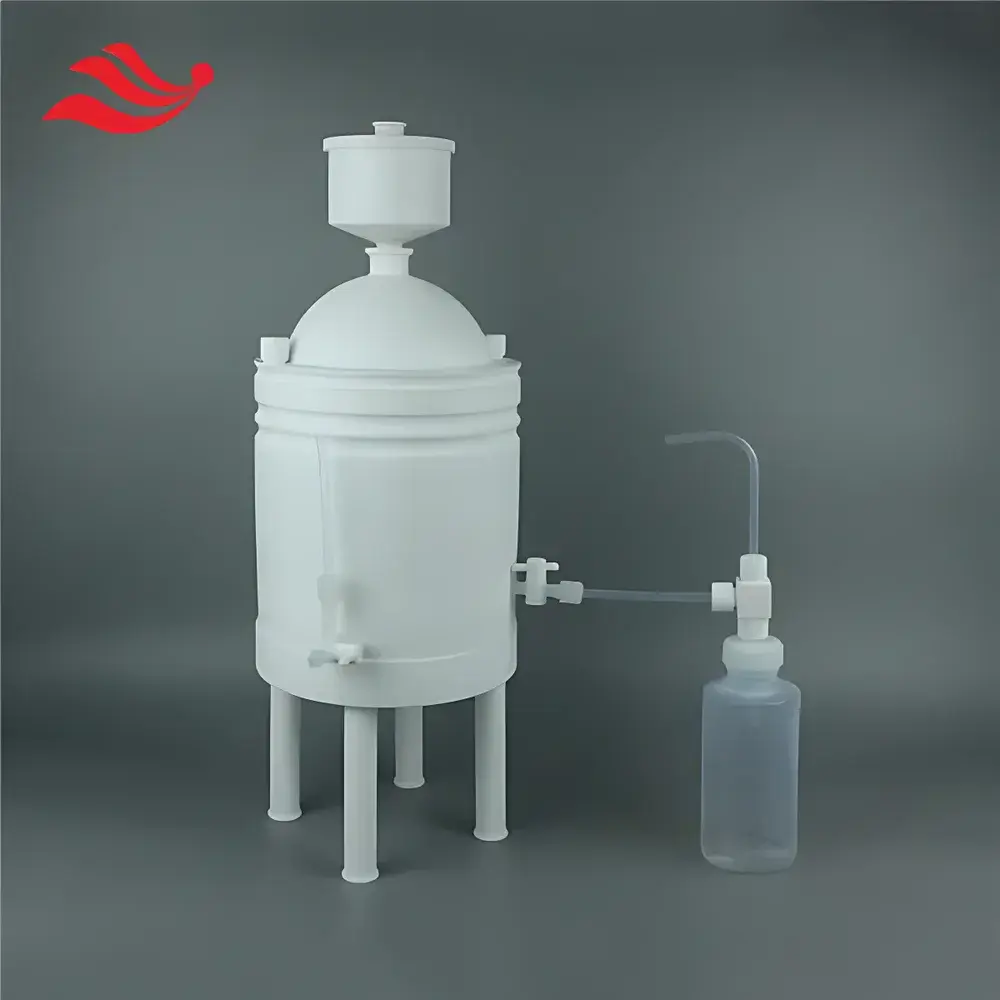
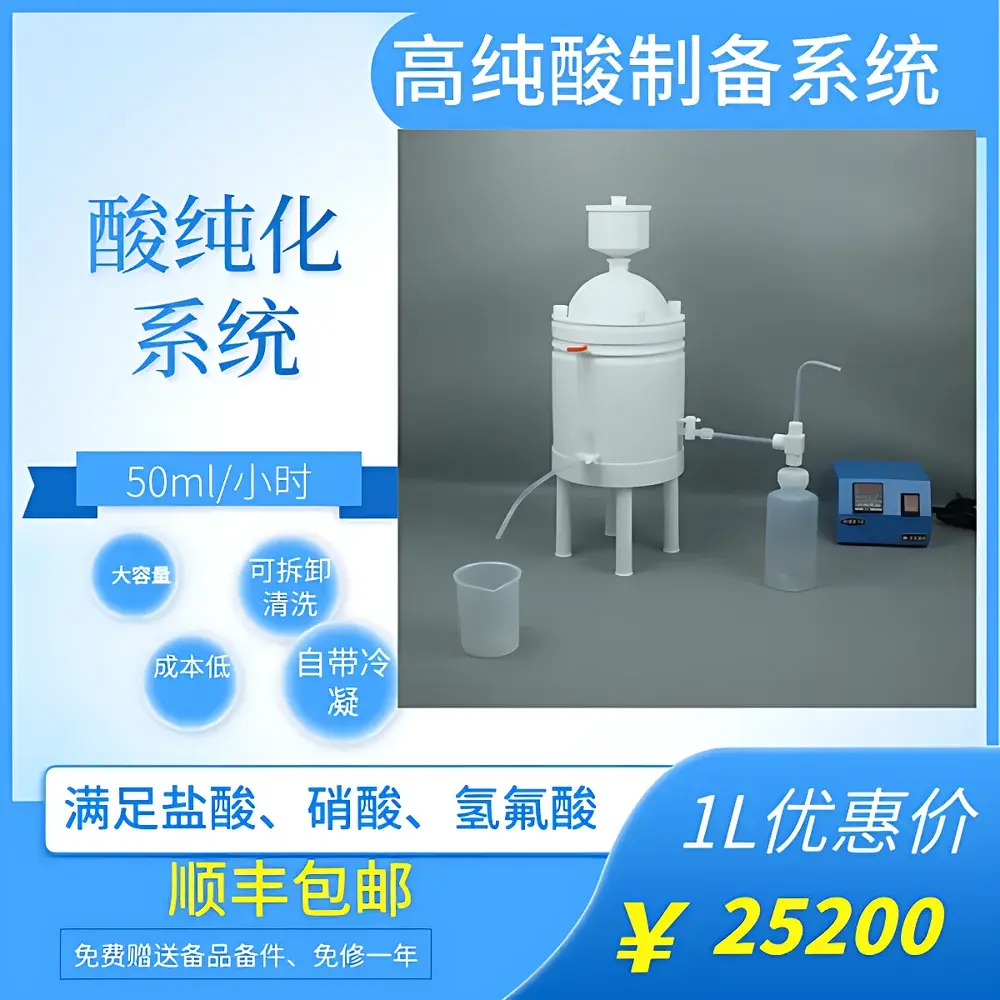
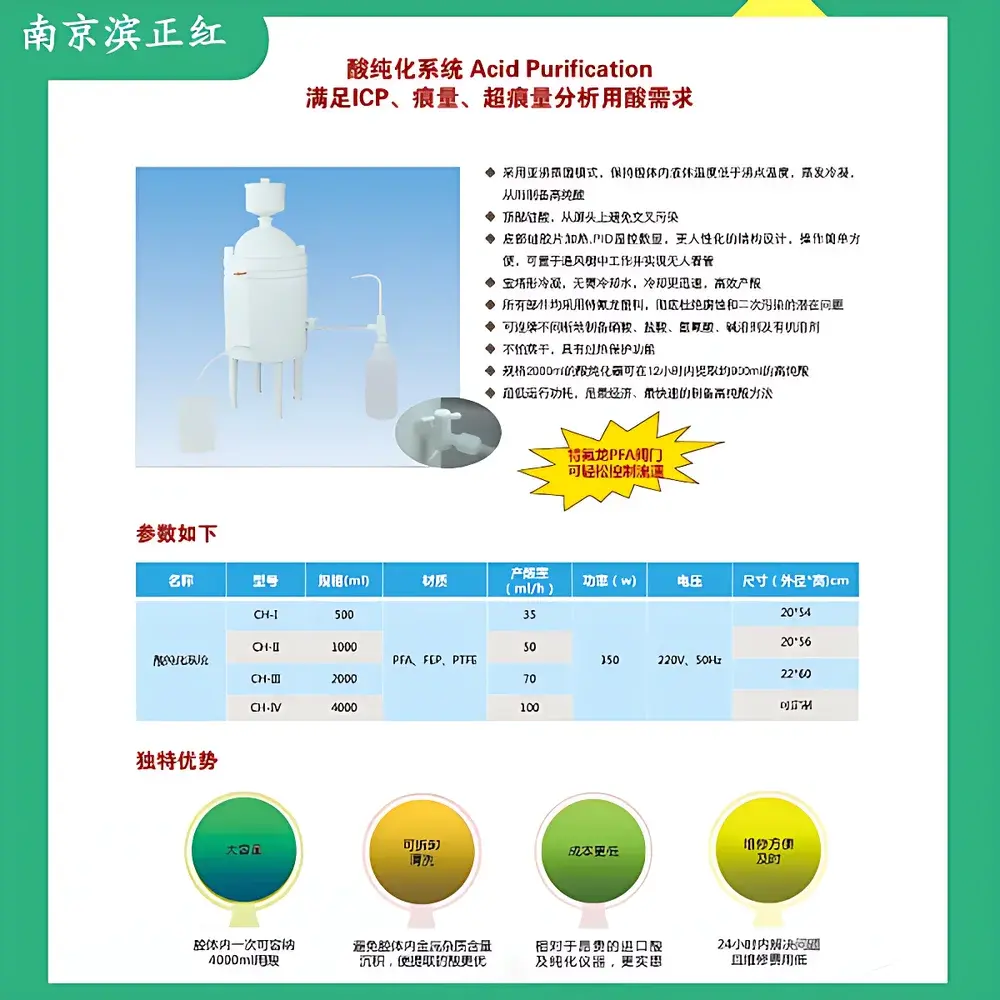
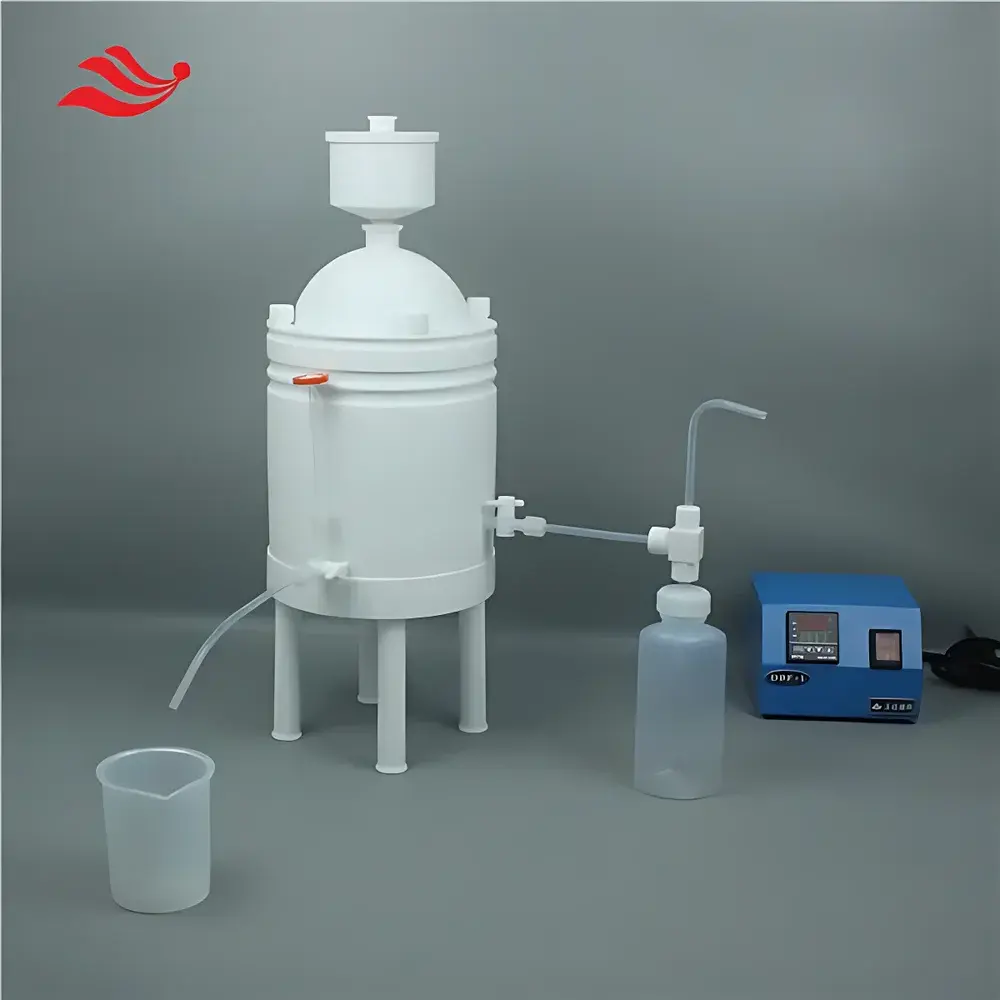
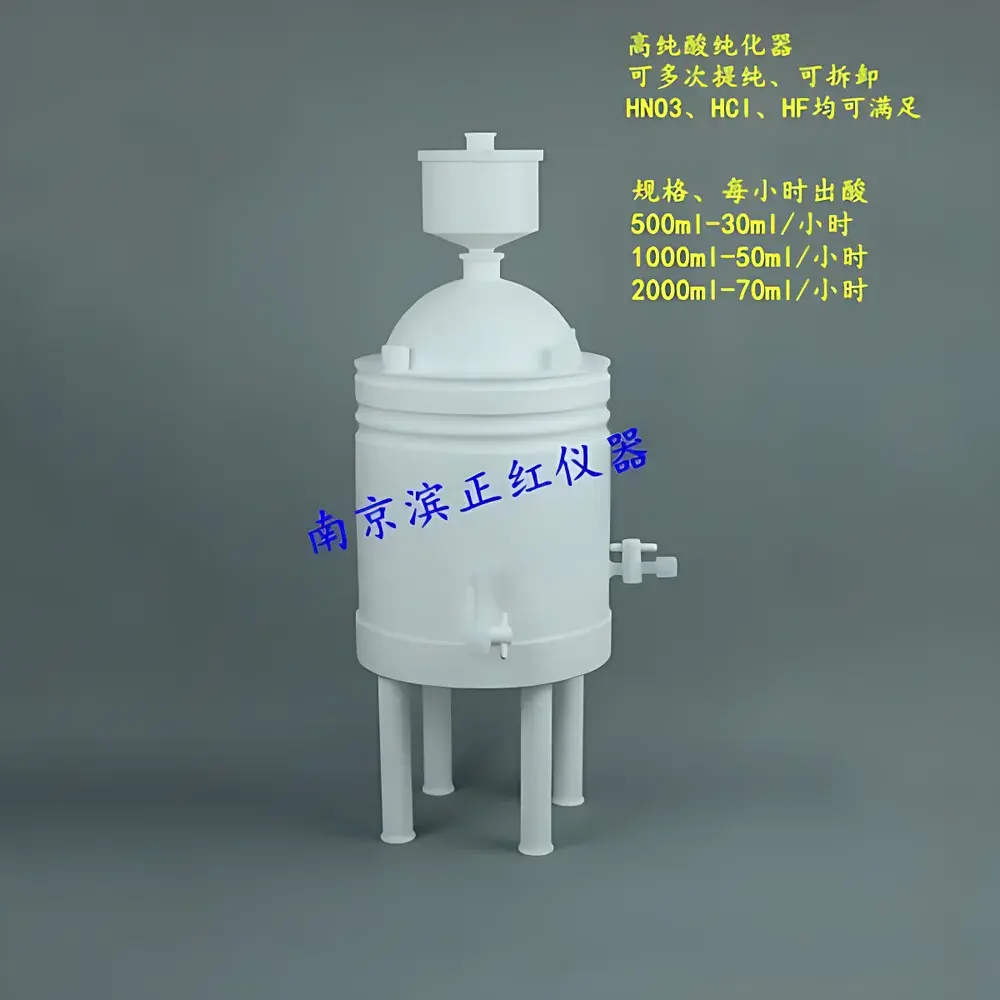
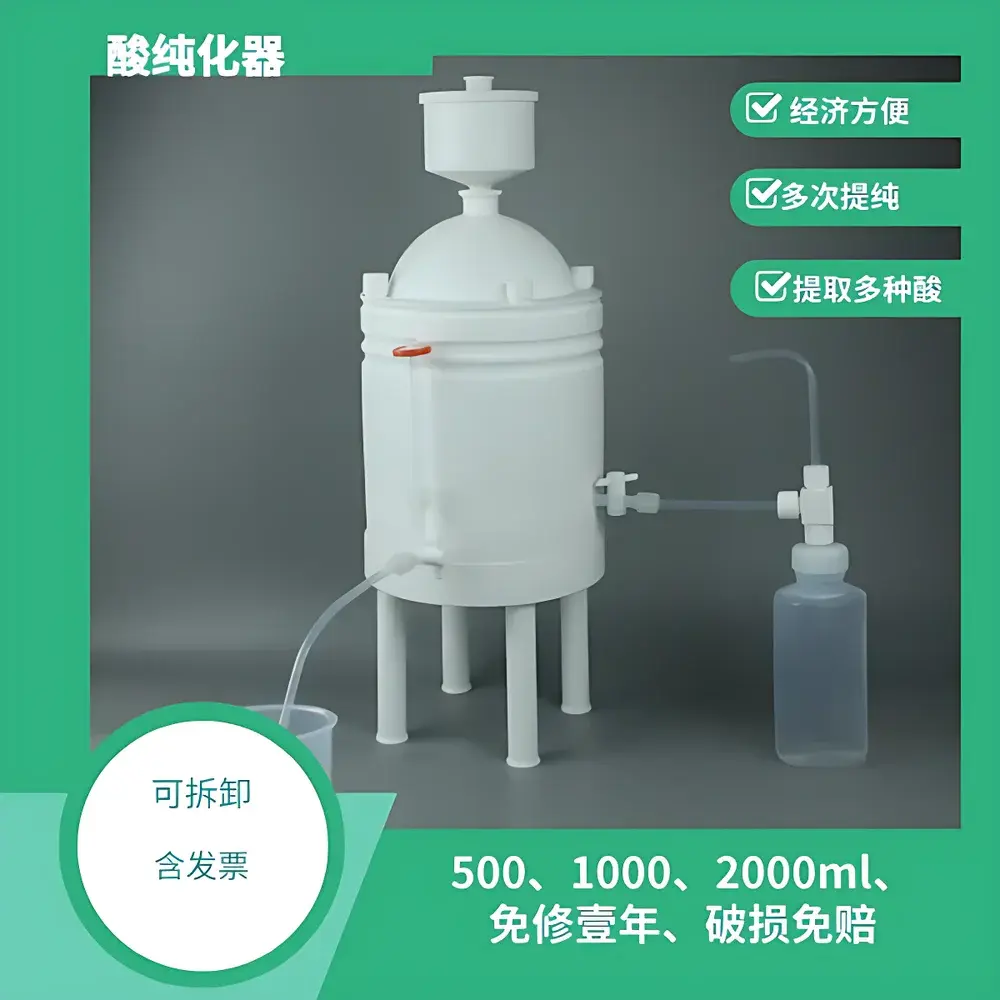
Binzhenghong NJ-CH-500ml Sub-Boiling Hydrochloric Acid Purifier
| Brand | Binzhenghong |
|---|---|
| Origin | Jiangsu, China |
| Manufacturer Type | Direct Manufacturer |
| Instrument Type | Sub-boiling Distillation Apparatus |
| Model | NJ-CH-500ml |
| Capacity | 500 mL |
| Purification Principle | Radiant Heating Sub-Boiling Distillation |
| Compatible Acids | HCl, HNO₃, HF, NaOH (aq), and Selected Organic Solvents |
| Construction Material | PTFE (Teflon®) and High-Purity Quartz/Fused Silica Components |
| Compliance | Designed for ISO/IEC 17025 Trace Metal Analysis Environments |
| Software Interface | None (Manual Temperature Control) |
Overview
The Binzhenghong NJ-CH-500ml Sub-Boiling Hydrochloric Acid Purifier is an engineered laboratory distillation system designed to produce ultra-high-purity mineral acids—particularly hydrochloric acid (HCl)—for trace elemental analysis. It operates on the principle of sub-boiling (also known as low-temperature or radiant-heating) distillation: thermal energy is applied uniformly to the acid reservoir via infrared or resistive radiant heating, maintaining the bulk liquid temperature deliberately below its atmospheric boiling point. This suppresses violent boiling and aerosol entrainment, minimizing carryover of particulate and metallic contaminants from vessel walls or residual impurities in the feed acid. The generated vapor is then condensed in a vertically oriented, high-surface-area PTFE-coated condenser, yielding re-distilled acid with significantly reduced concentrations of transition metals (e.g., Fe, Cr, Ni, Cu, Pb), alkali earths (Ca, Mg), and anionic impurities. The system is optimized for applications requiring detection limits in the low-ppt (pg/mL) range, such as ICP-MS, HR-ICP-MS, and EPA Method 200.8–compliant environmental testing.
Key Features
- 500 mL capacity chamber constructed entirely from high-purity PTFE (Teflon®) and quartz/fused silica—ensuring zero metal leaching and chemical inertness toward aggressive media including concentrated HCl, HNO₃, HF, and alkaline solutions.
- Radiant heating architecture with precise analog temperature control (adjustable up to 180 °C), enabling process optimization per acid type: e.g., 110 °C for HCl; 175–180 °C for HNO₃/HF mixtures.
- Fully sealed distillation path minimizes ambient contamination—critical for cleanroom-compatible workflows and ISO 14644 Class 5–7 environments.
- Modular, tool-free disassembly of the evaporation chamber, condenser, and collection funnel for routine cleaning and verification of residue accumulation—supporting long-term reproducibility and GLP-compliant maintenance logs.
- No moving parts or vacuum pumps; passive operation reduces failure points and eliminates oil vapor backstreaming risks common in rotary evaporators or vacuum distillation units.
Sample Compatibility & Compliance
The NJ-CH-500ml is validated for purification of hydrochloric acid (HCl), nitric acid (HNO₃), hydrofluoric acid (HF), sodium hydroxide (NaOH) aqueous solutions, and select low-boiling organic solvents compatible with PTFE (e.g., methanol, acetone). All wetted surfaces comply with ASTM D5127 (Standard Guide for High-Purity Water Used in Semiconductor Processing) material compatibility requirements. While the unit itself does not include electronic data logging, its mechanical design supports integration into GLP/GMP workflows when paired with external temperature validation probes (e.g., NIST-traceable Pt100 sensors) and manual batch records. It meets foundational requirements for USP and ISO 3696 Grade 1 water production support infrastructure, particularly where acid matrices are used in sample digestion prior to ICP-MS analysis.
Software & Data Management
This is a manually operated, non-digital purification system. Temperature is regulated via analog dial control without embedded firmware, data logging, or network connectivity. No software installation, license, or cybersecurity configuration is required—reducing validation burden in regulated laboratories. Users maintain full procedural control through documented SOPs, including pre-use chamber conditioning, feed acid lot traceability, distillate volume tracking, and post-purification rinse protocols. For labs requiring 21 CFR Part 11 compliance, optional external digital thermometers with audit trail functionality may be deployed alongside standard operating procedures defining calibration frequency, operator authorization, and record retention periods.
Applications
- Preparation of matrix-matched calibration standards and blank solutions for ICP-MS quantification of trace metals in geological, environmental, and biological samples.
- Digestion acid purification prior to microwave-assisted acid digestion (EPA Methods 3050B, 3051A, 3052) to prevent spectral interferences (e.g., 40Ar35Cl+ on 75As+) and polyatomic oxide formation.
- Refining acids used in semiconductor wafer cleaning baths where metallic contamination must remain below 0.1 ppt (ng/L) levels.
- Production of high-purity eluents for ion chromatography (IC) and trace-anion analysis (e.g., Cl⁻, SO₄²⁻, NO₃⁻) in ultrapure water systems.
- Supporting ISO/IEC 17025 accredited testing laboratories needing documented evidence of reagent purity improvement—verified via comparative ICP-MS analysis before and after distillation.
FAQ
What is the typical metal impurity reduction achieved after one distillation cycle?
Empirical data shows reduction from ~10 ppb total dissolved metals in commercial “ultra-pure” HCl to ≤0.01 ppb (10 pg/mL) for most transition elements—including Fe, Al, Cr, Ni, and Zn—when using fresh PTFE components and optimized temperature profiles.
Can the unit purify hydrofluoric acid (HF)?
Yes—provided all components (including condenser and receiver) are confirmed PTFE-lined or quartz-based. Standard NJ-CH-500ml configurations include HF-compatible materials; users must verify seal integrity and avoid any stainless steel or glass joints in HF service.
Is cleaning validation required between different acid types?
Yes. Cross-contamination risk exists due to residual adsorption on PTFE surfaces. A minimum triple-rinse protocol with high-purity water followed by air-drying under laminar flow is recommended before switching from HNO₃ to HCl or HF.
Does the system require cooling water or external chillers?
No. Condensation relies on ambient air convection across the vertical PTFE condenser surface. Operation in environments >35 °C may reduce condensation efficiency and should be avoided.
How often should the evaporation chamber be inspected for residue buildup?
At minimum, after every 10 distillation cycles—or immediately following any visible discoloration, crystallization, or reduced distillate yield—to ensure consistent thermal transfer and prevent nucleation-driven contamination.



