
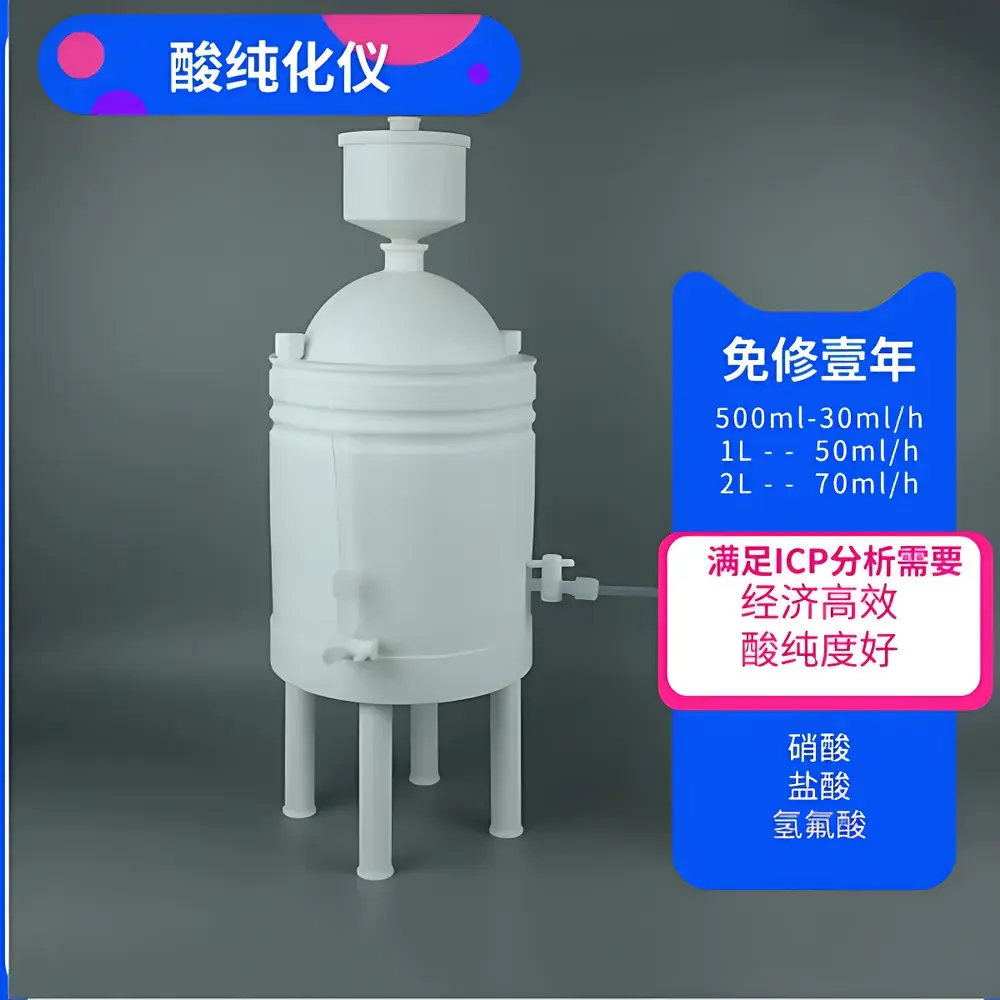
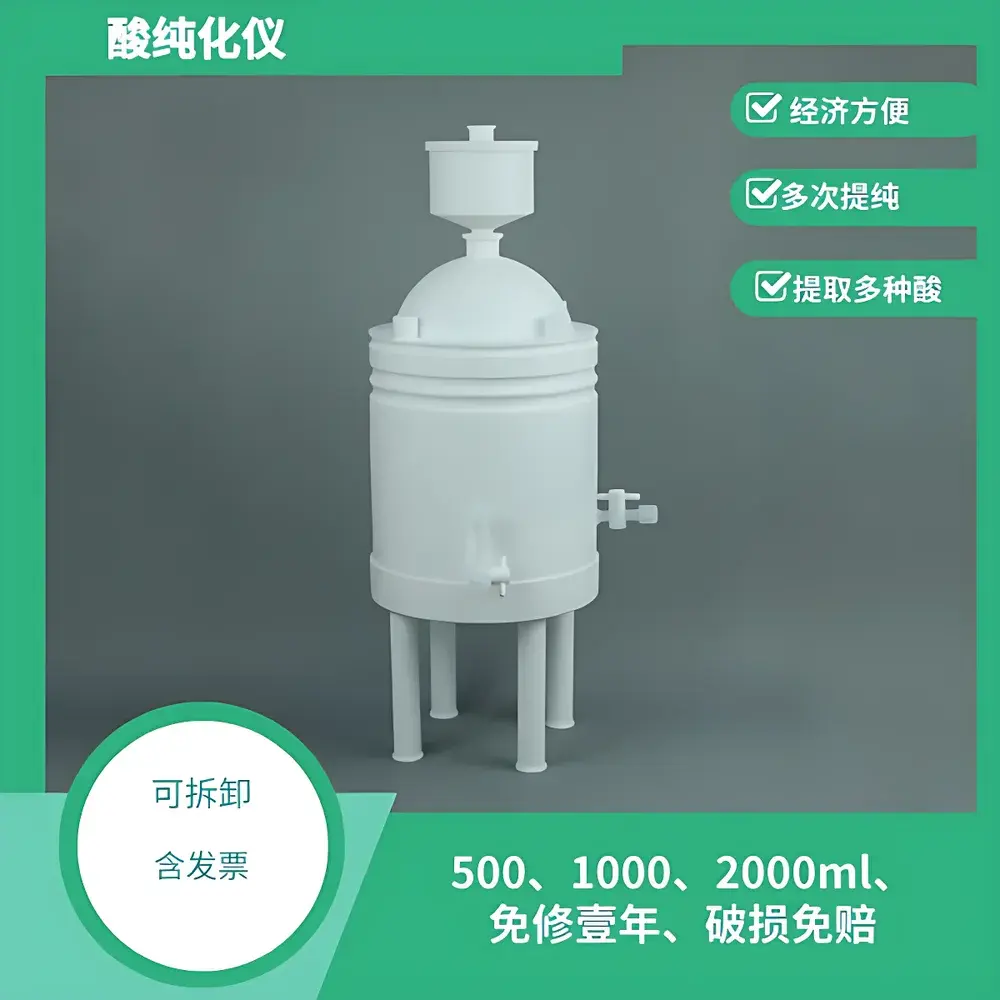
Binzhenghong CH-1000ml High-Purity Acid Distillation System for NMP and Analytical Chemistry Applications
| Brand | Binzhenghong |
|---|---|
| Model | CH-1000ml |
| Origin | Jiangsu, China |
| Manufacturer Type | Direct Manufacturer |
| Category | Domestic (China-Made) |
| Capacity | 1000 mL |
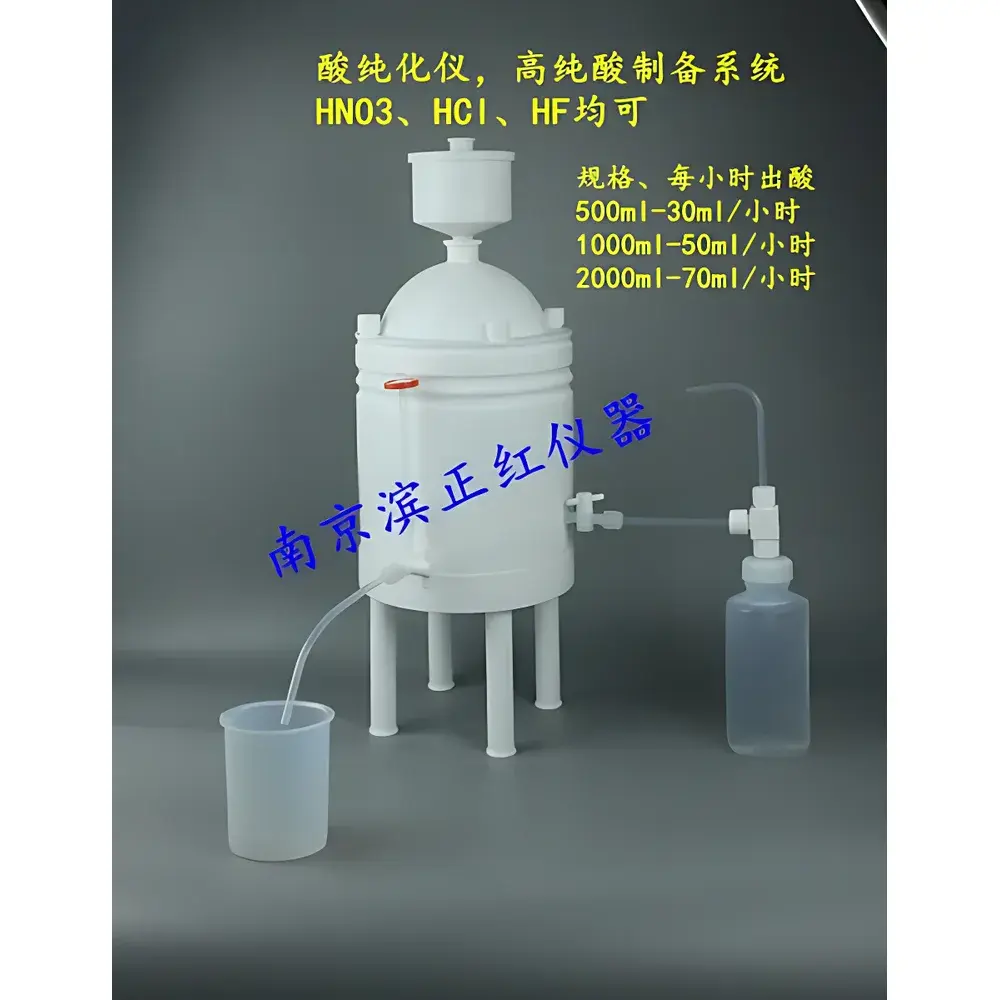
| Application | Purification of HNO₃, HCl, HF, NaOH solutions, and organic solvents including N-Methyl-2-pyrrolidone (NMP) |
| Construction Material | PTFE (Teflon)-lined chamber and condenser |
| Operating Principle | Sub-boiling distillation via infrared radiant heating |
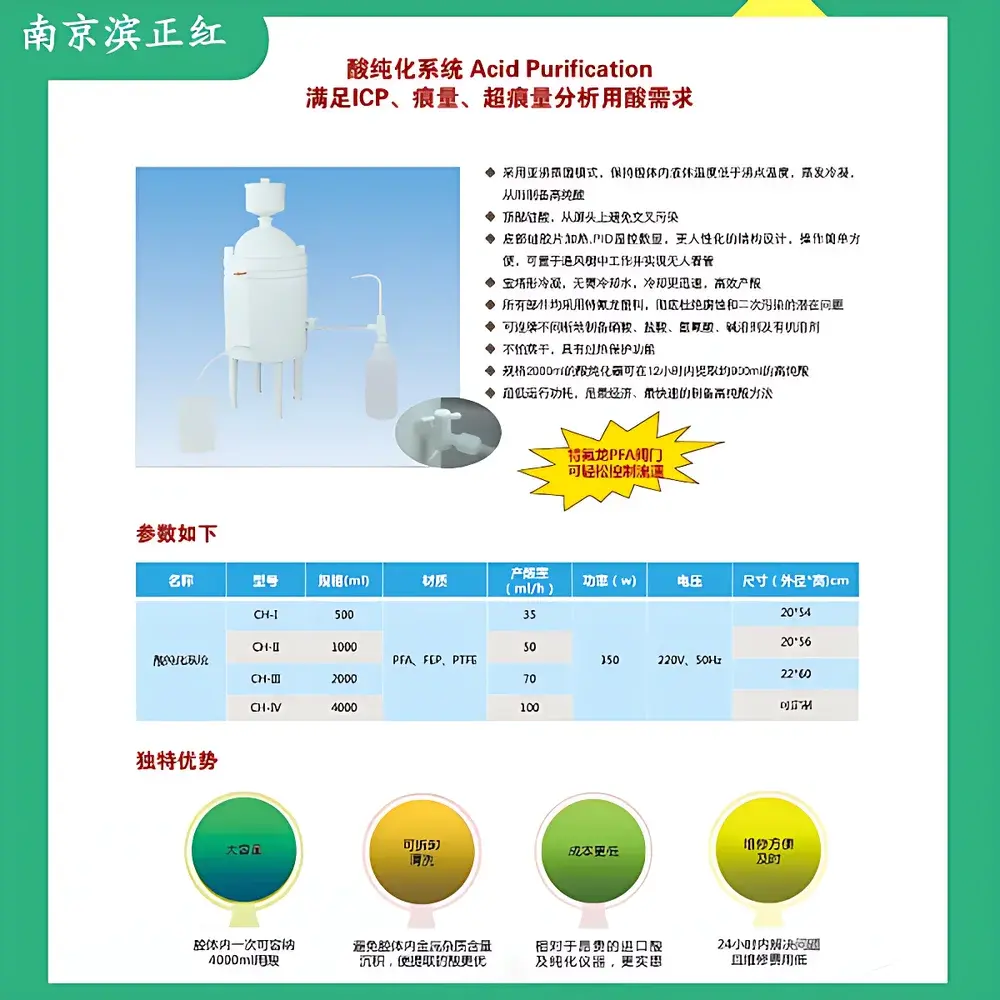
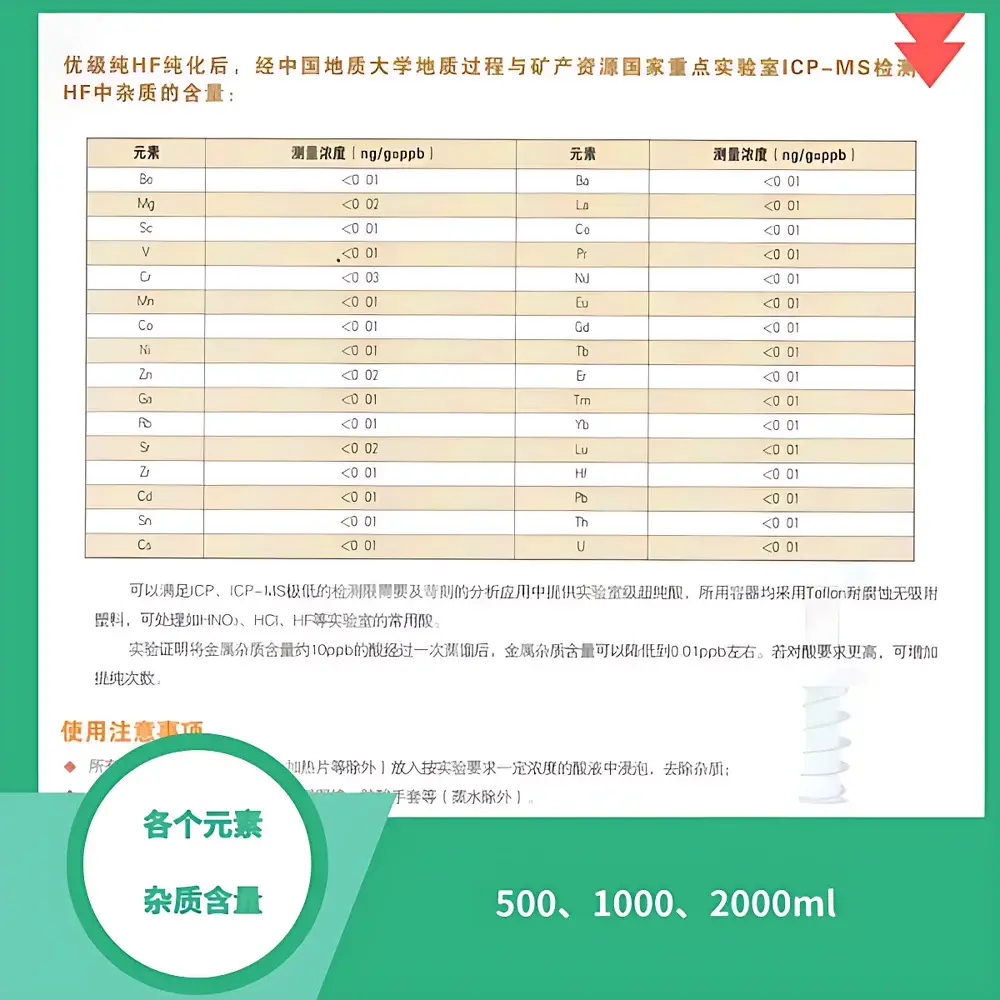
| Metal Impurity Reduction | From ~10 ppb to ≤0.01 ppb (single pass) |
| Compliance | Designed for ISO/IEC 17025-compliant trace metal analysis workflows |
| Software Interface | None (standalone analog control) |
| Certifications | CE-marked per EN 61000-6-3 & EN 61000-6-2 |
Overview
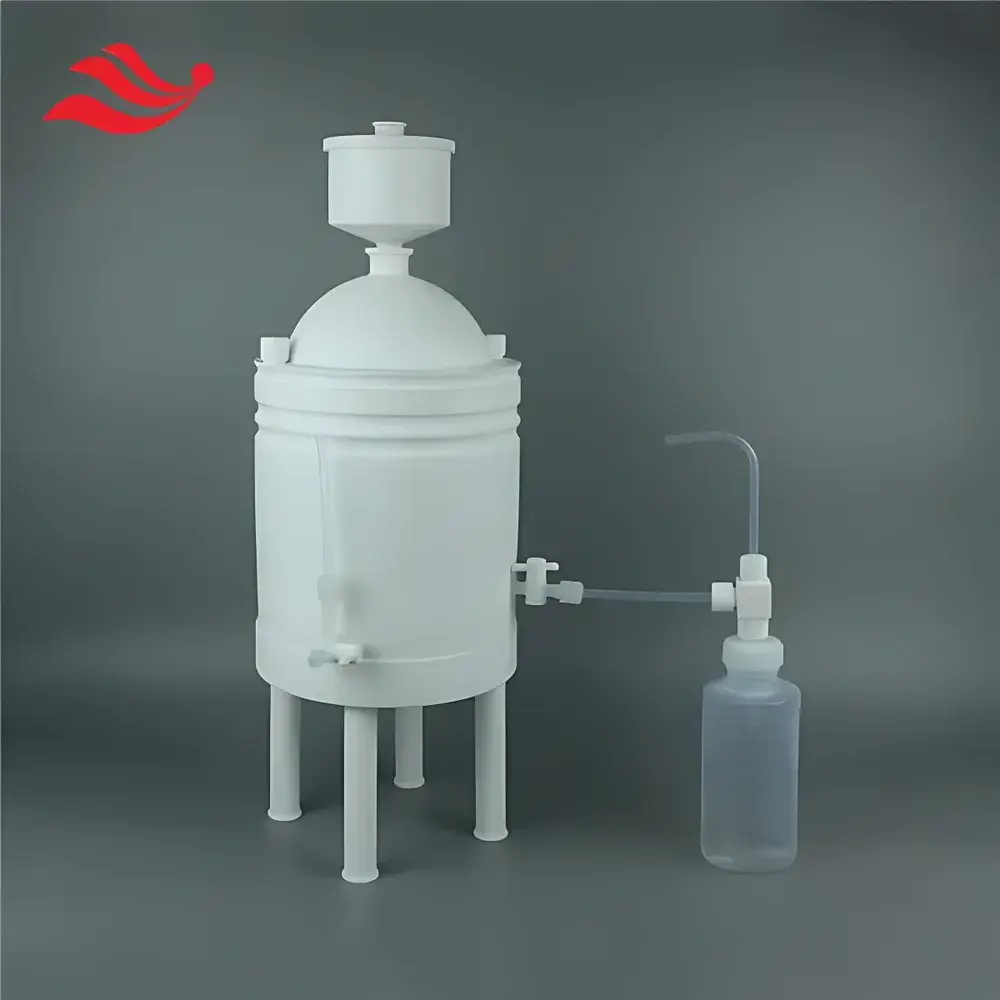
The Binzhenghong CH-1000ml High-Purity Acid Distillation System is a sub-boiling acid purification instrument engineered for laboratories requiring ultra-trace metal–free reagents in elemental analysis workflows. It operates on the principle of infrared radiant heating, maintaining liquid-phase temperature below the atmospheric boiling point to suppress violent boiling, aerosol entrainment, and volatile impurity carryover. This controlled thermal gradient enables selective vaporization of high-purity acid components while retaining non-volatile metallic contaminants—including Fe, Al, Cr, Ni, Cu, Zn, Pb, and rare earth elements—in the residue vessel. The vapor phase passes through a vertically oriented, PTFE-coated condenser where it undergoes rapid phase transition into high-purity distillate, collected in fluoropolymer-certified containers. The system is specifically validated for purification of nitric acid (HNO₃), hydrochloric acid (HCl), hydrofluoric acid (HF), sodium hydroxide (NaOH) solutions, and polar aprotic solvents such as N-methyl-2-pyrrolidone (NMP), commonly used in lithium-ion battery electrolyte analysis and semiconductor cleaning protocols.
Key Features
- 1000 mL borosilicate glass reservoir with integrated PTFE-coated heating mantle and IR radiation source, enabling precise thermal regulation without hot-spot formation
- Full-body PTFE (Teflon® AF-2400 equivalent) condensation column and collection funnel—chemically inert, low-adsorption, and compliant with ASTM D5127 for fluoropolymer purity verification
- Modular, tool-free disassembly design: all wetted parts—including vapor path, condenser core, and receiver interface—are removable for ultrasonic cleaning and acid-rinse validation per USP residual metals testing
- No moving parts or pumps: passive vapor transport eliminates mechanical contamination risk and ensures long-term reproducibility across >500 distillation cycles
- Sub-boiling operation reduces energy consumption by ≥40% versus conventional reflux distillation and minimizes decomposition of thermally labile acids (e.g., HF/HNO₃ mixtures)
- Designed for integration into cleanroom Class 1000 (ISO 6) environments; footprint: 280 × 220 × 450 mm (W × D × H)
Sample Compatibility & Compliance
The CH-1000ml system accommodates aqueous mineral acids (HNO₃, HCl, HF up to 49%), alkaline solutions (0.1–1.0 M NaOH/KOH), and high-boiling polar solvents including NMP (b.p. 202 °C), DMF, and DMSO. All contact surfaces meet ASTM F2217-21 specifications for fluoropolymer extractables in analytical reagent systems. The purified output meets ISO 3696 Grade 1 water specifications when applied to deionized feedstock, and supports ICP-MS detection limits ≤0.05 pg/g for most transition metals. Validation documentation includes batch-specific Certificate of Analysis (CoA) verifying ≤0.01 ppb total dissolved metals post-distillation (ICP-MS, EPA Method 200.8). The unit complies with GLP audit requirements for traceability: each distillation run is manually logged with date, operator ID, feedstock lot number, and final conductivity/resistivity measurement (≥18.2 MΩ·cm at 25 °C).
Software & Data Management
The CH-1000ml is a standalone analog-controlled instrument with no embedded microprocessor, firmware, or digital interface. Temperature regulation is achieved via calibrated bimetallic thermostat (±1.5 °C accuracy), eliminating software-related validation overhead under FDA 21 CFR Part 11. Users maintain full control over process parameters—including heating ramp rate, hold duration, and condensate collection volume—through manual adjustment and timed operation. All operational records are maintained externally in laboratory notebooks or LIMS-compatible spreadsheets. For labs requiring electronic audit trails, optional external data loggers (e.g., Omega OM-DAQPRO-5300) may be connected to the analog voltage output port (0–5 V DC proportional to surface temperature) for time-stamped thermal profiling.
Applications
- Preparation of matrix-matched calibration standards for ICP-OES and ICP-MS quantification in environmental water, soil digestates, and biological tissues
- Purification of HF for semiconductor wafer etching and quartz dissolution prior to trace boron analysis
- Generation of ultra-low blank reagents for U/Pb geochronology and Sr/Nd isotopic ratio measurements
- NMP solvent recovery and purification in cathode slurry formulation for Li-ion battery R&D
- Trace metal removal from digestion acids used in food safety testing (AOAC 2015.03, EN 15763:2009)
- Supporting ISO/IEC 17025 accreditation for testing laboratories performing heavy metal screening per EU CLP Regulation Annex VI
FAQ
What is the typical throughput for one distillation cycle?
A full 1000 mL charge of 70% HNO₃ yields approximately 850–900 mL of purified distillate in 4–6 hours, depending on ambient humidity and cooling water temperature (recommended: ≤15 °C inlet).
Can the system purify mixed acid solutions (e.g., HNO₃/HF)?
Yes—provided the mixture remains homogeneous and non-oxidizing during heating. Binary HF/HNO₃ blends up to 1:1 v/v have been validated for Si wafer cleaning applications.
Is PTFE the only wetted material?
All primary vapor-contact surfaces (reservoir liner, condenser tube, drip tip, and receiver adapter) are molded PTFE. The outer jacket and support frame are 316L stainless steel with electropolished finish.
How often should the condenser be cleaned?
After every 10–15 runs using high-impurity feedstock (e.g., commercial-grade HF), or quarterly for routine HNO₃ purification under GLP conditions.
Does the system require a dedicated exhaust hood?
Yes—operation must occur within a certified fume hood meeting ANSI/AIHA Z9.5 ventilation standards due to potential acid vapor release during startup and shutdown transients.





