
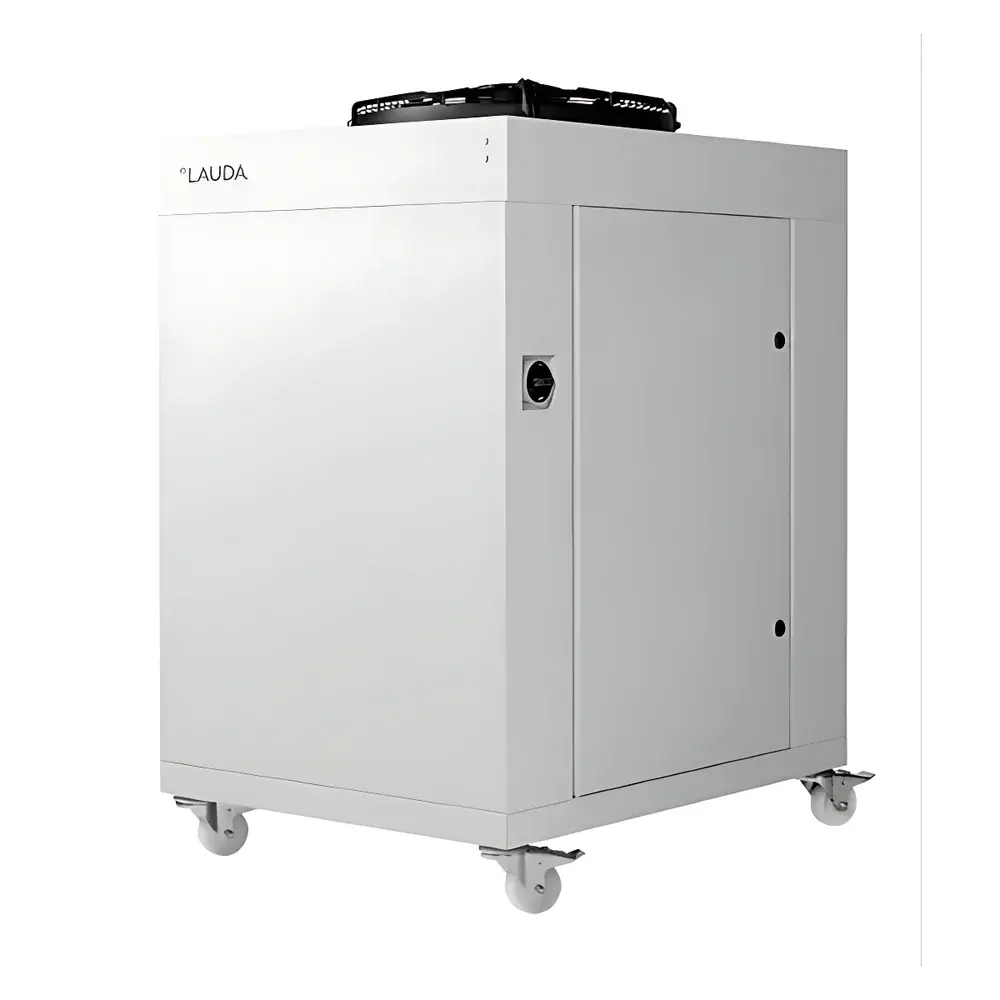
LAUDA UC 80 Ultracool Advanced Energy-Efficient Circulating Chiller
| Brand | LAUDA |
|---|---|
| Origin | Germany |
| Model | UC 80 |
| Cooling Type | Water-Cooled |
| Temperature Control Range | –10 to 35 °C |
| Temperature Stability | ±0.5 °C |
| Refrigeration Capacity | 80.0 kW (at 10 °C outlet water temperature) |
| Circulating Pump Pressure | 3.0 bar |
| Circulating Pump Flow Rate | 250 L/min |
| Reservoir Volume | 125 L |
| Operation Mode | Continuous |
| Configuration | Split-System |
| Compliance | EU Ecodesign Directive (EU) 2016/2281, EN 60335-1, EN 60335-2-40 |
Overview
The LAUDA UC 80 Ultracool Advanced Energy-Efficient Circulating Chiller is an industrial-grade, split-system process chiller engineered for precision thermal management in demanding laboratory and production environments. Based on LAUDA’s proprietary thermodynamic architecture and optimized refrigerant circuit design, the UC 80 employs a variable-speed scroll compressor, electronically controlled expansion valve (EEV), and intelligent fan speed modulation to achieve dynamic load matching across varying ambient and process conditions. Its core measurement principle relies on closed-loop PID-controlled refrigeration cycle regulation—monitored via high-resolution Pt100 sensors embedded at critical points (evaporator outlet, reservoir, and return line)—ensuring stable heat extraction and consistent coolant delivery. Designed specifically for continuous-duty operation in 24/7 industrial settings, the UC 80 delivers 80.0 kW of verified cooling capacity at 10 °C water outlet temperature, with operational stability maintained within ±0.5 °C under steady-state conditions. As a CE-marked, EN 60335-compliant device, it meets mandatory safety and energy efficiency requirements for electrical equipment in the European Economic Area.
Key Features
- Energy-optimized refrigeration system achieving up to 50% lower power consumption versus conventional chillers operating under identical thermal loads and ambient conditions, validated per EU Ecodesign Regulation (EU) 2016/2281 test protocols
- Split-system configuration enabling flexible installation: condensing unit mounted outdoors (IP54-rated enclosure) and evaporator/pump module located near process equipment
- High-capacity circulation system delivering 250 L/min at 3.0 bar maximum head pressure, supporting multi-point distribution networks with minimal pressure drop
- 125 L stainless-steel reservoir with integrated level monitoring, anti-corrosion coating, and low-noise baffling to suppress cavitation and thermal stratification
- Embedded Ethernet interface and optional Wi-Fi module for integration into Industry 4.0 infrastructures, supporting Modbus TCP, BACnet/IP, and OPC UA communication protocols
- Pre-certified compatibility with LAUDA Cloud—a secure, ISO/IEC 27001-aligned platform enabling remote diagnostics, historical trend analysis, predictive maintenance alerts, and audit-ready event logging
Sample Compatibility & Compliance
The UC 80 is compatible with standard aqueous glycol mixtures (up to 35% propylene glycol by volume), deionized water, and other non-corrosive heat transfer fluids meeting ASTM D1384 specifications. All wetted components—including pump housing, heat exchanger plates, and reservoir lining—are constructed from AISI 316 stainless steel or EPDM/NBR elastomers certified to FDA CFR 21 Part 177.2600 for indirect food contact. The chiller complies with electromagnetic compatibility (EMC) standards EN 61000-6-2 and EN 61000-6-4, and its control software supports 21 CFR Part 11–compliant user access control, electronic signatures, and immutable audit trails when deployed in regulated GxP environments (e.g., pharmaceutical QC labs or medical device manufacturing).
Software & Data Management
The UC 80 operates under LAUDA’s proprietary CoolControl v5.2 firmware, featuring a 7-inch capacitive touchscreen HMI with multilingual UI (English, German, French, Chinese, Japanese). Local data logging records temperature, flow rate, compressor runtime, energy consumption (kWh), and fault codes at 1-second intervals for up to 30 days. When connected to LAUDA Cloud, all parameters are encrypted (AES-256) and transmitted via TLS 1.3. The cloud dashboard enables cross-device comparative analytics, automated report generation (PDF/CSV), and configurable alarm escalation (email/SMS) based on user-defined thresholds. Full GLP/GMP traceability is supported through time-stamped operator logins, session-based change history, and exportable CSV datasets compliant with ISO/IEC 17025 documentation requirements.
Applications
- Laser systems: Stable thermal control for CO₂, fiber, and ultrafast lasers used in cutting, welding, marking, and additive manufacturing
- UV-curing and digital inkjet printing: Precise coolant temperature maintenance prevents LED array thermal drift and ensures consistent spectral output
- Numerical control (NC) and CNC machine tools: Heat removal from spindles, servo drives, and hydraulic systems to minimize dimensional drift during high-precision machining
- Hydrogen generation electrolyzers: Thermal stabilization of PEM and alkaline stacks to maintain optimal reaction kinetics and membrane integrity
- Research-scale reactors and calorimeters: Integration with jacketed vessels requiring reproducible ΔT control over extended run durations
- Automated packaging lines: Cooling of vision inspection systems, servo motors, and PLC cabinets in high-ambient-temperature production halls
FAQ
What is the minimum ambient temperature for outdoor condenser operation?
The outdoor condensing unit is rated for continuous operation between –20 °C and +45 °C ambient, with automatic low-ambient start-up sequencing and crankcase heater activation below 5 °C.
Does the UC 80 support external temperature setpoint modulation via analog signal?
Yes—0–10 V DC or 4–20 mA input is accepted for dynamic setpoint adjustment, with configurable scaling and filtering to prevent oscillation.
Can the chiller be integrated into a Building Management System (BMS)?
Standard Modbus TCP and optional BACnet/IP interfaces enable native integration with major BMS platforms including Siemens Desigo, Honeywell EBTron, and Schneider EcoStruxure.
Is field calibration of temperature sensors traceable to national standards?
Each unit ships with a factory calibration certificate (ISO/IEC 17025-accredited lab), and field recalibration can be performed using LAUDA’s certified handheld reference thermometer (model CAL-PT100-2A) with NIST-traceable documentation.
What maintenance intervals are recommended for continuous operation?
Compressor oil and refrigerant filter-drier replacement every 24 months; annual inspection of glycol concentration, pH, and conductivity; biannual verification of pressure relief valve function per EN 736-3 guidelines.



