
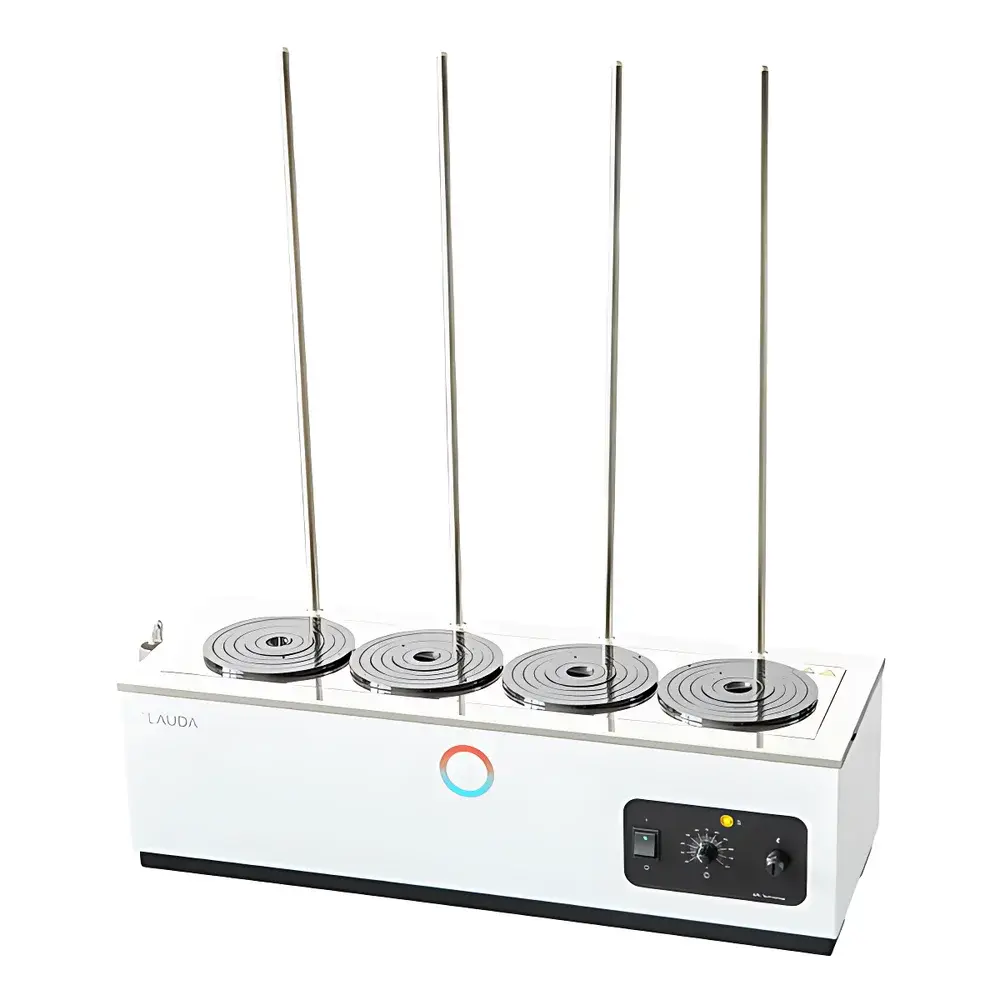
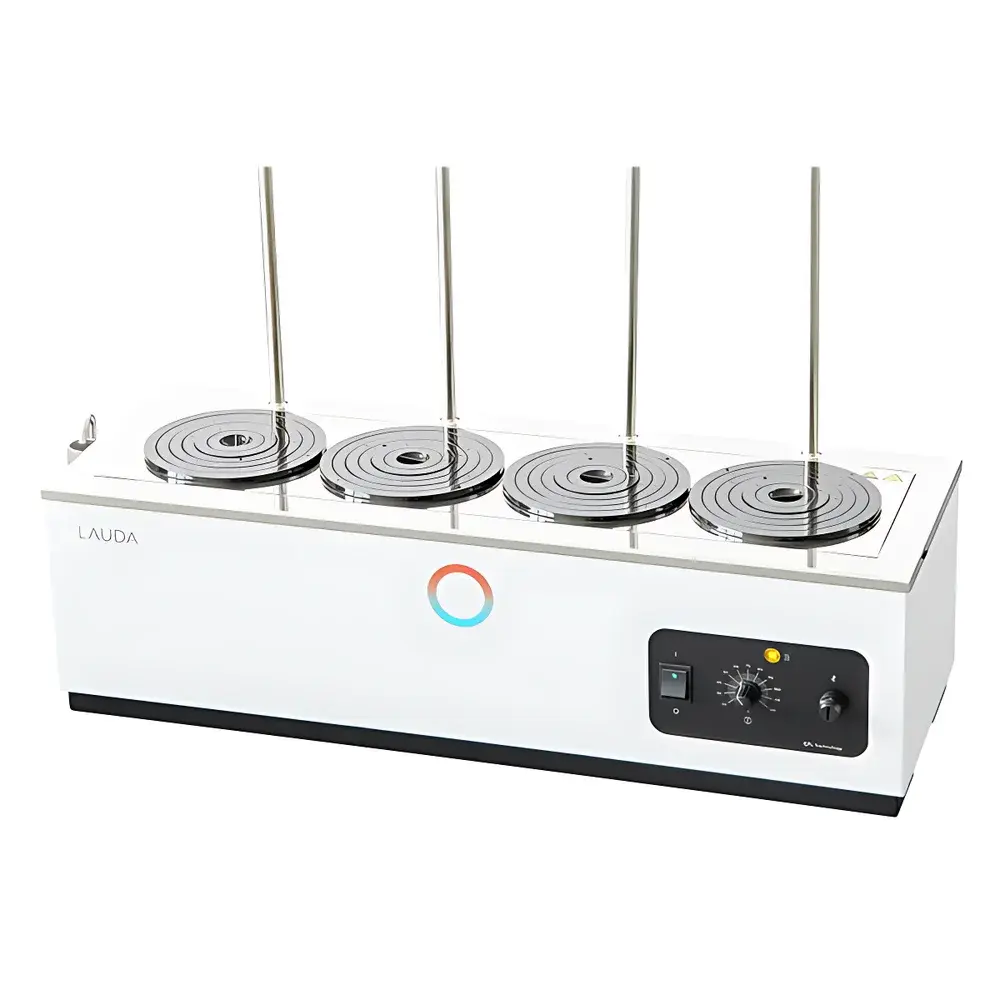
LAUDA Hydro H 6 V Evaporation Water Bath
| Brand | LAUDA |
|---|---|
| Origin | Germany |
| Model | H 6 V |
| Operating Temperature Range | 25–100 °C |
| Temperature Stability | ±3 °C |
| Bath Volume | 5.3 L |
| Heating Power | 1.0 kW |
| Dimensions (W×D×H) | 1010 × 270 × 192 mm |
Overview
The LAUDA Hydro H 6 V Evaporation Water Bath is a precision-engineered, benchtop thermal platform designed for controlled, gentle solvent removal in analytical, pharmaceutical, and synthetic chemistry laboratories. Unlike open-flame or hotplate-based evaporation methods, this unit employs water-mediated conductive heating—leveraging the high specific heat capacity and thermal uniformity of water to deliver reproducible, low-thermal-stress conditions. Its operating range spans 25 °C to 100 °C, enabling evaporation below decomposition thresholds of thermolabile compounds such as peptides, natural products, and polymer precursors. The bath’s stainless-steel construction, integrated liquid-level monitoring, and fail-safe dry-run protection support unattended operation—a critical requirement for overnight concentration protocols under GLP-compliant workflows.
Key Features
- Four independently accessible circular bath ports (Ø131 mm each), optimized for simultaneous processing of multiple flasks or beakers
- Manually calibrated single-point temperature controller with calibrated dial scale for intuitive setpoint adjustment
- Stainless-steel bath chamber, bottom sieve plate, removable ring-type bath cover, and heating element—all corrosion-resistant and compliant with ISO 8573-1 cleanliness standards for lab environments
- Modular polyphenylsulfone (PPSU) ring inserts—heat-resistant up to 130 °C—allow precise adaptation to vessel diameters from 25 mm to 100 mm without auxiliary clamps
- Integrated low-level detection circuitry that deactivates heating when water volume falls below operational threshold (≥2.8 L), preventing heater damage and ensuring process continuity
- Stainless-steel support rod (600 mm length, Ø12 mm) included for vertical suspension of condensers or reflux assemblies
- Compact footprint (1010 × 270 × 192 mm) with 13 kg mass—designed for integration into fume hoods or laminar flow workstations
Sample Compatibility & Compliance
The H 6 V accommodates standard laboratory glassware including Erlenmeyer flasks (50–500 mL), round-bottom flasks (25–250 mL), and tall-form beakers (100–400 mL). Its 90 mm usable bath depth ensures stable immersion of vessels up to 150 mm in height. All wetted surfaces meet DIN EN 10088-1 grade 1.4301 (AISI 304) stainless-steel specifications for chemical resistance and cleanability. The unit complies with IEC 61010-1:2010 for electrical safety in laboratory equipment and carries CE marking per EU Directive 2014/30/EU (EMC) and 2014/35/EU (LVD). It supports audit-ready documentation for FDA 21 CFR Part 11–aligned SOPs when paired with external data loggers.
Software & Data Management
The H 6 V operates as a stand-alone analog-controlled instrument with no embedded microprocessor or digital interface. Temperature verification is performed externally using NIST-traceable PT100 probes (recommended calibration interval: 6 months). For laboratories requiring electronic recordkeeping, optional LAUDA RC6 circulator controllers (sold separately) enable RS485 Modbus RTU integration with LIMS or ELN systems. All mechanical components—including the PPSU ring system and stainless-steel sieve—are autoclavable (121 °C, 20 min), facilitating reuse across GMP-grade purification campaigns.
Applications
- Routine concentration of reaction mixtures prior to HPLC or GC analysis
- Preparative-scale solvent exchange in peptide synthesis workflows
- Lyophilization pre-concentration steps in biopharmaceutical QC labs
- Controlled drying of thin-film samples for XRD or SEM characterization
- Standardized evaporation protocols compliant with ASTM D129-18 (petroleum product residue determination)
- Teaching labs: demonstration of Raoult’s law, boiling point elevation, and vapor pressure–temperature relationships
FAQ
Is the H 6 V compatible with organic solvents other than water?
No—the bath medium must be deionized or distilled water only. Use of alcohols, acetone, or chlorinated solvents compromises seal integrity and violates IEC 61010-1 insulation requirements.
Can temperature stability be improved beyond ±3 °C?
The specified stability reflects steady-state performance under load (4 × 250 mL flasks at 85 °C). For tighter control (±0.5 °C), pair with a LAUDA Alpha RA recirculating chiller and external PID controller.
Does the unit include a drain valve?
No—draining requires manual tilting or siphoning. A floor-standing LAUDA Proline KP series unit is recommended for applications requiring rapid bath exchange.
What maintenance is required for long-term reliability?
Monthly descaling with 5% citric acid solution; annual inspection of thermostat contact points and grounding continuity per DIN VDE 0701-1.



