
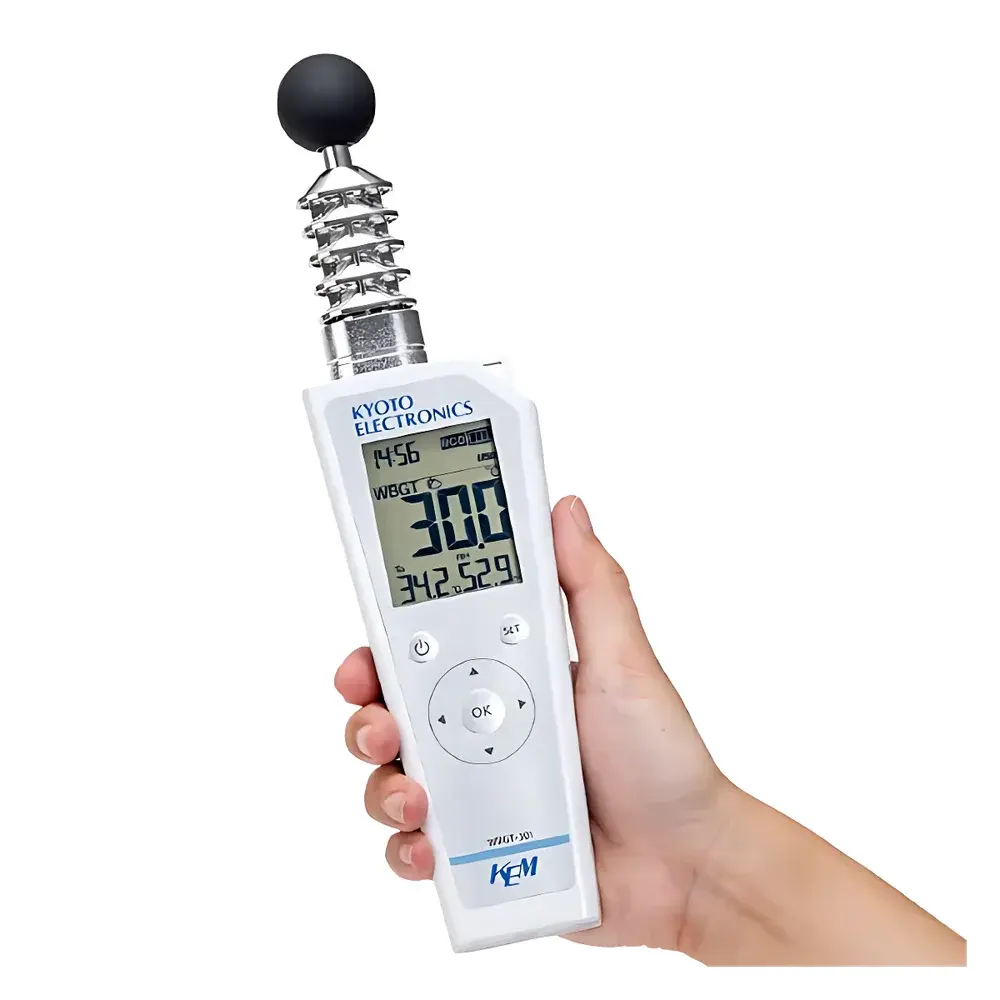
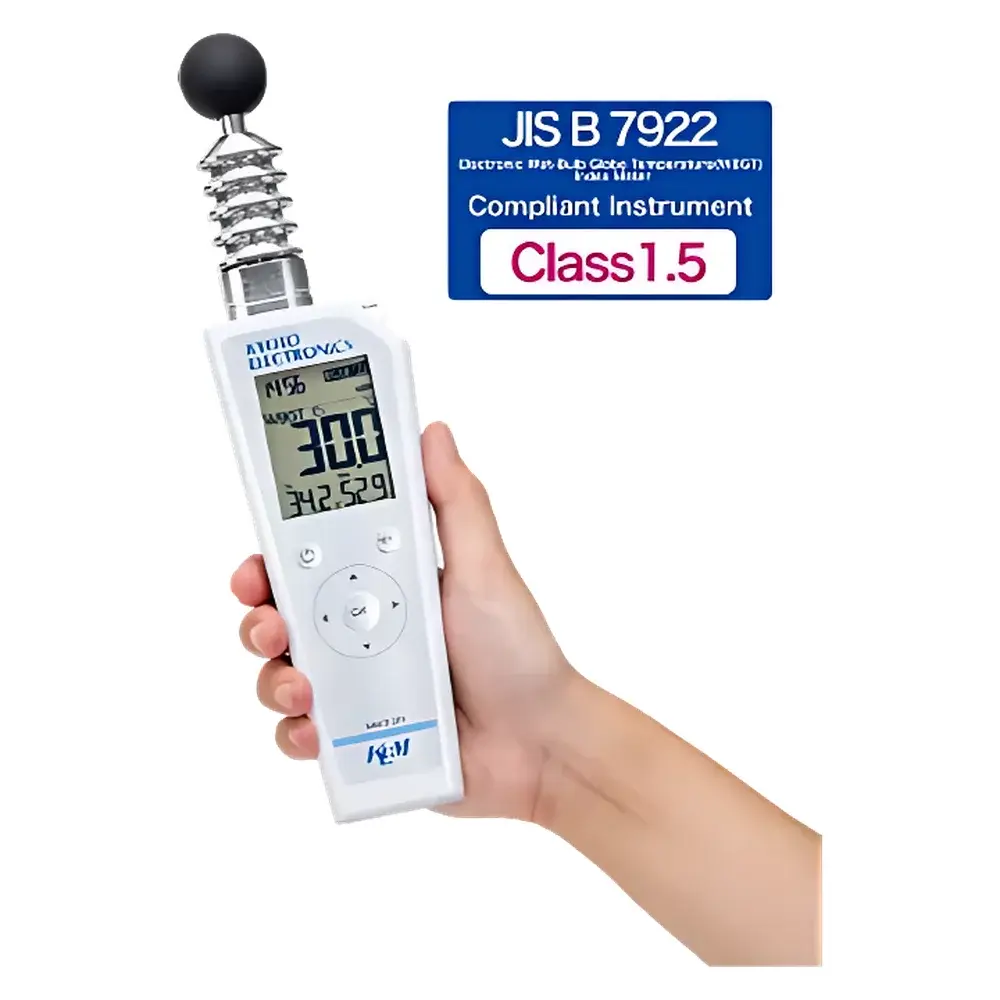
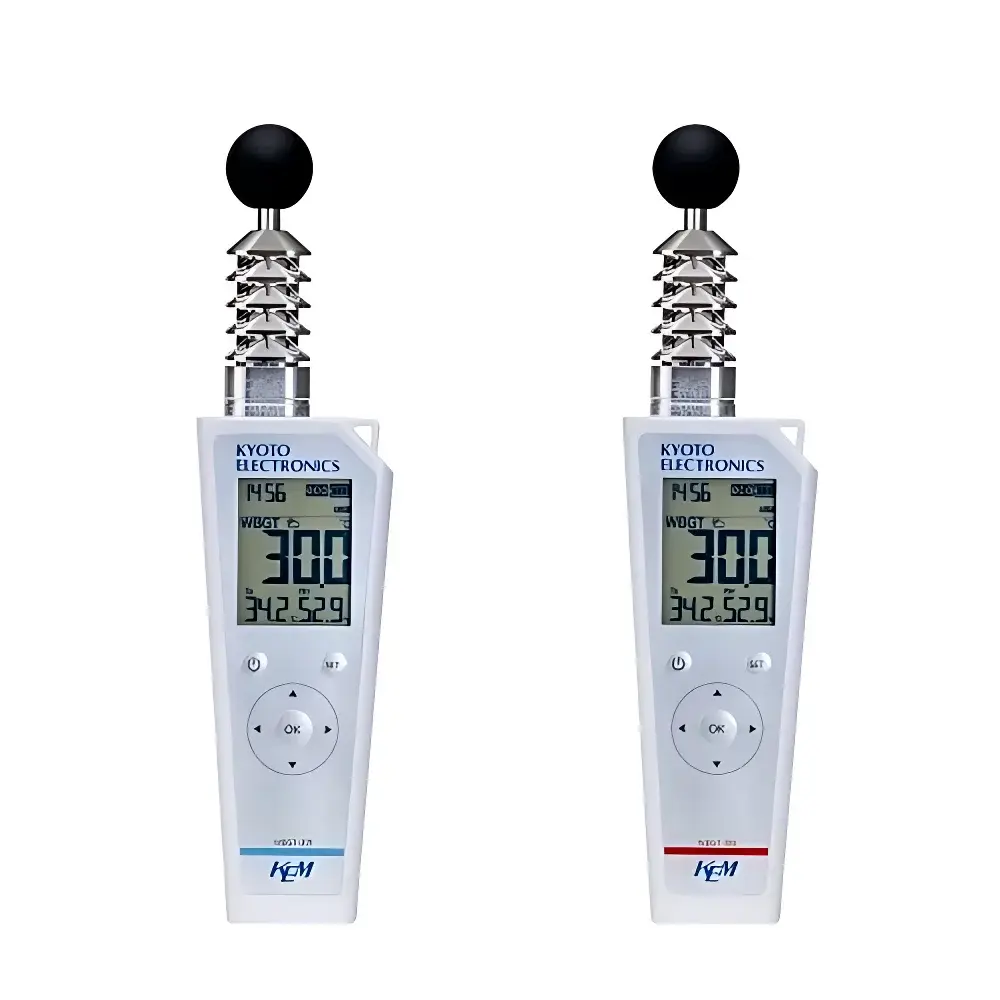
KEM WBGT-301 Wet Bulb Globe Temperature (WBGT) Index Meter
| Brand | Kyoto Electronics Manufacturing (KEM) |
|---|---|
| Origin | Japan |
| Manufacturer | Yes |
| Import Status | Imported |
| Model | WBGT-301 |
| Price | Upon Request |
Overview
The KEM WBGT-301 Wet Bulb Globe Temperature (WBGT) Index Meter is a precision-engineered, portable environmental heat stress monitoring instrument designed for real-time assessment of thermal load in occupational, athletic, educational, and outdoor event settings. It operates on the internationally standardized WBGT index calculation—defined by ISO 7243, ACGIH TLVs®, and OSHA guidelines—which integrates three independent temperature measurements: natural wet-bulb temperature (Tnw), black globe temperature (Tg), and ambient dry-bulb temperature (Ta). In indoor or shaded environments without solar radiation, WBGT is calculated as 0.7 × Tnw + 0.3 × Tg; under direct solar exposure, the formula adjusts to 0.7 × Tnw + 0.2 × Tg + 0.1 × Ta. This physics-based composite metric quantifies the net effect of air temperature, humidity, radiant heat, and air movement on human thermoregulation—making it the globally accepted parameter for heat stress risk evaluation in industrial hygiene, sports medicine, military training, and public health surveillance.
Key Features
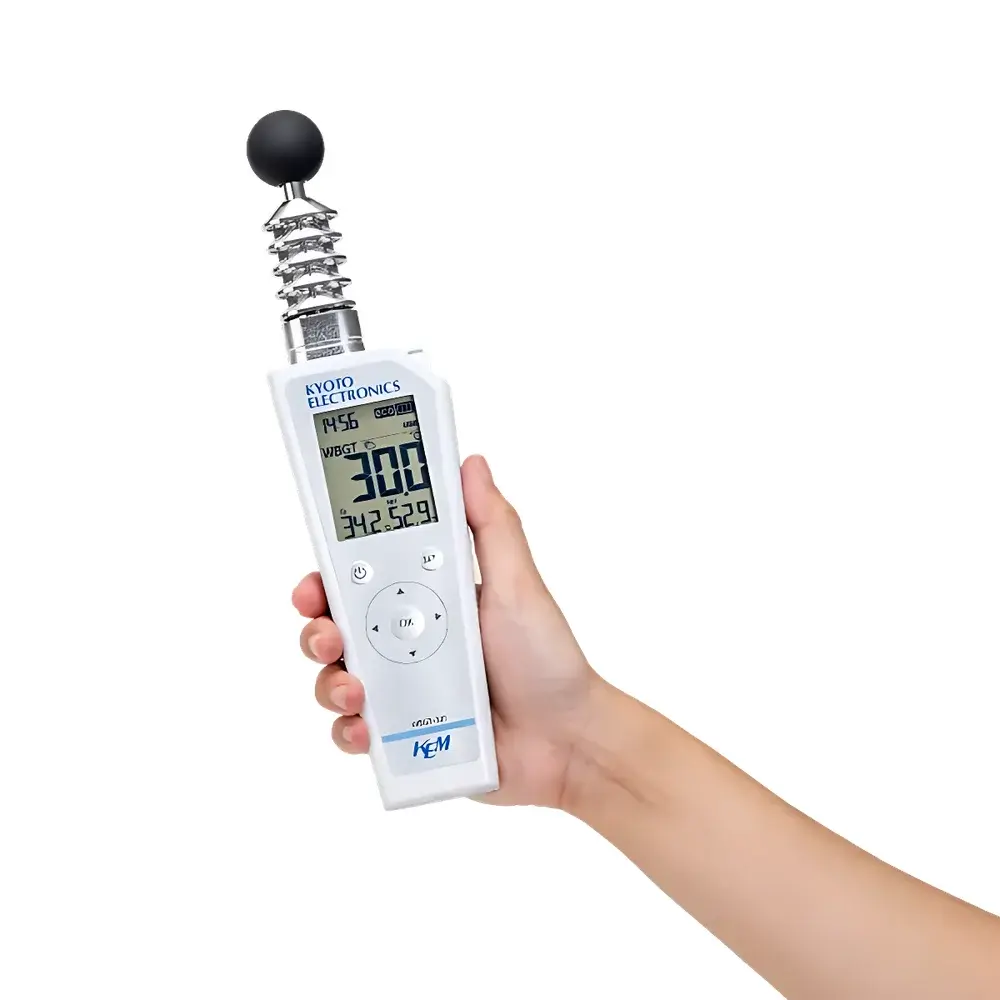
- Compact, handheld form factor (69 × 36 × 272 mm; ~230 g with batteries) optimized for field deployment across stadiums, construction sites, manufacturing floors, and school campuses.
- Triple-sensor architecture: integrated high-stability thermistor-based wet-bulb sensor (with ventilated wick), 150-mm black globe (copper sphere, matte black finish, 150 mm diameter), and calibrated ambient temperature/humidity sensor—all independently characterized and cross-compensated for thermal lag and radiative error.
- IP65-rated enclosure ensures full dust ingress protection and resistance to low-pressure water jets—validated per IEC 60529—enabling reliable operation in humid, dusty, or intermittently wet environments.
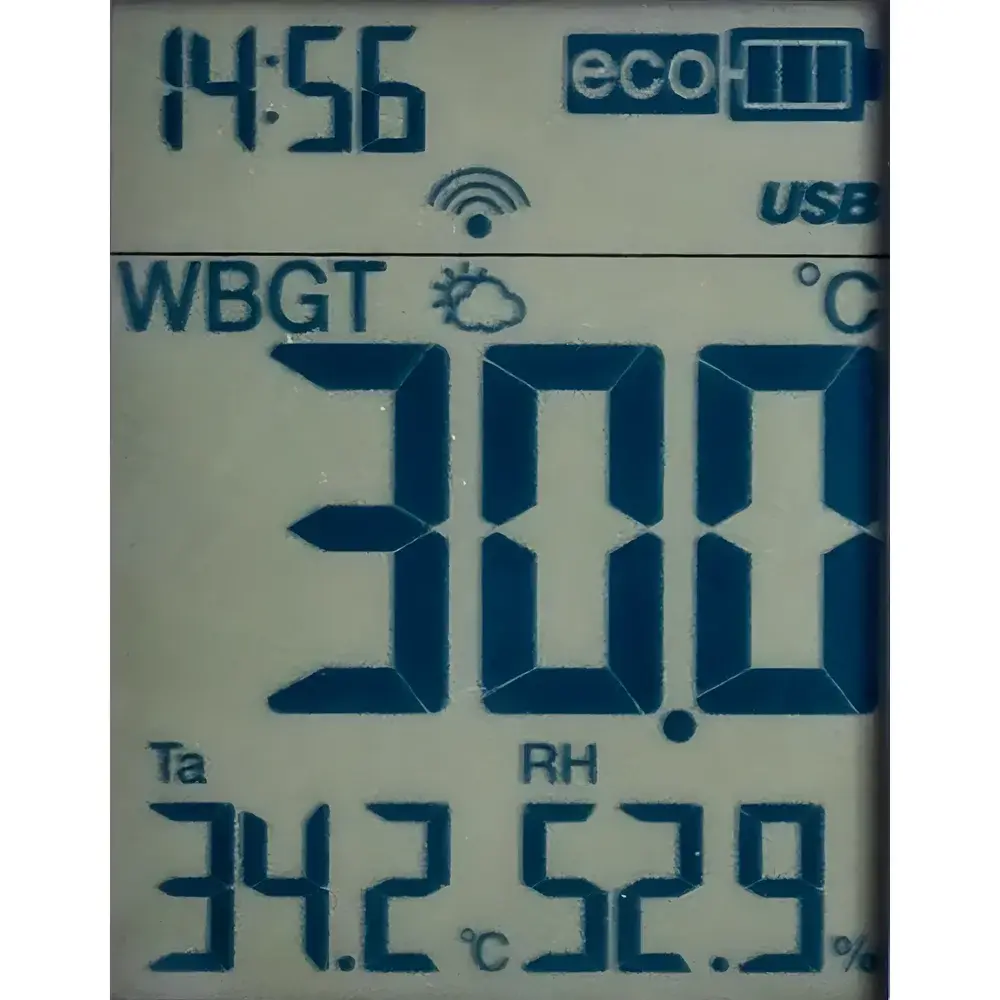
- Large 2.8-inch LCD display (56 × 42 mm active area) with high-contrast monochrome graphics and backlight for legibility under direct sunlight or low-light conditions.
- Built-in audible and visual threshold alarms configurable for user-defined WBGT limit values (e.g., ACGIH action levels: 28°C for moderate work, 27°C for heavy work), supporting proactive heat illness prevention protocols.
- Extended battery life (~6 months on two AA alkaline cells) with dual-power capability: operational via USB Type-C port for continuous power or data transfer during extended monitoring sessions.
Sample Compatibility & Compliance
The WBGT-301 is validated for use across heterogeneous thermal environments—including indoor facilities, open-air venues, and semi-shaded work zones—without requiring site-specific calibration. Its measurement performance conforms to JIS Z 8806:2019 (Class 1.5 accuracy grade for WBGT instruments), ensuring traceable uncertainty budgets aligned with national metrological standards. The device supports compliance with occupational health frameworks including OSHA Technical Manual Chapter 3 Section III, NIOSH Criteria Documents for Heat Stress, and EU Directive 89/391/EEC (Framework Directive on Safety and Health at Work). While not a medical diagnostic tool, its output meets data integrity requirements for workplace risk assessments subject to GLP-aligned documentation practices.
Software & Data Management
All measurements—including timestamped WBGT, ambient temperature, relative humidity, and black globe temperature—are stored internally with 30,000-point capacity and millisecond-level time resolution. Data export is performed via USB Type-C interface using vendor-provided Windows-compatible software that generates CSV-structured files compatible with Excel, MATLAB, and statistical analysis platforms. The software includes audit trail functionality (user login, session logs, export timestamps) and supports configuration lockout for supervised deployments. No cloud connectivity or remote telemetry is implemented—ensuring full data sovereignty and alignment with ITAR- and GDPR-sensitive operational environments.
Applications
- Occupational safety: Real-time heat stress monitoring for utility workers, foundry personnel, warehouse staff, and agricultural laborers.
- Sports medicine: On-field WBGT verification prior to and during athletic competitions, practice sessions, and youth sports events per NFHS and NCAA heat acclimatization guidelines.
- Public health: Municipal heat emergency response, festival crowd safety planning, and school-based heat vulnerability mapping.
- Research & validation: Field validation of HVAC system performance, PPE thermal burden studies, and comparative analysis of cooling interventions (e.g., misting fans, shade structures).
- Military & first responder training: Integration into heat casualty prevention SOPs for boot camps, wildfire suppression drills, and urban search-and-rescue exercises.
FAQ
What standards does the WBGT-301 comply with?
It meets JIS Z 8806:2019 Class 1.5 accuracy requirements and aligns with ISO 7243, ACGIH TLVs®, and OSHA heat stress evaluation methodologies.
Can the instrument be used indoors and outdoors interchangeably?
Yes—the device automatically applies the appropriate WBGT calculation algorithm (with or without dry-bulb term) based on user selection, and its IP65 rating ensures robustness in both environments.
Is calibration traceable to national standards?
KEM provides factory calibration certificates traceable to JNLA (Japan National Laboratory of Metrology); field recalibration services are available through authorized KEM service centers.
Does the WBGT-301 support Bluetooth or Wi-Fi connectivity?
No—it relies exclusively on wired USB Type-C communication to maintain data security, minimize electromagnetic interference, and ensure deterministic latency in critical monitoring scenarios.
How is the wet-bulb sensor maintained?
The ventilated cotton wick must be replaced periodically (recommended every 3–6 months depending on usage frequency and ambient dust levels) and kept saturated with distilled water prior to each measurement session.
Related Products



