
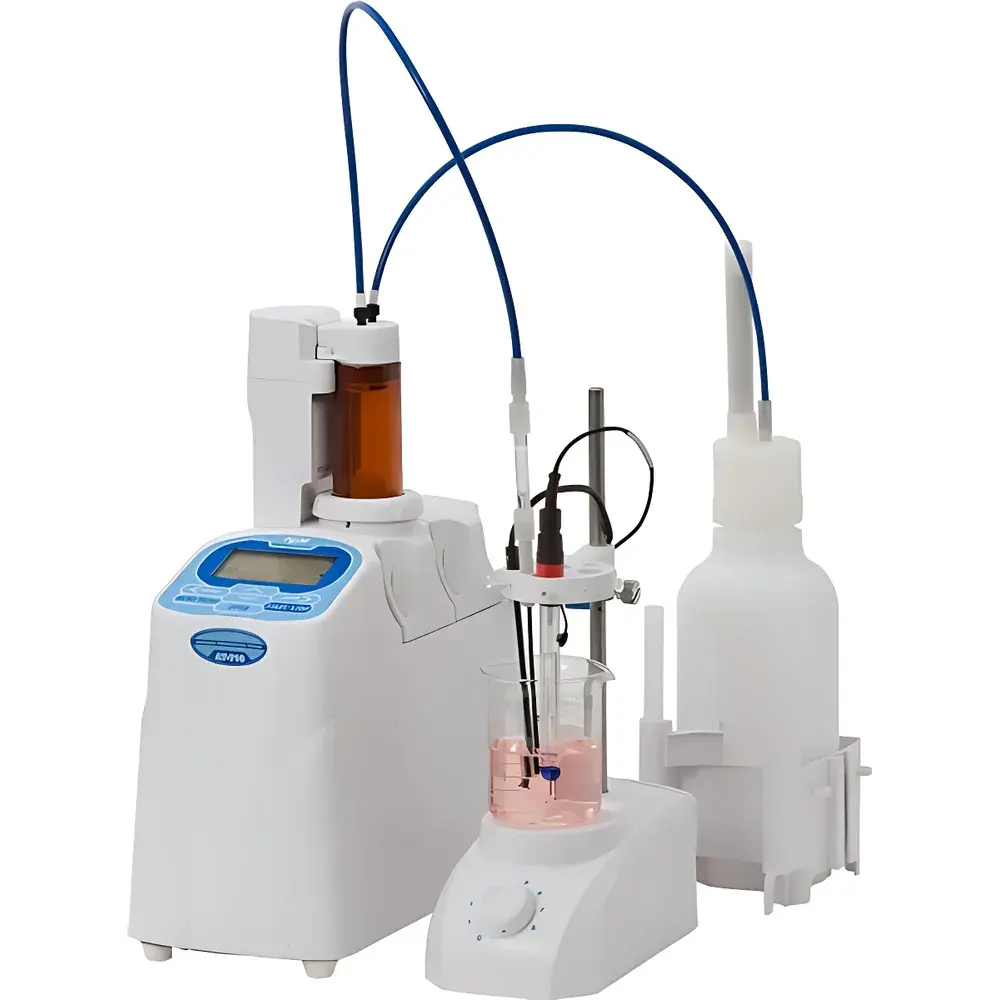
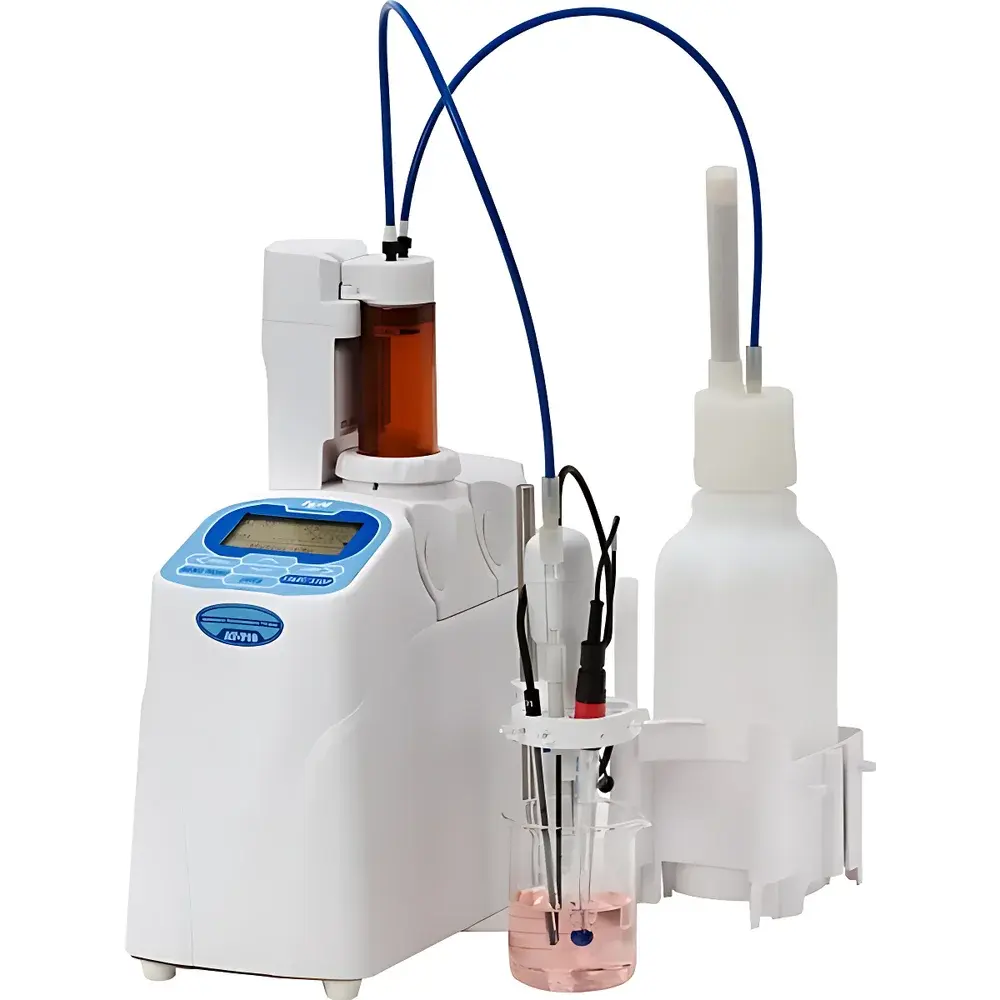
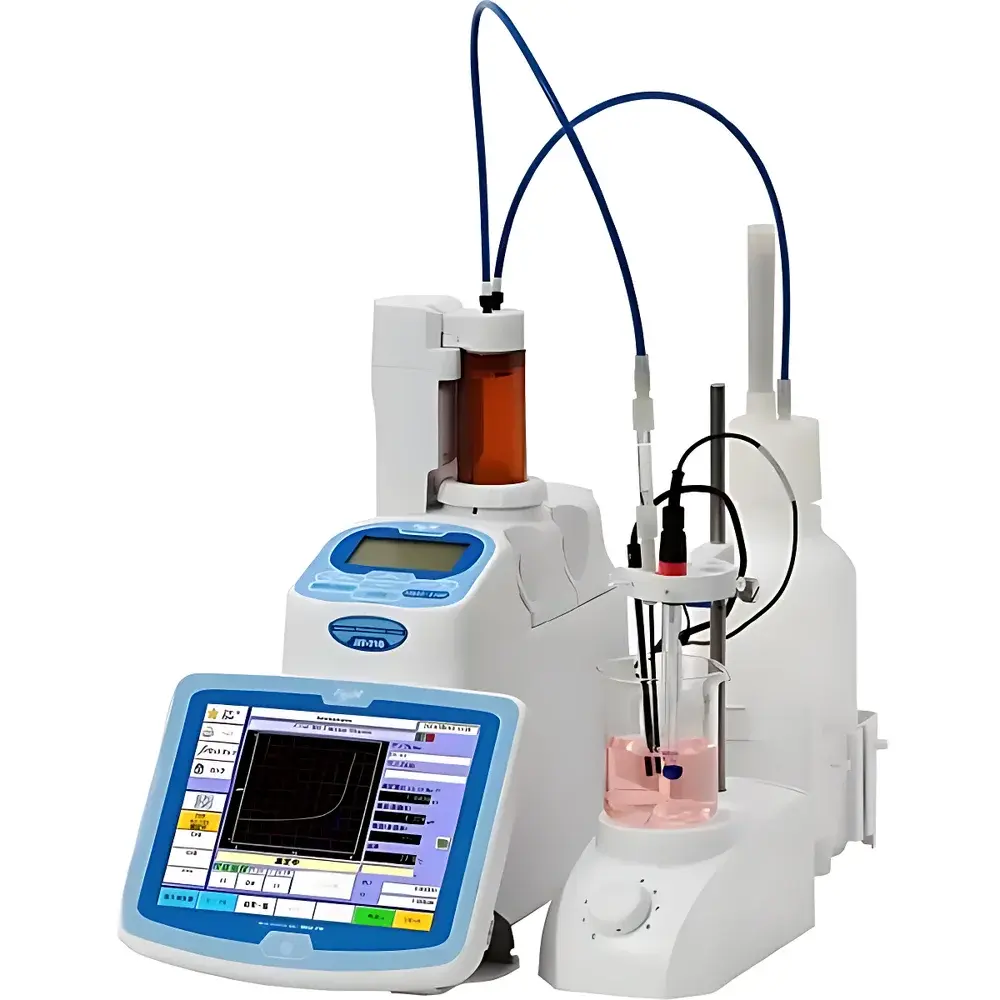
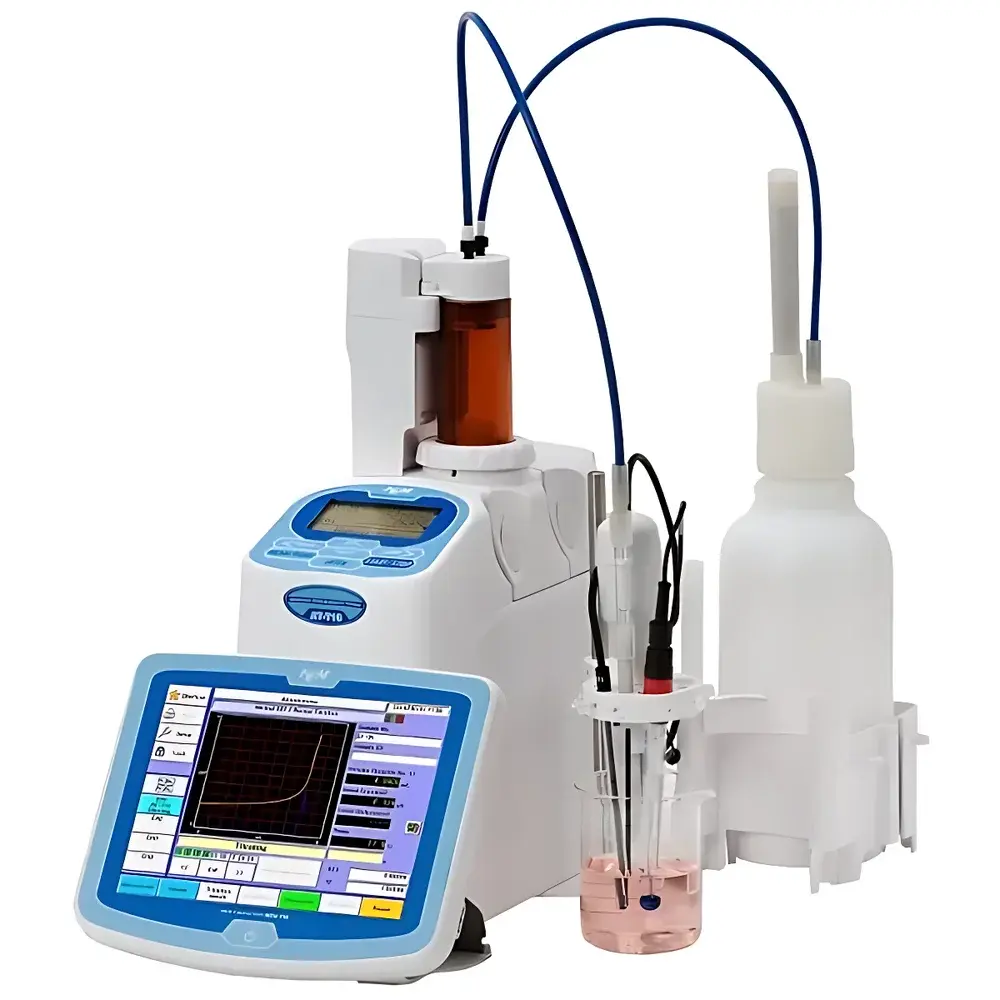
KEM AT-710 Automated Potentiometric Titrator for Food Acidity, Acid Value, Chloride, Peroxide Value, and Iodine Value Analysis
| Brand | KEM (Kyoto Electronics Manufacturing) |
|---|---|
| Origin | Japan |
| Manufacturer Type | Original Equipment Manufacturer (OEM) |
| Product Origin | Imported |
| Model | AT-710 |
| Price Range | USD 6,800 – 13,600 |
Overview
The KEM AT-710 is a fully automated, high-precision potentiometric titrator engineered for routine and regulatory-compliant analysis of critical quality parameters in food matrices. It operates on the fundamental principle of potentiometric endpoint detection—measuring the abrupt change in electrode potential (mV or pH) during a stoichiometric chemical reaction—to deliver traceable, reproducible quantification of total acidity, acid value, titratable acidity, chloride content, peroxide value, and iodine value. Designed in strict alignment with major Chinese national food safety standards—including GB 12456–2021 (total acidity), GB 5009.229–2025 (acid value), GB 5009.239–2016 (acidity), GB 5009.44–2016 (chloride), GB 5009.227–2023 (peroxide value), and GB/T 5532–2022 (iodine value)—the AT-710 supports both single-step and multi-stage titration protocols required for complex, heterogeneous samples such as oils, dairy products, beverages, condiments, and processed snacks. Its modular architecture integrates seamlessly with standardized reagent systems, certified reference materials, and GLP/GMP-aligned workflows.
Key Features
- Compact A4-footprint design with integrated titration unit, minimizing laboratory bench space without compromising mechanical stability or thermal isolation.
- High-resolution 20 mL glass burette with 1/20,000 step resolution (0.001 mL minimum dispensing increment), engineered to minimize bubble adhesion and ensure volumetric repeatability of ±0.01 mL.
- Dual-channel potentiometric amplifier supporting simultaneous pH/mV measurement and optional expansion to polarization (POL), conductometric (CMT), thermometric (TET), or photometric (PTA) detection modes.
- Onboard method storage for up to 20 user-defined titration procedures; methods editable via PC software and transferred via USB flash drive with PDF report generation capability.
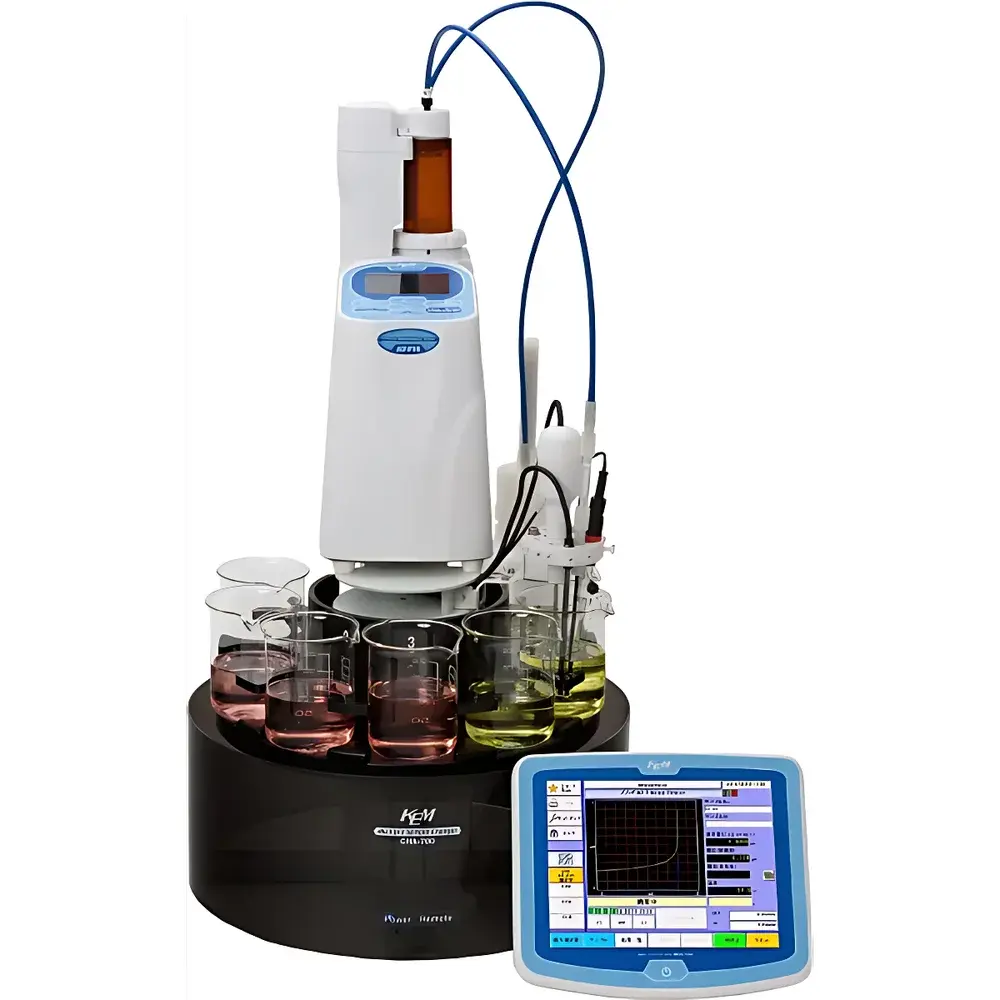
- Expandable configuration: Standard single-burette setup可 upgraded to dual-burette operation without external chassis; compatible with CHA-700 multi-sample autosampler for unattended batch processing.
- Integrated electrode intelligence: Smart electrode cables log calibration history, serial number, and maintenance timestamps directly into result files for full traceability.
- GLP-compliant audit trail: Operator ID, group assignment, reagent lot tracking, electrode usage logs, and automatic blank/titer correction applied at runtime.
Sample Compatibility & Compliance
The AT-710 accommodates diverse food sample types across liquid, semi-solid, and lipid-rich matrices. For total acidity (GB 12456–2021), it supports direct titration of clarified beverages, wines, vinegars, and fruit purees using NaOH standard solution to pH 8.2. For acid value (GB 5009.229–2025), it implements cold-solvent potentiometric titration of free fatty acids in oils and emulsified sauces using KOH/NaOH in ethanol/isopropanol. Chloride analysis (GB 5009.44–2016) employs AgNO₃ titration in acidic acetone medium with Ag electrode detection. Peroxide value (GB 5009.227–2023) follows iodometric back-titration in iso-octane/acetic acid, while iodine value (GB/T 5532–2022) applies Wijs reagent addition followed by Na₂S₂O₃ titration—all endpoints determined via sharp mV inflection. The system meets ISO/IEC 17025 documentation requirements and supports 21 CFR Part 11–compliant electronic signatures when paired with validated KEM software.
Software & Data Management
Method development occurs offline using KEM’s Windows-based TitraWin software, enabling precise definition of titrant addition profiles, endpoint algorithms (e.g., first derivative, fixed potential, or volumetric equivalence), and calculation templates compliant with GB formulae. All measurement data—including raw mV/pH curves, titrant volume vs. signal plots, statistical summaries (mean, SD, RSD), and metadata—are stored internally (50 sample records) and exportable via USB to CSV or encrypted PDF. Audit logs record operator login, method version, electrode calibration status, ambient temperature/humidity, and power-on duration—facilitating internal QA reviews and regulatory inspections under GLP or HACCP frameworks.
Applications
- Quality control laboratories validating shelf-life stability of edible oils via peroxide and iodine value trends.
- R&D departments optimizing fermentation profiles in dairy, soy sauce, and vinegar production through real-time titratable acidity monitoring.
- Contract testing labs performing accredited analyses for food importers requiring GB-standard compliance reports.
- Regulatory agencies conducting surveillance testing of salt content (chloride) in processed meats and snacks per GB 5009.44–2016.
- Ingredient suppliers verifying acid value specifications for palm oil derivatives used in infant formula or confectionery.
FAQ
What titration principles does the AT-710 support beyond acid-base reactions?
It supports redox (e.g., peroxide value), precipitation (e.g., chloride), complexometric, and non-aqueous titrations—configurable via method selection and electrode pairing.
Is the AT-710 compatible with third-party electrodes and titrants?
Yes—standard BNC and DIN connectors accept commercial pH, Ag, Pt, and redox electrodes; all titrant concentrations are user-definable within method parameters.
How does the system ensure long-term measurement consistency across shifts?
Through GLP-mandated operator authentication, automated reagent titer verification before each run, and electrode performance logging that flags drift exceeding ±2 mV/h.
Can the AT-710 be integrated into a LIMS environment?
Raw data export via USB or RS-232 enables manual LIMS ingestion; KEM provides API documentation for custom middleware integration upon request.
What environmental conditions are required for optimal operation?
Ambient temperature 5–35 °C, relative humidity ≤85% RH non-condensing, and stable AC power (100–240 V, 50/60 Hz) with surge protection recommended.






