
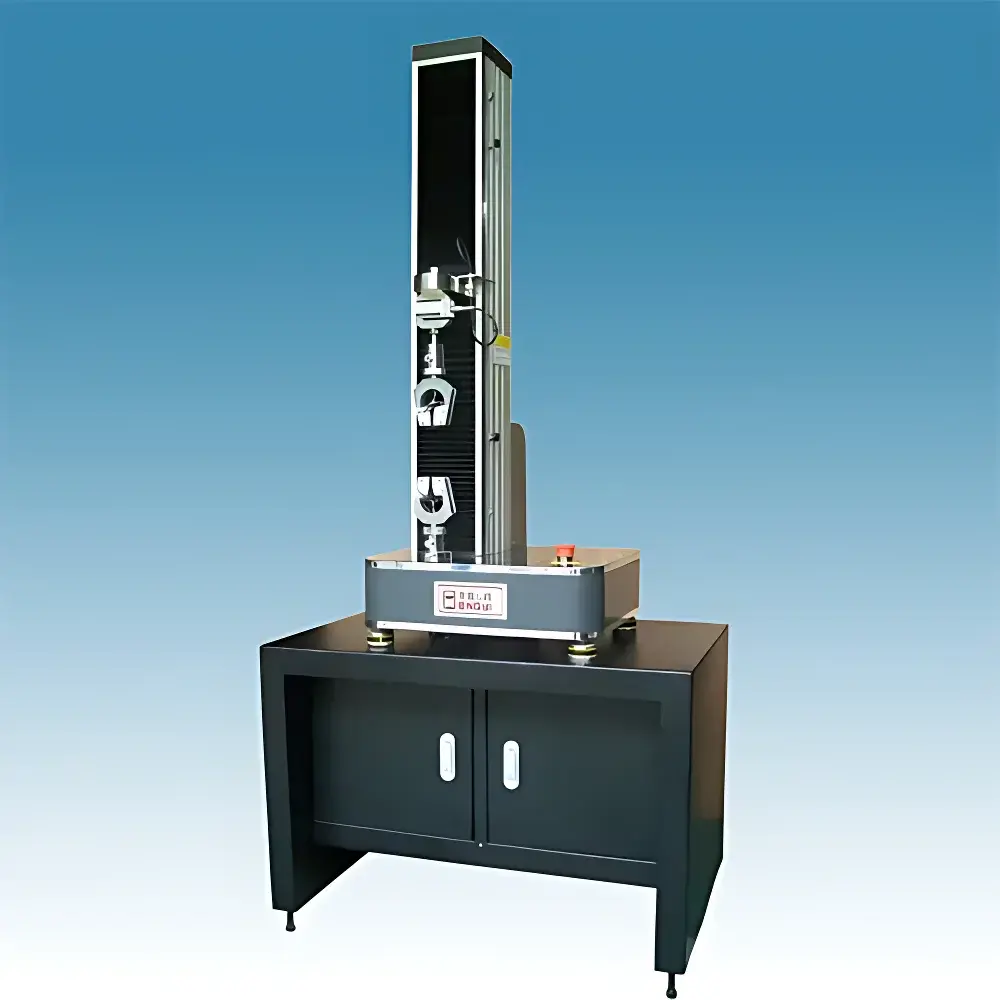
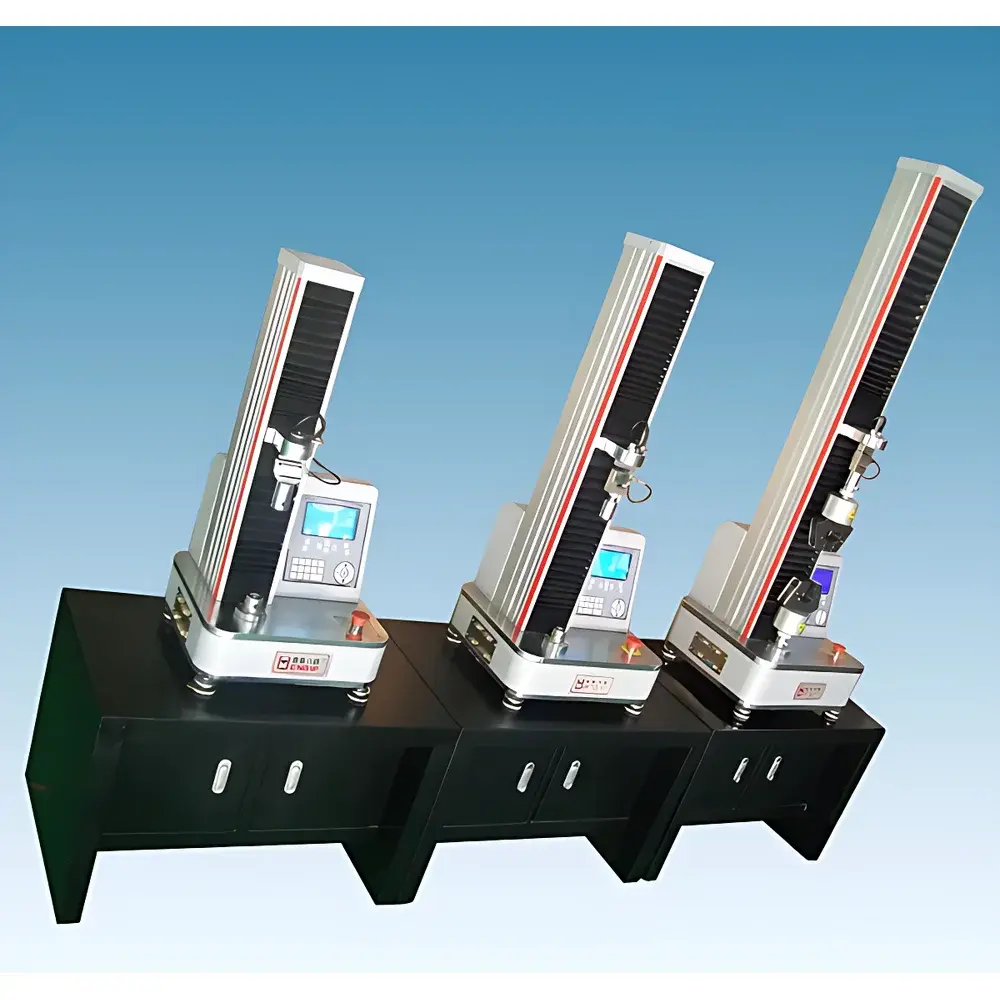
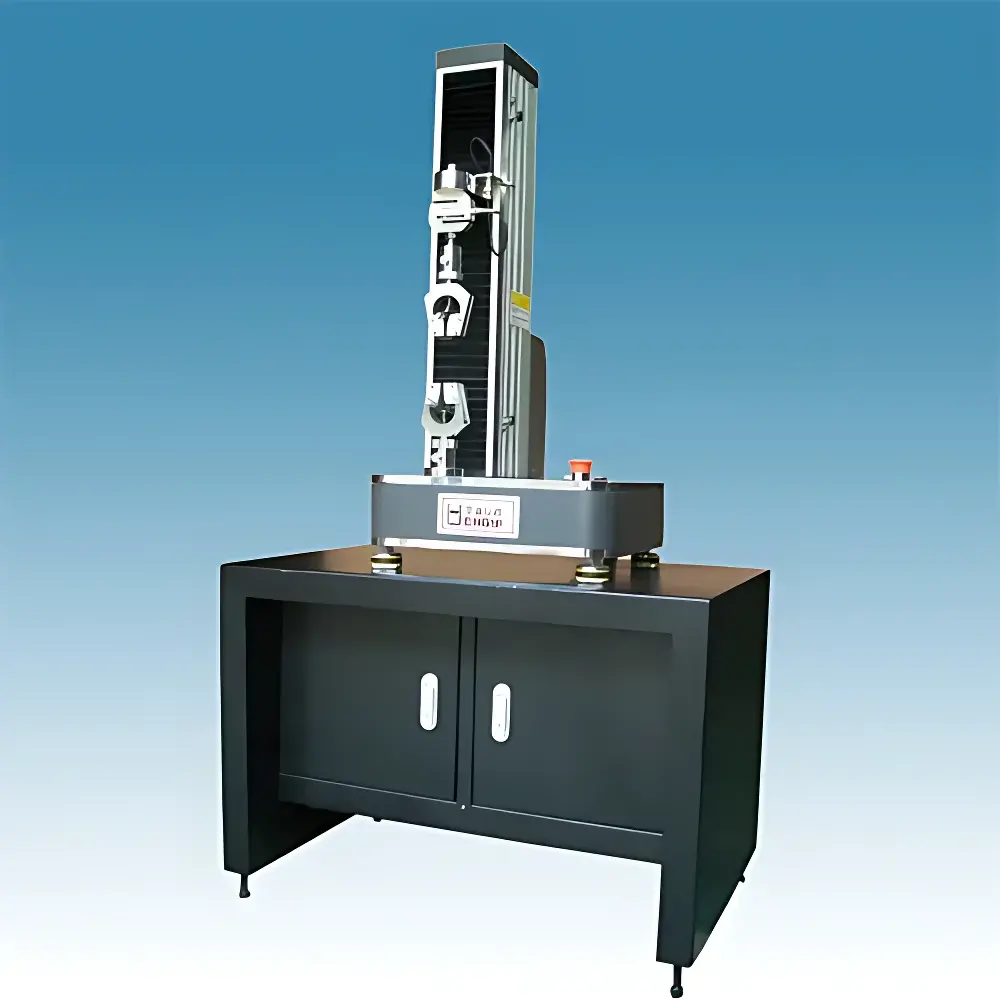
Hengyi HY-0580WEX Small Animal Bone Three-Point Bending Testing Machine
| Brand | Hengyi / Hengyitest |
|---|---|
| Origin | Shanghai, China |
| Manufacturer Type | Direct Manufacturer |
| Regional Category | Domestic (China) |
| Model | HY-0580WEX |
| Instrument Type | Electromechanical Universal Testing Machine |
| Maximum Test Load | 5 kN |
| Force Measurement Range | 0.001–100% of Full Scale (FS) |
| Force Accuracy | ±0.5% of reading |
| Test Stroke | 800 mm |
| Displacement Resolution | 0.001 mm |
| Speed Range | 0.001–500 mm/min (adjustable) |
| Speed Accuracy | ±0.5% of set value |
| Displacement Measurement Accuracy | ±0.5% of reading |
| Stress/Strain Control Capability | Yes |
| Load Cell Options | 1 N to 5,000 N (interchangeable) |
| Effective Test Width | 120 mm |
| Power Supply | 220 V AC, 50 Hz, 750 W |
| Net Weight | 95 kg |
| Dimensions (W×D×H) | 470 × 400 × 1510 mm |
Overview
The Hengyi HY-0580WEX Small Animal Bone Three-Point Bending Testing Machine is a precision-engineered electromechanical universal testing system designed specifically for biomechanical characterization of small-animal skeletal tissues and orthopedic biomaterials. It operates on the principle of quasi-static axial loading under controlled displacement or force rate, enabling standardized three-point bending, compression, tension, shear, and pull-out testing per ASTM F2118, ISO 5833, and USP guidelines. The system is calibrated to meet Class 0.5 accuracy requirements per ISO 7500-1 and is routinely deployed in preclinical research laboratories, orthopedic device development centers, and regulatory-compliant QA/QC environments where reproducible mechanical quantification of murine femurs, tibias, vertebrae, and engineered bone scaffolds is required.
Key Features
- Modular load cell architecture supporting interchangeable transducers from 1 N to 5,000 N — optimized for both soft tissue (e.g., decellularized tendon, hydrogel constructs) and hard tissue (e.g., cortical bone, ceramic scaffolds) without hardware recalibration.
- High-resolution displacement control with 0.001 mm resolution and ±0.5% linearity across full 800 mm stroke — critical for detecting micro-fracture initiation and post-yield deformation in brittle biological specimens.
- Dual-speed actuation system (fast positioning + fine-load ramping) with programmable acceleration profiles to minimize inertial artifacts during low-force, high-sensitivity bending tests.
- Integrated electronic limit switches and real-time overload protection (110% FS cutoff) ensure specimen integrity and operator safety during unpredictable failure events common in heterogeneous calcified tissues.
- Self-diagnostic firmware that continuously monitors drive current, encoder feedback, and signal-to-noise ratio — automatically logging fault codes and halting operation upon detection of thermal drift, motor stall, or sensor saturation.
- Robust steel frame with vibration-damped base plate and rigid crosshead alignment — reduces parasitic bending moments and improves repeatability in three-point flexural tests per ASTM D790.
Sample Compatibility & Compliance
The HY-0580WEX accommodates a broad spectrum of preclinical and biomaterial specimens, including but not limited to: murine and rat long bones (femur, tibia), vertebral bodies, calvarial segments, synthetic bone analogs (PMMA, HA composites), metallic implants (titanium screws, stainless-steel plates), polymer-based fixation devices (PLLA rods, PEEK interbody cages), hydrogels (alginate, GelMA, collagen I matrices), and decellularized vascular grafts. All test fixtures—including three-point bending supports (span length adjustable from 5–25 mm), compression platens, tensile grips with serrated jaws, and custom pull-out jigs—are machined to ISO 2768-mK tolerances. The system complies with GLP documentation standards and supports 21 CFR Part 11–compliant audit trails when paired with validated software modules.
Software & Data Management
Bundled with Hengyi TestMaster v4.2 — a Windows-based control and analysis suite certified for ISO/IEC 17025 traceability workflows. The software provides real-time dual-axis plotting (load vs. displacement; stress vs. strain), automatic yield point detection via 0.2% offset method, fracture toughness estimation (KIC derivation from load-deflection curves), and export of raw ASCII data with timestamped metadata (operator ID, environmental logs, calibration certificate IDs). All test methods are stored as reusable templates with version-controlled revision history. Audit trail functionality records every parameter change, user login/logout event, and calibration action — fully compliant with FDA inspection readiness requirements for regulated biocompatibility studies.
Applications
- Quantification of flexural modulus and ultimate bending strength in murine cortical bone following osteoporotic or anabolic interventions.
- Mechanical validation of 3D-printed calcium phosphate scaffolds under physiological loading conditions.
- Comparative fatigue life assessment of resorbable interference screws under cyclic three-point bending (1–10 Hz, R = 0.1).
- Tensile property mapping of electrospun nanofibrous membranes used in guided bone regeneration (GBR) membranes.
- Shear bond strength evaluation of bioactive glass coatings on titanium dental implants per ISO 9693-1.
- Compression testing of osteochondral hydrogel composites simulating native articular cartilage mechanics.
FAQ
What standards does the HY-0580WEX support for bone biomechanics testing?
It conforms to ASTM F2118 (standard practice for mechanical testing of bone cement), ISO 5833 (acrylic surgical cements), and ASTM D790 (flexural properties of unreinforced plastics), with method templates preloaded for murine femoral bending per ASBMR recommendations.
Can the system perform cyclic loading protocols?
Yes — with optional servo-controlled waveform generator module, it supports sinusoidal, triangular, and trapezoidal waveforms at frequencies up to 10 Hz and R-ratios from –1 to 0.9, fully programmable via TestMaster.
Is third-party calibration certification included?
Each unit ships with NIST-traceable calibration certificates for force (per ISO 376), displacement (per ISO 6892-1 Annex C), and speed (per ISO 5893), valid for 12 months from shipment date.
How is specimen alignment ensured during three-point bending?
The machine includes a laser-assisted centering jig and micrometer-adjustable roller supports with ±0.02 mm parallelism tolerance — minimizing eccentric loading errors that compromise bending moment calculations.
Does the software support automated pass/fail criteria against specification limits?
Yes — users can define upper/lower specification limits per parameter (e.g., “Ultimate Load ≥ 22 N ± 5%”), triggering visual alerts and PDF report flagging upon deviation.



