
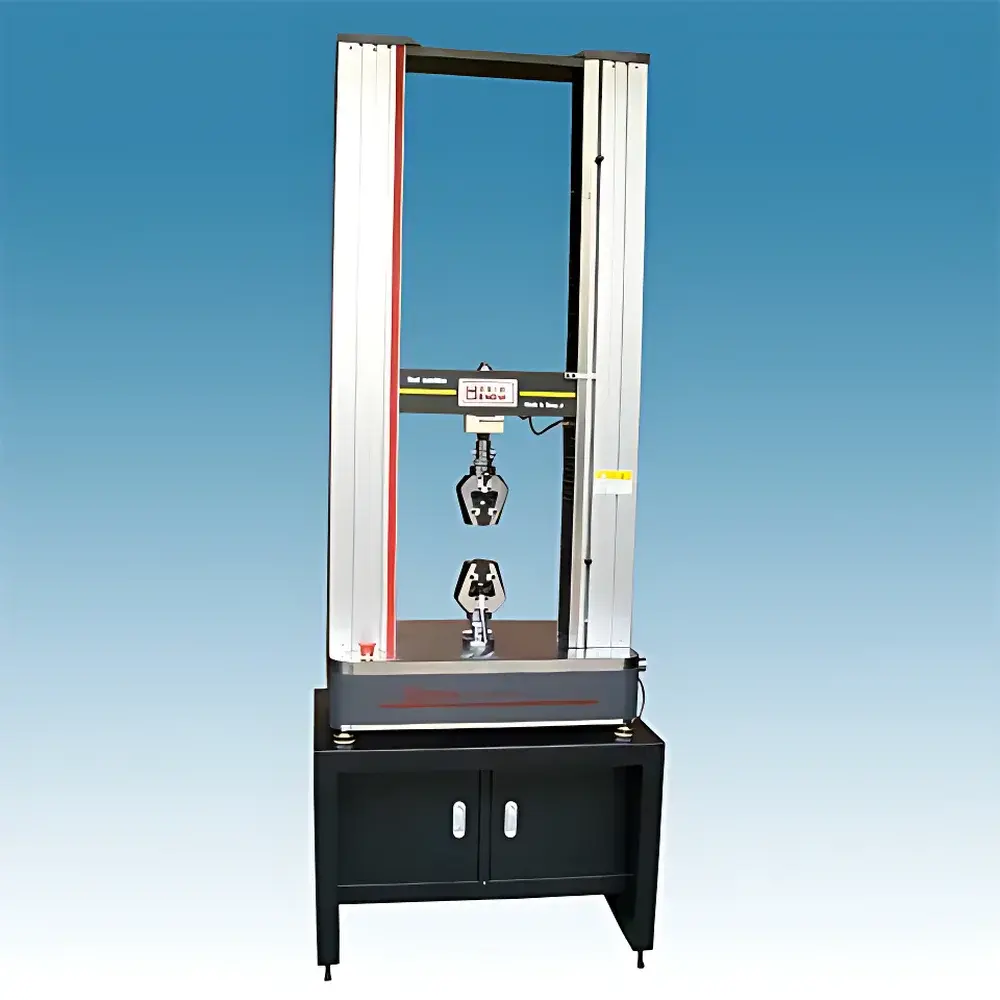
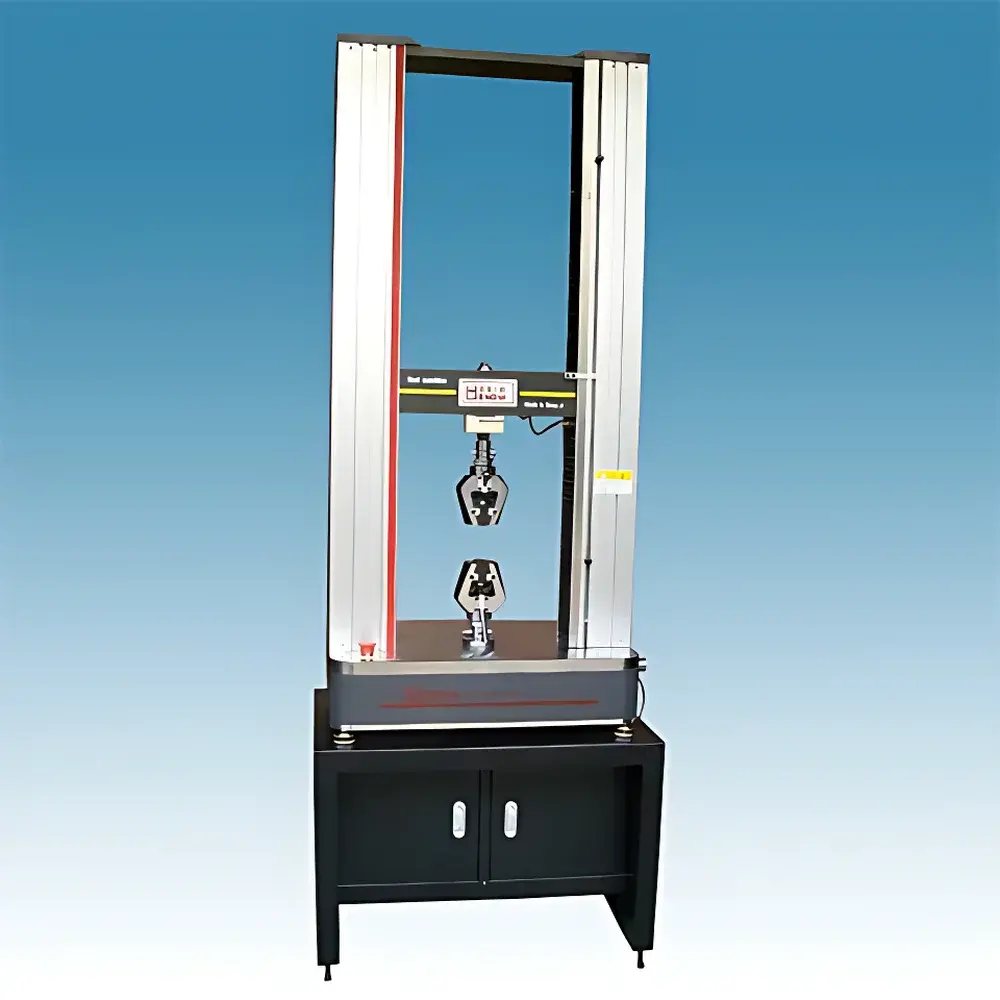
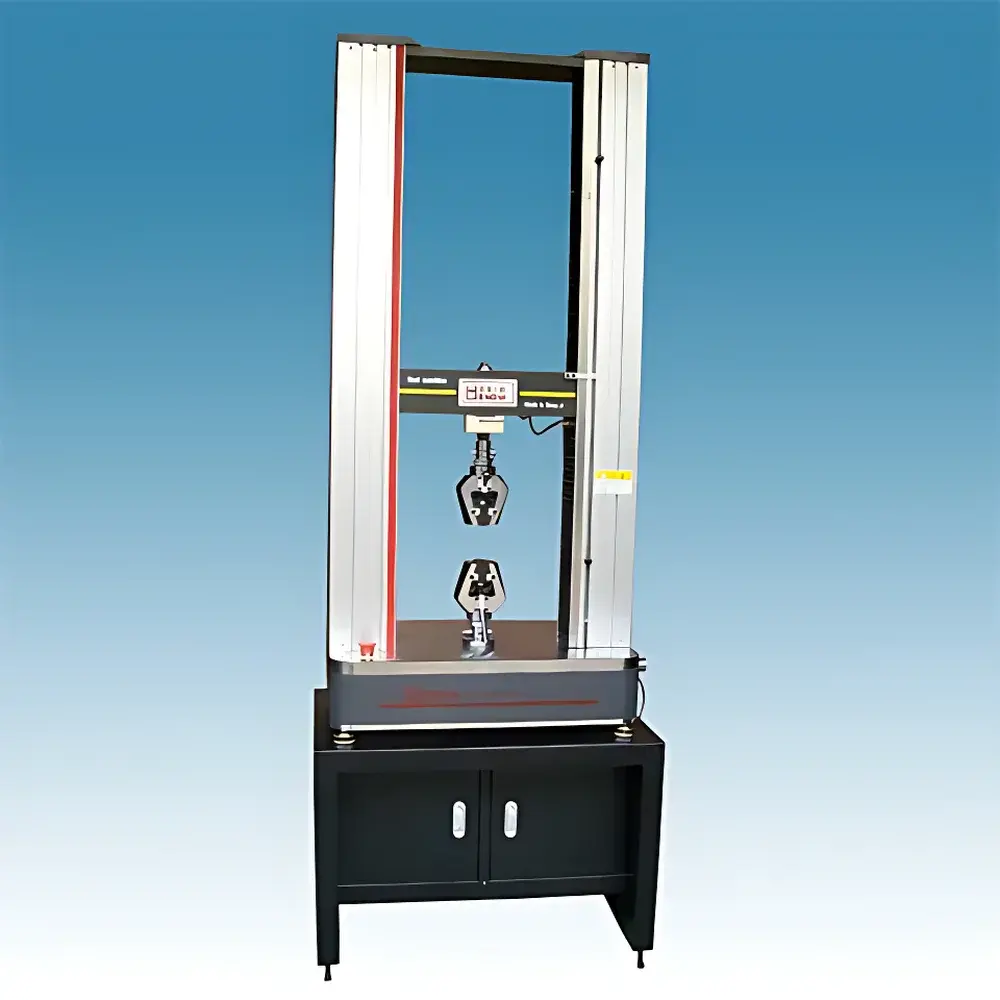
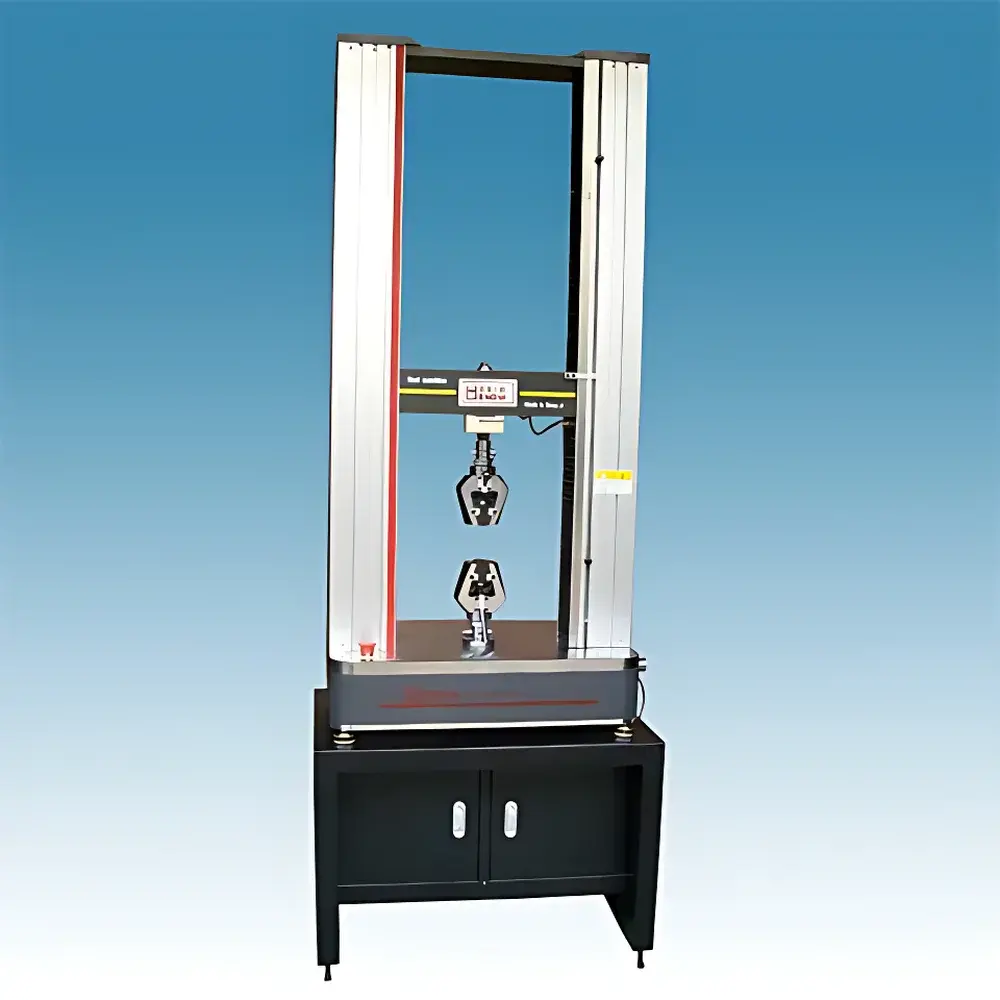
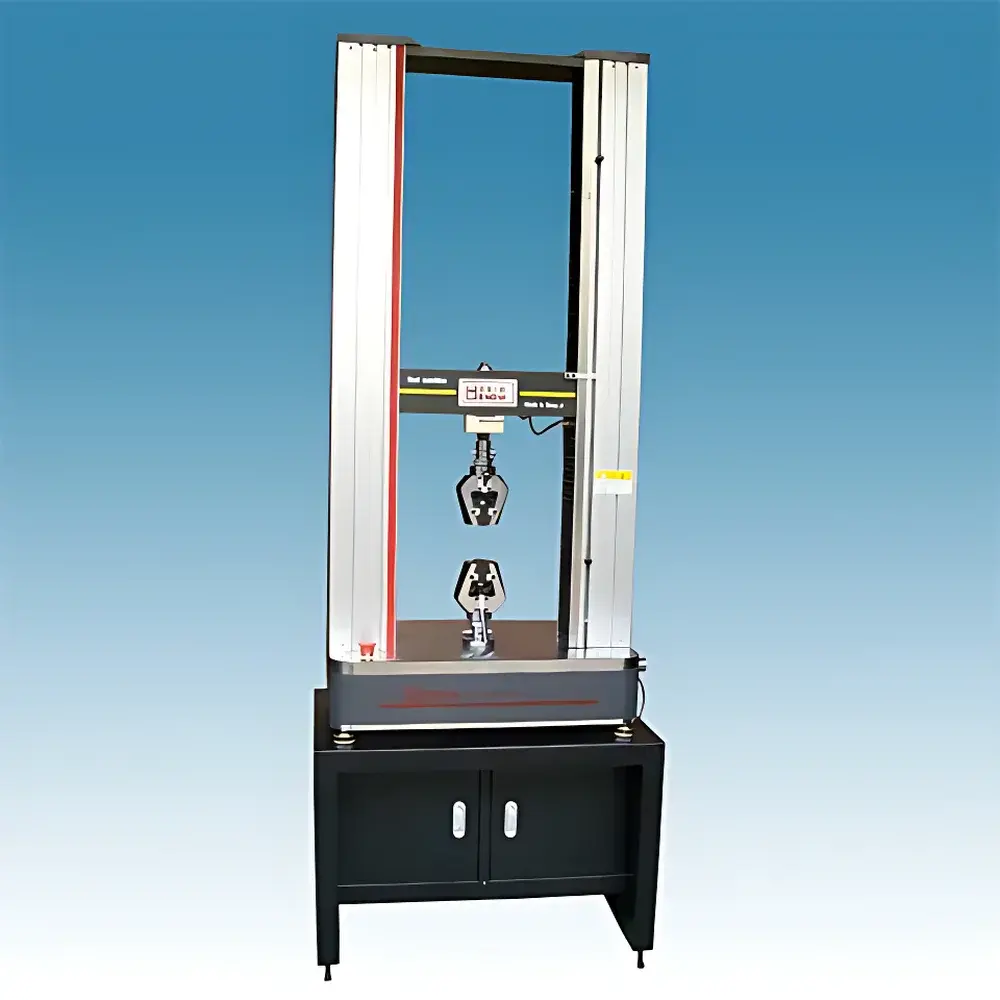
Hengyi HY-1080 Non-Metallic Universal Tensile Testing Machine
| Brand | Hengyi (Hengyitest) |
|---|---|
| Origin | Shanghai, China |
| Manufacturer Type | Direct Manufacturer |
| Regional Classification | Domestic (China) |
| Model | HY-1080HY |
| Instrument Type | Electronic Universal Tensile Testing Machine |
| Load Capacity | Up to 10 kN (configurable below 10 kN) |
| Load Cell Accuracy | 0.01% FS |
| Measurement Accuracy | < ±0.5% |
| Control Mode | Full PC-based Windows control (Windows XP/7 compatible) |
| Effective Test Width | ~420 mm |
| Effective Stroke | ~800 mm |
| Test Speed Range | 0.001–500 mm/min |
| Speed Accuracy | ±0.5% |
| Displacement Accuracy | ±0.5% |
| Deformation Measurement Accuracy | ±0.5% |
| Safety Protection | Electronic limit switches, emergency stop button |
| Unit Weight | ~135 kg |
| Power Supply | 220 V AC |
| Mainframe Dimensions | 700 × 420 × 1600 mm |
Overview
The Hengyi HY-1080 Non-Metallic Universal Tensile Testing Machine is an electromechanical static testing system engineered for high-reproducibility mechanical characterization of polymeric, composite, elastomeric, textile, paper, film, and other non-metallic materials. It operates on the principle of controlled uniaxial force application via a precision ball-screw-driven crosshead, with load measured by a high-stability, temperature-compensated load cell and displacement tracked via high-resolution encoder feedback. Designed in full compliance with ISO 527, ASTM D638, ASTM D882, ISO 179, GB/T 16491–1996, and related international standards for tensile, compressive, flexural, peel, and puncture testing, the HY-1080 delivers traceable, auditable, and repeatable results across R&D laboratories, QC departments, and third-party certification facilities.
Key Features
- High-precision load measurement system with 0.01% full-scale accuracy and < ±0.5% overall measurement uncertainty — calibrated per ISO 7500-1 Class 0.5 requirements.
- DSP-based real-time control architecture enabling closed-loop speed, load, and displacement control with sub-millisecond response time and minimal signal drift.
- Wide dynamic speed range: 0.001–500 mm/min, continuously adjustable with ±0.5% speed fidelity across the entire span — suitable for both quasi-static creep tests and high-rate tensile rupture analysis.
- Robust mechanical design featuring hardened steel guide columns, preloaded ball screws, and rigid cast-iron base — optimized for long-term dimensional stability and minimal frame deflection under load.
- Integrated dual-channel deformation measurement: high-resolution encoder-based crosshead displacement and optional extensometer input for true strain evaluation (e.g., for modulus or yield point determination).
- Comprehensive safety architecture including hardware-based electronic limit switches, software-configurable overload thresholds, and a front-panel emergency stop compliant with IEC 60204-1.
- USB 2.0 (backward-compatible with USB 1.1) high-speed data acquisition interface (12 Mb/s), supporting hot-plug connectivity and real-time streaming without driver conflicts on Windows XP/7 platforms.
Sample Compatibility & Compliance
The HY-1080 accommodates specimens ranging from thin films (≥10 µm thickness) to rigid plastic bars (up to 40 mm wide × 25 mm thick), with standard grips including pneumatic, wedge-action, and roller-type configurations. Optional accessories support ASTM D1876 (T-peel), ASTM D624 (tear), ISO 1133 (melt flow index correlation), and GB/T 2792 (adhesive peel strength). All firmware and calibration routines adhere to GLP and GMP documentation principles. Audit trails, user access levels, and electronic signature support are configurable within HYtest V7.0 software to meet FDA 21 CFR Part 11 readiness requirements where validated operation is mandated.
Software & Data Management
Hengyi HYtest V7.0 is a multilingual, database-driven test platform supporting nine UI languages (English, Chinese, German, French, Spanish, Japanese, Korean, Russian, Portuguese) and 12 unit systems (N, kN, lbf, kgf, gf, tonf, MPa, psi, %, mm, in, mm/min). The software implements SQL Server Compact Edition for structured test method storage, raw data archiving, and metadata tagging (operator ID, sample ID, environmental conditions). Real-time curve rendering supports auto-scaling, multi-curve overlay, parameter annotation (yield point, ultimate tensile strength, elongation at break, Young’s modulus), and export to CSV, PDF, or XML for LIMS integration. Custom test methods can be defined via drag-and-drop logic blocks — enabling automated pass/fail evaluation against user-defined acceptance criteria per ISO 17025 Clause 7.7.
Applications
- Quality assurance of thermoplastics (PP, PE, PET), elastomers (NR, SBR, TPU), composites (CFRP, GFRP), and biodegradable polymers in automotive and packaging supply chains.
- Mechanical validation of medical device components (catheter tubing, suture materials, wound dressings) per ISO 10993-12 and USP .
- Research-grade tensile property mapping for academic polymer physics labs studying strain-rate dependence, viscoelastic relaxation, and fracture mechanics.
- Third-party testing services accredited to CNAS (ISO/IEC 17025) and A2LA for certification reporting in electronics encapsulation, geotextiles, and aerospace non-structural components.
- Calibration verification of production-line tensile testers via reference specimen protocols aligned with JJG 475–2018.
FAQ
Does the HY-1080 support ASTM E8/E8M for metallic materials?
Yes — while optimized for non-metals, its 10 kN capacity, high-speed control, and extensometer compatibility enable compliant testing of thin metal foils, wires, and micro-tensile specimens per ASTM E8/E8M Annex A3.
Is the load cell factory-calibrated and NIST-traceable?
Each unit ships with a manufacturer calibration certificate referencing national metrology institute standards; optional UKAS-accredited recalibration services are available upon request.
Can HYtest V7.0 generate 21 CFR Part 11-compliant audit logs?
Yes — when deployed in validated environments with role-based user accounts and digital signature configuration, the software maintains immutable audit trails for all method edits, test executions, and data exports.
What maintenance intervals are recommended for long-term accuracy?
Biannual verification of load cell linearity and crosshead alignment is advised; routine lubrication of ball screws and visual inspection of grip surfaces should occur every 200 operational hours.
Is remote diagnostics supported?
The embedded USB interface enables secure remote desktop-assisted troubleshooting via encrypted VPN channels; no cloud connectivity or external telemetry is implemented by default.



