
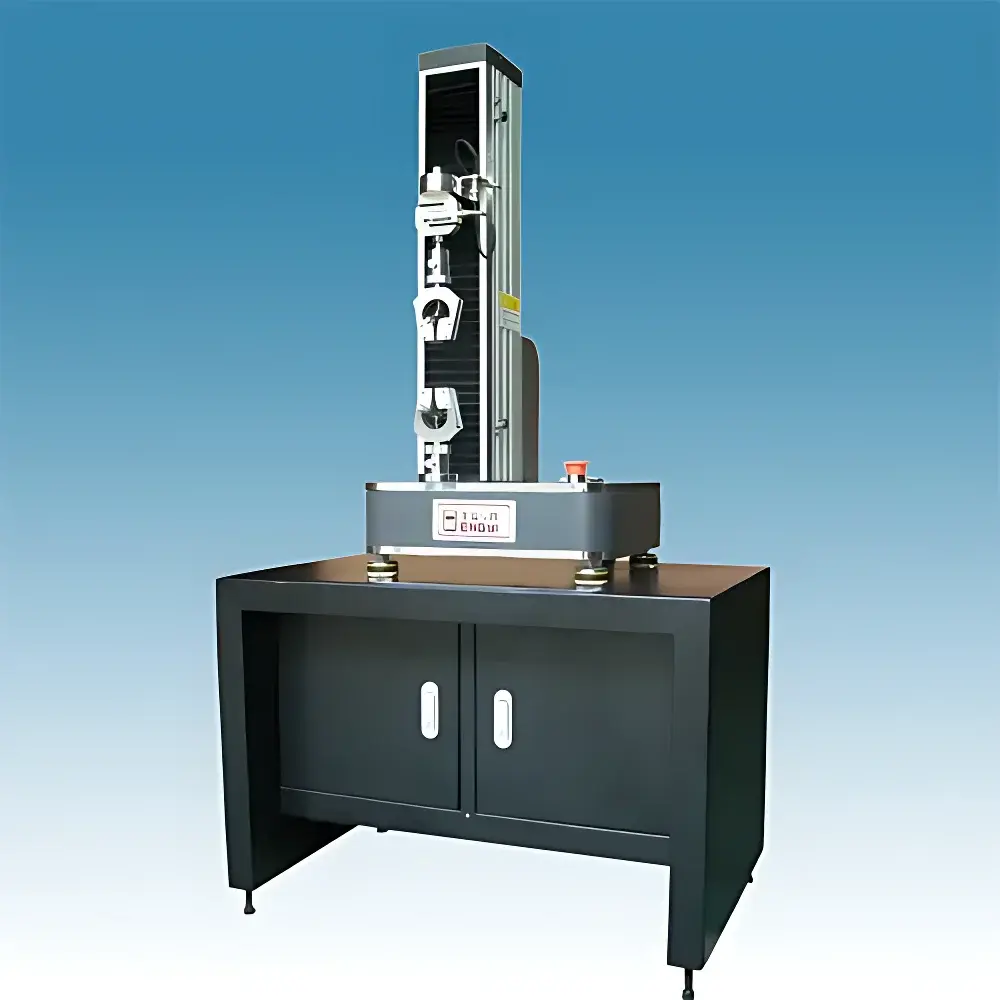
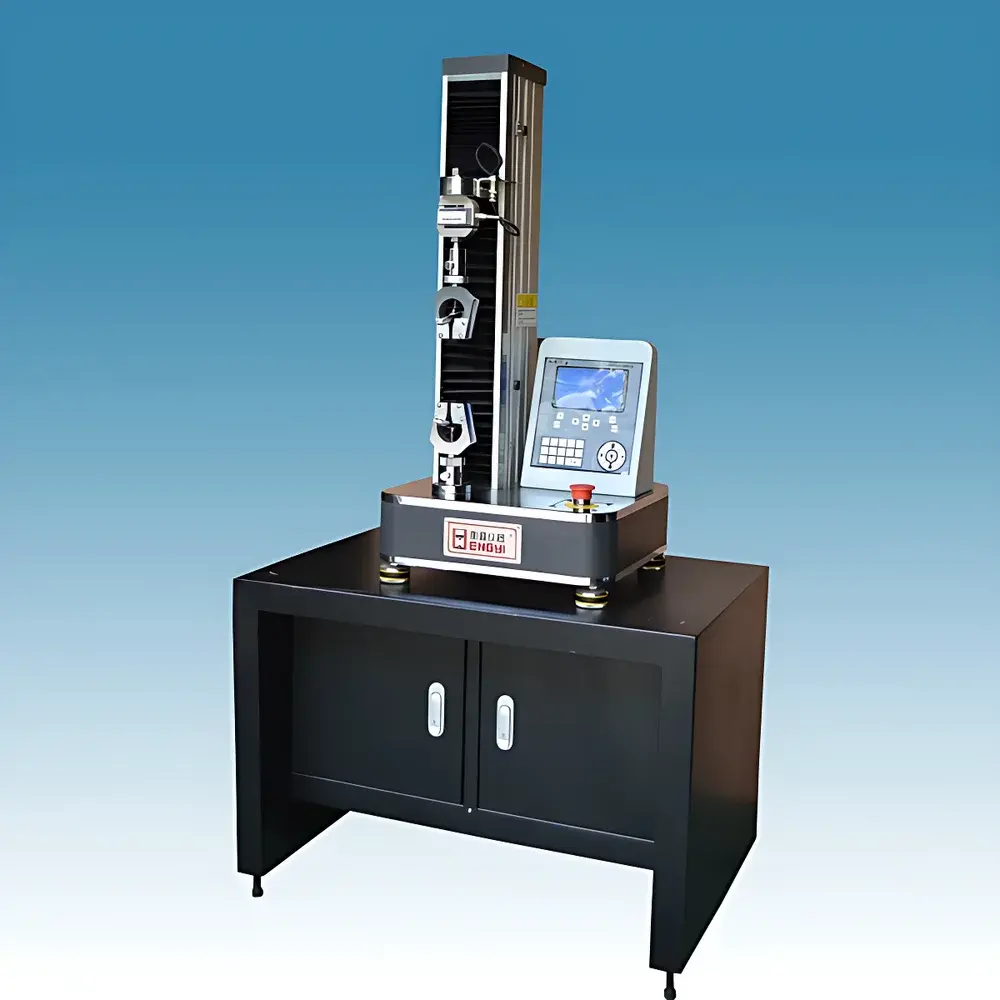
Hengyi HY-0230 Bio-Mechanical Testing Machine
| Brand | Hengyi |
|---|---|
| Origin | Shanghai, China |
| Manufacturer Type | Direct Manufacturer |
| Product Category | Domestic |
| Model | HY-0230 |
| Instrument Type | Electromechanical Universal Testing Machine |
| Max Load Capacity | ≤2000 N (configurable) |
| Load Cell Accuracy | 0.01% FS |
| Measurement Accuracy | ±0.5% |
| Control Mode | Full CNC or PC-controlled with thermal printer interface |
| Valid Test Width | 150 mm |
| Effective Stroke | 300 mm (extendable) |
| Test Speed Range | 0.001–300 mm/min |
| Speed Accuracy | ±0.5% |
| Stroke Accuracy | ±0.5% |
| Displacement Measurement Accuracy | ±0.5% |
| Safety Features | Electronic stroke limit protection, emergency stop button |
| Unit Weight | ~45 kg |
Overview
The Hengyi HY-0230 Bio-Mechanical Testing Machine is an electromechanical universal testing system engineered for high-fidelity mechanical characterization of biological tissues, biomaterials, and structural medical components under controlled quasi-static and low-speed dynamic loading conditions. Based on the fundamental principles of uniaxial force–displacement transduction and closed-loop servo control, the system applies precisely regulated tensile, compressive, flexural, shear, peel, and tear loads to specimens while capturing real-time load, displacement, and strain data. Its single-column rigid frame architecture ensures minimal parasitic bending moments and high axial alignment fidelity—critical for reproducible biomechanical evaluation of soft tissues (e.g., tendons, ligaments, vascular grafts), hydrogels, scaffolds, suture materials, orthopedic implants, and polymer-based medical devices. Designed in accordance with core mechanical testing paradigms defined in ISO 5832, ASTM F2118, ASTM D638, ISO 527, and GB/T 228.1, the HY-0230 supports both standardized compliance and method-developed protocols required in preclinical research, regulatory submission packages, and quality control workflows.
Key Features
- Rigid single-column load frame with precision-ground linear guides and preloaded ball screws, minimizing deflection and ensuring consistent load train alignment across test cycles.
- High-resolution load cell with 0.01% full-scale accuracy and temperature-compensated signal conditioning—optimized for low-force regimes typical in soft-tissue mechanics (e.g., 0.1–2000 N range).
- Wide dynamic speed range (0.001–300 mm/min), programmable in 0.001 mm/min increments, enabling precise replication of physiological strain rates (e.g., 0.01%/s for tendon creep studies) and high-throughput screening protocols.
- Integrated electronic stroke limit protection and hardware-triggered emergency stop circuitry—compliant with ISO 13850 requirements for functional safety in laboratory environments.
- Modular fixture interface compatible with standard ISO/ASTM-compliant grips (pneumatic, wedge, pin, and custom bio-fixtures), including optional extensometer mounting points for direct strain measurement.
- Compact footprint (~45 kg, benchtop installation) and low power consumption—suitable for shared core facilities, teaching labs, and GLP-compliant QC suites without dedicated structural reinforcement.
Sample Compatibility & Compliance
The HY-0230 accommodates a broad spectrum of specimen geometries and mechanical behaviors: planar soft tissue strips (1–10 mm width), cylindrical bone cores, tubular vascular grafts, thin-film hydrogels, braided sutures, and 3D-printed porous scaffolds. Its 150 mm test width and 300 mm extendable stroke support ISO 5832-3 compliant tensile testing of metallic implant wires and ASTM F2118-compliant compression of cancellous bone analogs. All mechanical measurements adhere to traceable metrological standards, with calibration certificates issued per ISO/IEC 17025-accredited procedures. The system satisfies essential requirements for regulatory documentation under FDA 21 CFR Part 11 (when paired with validated software), EU MDR Annex I General Safety and Performance Requirements (GSPR), and ISO 14155:2020 for biomedical device clinical investigation support testing.
Software & Data Management
The HY-0230 operates with Hengyi’s proprietary PC-based test control and analysis suite, supporting multi-step test sequences (preload → hold → ramp → relaxation), real-time curve overlay, and automatic calculation of modulus, yield point, ultimate strength, elongation at break, and hysteresis area. Raw data export is available in CSV and XML formats with embedded metadata (operator ID, timestamp, environmental conditions, calibration ID). Audit trail functionality logs all parameter modifications, test executions, and report generations—enabling full traceability for GLP/GMP audits. Optional integration with LIMS platforms via OPC UA or RESTful API allows automated result ingestion into enterprise quality management systems.
Applications
- Mechanical validation of resorbable polymer stents and drug-eluting coatings under simulated pulsatile loading.
- Tensile property mapping of decellularized extracellular matrix scaffolds across hydration states.
- Compression fatigue testing of calcium phosphate bone cements per ISO 13314.
- Peel adhesion quantification of surgical tapes and wound closure devices per ASTM D903.
- Educational biomechanics labs: comparative stiffness analysis of native vs. engineered cartilage constructs.
- Regulatory submission testing for ISO 10993-12 extractables and leachables sample holder integrity verification.
FAQ
Does the HY-0230 comply with ISO 13485 quality management system requirements for medical device manufacturers?
Yes—the instrument design, manufacturing process, and calibration documentation are aligned with ISO 13485:2016 clause 7.6 (Control of monitoring and measuring equipment) when deployed within a certified QMS.
Can third-party extensometers be interfaced with the system?
Yes—the machine provides analog voltage output (±10 V) and digital TTL trigger ports compatible with commercial contact and non-contact extensometers meeting ASTM E83 Class B2 specifications.
Is firmware update capability supported remotely?
Firmware updates require local USB connection and authenticated access; remote updates are disabled by default to maintain configuration integrity per FDA cybersecurity guidance for legacy medical device test systems.
What is the recommended recalibration interval for routine QC use?
Annual calibration is advised for GLP environments; however, user-performed daily verification using traceable reference load cells (NIST-traceable) is required prior to each test session per ISO/IEC 17025 section 5.9.2.
Are test method templates available for common biomaterial standards?
Preconfigured test methods for ASTM D638 (plastics), ISO 527-2 (tensile), and ISO 5832-3 (titanium alloys) are included; custom templates can be developed and validated in collaboration with Hengyi’s application engineering team.



