
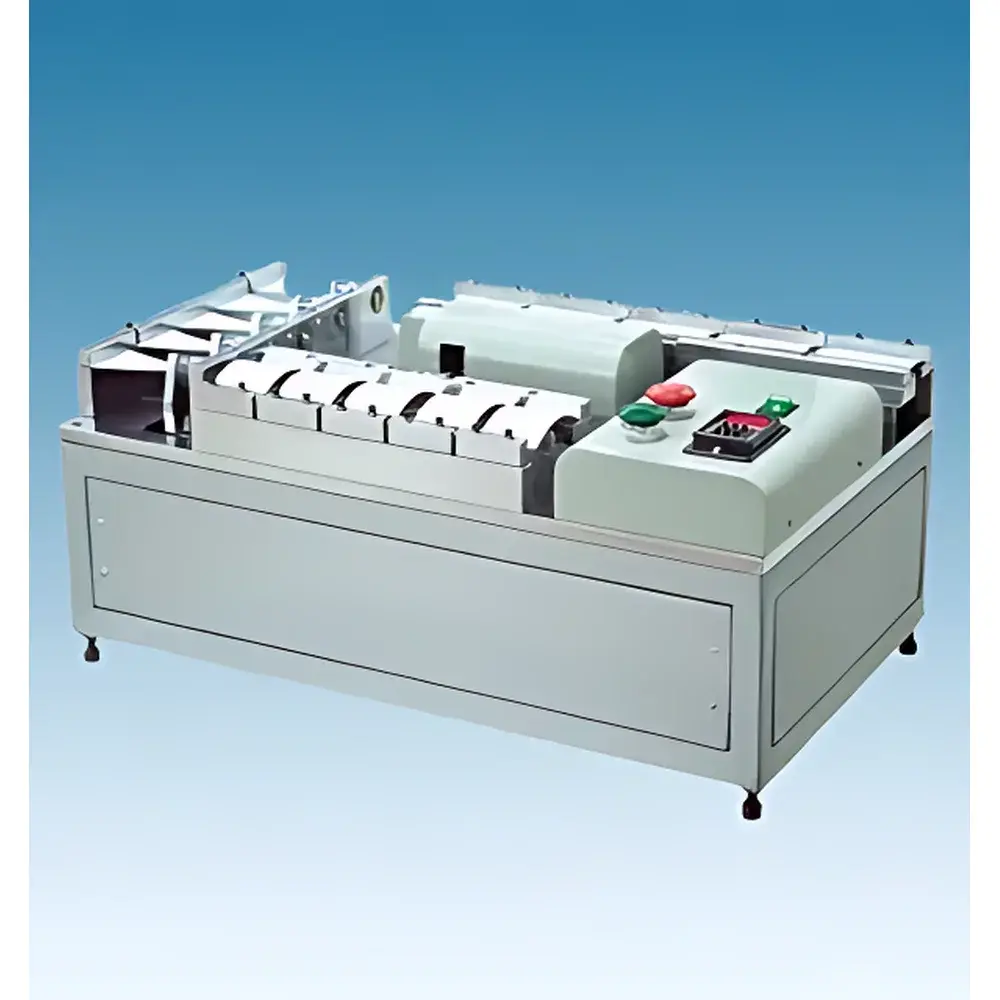
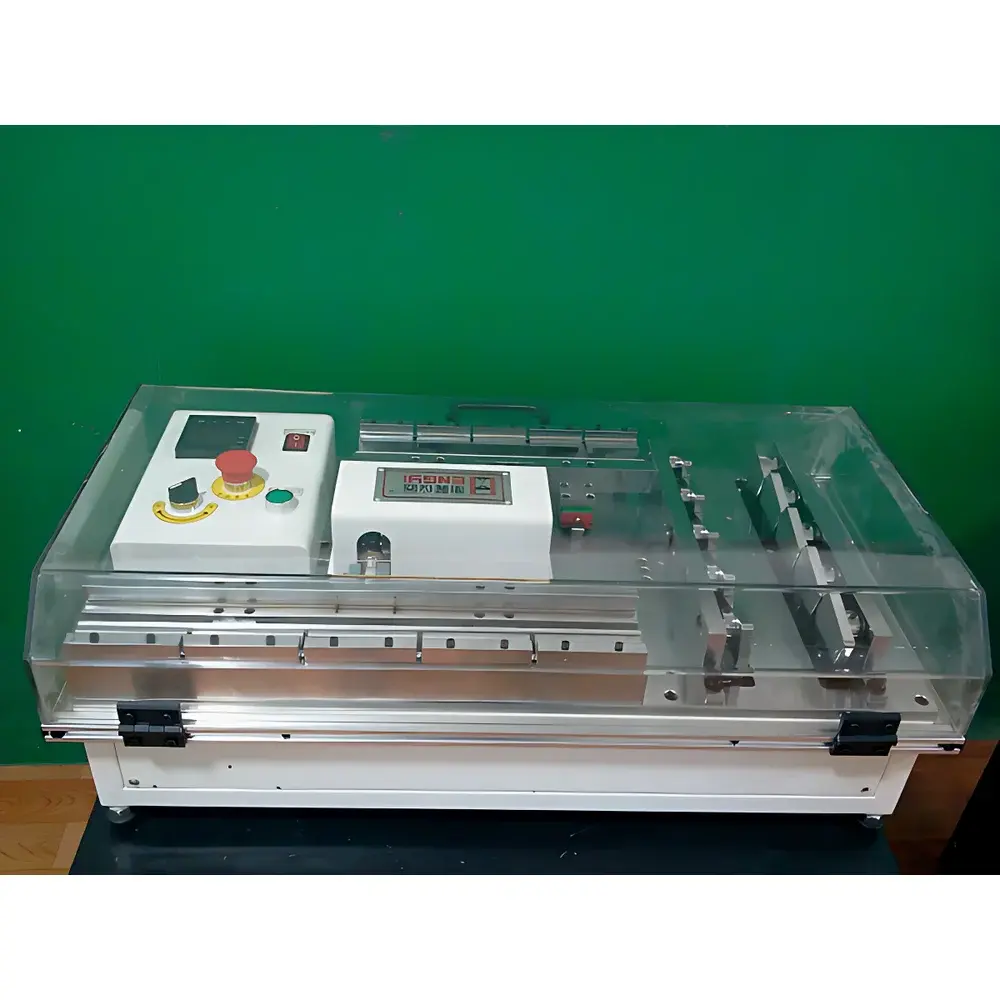
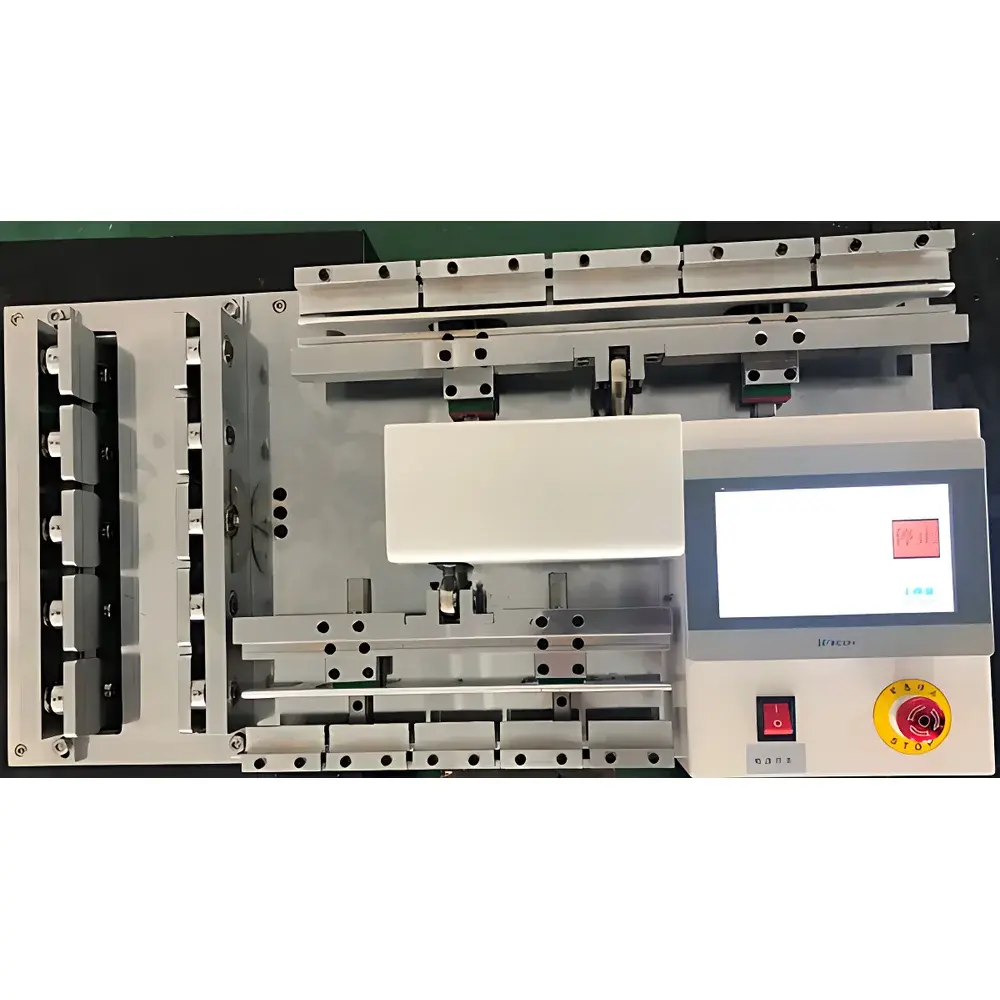
Hengyi HY(IC)RTVVGH Touchscreen-Controlled Dual Bending and Torsion Tester for Smart Cards
| Brand | Hengyi / Hengyitest |
|---|---|
| Origin | Shanghai, China |
| Manufacturer Type | Direct Manufacturer |
| Country of Origin | China |
| Model | HY(IC)RTVVGH |
| Pricing | Upon Request |
Overview
The Hengyi HY(IC)RTVVGH Touchscreen-Controlled Dual Bending and Torsion Tester is a precision-engineered mechanical durability testing system designed specifically for evaluating the structural integrity and fatigue resistance of contact and contactless smart cards under standardized cyclic mechanical stress. It operates on the principle of controlled, repeatable angular displacement and linear deflection to simulate real-world handling conditions—including wallet insertion, pocket flexing, and card reader engagement—thereby quantifying failure thresholds in accordance with internationally recognized test protocols. The instrument implements a dual-actuation architecture: independent servo-controlled mechanisms drive simultaneous or sequential long-edge bending, short-edge bending, and bidirectional torsional deformation across 15 parallel test stations (5 per mode), enabling high-throughput, statistically robust validation of card substrate resilience, laminate adhesion, and embedded IC module anchoring.
Key Features
- Fifteen independent test stations: five configured for long-edge bending (20 mm max displacement, ±0.5 mm resolution), five for short-edge bending (10 mm max displacement, ±0.5 mm resolution), and five for bidirectional torsion (±15° per direction, total 30° twist, ±1° angular accuracy)
- Non-contact optical counting system with 9999-cycle capacity—eliminating mechanical switch wear and ensuring >99.98% counting reliability over extended operation
- Integrated 7-inch industrial touchscreen HMI with intuitive parameter configuration, real-time cycle monitoring, and pass/fail status logging per station
- STK AC variable-speed motor coupled with high-precision gear reduction train, delivering stable rotational output at 30 rpm (0.5 Hz) for both bending and torsion modes
- Compliance-grade fixture geometry: all clamping dimensions strictly conform to ISO/IEC 7816-1:1998, ISO/IEC 10373-6:2021, GB/T 16649.1–2016, and GB/T 17554.1–2006 specifications
- Compact footprint (670 × 380 × 220 mm) and low power consumption (35 W nominal, AC 220 V ±5%) suitable for benchtop deployment in QC labs and R&D environments
Sample Compatibility & Compliance
The HY(IC)RTVVGH supports standard ISO/IEC 7810 ID-1 format cards (85.6 × 53.98 × 0.76 mm), including magnetic stripe cards, contact IC cards (with embedded microcontrollers), contactless RFID cards (e.g., MIFARE, DESFire), and hybrid dual-interface cards. Each test station accommodates cards with or without embossed characters, metallic antenna layers, or laminated security features. All mechanical profiles—including bend radius, torsion axis alignment, and clamp pressure—are traceably calibrated against national metrology standards. Test execution complies with clause 6.2 (Bending Test) and clause 6.3 (Torsion Test) of ISO/IEC 10373-6:2021, and satisfies the mechanical stress verification requirements of ISO/IEC 7816-1 Annex A. Data records maintain auditability for GLP-compliant laboratories and support FDA 21 CFR Part 11 readiness when integrated with validated LIMS or ELN systems.
Software & Data Management
The embedded firmware provides full-cycle control logic with programmable start/stop triggers, cycle interruption recovery, and per-station error flagging (e.g., jam detection, out-of-tolerance angle deviation). Cycle count, elapsed time, and operational status are logged internally with timestamping and exportable via USB to CSV format. Optional PC-based software (sold separately) enables remote monitoring, statistical process control (SPC) charting (X̄-R charts for cycle-to-failure distributions), and automated report generation compliant with ISO/IEC 17025 documentation requirements. Audit trails record operator ID, parameter changes, and calibration events—supporting traceability in regulated environments.
Applications
- Pre-certification validation of smart cards prior to submission to EMVCo, Common Criteria (CC EAL4+), or national payment scheme certification bodies
- Comparative fatigue analysis of alternative substrate materials (PVC, PET-G, polycarbonate, composite laminates)
- Qualification testing of adhesive systems used in multi-layer card construction
- Failure mode analysis (crack propagation, delamination, solder joint fracture) under accelerated mechanical aging
- Supplier qualification and incoming inspection for card manufacturers, personalization bureaus, and banking OEMs
- Research into mechanical-electrical coupling effects—e.g., how repeated bending influences RF performance or chip electrical continuity
FAQ
What international standards does this tester fully comply with?
It meets the mechanical test requirements of ISO/IEC 7816-1:1998, ISO/IEC 10373-6:2021, GB/T 16649.1–2016, and GB/T 17554.1–2006.
Is the optical counting system field-serviceable?
Yes—the photoelectric sensor module is modular and replaceable without recalibration; alignment fixtures and reference targets are included in the maintenance kit.
Can test parameters be customized per station?
No—parameters are synchronized across all stations within a given mode (bending or torsion) to ensure inter-laboratory reproducibility, as required by ISO/IEC 10373-6.
What is the warranty coverage and service support structure?
The instrument carries a 12-month parts-and-labor warranty; lifetime technical support includes remote diagnostics, firmware updates, and access to application engineering consultation for method development.
Does the system support integration with laboratory information management systems (LIMS)?
Native USB data export enables seamless ingestion into third-party LIMS; optional RS-232 or Ethernet communication modules (with Modbus RTU/TCP protocol) are available for direct system integration.



