
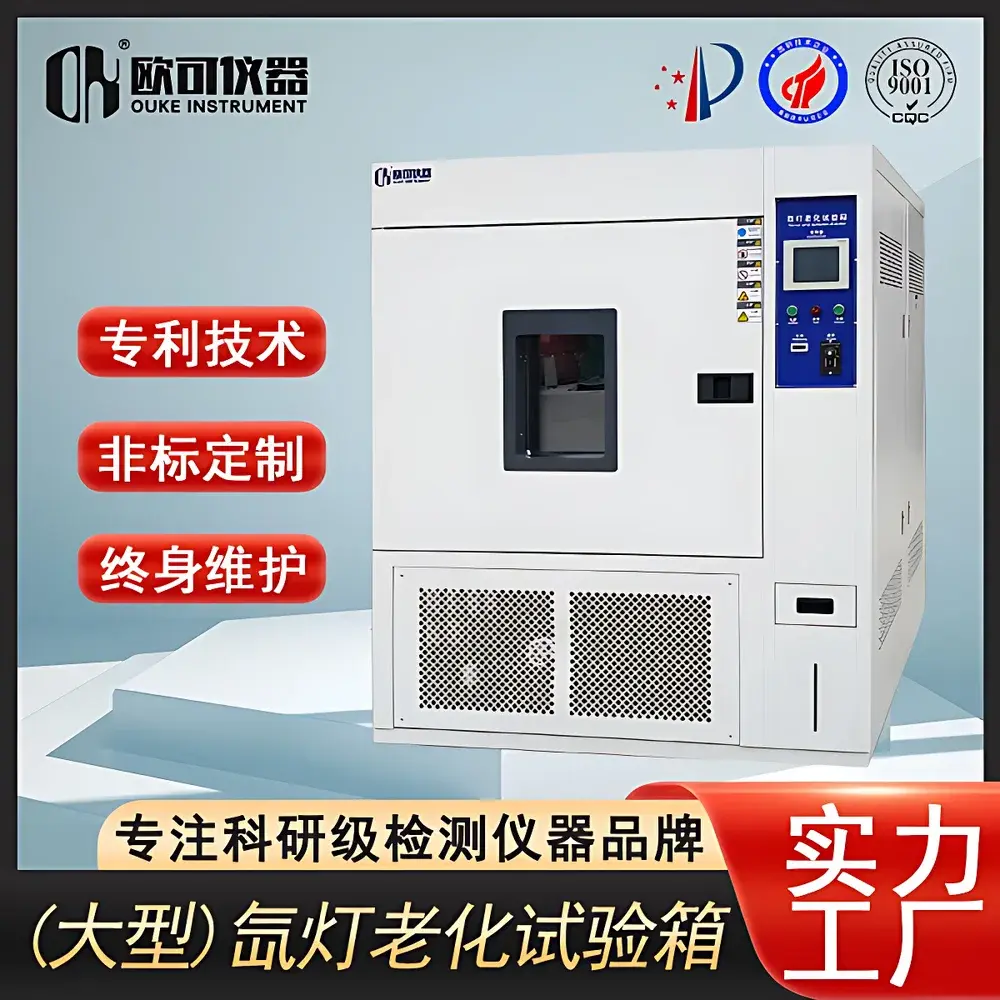
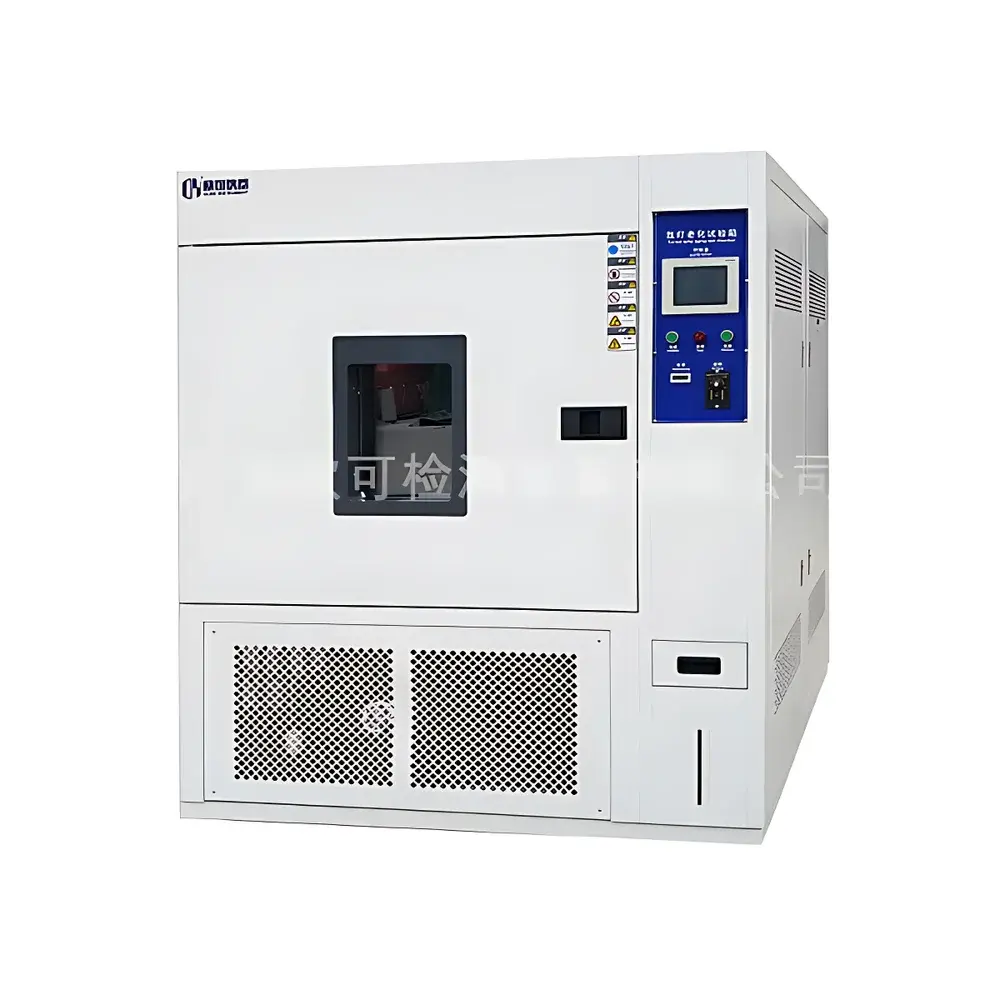
OK-XD-153 Programmable Xenon Arc Weathering Test Chamber
| Brand | OK Instruments |
|---|---|
| Origin | Guangdong, China |
| Manufacturer Type | OEM/ODM Manufacturer |
| Country of Origin | China |
| Model | OK-XD-153 |
| Price | USD 5,200 (FOB Guangdong) |
| Xenon Lamp Power | 6 kW |
| Irradiance Range | ≤ 1200 W/m² (at sample plane, 300–800 nm) |
| Light/Dark Cycle Programming | 1 s to 999 h, programmable in seconds, minutes, or hours |
| Humidity Control Range | 20–75 %RH (non-condensing), ±3 %RH accuracy |
| Temperature Range (Black Panel) | 40–110 °C |
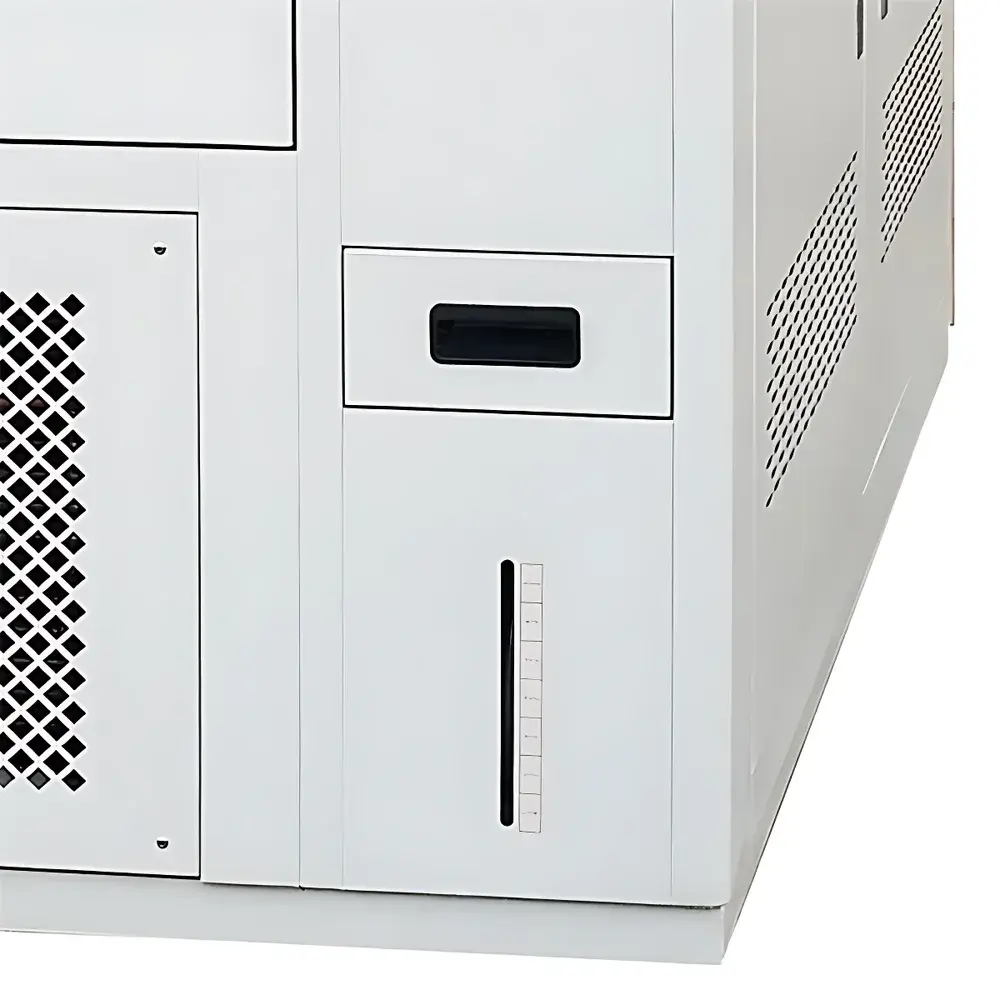
| Cooling Method | Air-cooled xenon lamp system with forced convection and thermal management |
| Filter Options | Daylight-Q/B, Window Glass-Q/B, Extended UV-Q/B (compliant with ISO 4892-2 spectral requirements) |
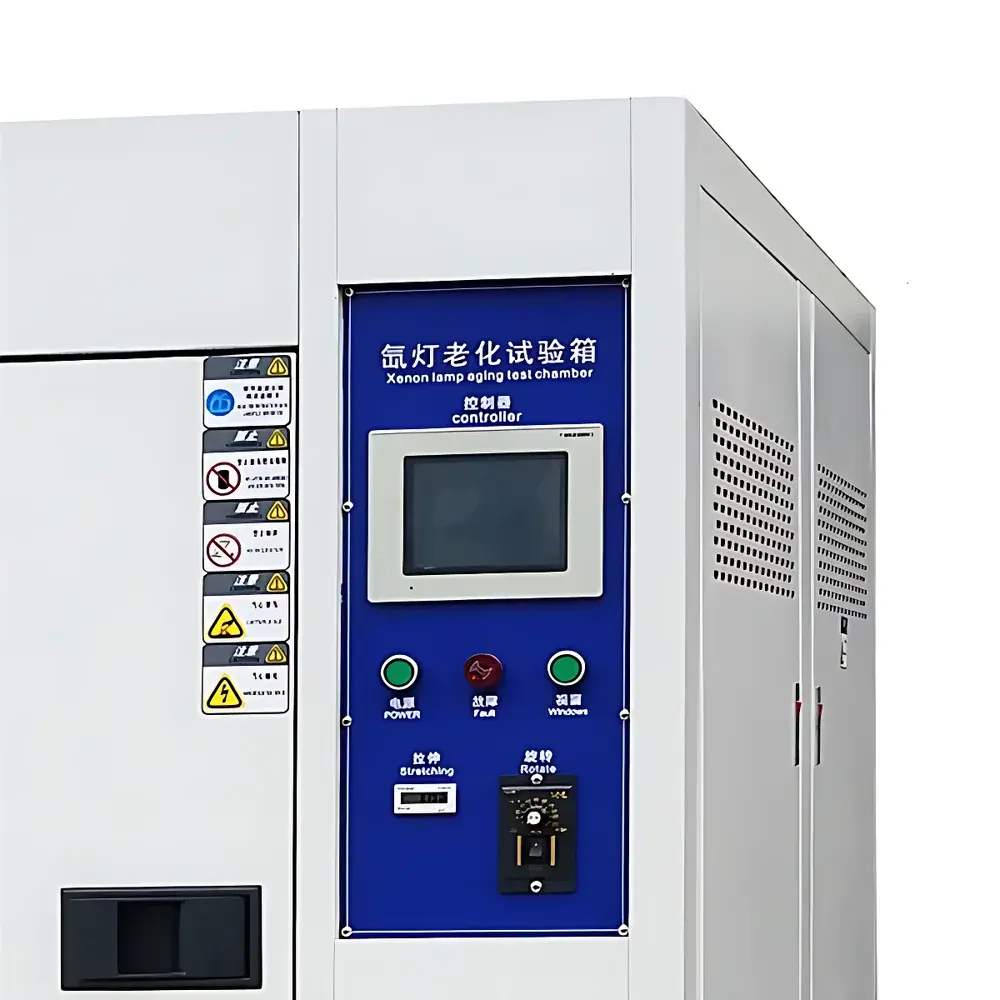
| Control System | PLC-based controller with 10.4″ color touchscreen HMI, real-time data logging, USB export, and password-protected user levels |
Overview
The OK-XD-153 Programmable Xenon Arc Weathering Test Chamber is an engineered solution for accelerated multi-stress environmental aging simulation under laboratory-controlled conditions. It employs a 6 kW long-arc xenon lamp as its primary radiation source—selected for its continuous spectral output closely approximating natural solar irradiance across the ultraviolet (290–400 nm), visible (400–700 nm), and near-infrared (700–800 nm) regions. Unlike narrow-band UV fluorescent sources, xenon arc technology enables holistic photodegradation assessment by delivering full-spectrum exposure, critical for evaluating photochemical degradation mechanisms in polymers, coatings, textiles, and automotive components. The chamber integrates closed-loop irradiance control via calibrated broadband (300–800 nm) or narrowband (e.g., 340 nm) sensors, automatically adjusting lamp power to compensate for spectral drift and intensity decay over lamp life—ensuring test reproducibility per ISO 4892-2, ASTM G155, and SAE J2527.
Key Features
- Programmable Multi-Parameter Cycling: Independent scheduling of irradiance level, black panel temperature (40–110 °C), chamber relative humidity (20–75 %RH), spray duration/frequency, and dark periods—all configurable in single or nested cycles with resolution down to 1 second.
- Spectral Flexibility: Interchangeable optical filter assemblies (Daylight-Q/B, Window Glass-Q/B, Extended UV-Q/B) enable compliance with application-specific spectral power distributions mandated by ISO, ASTM, and SAE standards.
- Thermal & Humidity Precision: Dual-mode temperature control (PID-regulated heating + air-cooled condenser-based cooling) and ultrasonic humidification with desiccant-assisted dehumidification deliver ±0.5 °C temperature stability and ±3 %RH humidity repeatability across the working volume.
- Robust Irradiance Management: Real-time irradiance monitoring with automatic lamp power modulation maintains setpoint irradiance within ±5 % tolerance throughout test duration—eliminating manual recalibration and mitigating inter-lamp variability.
- Engineered Sample Environment Uniformity: Rotating sample drum (optional) or static vertical rack configuration ensures <±10 % irradiance variation and <±2 °C thermal gradient across standard specimen arrays (up to 48 × 75 mm samples).
- Compliance-Ready Data Integrity: Built-in audit trail, timestamped parameter logging (min/max/avg), user access levels, and encrypted USB data export support GLP/GMP-aligned documentation and FDA 21 CFR Part 11 readiness when paired with validated software protocols.
Sample Compatibility & Compliance
The OK-XD-153 accommodates flat-panel specimens up to 100 mm × 100 mm × 25 mm (standard rack) or cylindrical parts on optional rotating drums. Compatible substrates include thermoplastics (PP, ABS, PC), elastomers, painted metal panels, textile laminates, architectural sealants, and photovoltaic backsheet films. The system is designed and verified to meet the physical and operational requirements of ISO 4892-2:2013 (Plastics — Methods of exposure to laboratory light sources — Part 2: Xenon-arc lamps), ASTM G155-22 (Standard Practice for Operating Xenon Arc Lamp Apparatus for Exposure of Non-Metallic Materials), and SAE J2527:2015 (Surface Vehicle Recommended Practice — Laboratory Accelerated Weathering of Automotive Exterior Materials Using a Controlled Irradiance Xenon Arc Apparatus). All calibration procedures align with ISO/IEC 17025 traceability requirements when performed using NIST-traceable reference sensors.
Software & Data Management
Control and monitoring are executed via an embedded industrial PLC interfaced with a 10.4″ capacitive touchscreen HMI. The interface supports creation, storage, and recall of up to 100 independent test programs—each defining sequential phases with unique irradiance setpoints, temperature/humidity ramps, spray activation logic, and dwell times. All operational parameters (irradiance, black panel temp, chamber RH, lamp voltage/current, coolant flow status) are logged at user-selectable intervals (1 s to 60 min) into non-volatile memory. Data exports as CSV files via USB port; optional Ethernet connectivity enables remote supervision and integration into centralized LIMS or MES platforms. Firmware supports firmware versioning, event logging (e.g., door open, lamp fault, sensor timeout), and password-protected administrator mode for calibration lockout and audit trail preservation.
Applications
This chamber serves as a core tool in R&D labs and QC departments across regulated and industrial sectors. In automotive engineering, it validates exterior paint gloss retention, plastic fascia cracking resistance, and interior trim colorfastness per OEM specifications. Coatings manufacturers use it to quantify chalking, blistering, and adhesion loss in architectural acrylics and marine epoxies. Polymer compounders assess UV stabilizer efficacy in polyolefin formulations destined for outdoor infrastructure. Textile laboratories evaluate fading kinetics of dyed polyester and nylon under simulated subtropical or desert climatic profiles. Photovoltaic material suppliers perform IEC 61215-compliant backsheet durability screening. Academic researchers apply it to mechanistic studies of photo-oxidation pathways, hydrolytic degradation synergies, and moisture-mediated embrittlement in biodegradable polymers.
FAQ
What spectral filters are included standard with the OK-XD-153?
Standard configuration includes Daylight-Q/B filter assembly. Window Glass-Q/B and Extended UV-Q/B filters are available as optional accessories—each certified to meet spectral transmittance tolerances defined in ISO 4892-2 Annex A.
Is the irradiance sensor calibrated to NIST traceable standards?
Yes—the factory-installed broadband irradiance sensor is supplied with a calibration certificate traceable to NIST SRM 2242, valid for 12 months. Recalibration is recommended annually or after 1,500 lamp operating hours.
Can the chamber operate without spray function during dark cycles?
Yes. Spray activation is fully decoupled from light/dark timing and can be enabled or disabled independently per phase within any program sequence.
What maintenance intervals are recommended for optimal performance?
Lamp replacement every 1,500 hours; quartz filter sleeve cleaning weekly; air filter inspection bi-weekly; full optical path alignment and sensor verification quarterly; annual full-system calibration including temperature/RH sensors and irradiance detector.
Does the system support third-party software integration for automated reporting?
Yes—via Modbus TCP protocol over Ethernet or RS-485, enabling bidirectional communication with LabVIEW, Python-based QA systems, or enterprise LIMS platforms for automated report generation and statistical process control (SPC) charting.



