
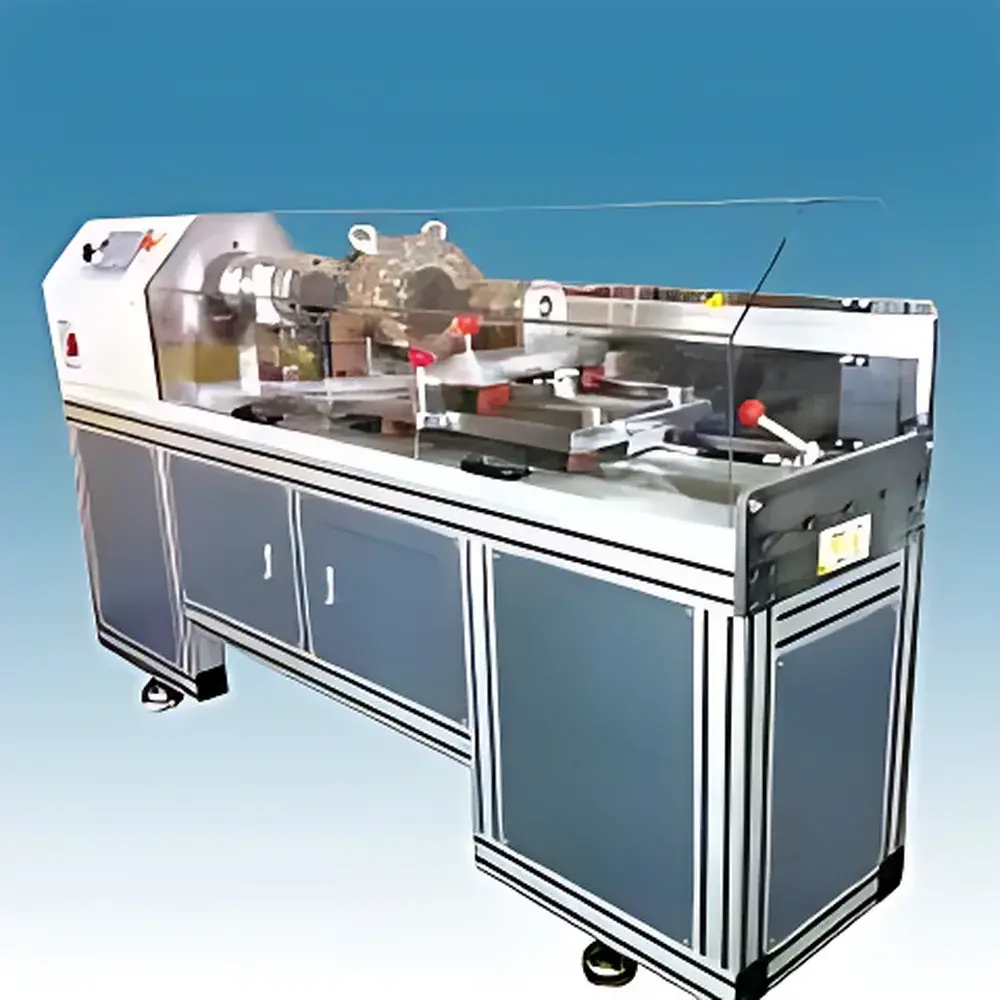
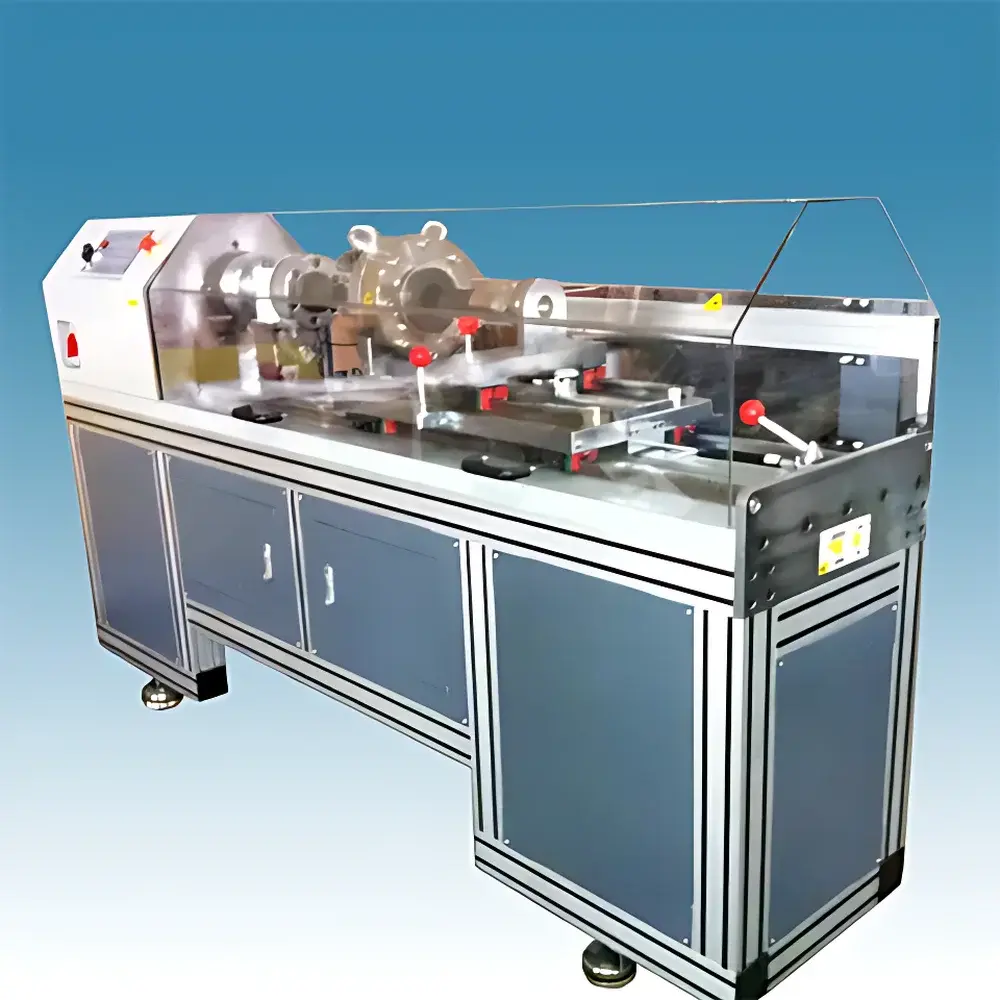
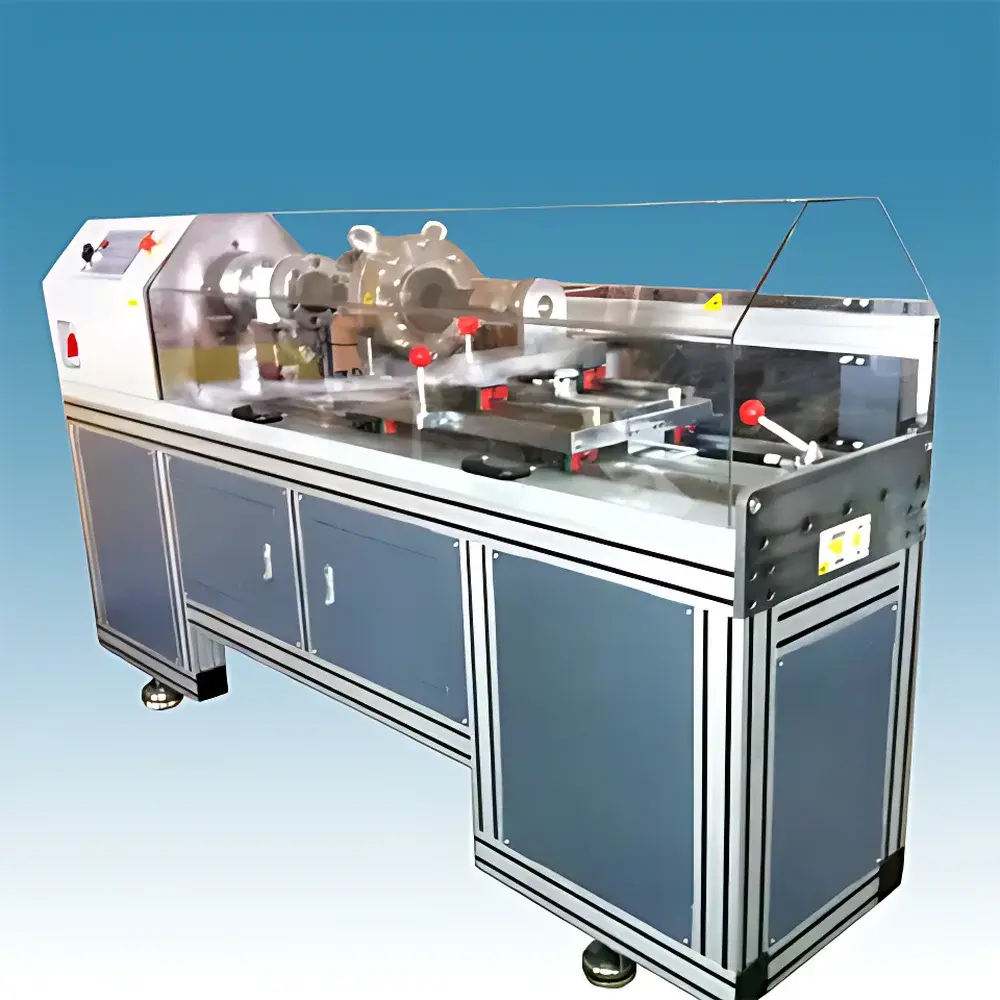
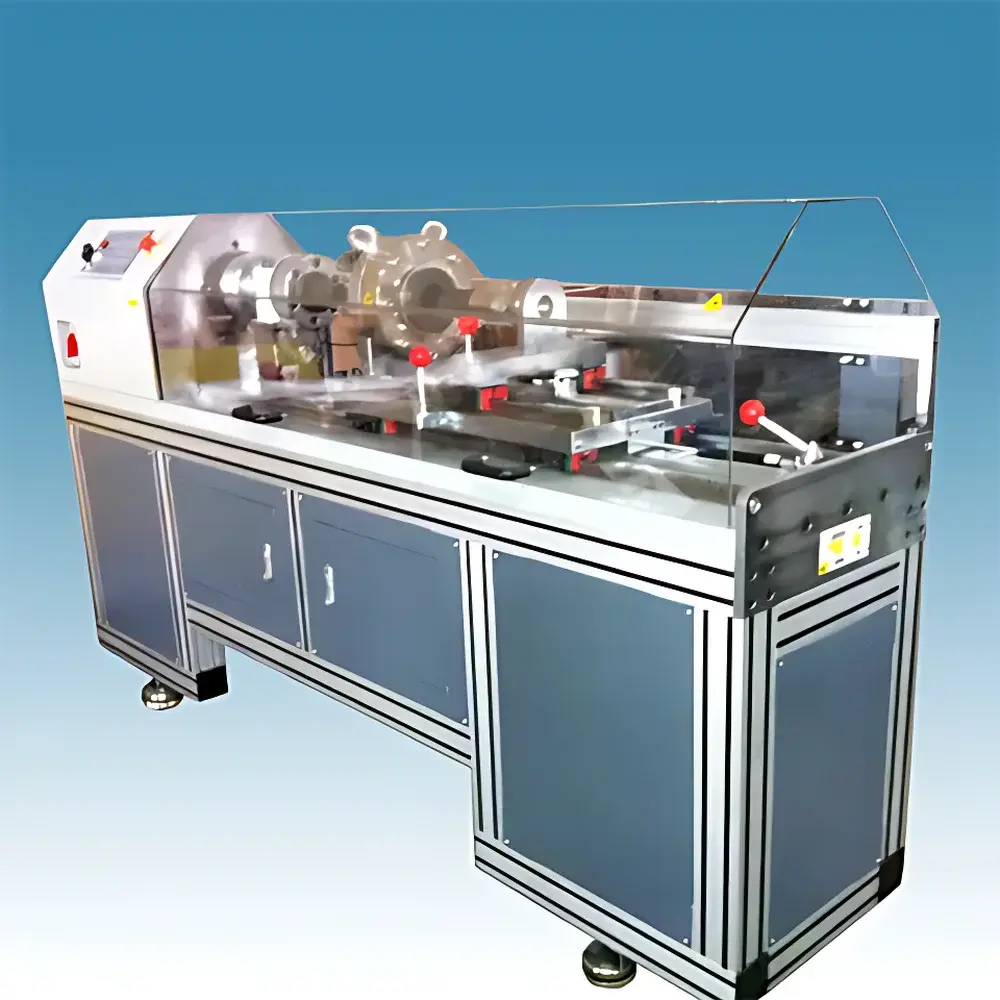
Hengyi HY-2000N·m Thread Friction Coefficient Tester
| Brand | Hengyi / Hengyitest |
|---|---|
| Origin | Shanghai, China |
| Manufacturer Type | Direct Manufacturer |
| Regional Category | Domestic (China) |
| Model | HY-2000N·m |
| Price Range | USD 28,000 – 70,000 |
| Max. Total Torque | 2000 N·m |
| Max. Thread Torque | 1000 N·m |
| Axial Force Range | 5–500 kN |
| Torque Measurement Accuracy | ±0.5% FS |
| Twist Angle Range | 0–100,000° (or continuous) |
| Angular Accuracy | ±0.5% FS |
| Rotational Speed Range | 0–30 rpm |
| Speed Accuracy | ±0.5% |
| Gauge Length Adjustment | Up to 1000 mm |
| Specimen Thread Size | M10–M30 (customizable) |
| Power Supply | Single-phase 5 kW |
| Dimensions (L×W×H) | ≈2200×540×1250 mm |
| Weight | 1800 kg |
Overview
The Hengyi HY-2000N·m Thread Friction Coefficient Tester is a high-capacity, microprocessor-controlled torsion testing system engineered for precision evaluation of mechanical fasteners under combined torsional and axial loading. Based on the fundamental principle of coupled torque–axial force measurement during controlled tightening and loosening cycles, this instrument quantifies interfacial friction behavior across threaded interfaces—enabling rigorous determination of thread friction coefficient (µthread), bearing surface (end-face) friction coefficient (µbearing), and total system friction coefficient (µtotal). Designed in accordance with ISO 16047, ASTM F519, DIN 267-27, and GB/T 3098.9 standards, the tester supports full-cycle analysis of torque–tension relationships, yield preloading, ultimate failure, breakaway torque, and prevailing torque characteristics. Its horizontal rigid frame architecture, integrated high-fidelity torque transducers, and optical rotary encoders ensure traceable, repeatable measurements essential for R&D validation, production quality assurance, and regulatory compliance in aerospace, automotive, energy, and heavy machinery sectors.
Key Features
- High-resolution dual-axis measurement: Simultaneous acquisition of torque (up to 2000 N·m), axial force (5–500 kN), and angular displacement (0–100,000° or continuous) at 100 Hz sampling rate
- Industrial-grade servo drive system powered by Panasonic AC servo motor with 1:2,000,000 speed regulation ratio and ±0.5% speed accuracy
- Calibration-traceable torque sensing using high-stability strain-gauge transducers (accuracy ≤ ±0.5% FS per ISO 376 Class 0.5)
- Precision angular measurement via imported high-resolution optical encoder (resolution < 0.01°, repeatability ±0.02°)
- Dedicated torsion–tension coupling algorithm enabling real-time calculation of K-factor, µthread, µbearing, and µtotal per ISO 16047 Annex A
- Modular fixture interface supporting standardized test specimens from M10 to M30; adaptable for custom geometries including flanged bolts, locknuts, and self-locking fasteners
- Robust steel frame with powder-coated enclosure (2200 × 540 × 1250 mm, 1800 kg) optimized for vibration-damped operation in QC labs and production floors
Sample Compatibility & Compliance
The HY-2000N·m accommodates hex nuts, structural bolts, aerospace-grade fasteners, prevailing-torque locknuts, and specialty threaded components per ISO 4032, ISO 4034, ASTM A194/A194M, and SAE J429 specifications. It supports both static and dynamic friction characterization—including run-down, dwell, and reverse-torque protocols—required for validating lubrication performance, coating integrity, and thread deformation resistance. All measurement outputs comply with GLP documentation requirements and support audit-ready data export conforming to FDA 21 CFR Part 11 (electronic records & signatures) when paired with optional audit trail software modules. Test reports include full metadata: environmental conditions, calibration certificates, operator ID, and timestamped raw curves (torque vs. angle, tension vs. angle, torque vs. tension).
Software & Data Management
The embedded control software is built on a 32-bit ARM microprocessor platform (ARM Cortex-M4, 56 MIPS), delivering deterministic real-time loop control and synchronized multi-channel acquisition. The Windows-based analysis suite enables interactive curve segmentation, automatic peak detection (yield torque, ultimate torque, breakaway torque), and customizable report generation aligned with ISO/IEC 17025 technical record requirements. Users may define multi-step test sequences—including ramp-hold-ramp profiles—and apply digital filtering to suppress noise without phase distortion. Raw data exports are provided in CSV and XML formats compatible with MATLAB, Python (Pandas), and LIMS integration. Optional add-ons include automated calibration verification logs, electronic signature workflows, and cloud-synced backup repositories compliant with IEC 62443 cybersecurity guidelines.
Applications
- Quantitative validation of thread lubricant efficacy and thermal stability under preload cycling
- Comparative assessment of plating adhesion, PTFE coating durability, and dry-film lubricant consistency
- Development and qualification of high-strength fasteners for wind turbine rotor assemblies and rail vehicle suspension systems
- Root-cause analysis of bolt loosening failures in vibration-prone environments (e.g., engine mounts, gearbox housings)
- Verification of assembly process capability (Cpk) for torque-controlled tightening stations in Tier-1 automotive manufacturing
- Research into tribological behavior of novel thread geometries (e.g., rolled vs. cut threads, flank-angle variants)
FAQ
What international standards does this tester support?
ISO 16047, ASTM F519, DIN 267-27, GB/T 3098.9, ISO 4032, ISO 4034, and SAE J429 — with configurable test templates and pass/fail thresholds.
Can it measure both static and dynamic friction coefficients?
Yes — through programmable tightening/loosening sequences with dwell periods, enabling separation of static (breakaway) and kinetic (running) friction parameters.
Is third-party calibration certification available?
Yes — factory calibration includes NIST-traceable torque and force certificates; on-site recalibration services are offered annually per ISO/IEC 17025.
Does the system support GMP/GLP-compliant reporting?
With optional software modules, it provides full audit trails, electronic signatures, data immutability, and 21 CFR Part 11 compliance for regulated environments.
What is the minimum measurable friction coefficient resolution?
System resolution supports µ-value discrimination down to 0.001 units, limited only by specimen surface finish and environmental control (temperature/humidity stabilization recommended).



