
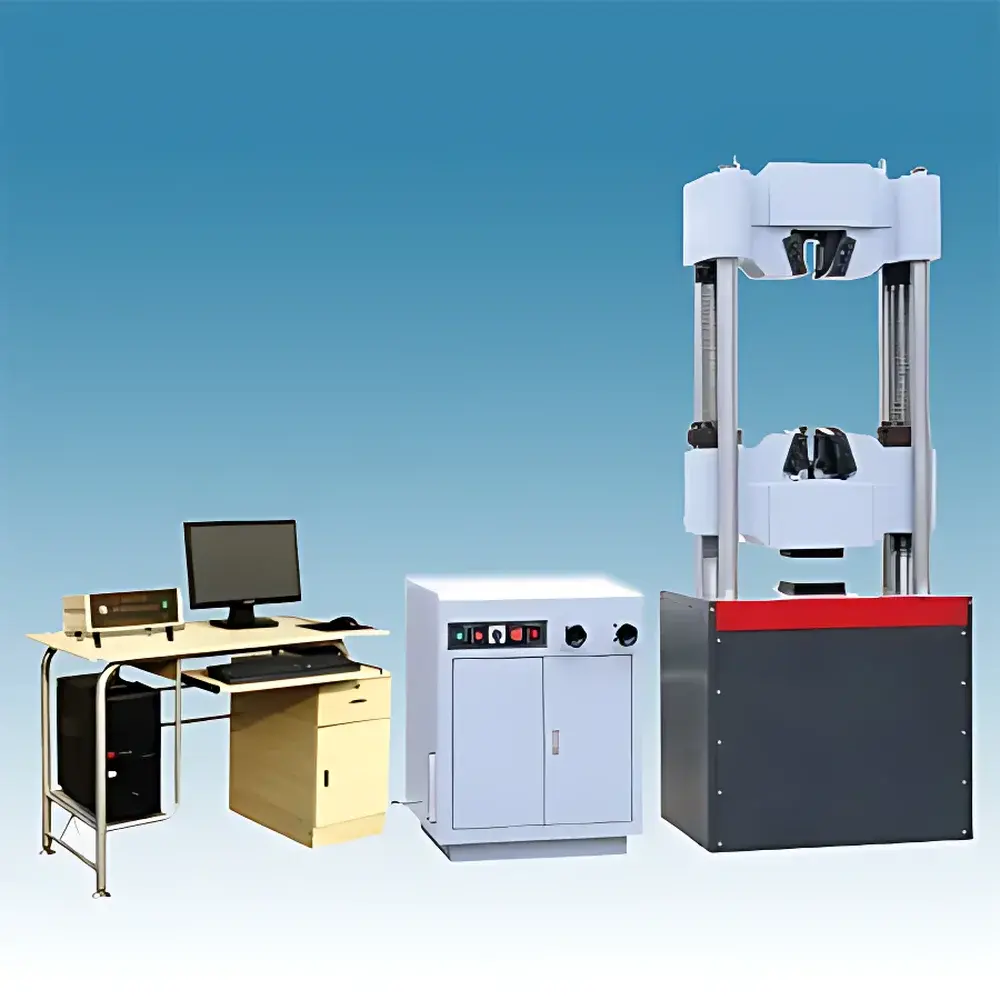
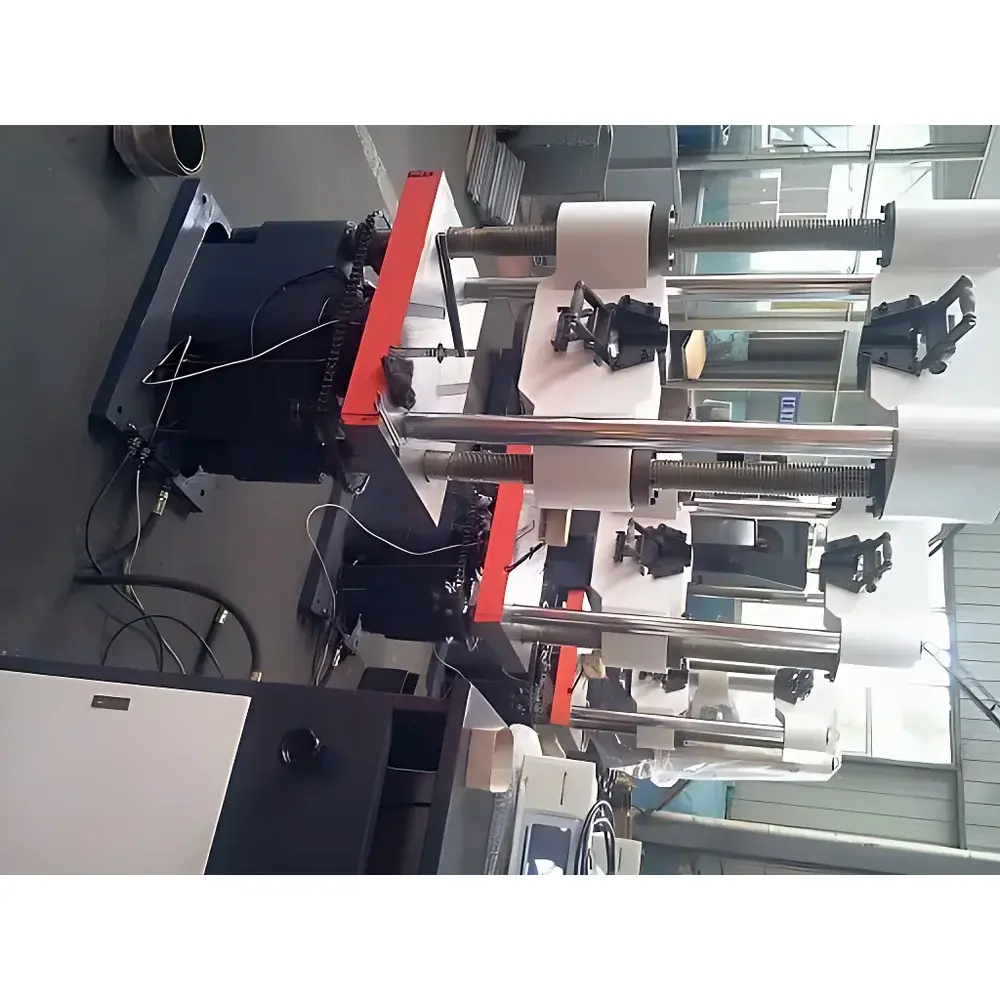
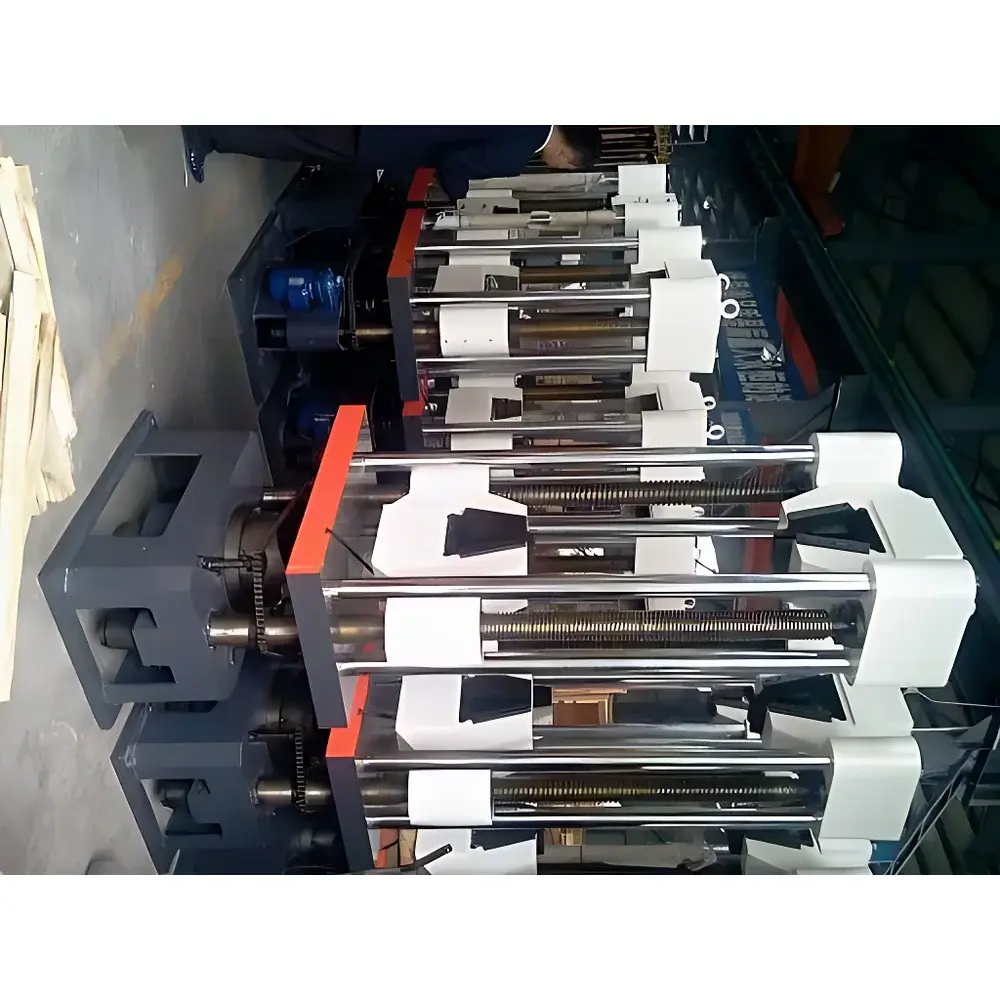
Hengyi HY(WE)100060 Electro-Hydraulic Servo Universal Testing Machine
| Brand | Hengyi |
|---|---|
| Origin | Shanghai, China |
| Manufacturer Type | Direct Manufacturer |
| Product Category | Domestic |
| Model | HY(WE)100060 |
| Instrument Type | Electro-Hydraulic Servo Testing Machine |
| Max Load Capacity | 1000 kN |
| Load Accuracy | ±1% of reading |
| Resolution | ≤0.5% of full scale |
| Compression Space | 600 mm |
| Tensile Space | 600 mm |
| Round Specimen Grip Range | Φ20–60 mm |
| Flat Specimen Grip Range | 0–40 mm |
| Piston Stroke | 150 mm |
| Maximum Bend Support Span | 100–600 mm |
| Shear Specimen Diameter | Φ10 mm |
| Deformation Measurement Accuracy | ±0.5% of reading |
| Displacement Measurement Error | ±0.5% of reading |
| Stress Rate Control Range | 1–60 N/mm²/s |
| Strain Rate Control Range | 0.00025–0.0025 s⁻¹ |
| Closed-Loop Control Accuracy (Force/Displacement/Deformation) | ±1% of setpoint |
| Host Dimensions (W×D×H) | 880 × 580 × 2260 mm |
| Motor Power | 1.5 kW, 3-phase |
| Weight | 3500 kg |
Overview
The Hengyi HY(WE)100060 Electro-Hydraulic Servo Universal Testing Machine is a high-capacity, microprocessor-controlled mechanical testing system engineered for precision static mechanical characterization of metallic and non-metallic materials under tension, compression, bending, and shear loading conditions. It operates on the principle of servo-controlled hydraulic actuation—where a high-fidelity electro-hydraulic servo valve regulates oil flow to a bottom-mounted cylinder, enabling precise force application and real-time closed-loop feedback control. The machine integrates load, displacement, and strain measurement channels via calibrated transducers compliant with ISO 7500-1 Class 1 accuracy requirements. Designed for structural integrity validation and material property certification, it supports standardized test protocols across metallurgy, civil engineering, aerospace component qualification, and quality assurance laboratories operating under ISO/IEC 17025-accredited environments.
Key Features
- 1000 kN maximum load capacity with ±1% load indication accuracy and ≤0.5% relative resolution—validated per ASTM E4 and ISO 7500-1 calibration standards.
- Adjustable test space architecture: 600 mm tensile and compression clearances; customizable bending span from 100 mm to 600 mm; piston stroke of 150 mm ensures extended deformation capability.
- Multi-mode closed-loop control: independent regulation of stress rate (1–60 N/mm²/s), strain rate (0.00025–0.0025 s⁻¹), or displacement rate—each maintaining ±1% deviation from target setpoints during dynamic ramping.
- Dual-sensor architecture: high-stability load cell (imported, temperature-compensated) and linear variable differential transformer (LVDT)-based displacement transducer, both traceably calibrated to national metrological standards.
- Modular grip system: standard configurations include wedge-action tensile grips (Φ20–60 mm round, 0–40 mm flat), three-point bend fixtures, compression platens, and dedicated double-shear adapters for Φ10 mm specimens.
- Robust mechanical frame: rigid two-column steel construction with reinforced crossheads, precision-ground guide rods, and anti-backlash ball screws in the motorized crosshead adjustment mechanism.
Sample Compatibility & Compliance
The HY(WE)100060 accommodates a broad spectrum of specimen geometries and material classes—including ferrous and non-ferrous alloys, reinforced concrete prisms, cementitious composites, polymer-matrix laminates, and welded joints. Its mechanical design and control firmware are validated against key international test standards, including GB/T 228.1–2021 (tensile testing of metallic materials), GB/T 232–2010 (bend testing), GB/T 5224–2014 (prestressing steel wires), ASTM E8/E8M, ASTM C39, ISO 6892-1, and EN 10002-1. All hardware and software components meet electromagnetic compatibility (EMC) requirements per IEC 61326-1 and safety specifications under GB/T 2611–2013 (general requirements for testing machines). Data acquisition and reporting workflows support audit readiness for GLP and GMP-regulated environments.
Software & Data Management
The system ships with Hengyi’s proprietary Windows-based test control and analysis suite—fully localized in English and compatible with Windows 10/11 (64-bit). The software implements full digital PID control with real-time waveform visualization, synchronized multi-channel data logging at up to 1 kHz sampling rate, and automatic identification of yield strength, ultimate tensile strength, modulus of elasticity, and fracture elongation. Test sequences are programmable via step-based scripting, supporting conditional branching and pass/fail logic checks. Raw data exports to CSV, XML, and universal MDF4 formats; reports comply with ISO 14289-1 (PDF/A-2u) archival standards and include embedded metadata (operator ID, calibration certificate IDs, environmental logs). Audit trail functionality records all user actions, parameter modifications, and calibration events—meeting FDA 21 CFR Part 11 requirements when deployed with Windows domain authentication and electronic signature modules.
Applications
- Mechanical property certification of structural steels, aluminum extrusions, and titanium alloys used in pressure vessel fabrication and bridge construction.
- Quality conformance testing of pre-stressed concrete tendons, grouted duct systems, and fiber-reinforced polymer (FRP) rebars per ACI 440 and ASTM D7205.
- R&D evaluation of high-temperature superalloys under controlled strain-rate conditions simulating turbine disk operational loads.
- Validation of additive manufacturing (AM) build parameters through post-build tensile and bend testing of Ti-6Al-4V and Inconel 718 coupons.
- Third-party verification of weld joint integrity in ASME Section IX and ISO 15614-1 qualified procedures.
- Calibration reference service for lower-capacity UTM systems within metrology labs accredited to ISO/IEC 17025.
FAQ
What standards does this machine support for tensile testing of metals?
It fully complies with GB/T 228.1–2021, ASTM E8/E8M, ISO 6892-1, and EN ISO 6892-1 for uniaxial tensile testing—including automatic determination of Rp0.2, Rm, Agt, and Ag.
Can the system perform cyclic loading or fatigue tests?
No—the HY(WE)100060 is designed exclusively for quasi-static monotonic loading. For low-cycle fatigue or servo-hydraulic fatigue applications, refer to Hengyi’s dedicated fatigue testing systems (e.g., HF series) with higher-frequency actuation and thermal management.
Is third-party calibration documentation included?
Yes—a factory calibration certificate traceable to CNAS-accredited primary standards is supplied. Optional UKAS or DAkkS-certified calibration services are available upon request.
What maintenance intervals are recommended for the hydraulic system?
Oil filtration and level inspection every 500 operational hours; full hydraulic oil replacement and servo valve cleaning every 2,000 hours or annually—whichever occurs first—per ISO 4406:2017 cleanliness code requirements.
Does the software support automated report generation for ISO/IEC 17025 accreditation?
Yes—templates include mandatory fields for uncertainty budgeting, equipment traceability, environmental monitoring logs, and technician sign-off, aligning with ILAC-P14:2019 reporting guidelines.



