
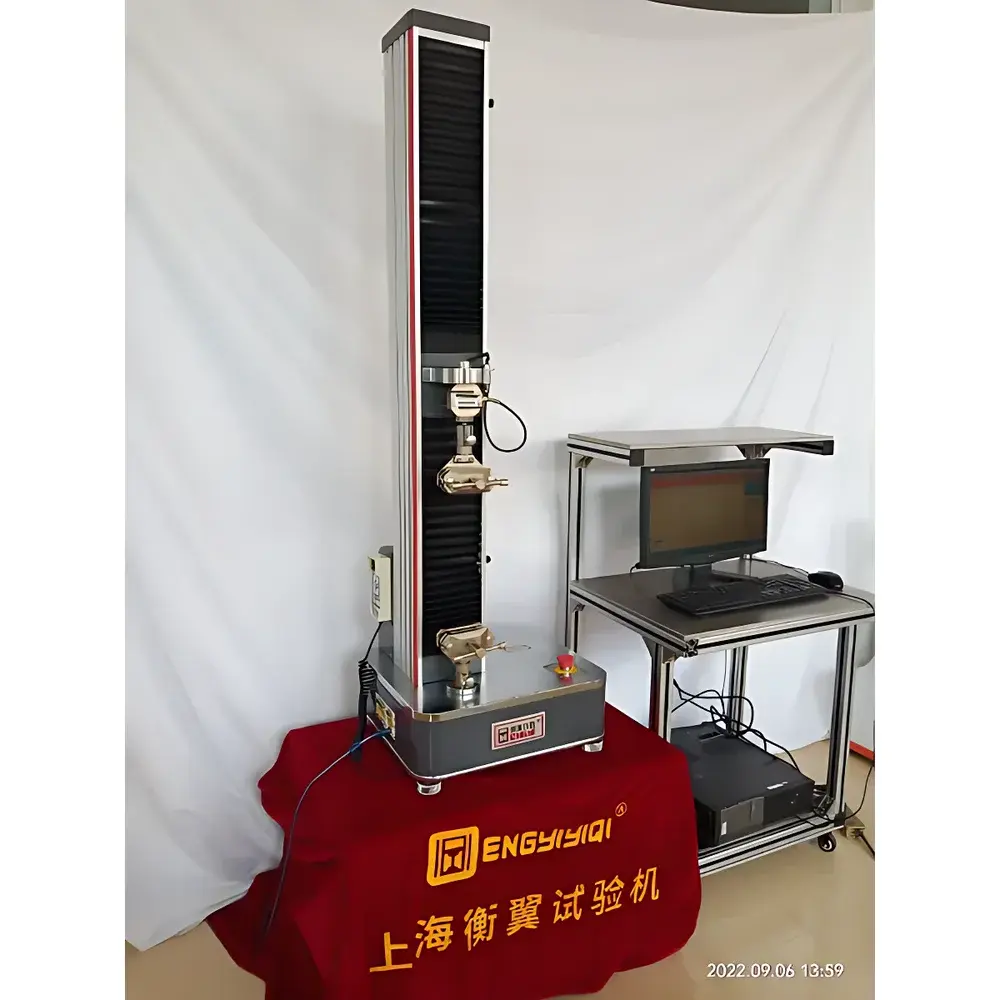
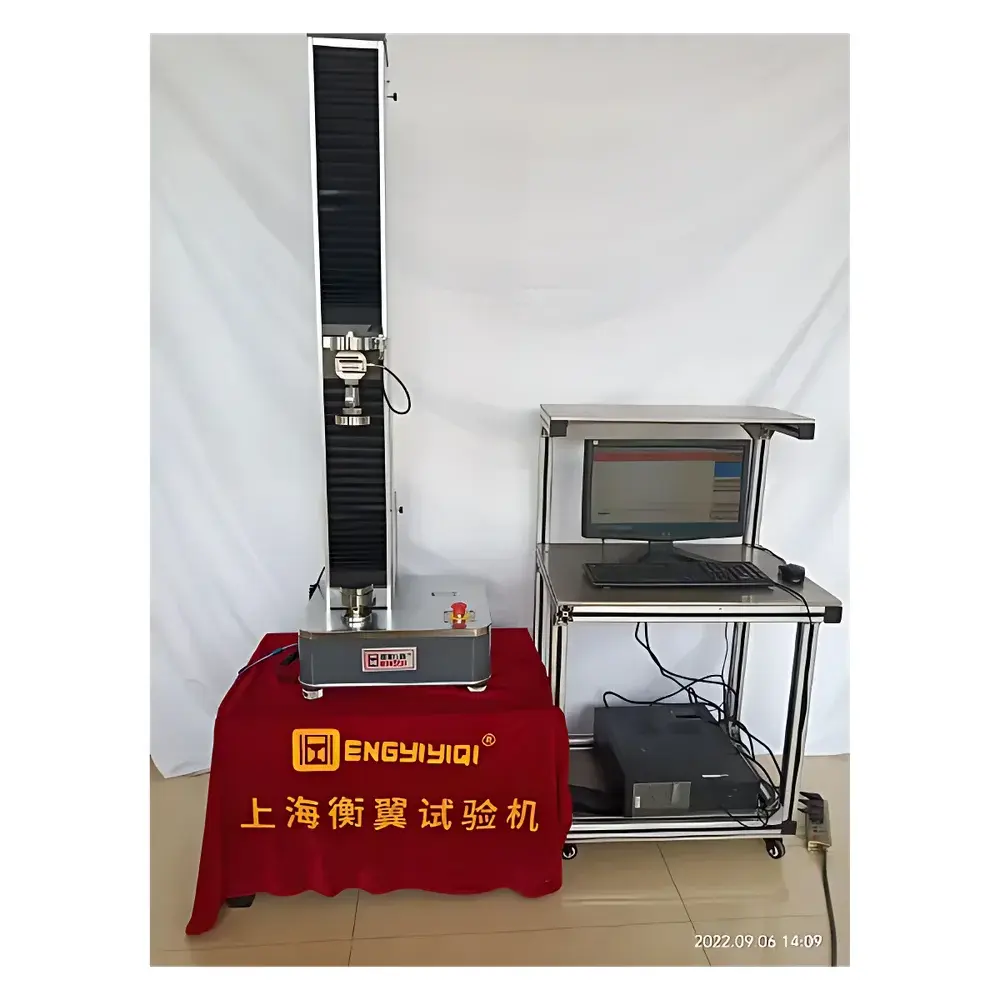
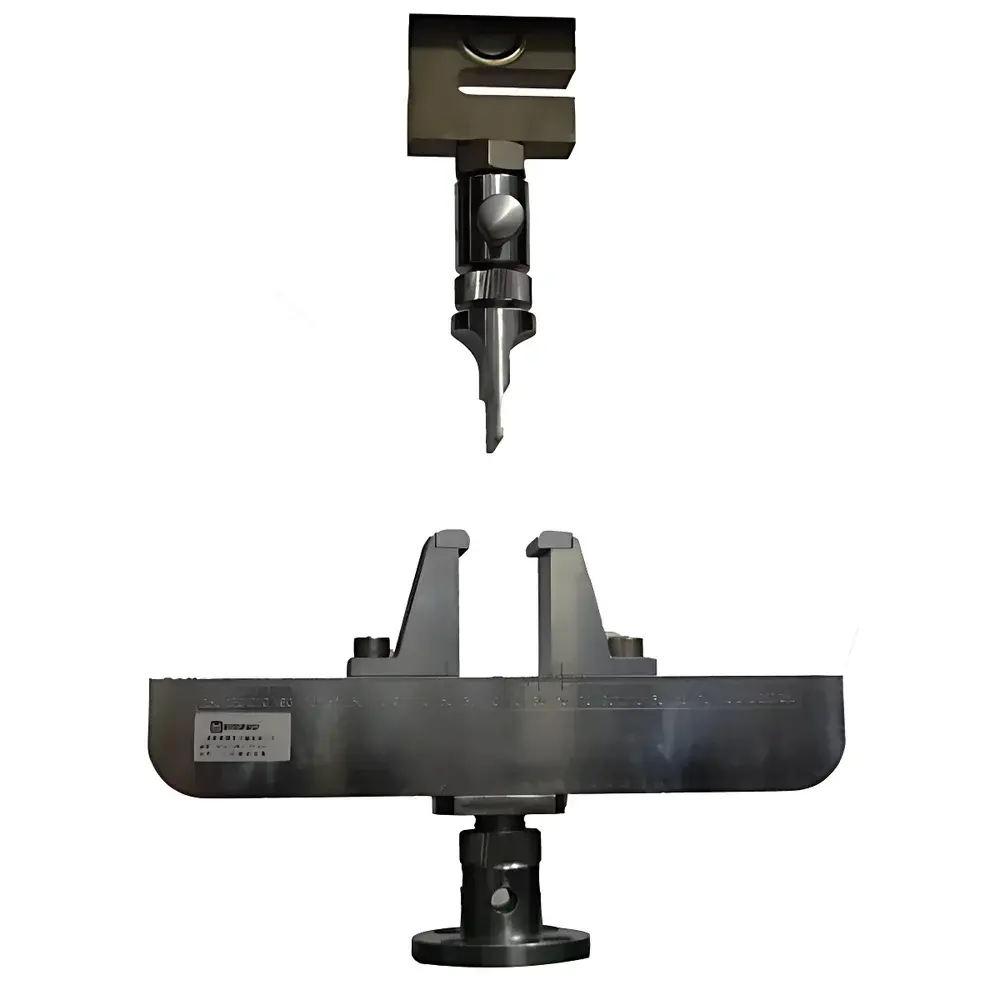
Hengyi HY-0580(WQ) Three-Point Bending Tester for Bone, Soft Tissue & Ligament Biomechanics
| Brand | Hengyi / Hengyitest |
|---|---|
| Origin | Shanghai, China |
| Manufacturer Type | Direct Manufacturer |
| Product Origin | Domestic (China) |
| Model | HY-0580(WQ) |
| Instrument Type | Electromechanical Universal Testing Machine |
| Load Capacity | 5–5000 N (selectable) |
| Force Accuracy | Class 0.5 per ISO 7500-1 |
| Force Resolution | ±500,000 counts (full-scale, no range switching) |
| Displacement Resolution | 0.0001 mm |
| Deformation Resolution | 0.0001 mm |
| Closed-Loop Sampling Rate | 2000 Hz (customizable) |
| Effective Test Width | 120 mm |
| Vertical Test Space | 800 mm |
| Speed Range | 0.001–500 mm/min (adjustable) |
| Speed Accuracy | ±0.5% of indicated value |
| Displacement/Strain Measurement Accuracy | ±0.5% of indicated value |
| Stress Control Rate Range | 0.005–6 %FS/s |
| Strain Control Rate Range | 0.002–6 %FS/s |
| Constant-Load/Displacement/Deformation Control Range | 0.5–99.999 %FS |
| Overload Protection | +10% of maximum capacity |
| Power Supply | 220 V AC, 750 W |
| Dimensions (W×D×H) | 470 × 400 × 1510 mm |
| Weight | 100 kg |
Overview
The Hengyi HY-0580(WQ) Three-Point Bending Tester is a high-precision electromechanical universal testing system engineered specifically for biomechanical characterization of orthopedic and soft biological materials. It operates on the principle of quasi-static mechanical loading under controlled displacement or force, enabling standardized three-point bending tests per ASTM F2118, ISO 178, ISO 527, and EN 12664—critical for evaluating flexural modulus, yield strength, ultimate bending stress, and fracture behavior of bone analogs, ligaments, tendons, cartilage scaffolds, spinal implants, interbody fusion devices, metallic fixation plates, intramedullary nails, and polymer-based tissue-engineered constructs. Its modular architecture supports full-force-range testing from 5 N to 5000 N with Class 0.5 accuracy per ISO 7500-1, making it suitable for both low-force soft-tissue mechanics and high-strength implant validation. The system integrates real-time dual-channel data acquisition (force and displacement), synchronized at up to 2000 Hz (custom-configurable), ensuring fidelity in capturing transient deformation events during brittle failure or viscoelastic relaxation.
Key Features
- Triple-closed-loop control architecture supporting displacement-, force-, and strain-controlled testing modes—including low-cycle fatigue protocols and repeated cyclic bending sequences.
- Precision linear guide rail system ensures axial alignment stability and minimizes lateral deflection during bending, critical for accurate moment arm definition in three-point configurations.
- Preloaded ball-screw drive with heavy-duty angular contact bearings guarantees zero-backlash operation over extended service life and maintains repeatability within ±0.5% across >10,000 test cycles.
- High-efficiency planetary gearmotor with maintenance-free lubrication delivers smooth, silent actuation and consistent torque delivery across the full speed range (0.001–500 mm/min).
- Integrated electronic limit protection, automatic return-to-start functionality, and programmable stop conditions (e.g., preset load, displacement, or time termination) enhance operational safety and protocol compliance.
- Self-diagnostic firmware continuously monitors drive current, voltage, thermal load, and sensor integrity—triggering immediate shutdown upon detection of overload, overpressure, or signal anomaly.
Sample Compatibility & Compliance
The HY-0580(WQ) accommodates a broad spectrum of specimen geometries and mechanical classes: cortical and cancellous bone analogs (synthetic or cadaveric), hydrogel-based soft tissues, electrospun nanofibrous membranes, biodegradable polymer rods (PLA, PCL), metallic spinal cages, titanium alloy plates, and composite-coated orthopedic hardware. Its 120 mm test width and 800 mm vertical clearance support large-format vertebral body specimens and multi-component spinal constructs. The system complies with essential regulatory and quality frameworks including ISO 13485 for medical device testing, ASTM E4 for force verification, ISO 5893 for tensile testing instrumentation, and supports audit-ready documentation per FDA 21 CFR Part 11 when paired with validated software modules. All mechanical calibrations are traceable to national metrology institutes via certified reference standards.
Software & Data Management
The bundled Hengyi TestSuite v4.2 provides a dual-mode interface: a streamlined QC mode for routine pass/fail assessments (e.g., “bend-to-failure at 10 mm deflection”) and an advanced research mode supporting custom ramp-hold-relax profiles, multi-stage loading sequences, and user-defined material models. The software embeds over 200 preconfigured test methods aligned with ASTM F2118 (ligament grafts), ISO 178 (flexural properties), ISO 10993-12 (biomaterial mechanical evaluation), and USP (mechanical testing of surgical meshes). Real-time plotting of force–displacement, stress–strain, and moment–curvature curves is supported, with automated calculation of flexural modulus, proportional limit, and energy absorption (area under curve). Export formats include CSV, PDF (with embedded digital signatures), and XML for LIMS integration. Multi-language UI (English, German, French, Japanese, Simplified Chinese) and customizable report templates meet international laboratory documentation requirements.
Applications
- Mechanical validation of osteosynthetic implants under ISO 14801 (dental implants) and ASTM F1717 (spinal fixation systems).
- Flexural rigidity assessment of decellularized tendon grafts and collagen-based scaffolds per ISO 10993-12.
- Comparative bending performance of bioresorbable interference screws versus titanium counterparts.
- Creep and stress-relaxation analysis of hydrogel cartilage replacements under sustained three-point loading.
- Quality assurance testing of 3D-printed porous titanium acetabular cups per ASTM F3001.
- Educational biomechanics labs requiring reproducible, standards-aligned experiments on bovine cortical bone or porcine ligament specimens.
FAQ
Does the HY-0580(WQ) support ASTM F2118-compliant ligament graft testing?
Yes—the system’s three-point bending fixture geometry, displacement resolution (0.0001 mm), and closed-loop control enable full compliance with ASTM F2118 Annex A1 for flexural stiffness measurement of soft-tissue grafts.
Can the software generate GLP-compliant audit trails?
When operated with the optional 21 CFR Part 11 module, the software logs all user actions, parameter changes, calibration events, and test executions with timestamped, non-erasable records.
Is customization available for specialized fixtures, such as vertebral body compression or intervertebral disc bending jigs?
Yes—Hengyi offers OEM fixture design and validation services, including finite element–informed load-path optimization and ISO 17025 traceable mechanical certification.
What maintenance intervals are recommended for long-term accuracy retention?
Annual force calibration using NIST-traceable deadweight standards and biannual verification of displacement encoder linearity are recommended; the planetary gearbox requires no scheduled lubrication.
Does the system support real-time data streaming to external DAQ or MATLAB environments?
Yes—via TCP/IP API and ASCII-based serial protocol, enabling synchronous acquisition with third-party sensors (e.g., digital image correlation cameras or strain gauges).



