
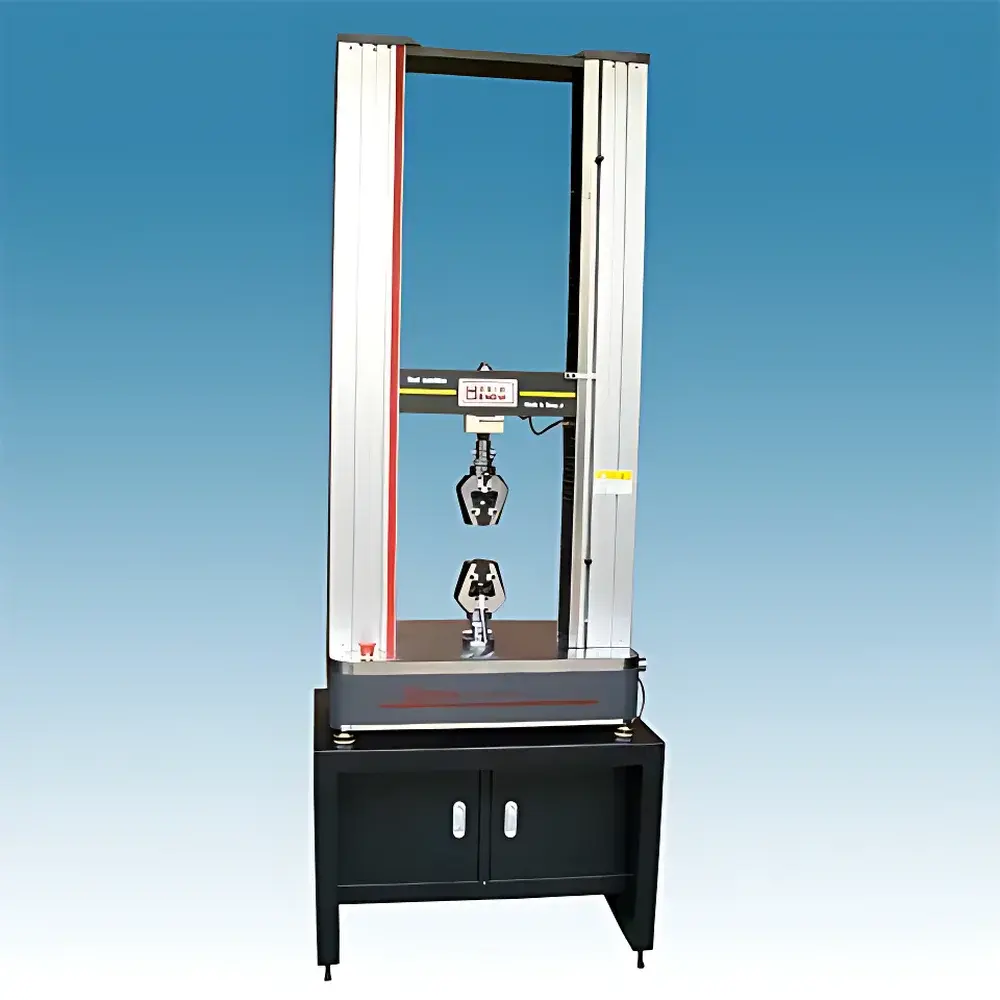
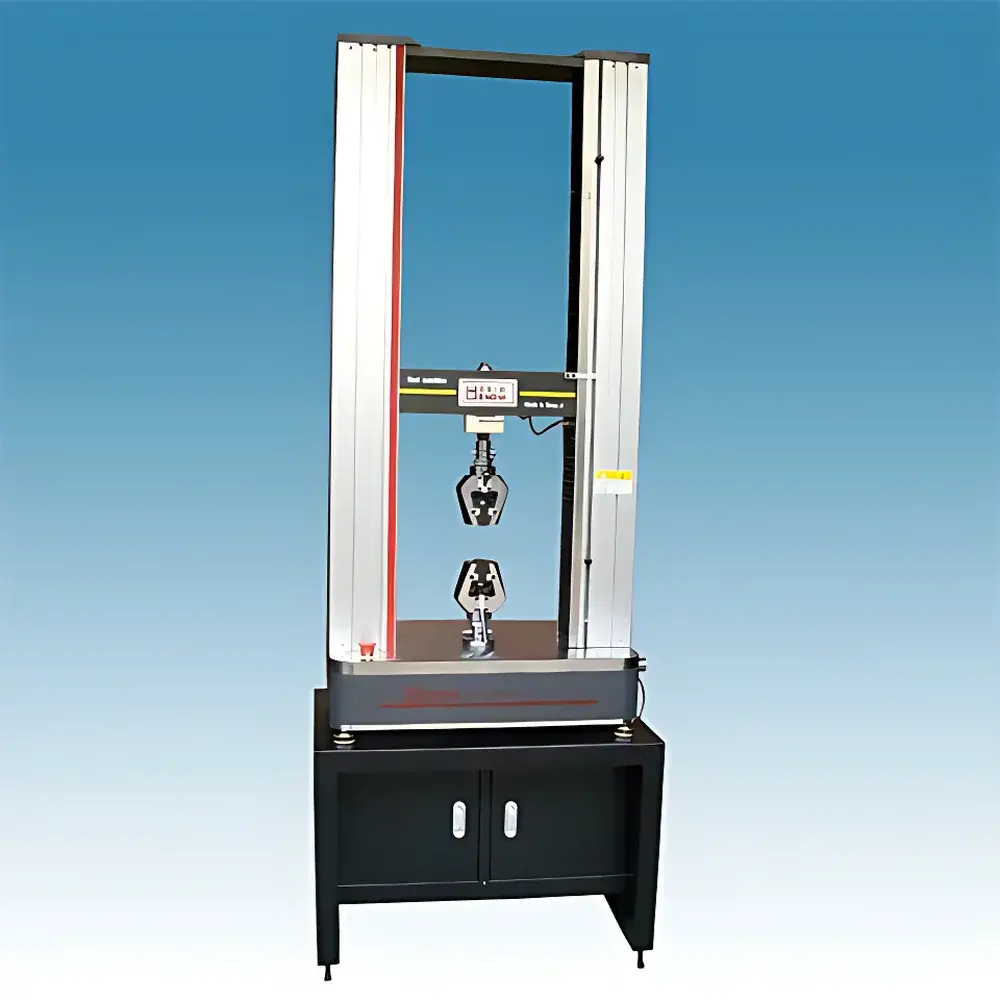
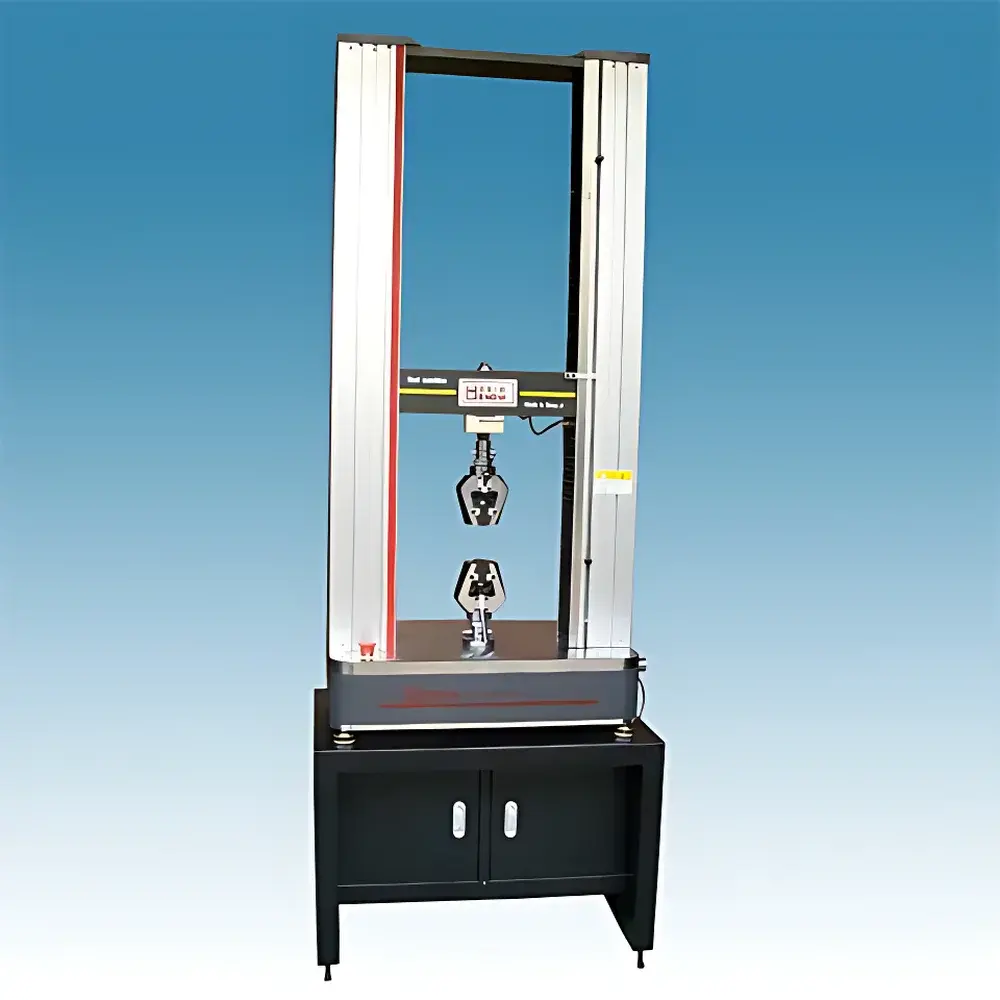
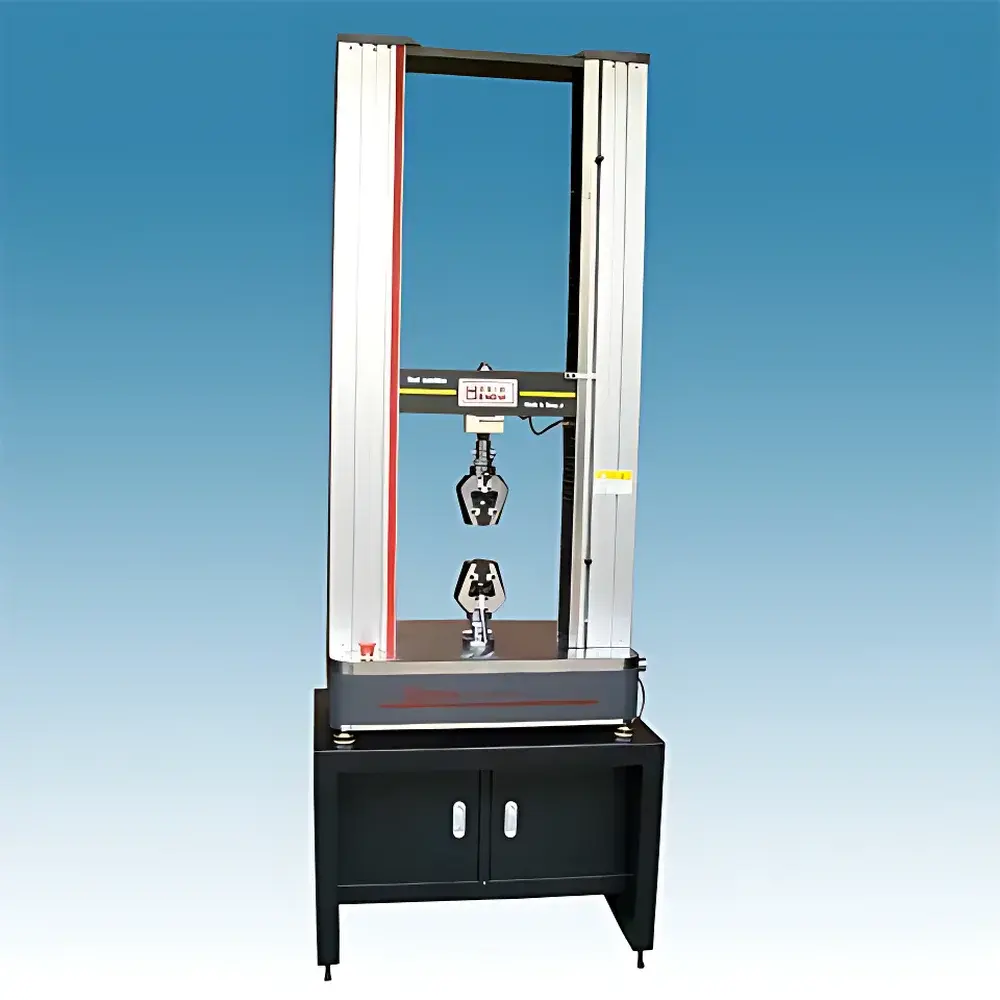
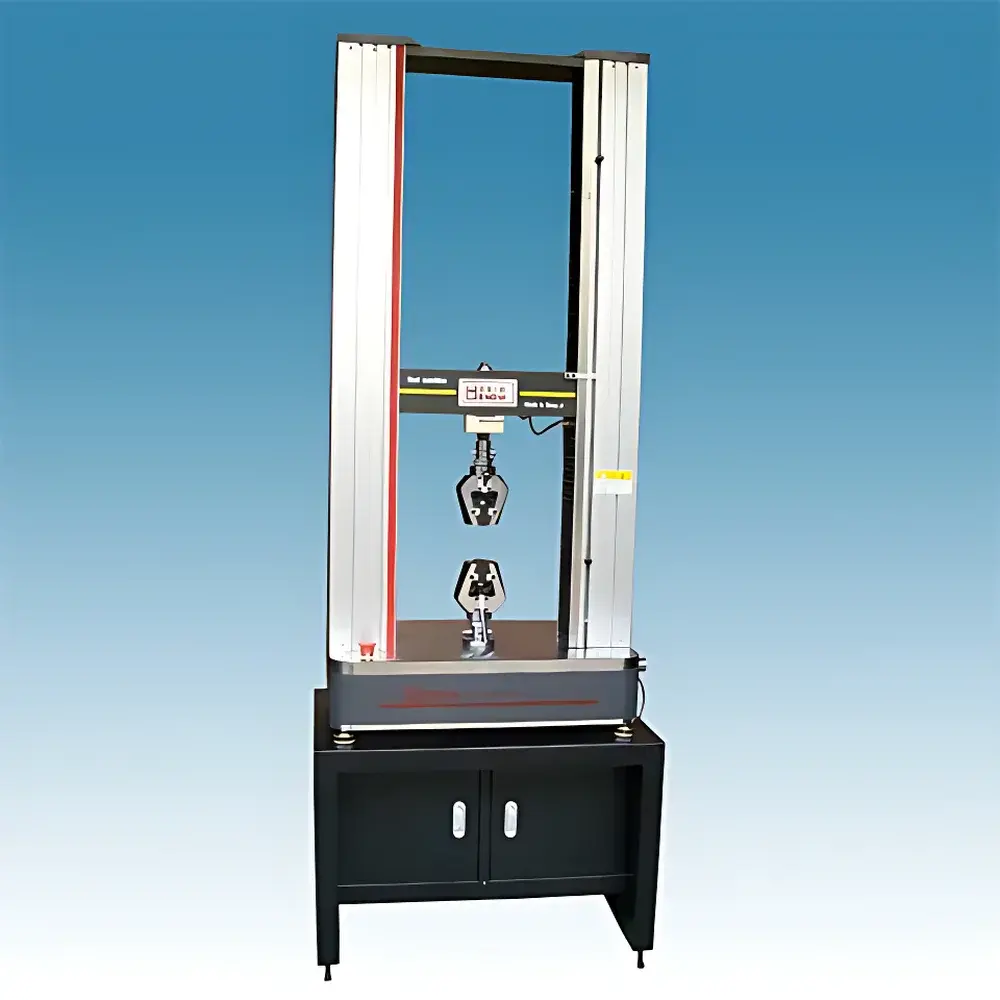
Hengyi HY-1080A Dual-Column Universal Testing Machine
| Brand | Hengyi |
|---|---|
| Origin | Shanghai, China |
| Manufacturer Type | Direct Manufacturer |
| Instrument Type | Electromechanical Universal Testing Machine |
| Model | HY-1080A |
| Load Capacity Options | 1 N to 10 kN (multi-range configurable) |
| Accuracy Class | ≤0.5% of reading |
| Effective Test Width | 420 mm (expandable) |
| Effective Stroke | 800 mm (extendable) |
| Speed Range | 0.001–800 mm/min (continuous, closed-loop controlled) |
| Speed Accuracy | ±0.5% of set value |
| Force Resolution | ±500,000 counts full scale,不分档 (no range switching) |
| Displacement Accuracy | ±0.5% of reading |
| Strain Measurement Accuracy | ±0.5% of reading |
| Control Modes | Force, displacement, strain, and constant-rate profiling |
| Safety Features | Electronic limit protection, overload cutoff (110% FS), emergency stop, real-time self-diagnosis |
| Power Supply | 220 V AC, single-phase, 2.5 kW |
| Dimensions (W×D×H) | 700 × 420 × 1600 mm |
| Weight | 135 kg |
Overview
The Hengyi HY-1080A is a dual-column, electromechanical universal testing machine engineered for high-fidelity static mechanical characterization of materials across research, quality control, and production environments. Based on servo-controlled load application and precision displacement feedback, the system operates under ASTM E4, ISO 7500-1, and GB/T 228.1-compliant force measurement principles. Its rigid aluminum-alloy frame—designed for long-term dimensional stability and UV/oxidation resistance—supports bidirectional tensile, compressive, flexural, shear, peel, tear, and cyclic loading protocols. The machine delivers traceable, repeatable mechanical property data including ultimate tensile strength (UTS), yield strength (0.2% offset), Young’s modulus (E), elongation at break, compressive yield stress, bending stiffness, and shear strength—applicable to both metallic and non-metallic specimens per ISO 527, ASTM D638, ASTM D790, ISO 178, ASTM D1876 (T-peel), and ASTM D624 standards.
Key Features
- High-rigidity dual-column frame with anodized aluminum construction for corrosion resistance and thermal stability
- Panasonic servo motor and driver system (Japan) with integrated planetary gear reduction for smooth, low-noise actuation
- Two preloaded, ground-precision ball screws (imported) ensuring axial alignment and minimal backlash
- Bi-directional load cell (USA-sourced, ±0.5% accuracy class) with automatic transducer recognition and digital calibration memory
- DSP-based real-time control platform enabling 12 Mbps USB 2.0 (full-speed) communication and deterministic sampling at up to 1 kHz
- Four-layer PCB architecture with optimized grounding and differential signal routing for electromagnetic immunity in industrial labs
- Hot-pluggable USB interfaces supporting plug-and-play connectivity for controllers, extensometers, and environmental chambers
- Comprehensive safety suite: programmable electronic end limits, 110% overload cut-off, hardware emergency stop, and continuous system health monitoring
Sample Compatibility & Compliance
The HY-1080A accommodates specimens ranging from ultra-thin films (<10 µm) to structural composites, including polymer films, elastomers, fine wires (diameter ≥0.1 mm), metal foils (Al/Cu), photovoltaic ribbons, biomedical sutures, hydrogels, packaging laminates, pharmaceutical blister packs, orthopedic fixation devices, and fiber-reinforced thermoplastics. Standardized fixtures—including shear, three/four-point bend, compression platens, pneumatic grips, and T-slot test tables—enable rapid method reconfiguration. All mechanical measurements comply with ISO/IEC 17025 requirements for accredited testing laboratories. Force and displacement channels are validated per ISO 376 and ISO 9513, supporting GLP/GMP audit readiness and FDA 21 CFR Part 11–compliant data integrity when paired with optional audit-trail-enabled software.
Software & Data Management
Control and analysis are performed via Hengyi’s Windows-based TestSuite™ v5.x software, supporting multilingual UI (English, German, French, Japanese, Chinese) and SI/imperial unit switching. The software implements VB.NET + SQL Server backend architecture for structured data storage, enabling relational querying, custom report generation (PDF/Excel), and batch statistical evaluation (mean, SD, CV%, confidence intervals). Real-time curve rendering includes auto-scaling axes, tangent modulus calculation, yield point detection (0.2% offset or secant), and failure event tagging. Raw data export is ASCII-compatible with third-party tools (MATLAB, Python Pandas, OriginLab). Optional modules include 21 CFR Part 11 user access control, electronic signatures, and audit trail logging for regulated environments.
Applications
This system serves cross-industry mechanical validation needs: tensile testing of battery electrode foils and solar cell interconnects in renewable energy R&D; peel strength verification of medical device adhesives per ISO 10993-18; compression testing of orthopedic foam scaffolds; shear modulus determination of elastomeric seals in automotive NVH studies; flexural rigidity assessment of biodegradable packaging films; and cyclic fatigue characterization of suture materials per USP . It is routinely deployed in metrology institutes (e.g., SMTC-certified calibration workflows), university materials science labs, Tier-1 automotive suppliers’ QC labs, and ISO 13485-certified medical device manufacturers conducting design verification per ISO 14971.
FAQ
What load capacity options are available for the HY-1080A?
Standard configurations span 1 N to 10 kN; multiple load cells can be installed and auto-recognized for extended dynamic range.
Does the system support ASTM E8/E21 high-temperature tensile testing?
Yes—when integrated with optional furnace modules (−70 °C to +1200 °C) and high-temp extensometers, compliant with ASTM E21 Annex A1.
Can test methods be saved and recalled as SOP templates?
Yes—user-defined test profiles (including control mode, ramp rates, stopping conditions, and post-processing rules) are stored as encrypted .tst files with version timestamps.
Is third-party calibration certification included?
Factory calibration is traceable to NIM (China National Institute of Metrology); optional Shanghai Metrology & Testing Institute (SMTC) certificate available upon request.
What maintenance is required for long-term accuracy retention?
Annual verification of force and displacement metrology is recommended; routine tasks include ball screw lubrication (lithium grease + light mineral oil blend) and periodic load cell zero-checks per ISO 7500-1 Annex B.
Related Products



