
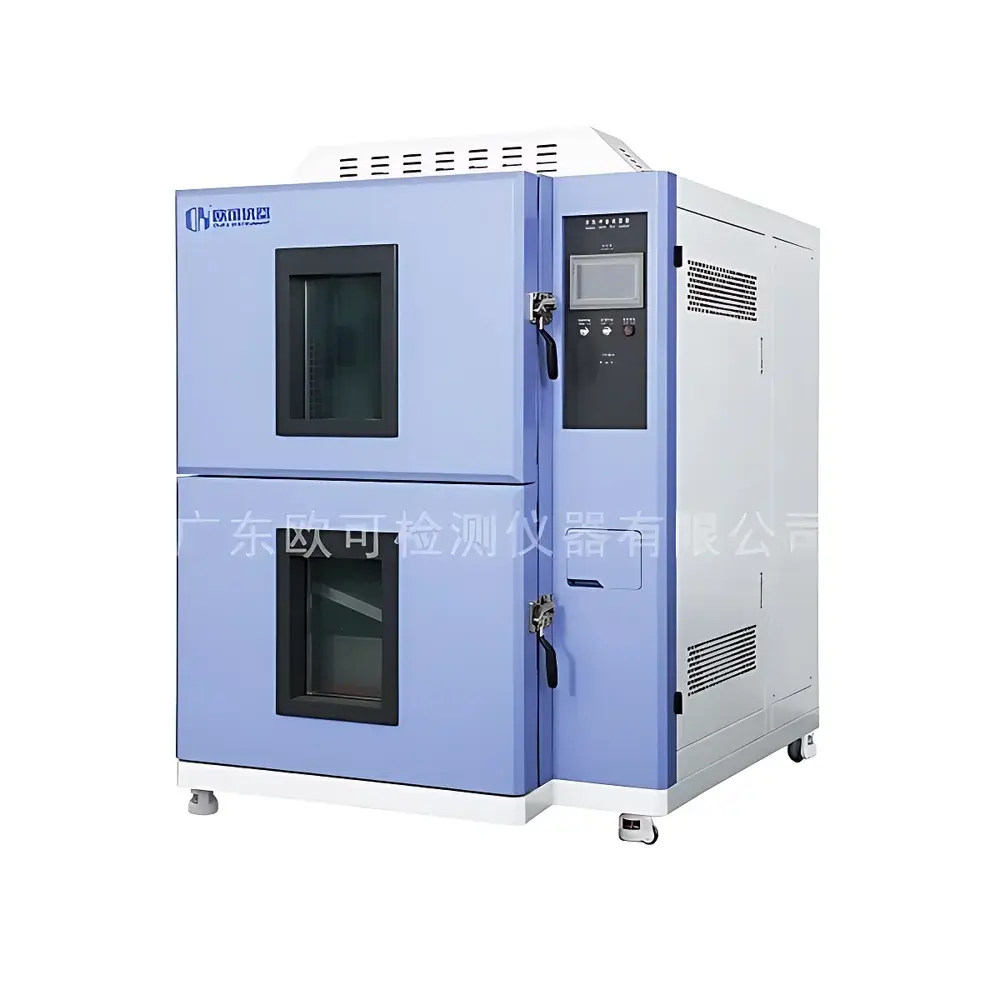
Thermal Shock Test Chamber – High-Low Temperature Alternating Shock Environmental Test System
| Brand | Other Brands |
|---|---|
| Origin | Imported |
| Manufacturer Type | Authorized Distributor |
| Temperature Range | −55 °C to +150 °C |
| Temperature Stability (Hot/Cold Chambers) | ≤ ±2 °C |
| Sample Zone Temperature Stability (Steady State) | ≤ ±0.5 °C |
| Temperature Uniformity | ≤ ±2.0 °C |
| Sample Load Capacity | 30 kg |
| Temperature Recovery Time | ≤ 5 min |
| Low-Temp Chamber Cooling Time (RT → −55 °C) | ≤ 50 min |
| High-Temp Chamber Heating Time (RT → +150 °C) | ≤ 30 min |
| Transfer Time Between Chambers | ≤ 10 s |
| Interior Material | SUS#304 Stainless Steel |
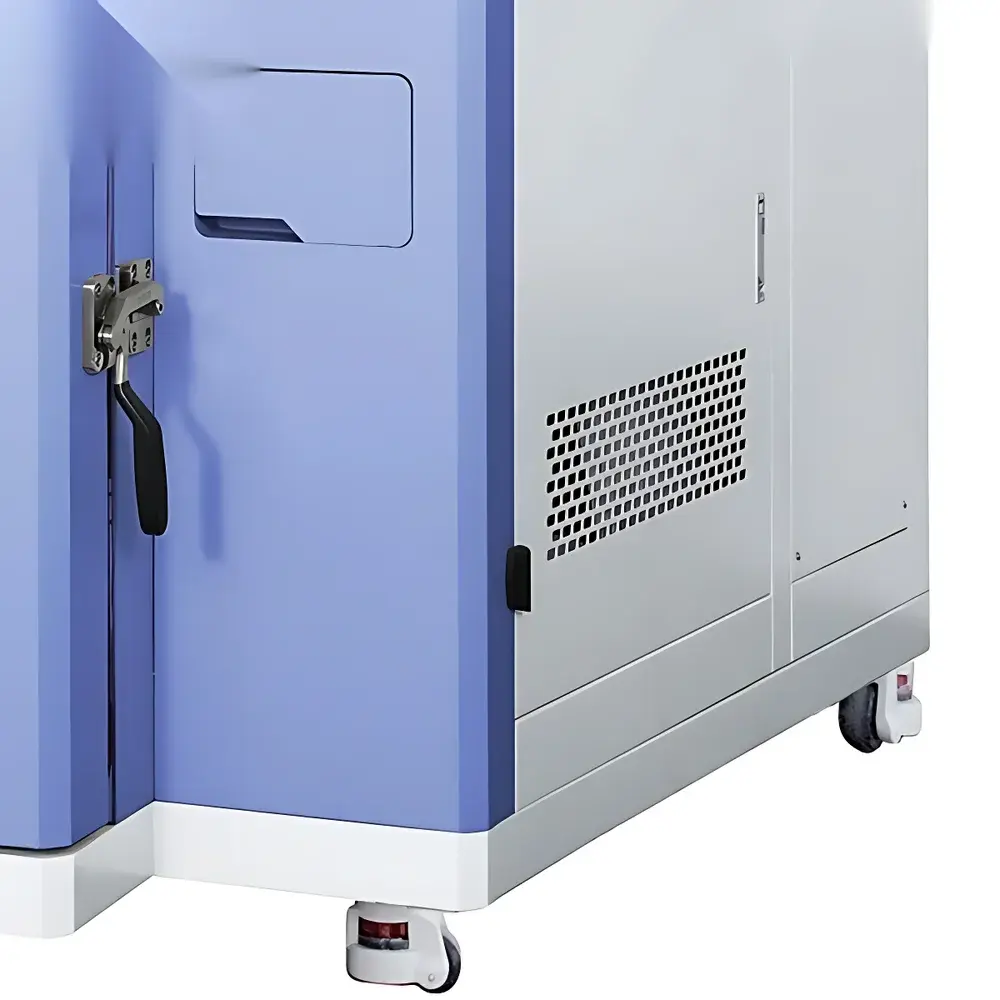
| Cooling Method | Water-Cooled |
| Compressor | Imported Dual-Stage Cascade Refrigeration Unit |
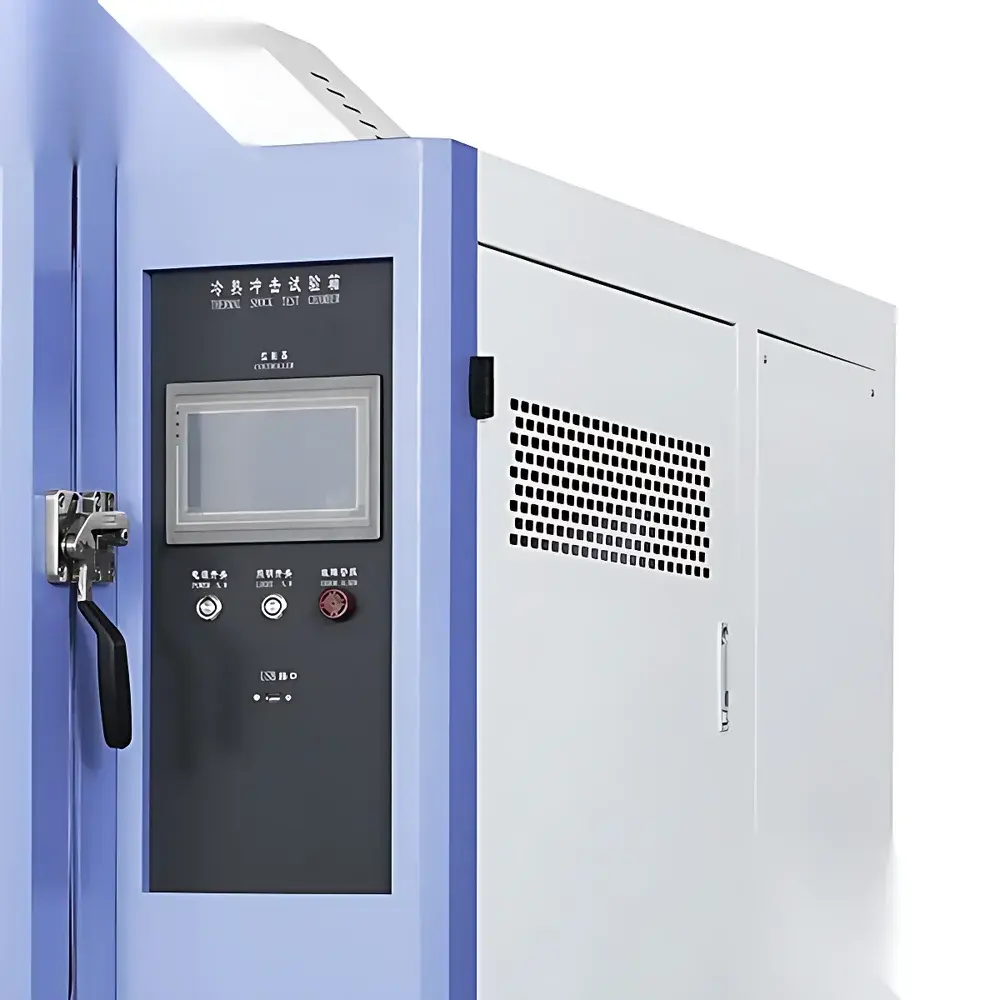
| Control Interface | Touchscreen Color LCD with PID Auto-Tuning Algorithm |
| Compliance Support | MIL-STD-810G, IEC 60068-2-14, DIN EN 60068-2-14, JIS Z 8702 |
Overview
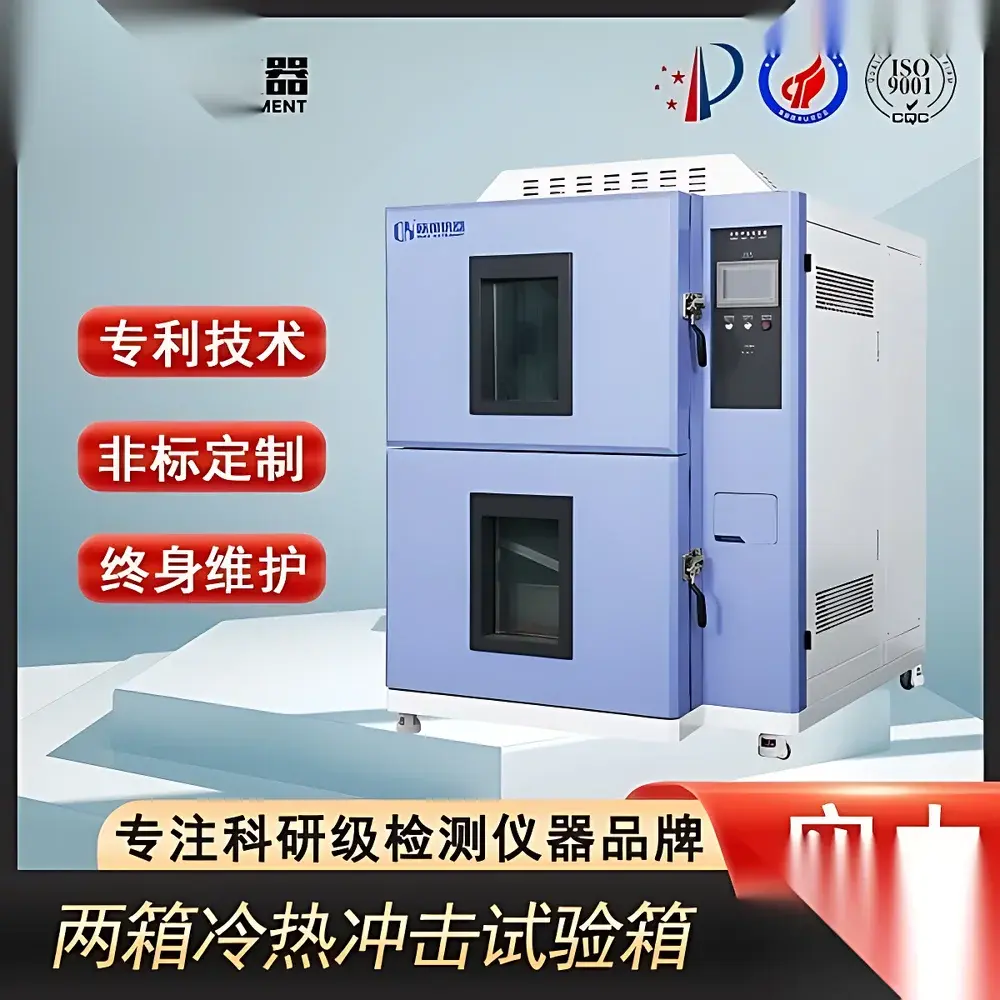
The Thermal Shock Test Chamber – High-Low Temperature Alternating Shock Environmental Test System is an engineered solution for evaluating material and component reliability under rapid, repetitive thermal transitions. Based on the three-chamber (hot/neutral/cold) or two-chamber (hot/cold) configuration, it implements a static sample test method, where the test specimen remains fixed in the central test zone while conditioned air or thermal mass is dynamically transferred between insulated chambers. This architecture eliminates mechanical movement of samples—reducing vibration-induced artifacts and enhancing repeatability across qualification cycles. Unlike cryogen-dependent systems (e.g., LN2-assisted shock chambers), this unit employs a high-efficiency, water-cooled, imported dual-stage cascade refrigeration system, enabling precise, repeatable transitions from −55 °C to +150 °C without consumable gases. Its design meets stringent requirements for thermal shock profiling per MIL-STD-810G Method 503.5, IEC 60068-2-14 Ed. 3.0, and DIN EN 60068-2-14, including optional ambient-hold steps during cycling—a critical requirement for aerospace electronics, automotive ECUs, and military-grade PCB assemblies.
Key Features
- Static test zone architecture: Eliminates sample displacement, ensuring mechanical integrity and measurement stability during thermal transients
- Triple-zone chamber design (optional two-zone mode): Independent hot, cold, and neutral zones allow programmable dwell at ambient temperature—essential for standards-compliant MIL-STD and IEC thermal shock profiles
- Water-cooled, imported dual-stage cascade compressor system: Delivers rapid cooling (RT → −55 °C in ≤50 min) and heating (RT → +150 °C in ≤30 min) with low acoustic emission (<65 dB(A)) and optimized energy efficiency
- PID auto-tuning digital controller with 7-inch color touchscreen HMI: Supports real-time curve plotting, multi-segment ramp/soak programming, and password-protected parameter locking
- High-precision thermal regulation: Sample zone temperature stability ≤ ±0.5 °C under steady-state conditions; uniformity ≤ ±2.0 °C across 30 kg load capacity
- Automatic defrost scheduling: Configurable frequency and duration; manual override available during active test cycles
- Comprehensive fault diagnostics: On-screen display of error codes, cause analysis, and step-by-step remediation guidance—including refrigerant pressure monitoring and chiller flow verification
- Test port compatibility: Standard Ø50 mm through-wall ports (sealable with silicone gaskets) enable external power/data cabling without compromising chamber integrity
Sample Compatibility & Compliance
This chamber accommodates rigid and semi-rigid specimens up to 30 kg total mass, including printed circuit boards (PCBs), semiconductor packages (QFP, BGA, CSP), automotive sensors, optical modules, and hermetically sealed electronic enclosures. Its static test methodology ensures no mechanical stress beyond thermal expansion/contraction—critical for brittle ceramics, thin-film coatings, and MEMS devices. The system supports full traceability per GLP and GMP frameworks: audit trails log all setpoint changes, alarm events, and user actions with timestamp and operator ID. Optional 21 CFR Part 11–compliant software adds electronic signatures, role-based access control, and immutable data archiving. Calibration documentation follows ISO/IEC 17025 guidelines, with NIST-traceable sensor verification available upon request.
Software & Data Management
Built-in embedded firmware enables local data logging at configurable intervals (1–60 s resolution) to internal flash memory (≥1 million data points). Export formats include CSV and Excel-compatible .xls for post-test statistical analysis (e.g., Cpk, Weibull lifetime modeling). Optional PC-based software extends functionality with remote monitoring via Ethernet/IP, automated report generation (PDF/HTML), and integration into enterprise LIMS or MES platforms using Modbus TCP or OPC UA protocols. All logged temperature profiles are time-synchronized with system clock (RTC-backed), supporting synchronized multi-chamber validation studies.
Applications
- Qualification testing of avionics components per DO-160 Section 4 (Temperature Shock)
- Accelerated life testing of solder joints in automotive ADAS modules
- Reliability screening of GaN/SiC power devices prior to burn-in
- Validation of conformal coating adhesion under cyclic thermal strain
- Material compatibility assessment for encapsulants and underfills in microelectronics packaging
- Pre-shipment stress screening for industrial IoT gateways operating in extreme climates
FAQ
What distinguishes the three-chamber configuration from two-chamber designs?
Three-chamber systems incorporate a dedicated ambient (neutral) zone, enabling precise insertion of dwell periods at room temperature within a thermal cycle—required by MIL-STD-810G and IEC 60068-2-14 for certain device classes. Two-chamber variants offer faster transfer times but lack ambient-hold capability.
Is liquid nitrogen (LN₂) required for operation?
No. This system uses only mechanical refrigeration. LN₂ is neither consumed nor interfaced, eliminating safety hazards, storage logistics, and recurring operational costs associated with cryogenic media.
Can the chamber be integrated into an automated test line?
Yes. Standard Ethernet and RS-485 interfaces support SCADA-level integration. Optional I/O modules provide dry-contact signals for start/stop, door interlock, and alarm status—compatible with PLC-controlled manufacturing environments.
What maintenance is required for long-term calibration stability?
Annual verification of PT100 sensor accuracy against NIST-traceable reference sources is recommended. Condenser coil cleaning (per water quality) and refrigerant oil analysis every 24 months ensure sustained thermal performance per ISO 16750-4 Annex A.



